
Is Cedar Breaks Worth Visiting? Essential Guide
Yes, Cedar Breaks is absolutely worth visiting! It’s a stunning natural amphitheater of hoodoos, spires, and fins offering breathtaking views comparable to Bryce Canyon, but with fewer crowds and a more intimate feel. Especially for those seeking natural beauty and a peaceful escape, Cedar Breaks provides a truly memorable experience.
Planning a trip to a new place can sometimes feel overwhelming, right? You wonder if it’s truly worth the travel time and effort. If you’re curious about Cedar Breaks National Monument in Utah, you’re in the right spot! It’s a place often overshadowed by its more famous neighbor, Bryce Canyon, but it holds its own special magic. Many folks ask, “Is Cedar Breaks worth visiting?” The answer is a resounding yes for many reasons we’ll explore. We’ll break down what makes it unique, what you can do there, and how to best enjoy your visit, making sure you feel confident and excited about planning your adventure.
What is Cedar Breaks National Monument?
Cedar Breaks National Monument is a breathtaking geological formation located in southwestern Utah. It’s often described as a giant natural amphitheater, carved over millions of years by erosion. Imagine a vast, colorful bowl filled with intricate hoodoos, towering spires, and striking fins of rock, painted in shades of red, orange, yellow, and white. It sits at a high elevation, around 10,000 feet, which means cooler temperatures and incredible panoramic views.
While it shares similarities with Bryce Canyon National Park, Cedar Breaks is significantly smaller and visited by fewer people. This gives it a more serene and less crowded atmosphere. It’s a perfect place for those who appreciate natural beauty without feeling overwhelmed by tourist crowds. The sheer scale and the delicate artistry of nature on display are truly awe-inspiring.
Why Is Cedar Breaks Worth Visiting? Key Highlights
So, what makes Cedar Breaks a must-see destination? It boils down to a unique combination of spectacular scenery, accessibility, and a sense of peaceful discovery. Let’s dive into the main reasons why this hidden gem shines:
- Stunning Hoodoo Formations: Cedar Breaks boasts an incredible concentration of hoodoos, which are irregular columns of rock. These formations, sculpted by ice, rain, and wind, create a fantastical landscape that captivates the imagination. They look like something from another planet!
- Breathtaking Views: From the rim viewpoints, you get expansive vistas of the amphitheater. The colors shift throughout the day, especially during sunrise and sunset, creating a magical display. The depth and complexity of the eroded landscape are simply mesmerizing.
- Fewer Crowds: Compared to its more famous neighbors, Cedar Breaks offers a much more tranquil experience. You can often enjoy the viewpoints and trails with plenty of space, allowing for a more personal connection with nature.
- High Elevation and Cool Air: Being at over 10,000 feet, Cedar Breaks is a welcome escape from the Utah summer heat. The crisp, cool air at this altitude makes hiking and exploring incredibly pleasant, even in July or August.
- Accessible Beauty: Several overlooks are easily accessible from the scenic drive, making it a great stop even for those with limited mobility. You don’t need to be an avid hiker to witness its grandeur.
- Stargazing Opportunities: Due to its remote location and high elevation, Cedar Breaks offers exceptionally dark skies. It’s a designated International Dark Sky Park, making it a fantastic spot for amateur astronomers and anyone wanting to marvel at the Milky Way.

Things to Do at Cedar Breaks
Cedar Breaks offers a variety of activities to suit different interests and energy levels. Whether you prefer a leisurely drive with stunning vista stops or a more active hiking experience, you’ll find something to enjoy. Here are the top things you can do:
Scenic Drive
The 5-mile paved scenic drive along the rim of Cedar Breaks is the park’s main feature. It connects the three main viewpoints::
- Point Supreme: Offers a sweeping, panoramic view of the entire amphitheater. It’s a great place to start and get a feel for the scale of the landscape.
- The Chessmen: Named for the hoodoos that resemble chess pieces, this viewpoint provides close-up views of the unique rock formations.
- Rainbow Point: The southernmost viewpoint, offering a slightly different perspective and often featuring vibrant colors, especially in the late afternoon light.
The drive itself is beautiful, winding through forests of spruce, fir, and aspen. Several pull-offs along the way offer opportunities to simply stop, admire the view, and take photos.
Hiking Trails
For those who want to get closer to the hoodoos and experience the landscape on foot, Cedar Breaks offers several hiking trails:
Easy Trails:
- Sunset View Trail: A short, paved, and mostly level 1-mile loop that’s easily accessible from the main road. It provides stunning views into the amphitheater and is perfect for all visitors.
- Point Supreme Overlook Trail: This short, paved path leads from the Point Supreme parking area to a prime viewing spot.
Moderate Trails:
- Riparian Trail: A 2-mile loop that descends into the canyon from the South Rim. It offers a different perspective, taking you among the pines and aspens, with opportunities to see wildflowers and wildlife. Be aware that the climb back up can be strenuous due to the elevation.
- Ingalls Lake Trail: This 5.5-mile roundtrip trail starts near Brian Head Peak and descends into the canyon through diverse scenery. It’s a longer option for a more immersive experience.
Strenuous Trails:
- Avenue of Giants Trail: This challenging 2-mile trail descends steeply into the amphitheater from the North Rim (near the visitor center). It’s a vigorous hike that takes you down among the hoodoos, but the climb back up is demanding.
Remember, many of these trails are at high elevation, so take it easy and drink plenty of water.
Ranger Programs and Visitor Center
The small visitor center at Cedar Breaks offers exhibits about the geology, flora, and fauna of the monument. Park rangers also lead free interpretive programs during the summer months. These talks and guided walks are a fantastic way to learn more about the park’s natural and cultural history. Check the park’s official website or the visitor center for schedules.
Stargazing
As an International Dark Sky Park, Cedar Breaks is a premier destination for stargazing. On moonless nights, the sky is incredibly clear, revealing thousands of stars, planets, and even the Milky Way with stunning clarity. The park often hosts astronomy and telescope events during the summer. It’s an unforgettable experience to witness the cosmos from such a pristine dark sky location.
Best Time to Visit
The best time to visit Cedar Breaks largely depends on what you’re looking for in your trip. The park is typically accessible from late May or June through mid-October, as the high elevation means heavy snows close the roads for much of the year.
Summer (July – August)
- Pros: Full access to the scenic drive and all trails. Pleasant, cool temperatures (evenings can be chilly). Wildflowers are often in bloom. Ranger programs are most frequent.
- Cons: This is the busiest season, though still much less crowded than national parks. Afternoon thunderstorms are common.
Fall (September – October)
- Pros: Fewer crowds. Beautiful autumn colors, especially in the aspen groves. Crisp, clear air and excellent stargazing.
- Cons: Weather can be unpredictable, with chances of early snow. Some ranger programs may wind down. The scenic drive may close earlier in October due to snow.
Late Spring (Late May – June)
- Pros: Wildflowers begin to appear. Fewer visitors than in summer. The park is awakening from winter.
- Cons: Snow may still block some higher sections of the scenic drive or trailheads early in this period. The visitor center might have limited hours.
Recommendation: For the best balance of good weather, accessibility, and fewer crowds, September is often considered ideal. However, mid-July through August offers the most reliable access and weather for extensive exploration and ranger programs.
Getting to Cedar Breaks
Cedar Breaks is located in a relatively remote area of Utah but is quite accessible if you’re driving. The main entrance is off Utah Scenic Byway 143 (Kolob Terrace Road), about 25 miles east of I-15 near Cedar City.
- From Cedar City, Utah: Take UT-14 East for about 14 miles to UT-143 North. Follow UT-143 North for another 14 miles to the park entrance.
- Airport Access: The closest major airport is Cedar City Regional Airport (CDC), which offers limited flights. Salt Lake City International Airport (SLC) is about a 3.5-hour drive away, and Las Vegas McCarran International Airport (LAS) is about a 3-hour drive away.
- Directions: It’s highly recommended to have a GPS or map ready, as cell service can be spotty in the areas surrounding the park.
The park road is generally well-maintained, but always check road conditions with the National Park Service before your visit, especially outside of peak summer months.
What to Pack for Cedar Breaks
Given the high elevation and potentially variable weather, thoughtful packing is key to enjoying your visit. Think layers!
Clothing Essentials
- Layers: Pack t-shirts, long-sleeved shirts, a fleece jacket or sweater, and a windproof/water-resistant outer shell. Temperatures can swing significantly between day and night, and even between sun and shade.
- Comfortable Footwear: Sturdy, broken-in hiking shoes or boots are essential for trails. Even if you’re just walking to viewpoints, good walking shoes are a must.
- Sun Protection: A wide-brimmed hat, sunglasses, and high-SPF sunscreen are crucial. The sun is very intense at this altitude, even on cloudy days.
- Rain Gear: A lightweight, waterproof jacket is advisable, especially during the summer when afternoon thunderstorms can pop up quickly.
Other Important Items
- Water Bottles: Staying hydrated is vital at high altitudes. Bring plenty of water or a reusable water bottle to refill.
- Snacks: Pack high-energy snacks like trail mix, granola bars, or fruit. Food services are very limited within the park itself.
- Camera: You’ll want to capture the incredible scenery!
- Binoculars: Enhance your viewing experience of distant formations and potential wildlife.
- First-Aid Kit: A basic kit for minor scrapes or blisters is always a good idea.
- Navigation: A park map (available at the entrance or visitor center) is recommended, as phone service can be unreliable.
Cedar Breaks vs. Bryce Canyon: A Comparison
It’s natural to compare Cedar Breaks to Bryce Canyon National Park, given their similar hoodoo landscapes. Both are stunning, but they offer distinct experiences. Understanding these differences can help you decide which fits your travel plans best, or if visiting both is the right choice!
| Feature | Cedar Breaks National Monument | Bryce Canyon National Park |
|---|---|---|
| Size of Amphitheater | Smaller, more concentrated | Larger, more expansive |
| Number of Hoodoos | Abundant, dense formations | Abundant, iconic formations |
| Visitor Volume | Significantly lower, more peaceful | High, can be very crowded |
| Elevation | Average 10,000 feet (3,050 m) | Rim average 8,000-9,000 feet (2,400-2,700 m) |
| Accessibility | Easier access to rim viewpoints, scenic drive is shorter | More extensive trail network, more viewpoints along the rim |
| Services | Limited (Visitor Center, restrooms) | More extensive (Lodging, restaurants, general store, larger visitor center) |
| Dark Skies | Excellent (International Dark Sky Park) | Excellent (also known for dark skies) |
| “Wow” Factor | Intimate, dramatic beauty | Grand, spectacular vistas |
Key Takeaway: If you prefer a more serene, less crowded experience and want to see incredible hoodoos without the throngs of people, Cedar Breaks is a fantastic choice. If you desire a grander scale, more extensive infrastructure, and a wider variety of lodging and dining options, Bryce Canyon might be preferable. Many visitors find that Cedar Breaks offers a chance to appreciate the hoodoo landscape in a more personal and contemplative way.
Tips for a Great Visit
To make the most of your trip to Cedar Breaks, keep these helpful tips in mind:
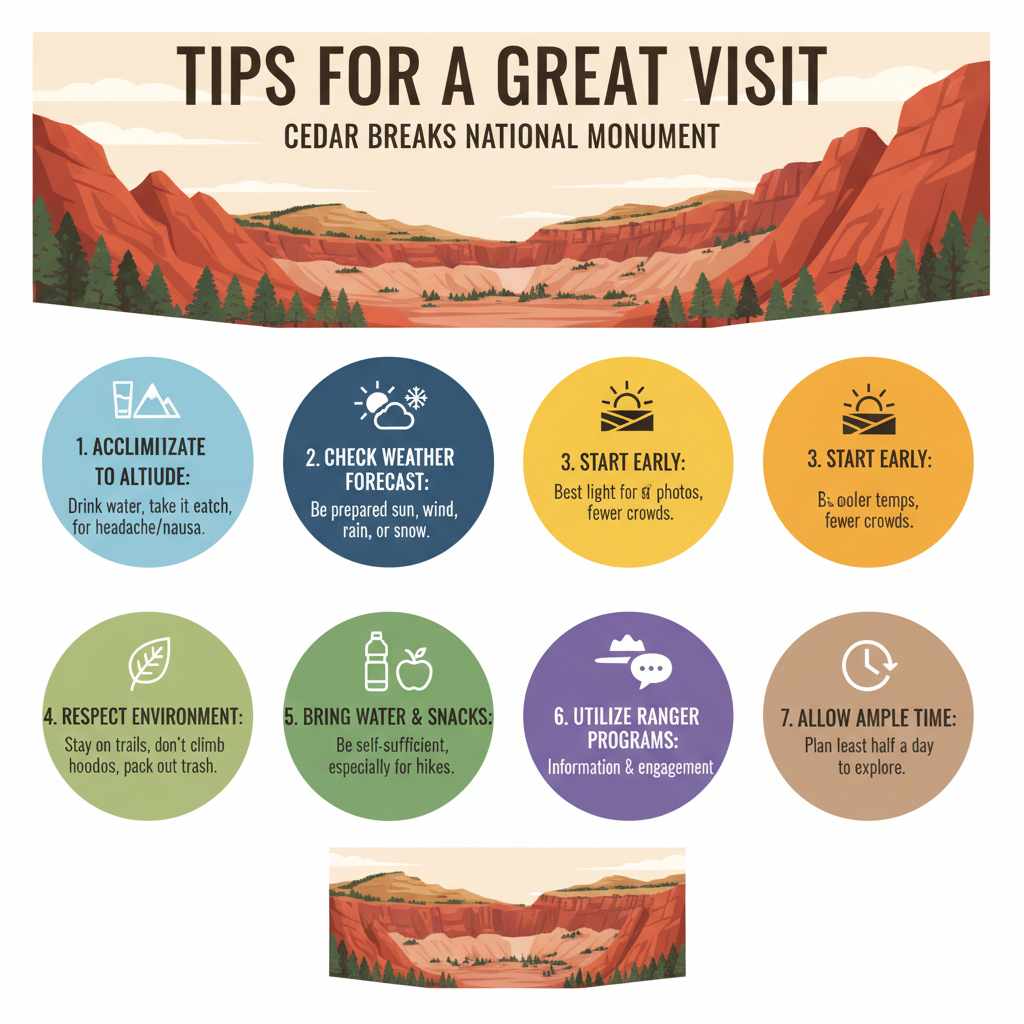
- Acclimatize to the Altitude: Cedar Breaks is at a very high elevation. If you’re coming from sea level, take it easy on your first day. Drink plenty of water and avoid strenuous activity until you feel adjusted. Symptoms of altitude sickness can include headache, nausea, and fatigue.
- Check the Weather Forecast: Weather can change rapidly at high altitudes. Be prepared for sun, wind, rain, and even snow, especially outside of the peak summer season.
- Start Your Day Early: Arriving early in the morning allows you to enjoy the best light for photography, cooler temperatures, and potentially fewer people at the viewpoints.
- Respect the Environment: Stay on designated trails to protect the fragile soil and vegetation. Do not climb on or disturb the hoodoos; they are easily damaged. Pack out everything you pack in.
- Bring Water and Snacks: As mentioned, services are minimal. Be self-sufficient, especially if you plan to hike.
- Utilize Ranger Programs: These are a treasure trove of information and a great way to engage with the park’s natural wonders.
- Allow Ample Time: While small, Cedar Breaks deserves time to be appreciated. Plan at least a half-day to drive the scenic road, stop at viewpoints, and perhaps do a short hike.
Frequently Asked Questions (FAQ)
Q1: How much does it cost to visit Cedar Breaks National Monument?
A: Cedar Breaks National Monument is managed by the National Park Service. As of my last update, there is an entrance fee. Typically, it’s a per-vehicle fee valid for several days. You can check the most current fee information on the official NPS Cedar Breaks Fees page.
Q2: Is Cedar Breaks suitable for kids?
A: Yes, Cedar Breaks can be very engaging for children! The dramatic hoodoo formations spark imagination, and the shorter, paved trails like the Sunset View Trail are manageable for little legs. The scenic drive with its many stops also keeps things interesting. Just be mindful of the high altitude and ensure they stay hydrated.
Q3: Can I bring my dog to Cedar Breaks?
A: Pets are allowed in Cedar Breaks National Monument, but they must be kept on a leash no longer than 6 feet and are generally restricted to paved areas, including the paved viewpoints and the Sunset View Trail. They are not permitted on hiking trails that descend into the amphitheater or in park buildings. Always check current regulations on the NPS website for the most up-to-date pet policy.
Q4: Is camping available at Cedar Breaks?
A: There is no camping available within Cedar Breaks National Monument itself, neither in the frontcountry nor backcountry. However, there are several campgrounds nearby. The closest are the popular campgrounds in Dixie National Forest along the scenic byway (e.g., near Brian Head), and more options are available in Cedar City and near Brian Head Ski Resort.
Q5: How long does it take to see Cedar Breaks?
A: You can experience the main highlights of Cedar Breaks in about 2-3 hours if you drive the scenic road and stop at the main viewpoints. If you plan to do a shorter hike, like the Riparian Trail or Sunset View Trail, add another 1-2 hours. For a more thorough exploration or a longer hike, you might spend 4-6 hours or even a full day.