Are Cedar Hangers Worth It? What They Actually Do to Fabric
Cedar hangers are worth it for the clothes you actually care about — suits, coats, and wool sweaters — because cedar’s natural thujaplicins repel moth larvae and its wood pulls moisture out of the air, but they’re overkill for a closet full of everyday cotton t-shirts.
The moth-repelling and moisture-absorbing claims on cedar hanger listings are mostly true, but they come with limits that most product pages leave out: cedar’s scent fades within 6-12 months unless you resand it, and it only repels moths — it doesn’t kill existing larvae or eggs already in a garment. Here’s what cedar hangers actually do, where the value genuinely holds up, and when a $10 wooden hanger without the cedar markup does the same job.
What Cedar Actually Does (and Doesn’t Do)
Best Cedar Hanger Set for Closet Upgrades
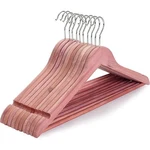 |
TOPIA HANGER Red Cedar Wooden Hangers (10-Pack) – $26.99 A 10-pack is enough to cover the suits, coats, and wool pieces that actually benefit from cedar, without paying the cedar premium on your whole closet.
|
Cedar wood contains thujaplicins and other aromatic compounds that are genuinely toxic to clothes moth larvae — this isn’t folk wisdom, it’s the same chemistry behind cedar-lined chests. But there’s a real limit: cedar repels adult moths from laying eggs and can slow young larvae, it does not kill an active infestation already established in wool fibers. If you’re storing garments that already have moth damage or larvae, cedar hangers won’t reverse that — wash or dry-clean first, then switch to cedar for prevention.
The moisture-absorption claim is also real but modest. Cedar is hygroscopic, meaning it pulls ambient moisture into the wood rather than letting it sit on fabric. In a genuinely humid closet this measurably reduces the mildew risk on wool and leather. In a dry climate or a climate-controlled home, the effect is negligible — you’re paying for a benefit you won’t notice.
Where the Cedar Scent Actually Comes From, and Why It Fades
The scent and the moth-repelling effect come from the same source: volatile oils sitting near the wood’s surface. Every time air moves across a cedar hanger, a small amount of that oil evaporates — which is what you’re smelling, and it’s also what’s slowly running out. Most cedar hangers lose noticeable potency within 6 to 12 months in normal use. A light pass with 120-150 grit sandpaper exposes fresh wood and fresh oil underneath, effectively resetting the clock. Skip this step and a cedar hanger becomes, functionally, just a nicer-looking wooden hanger with no more moth protection than a $10 non-cedar one.
Cedar vs. Plastic vs. Wire: The Honest Comparison
| Hanger Type | Moth Protection | Shoulder Shape Support | Typical Cost per Hanger |
|---|---|---|---|
| Solid cedar | Yes, while scent is active | Excellent (contoured, thick) | $2.50-$3.50 |
| Non-cedar hardwood | None | Excellent (same shape, no cedar) | $1.50-$2.50 |
| Plastic | None | Fair (can bow under heavy coats) | $0.50-$1.00 |
| Wire | None | Poor (creates shoulder bumps) | $0.10-$0.25 |
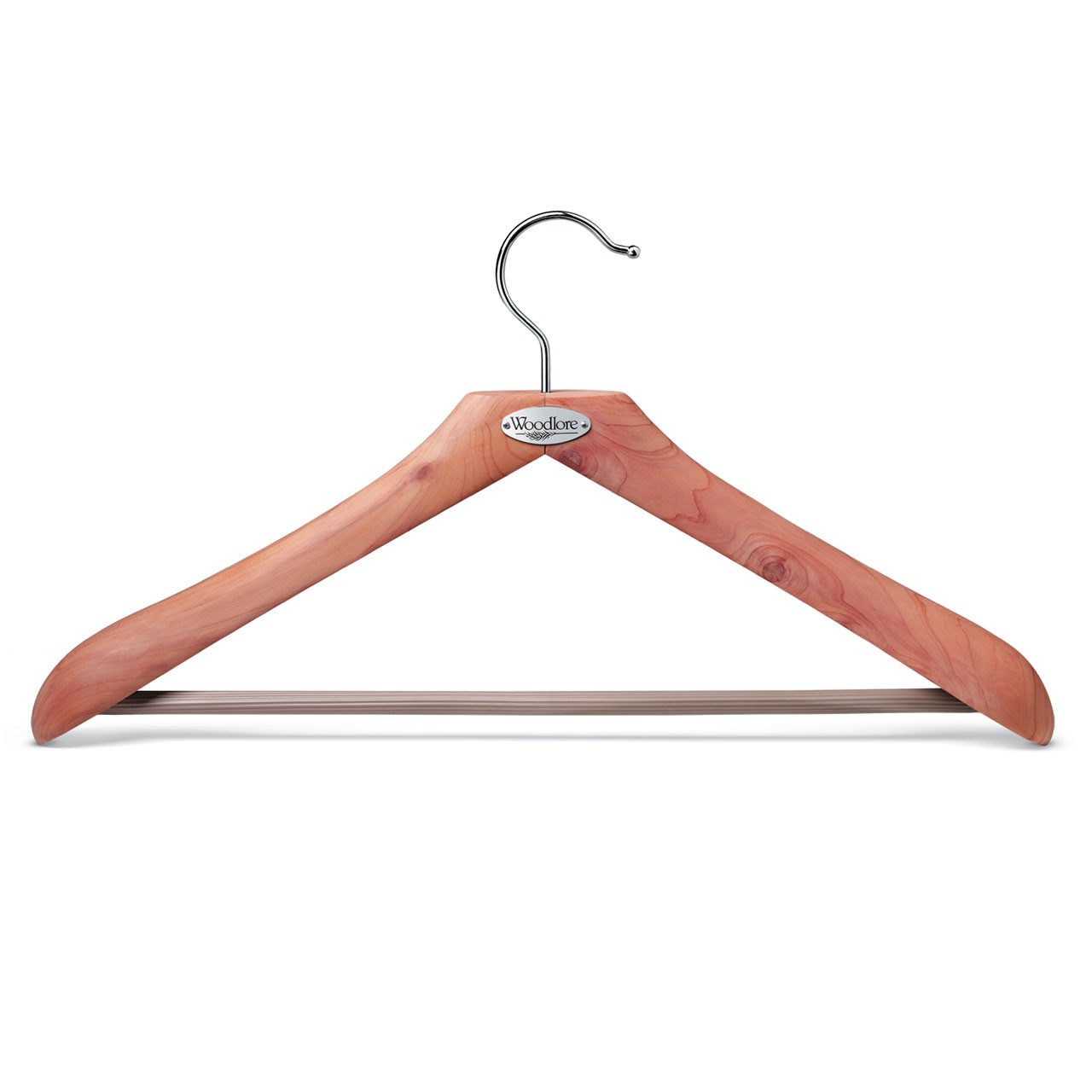
The honest takeaway: you’re paying roughly a dollar more per hanger for cedar over an identical-shaped non-cedar wooden hanger. For everyday shirts and casual clothes with no moth risk, that dollar buys you nothing — a plain hardwood hanger protects the garment’s shape just as well. The premium only earns its keep on wool, cashmere, silk, and fur, the fabrics moths actually target.
Maintaining Cedar Hangers So They Keep Working
- Sand lightly every 3-6 months with fine sandpaper to refresh the exposed oil and scent — this matters more than any other maintenance step.
- Never use water, polish, or scented sprays on cedar hangers; both can seal the wood’s pores and mute the natural oils you’re relying on.
- Keep the closet from getting bone-dry — cedar that dries out completely (common with forced-air heating) can crack at the hook joint over years of use.
- Rotate hangers seasonally so the cedar isn’t doing double duty on your whole wardrobe at once; concentrate them on stored off-season wool and coats.
Frequently Asked Questions
Do cedar hangers actually keep moths away?
Yes, cedar’s natural thujaplicin oils repel adult clothes moths and can slow young larvae, but they don’t kill an existing infestation. Cedar is a prevention tool, not a treatment — wash or dry-clean already-affected garments first, then switch to cedar hangers to keep new moths away.
How long do cedar hangers keep their scent?
Most cedar hangers noticeably lose scent and moth-repelling strength within 6 to 12 months of normal use. A light sanding with fine-grit sandpaper exposes fresh wood and oil underneath, which restores most of the original effect.
Are cedar hangers worth it for regular clothes?
Not really. The moth and moisture benefits only matter for wool, cashmere, silk, and fur — fabrics moths actually target. For everyday cotton shirts and casual wear, a plain non-cedar wooden hanger gives the same shoulder support for about a dollar less per hanger.
Can cedar hangers damage clothes?
No, a smooth, well-finished cedar hanger is gentle on fabric. The only real risk is a rough or unfinished spot snagging delicate fabric like silk — run a hand over the hanger before use, and lightly sand any rough patches.
Conclusion
Cedar hangers earn their higher price on the garments where moth damage and moisture actually matter — suits, wool coats, sweaters, anything stored for a season or more. For the rest of your closet, the cedar premium buys scent and not much else. Buy a smaller set for the pieces that need it, sand them every few months, and skip cedar entirely for everyday clothes.
Sponsored / affiliate links. As an Amazon Associate I earn from qualifying purchases. I may earn additional commission from eligible campaigns.
 8 Pack Unfinished Red Cedar Wood Clothes Hangers, Flat Cedar Hangers with 360 Swivel Chrome Hook and Notches for Shirts, Dresses and Strappy Garments
 SereneLife Premium Wooden Hangers 30 Pack - Heavy Duty & Durable Coat Hanger - Wood Hanger with 360-Degree Rotatable Hook - Clothes Hangers with Non-Slip Shoulder Notches for Shirts & Coats (Cherry)