Is Wood a Good Insulator: Unveiling the Truth
Yes, wood is a good insulator. It slows down heat transfer.
This makes it useful in many applications, from building homes to creating furniture. Wood’s insulating properties come from its natural structure. The cellular makeup of wood contains air pockets, which help to reduce heat flow. These air pockets trap heat, making wood a poor conductor of heat.
This quality is why wood is often used in construction to keep buildings warm in winter and cool in summer. Moreover, wood is a renewable resource, making it an eco-friendly choice. Understanding wood’s insulating abilities can help you make better choices in home building, furniture selection, or even DIY projects. Keep reading to discover more about why wood is an excellent insulator.
Credit: www.cambridge.org
Introduction To Wood Insulation
Wood has been used for many years. People built homes with wood. Wood keeps homes warm in cold weather. It also keeps homes cool in hot weather. This is because wood is a natural insulator. It slows the transfer of heat. Wood was easy to find and use. People learned to trust wood.
Today, wood is still popular. Builders use wood in many ways. Wood is used in walls and floors. It is also used in roofs. Wood helps save energy. It keeps homes comfortable. Wood is also eco-friendly. It can be recycled. This makes wood a good choice. Many people prefer wood for its look and feel.
Thermal Properties Of Wood
Heat moves from hot to cold. This is called heat transfer. It can happen in three ways: conduction, convection, and radiation. Wood is mostly affected by conduction. Conduction is heat moving through solid materials. Wood is not a great conductor. This means it does not let heat move through it easily.
Wood has low thermal conductivity. This means it keeps heat from moving through it. This is why wood feels warm to touch. It does not take heat from your hand quickly. This makes wood a good insulator. It helps keep heat inside your home. It also keeps cold out. Not all woods are the same. Hardwoods and softwoods have different conductivity levels. But both types still insulate well.
Comparing Wood With Other Insulators
Wood can be a good insulator compared to other materials. It offers decent thermal resistance and is environmentally friendly. However, it may not be as effective as synthetic insulators like fiberglass.
Common Insulating Materials
Insulating materials keep heat in or out. They are important for homes. Wood is one option. Other common materials are fiberglass, foam, and cellulose. Each has pros and cons. Fiberglass is lightweight. Foam is easy to cut. Cellulose is eco-friendly.
Advantages And Disadvantages
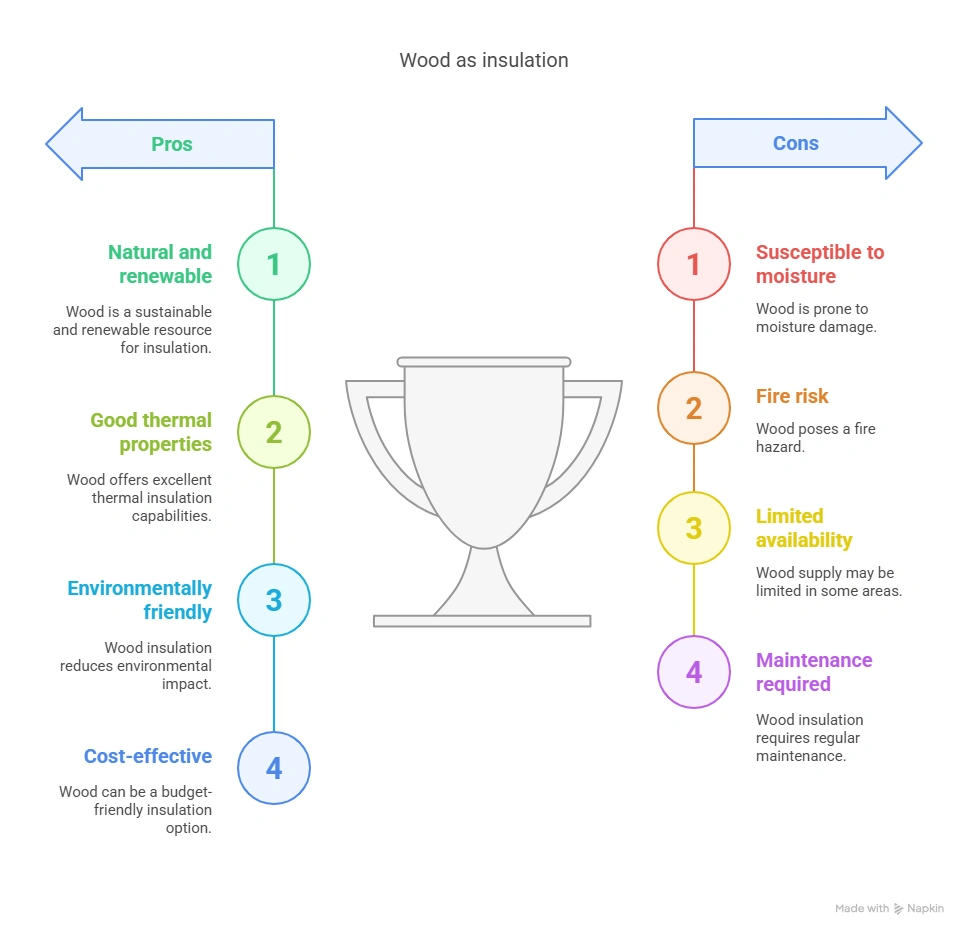
Wood has many advantages. It is natural. It is also renewable. Wood is easy to work with. It looks nice. But, wood has some disadvantages too. It can rot. It can also attract bugs. Wood is not as good as foam for insulation. Foam is better at stopping heat. Yet, foam is not eco-friendly. It is also not as easy to install. Choose wisely. Think of your needs.
Factors Affecting Wood’s Insulation
Wood’s insulation ability depends on its moisture content. Wet wood is less effective at insulating. Dry wood is better for keeping heat inside. High moisture makes wood conduct heat. Low moisture improves wood’s insulation.
Dense wood has tightly packed fibers. This makes it a poor insulator. Less dense wood is better for insulation. It traps more air inside. Air pockets help keep heat from moving through the wood.
Energy Efficiency With Wood
Wood serves as an excellent insulator, offering natural energy efficiency. It helps maintain steady indoor temperatures by reducing heat transfer. This property makes wood a smart choice for sustainable building materials.
Insulation In Buildings
Wood is a great insulator. It keeps homes warm in the winter. It also keeps them cool in the summer. This means lower energy bills. Wood does not conduct heat well. So, it acts as a barrier. It keeps the inside temperature stable. This makes it a popular choice for houses.
Environmental Impact
Wood is eco-friendly. It is a renewable resource. It grows back after it is cut. Using wood helps reduce carbon footprint. It absorbs CO2 from the air. This makes it a sustainable building material. Wood breaks down naturally. It does not harm the environment. Choosing wood is good for the planet.
Credit: www.nia.org
Case Studies And Real-life Examples
Wood is often used in building homes. It keeps houses warm. Many homeowners prefer wood for insulation. It is easy to work with. Wood is also a natural material.
Some schools use wood for their classrooms. This helps keep the rooms warm during winter. Wood is also used in some offices. It helps save energy. Wood makes spaces cozy.
Using wood for insulation has many benefits. It is cost-effective. It helps save energy. Wood is also eco-friendly. It is a renewable resource.
Some buildings have found success using wood. They have lower heating costs. Wood is also durable. It lasts for many years. Many people find wood insulation helpful.
Innovations In Wood Insulation
New technologies have made wood better for insulation. Engineers now use wood fibers in new ways. These fibers trap air and keep heat in. Special treatments make wood more resistant to fire. This is very important for safety.
Some companies mix wood with other materials. This makes the insulation even more effective. These innovations help homes stay warm and use less energy.
Researchers are exploring eco-friendly options for wood insulation. They aim to reduce waste and use sustainable resources. New methods could make wood insulation cheaper and more accessible.
Smart technology is also being tested. Sensors can monitor the insulation’s effectiveness. This ensures homes stay warm without wasting energy. The future looks promising for wood insulation.
Conclusion And Final Thoughts
Wood is a good insulator. It traps heat inside buildings. This helps keep homes warm in winter. In summer, wood keeps heat out. This makes homes cooler.
Wood is eco-friendly. It is a renewable resource. This makes it a green choice. Wood also looks good. It adds a natural touch to any home.
Use wooden walls to insulate your home. Install wooden floors for better heat retention. Choose solid wood doors. They help in reducing heat loss. Consider using wooden furniture. It also adds to the insulation.
Maintain your wooden items. Polish and treat wood to last longer. This keeps your home efficient. Wood can be a wise investment.
Frequently Asked Questions
Is Wood Good At Keeping Heat Out?
Yes, wood is good at keeping heat out. It has natural insulating properties, helping to maintain cooler indoor temperatures.
Is Wood An Insulator Or Not?
Yes, wood is an insulator. It resists the flow of electricity and heat, making it a poor conductor.
Does Wood Keep Things Cold?
Wood is not an effective insulator for keeping things cold. It lacks sufficient thermal insulation properties. Use materials like foam or fiberglass for better insulation.
How Much Does Wood Insulate?
Wood has an R-value of 1. 41 per inch, providing moderate insulation. It’s less effective than materials like fiberglass.
Conclusion
Wood serves as a decent insulator in many situations. It helps retain warmth indoors. Compared to materials like metal, wood performs better. It is also eco-friendly and accessible. While not the best insulator, wood is useful. Consider using it for basic insulation needs.
Its natural properties offer benefits. Wood can enhance comfort in your home. Overall, wood is a practical choice for insulation. Explore its potential in your projects. Test and see how well it works.