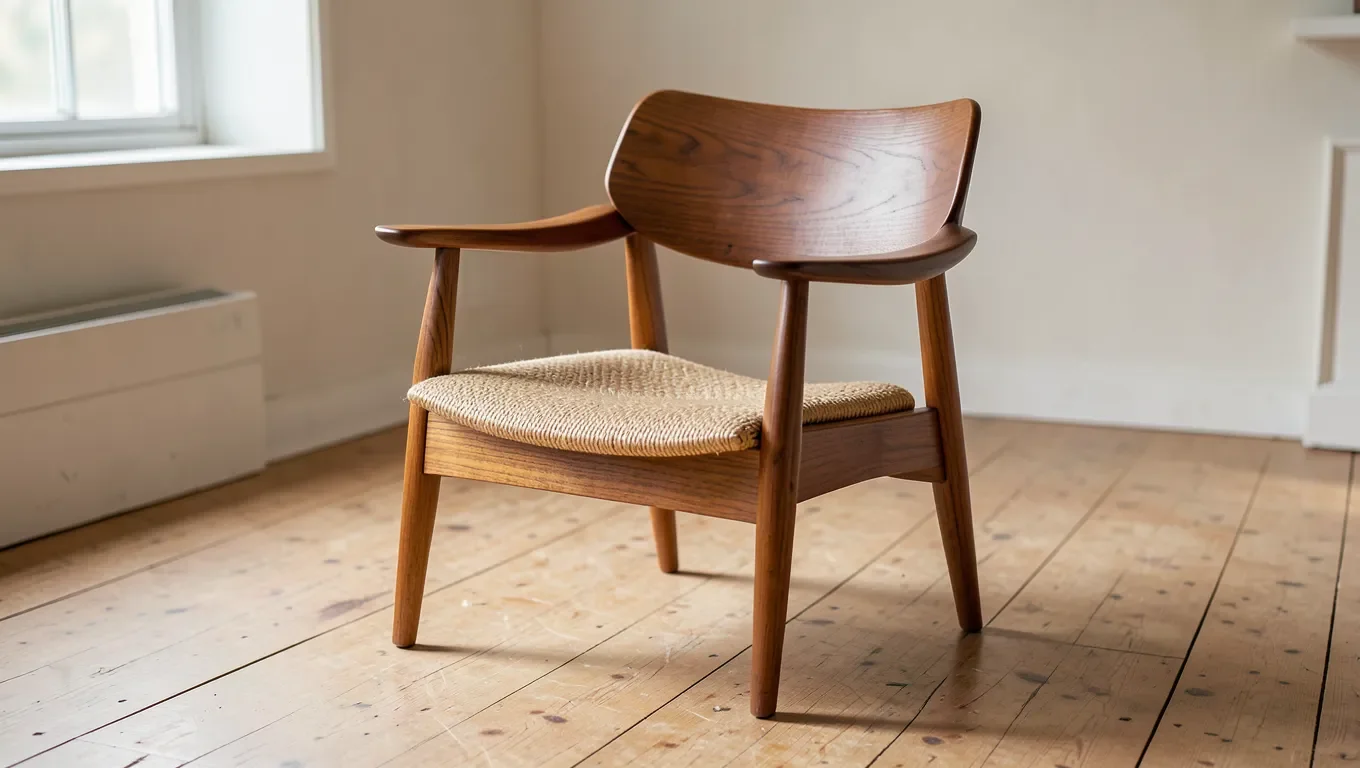
Maloof Low-Back Chair: The Design Sam Maloof Called His Favorite
Of every chair Sam Maloof designed in a six-decade career, the low-back was the one he kept coming back to – and after roughly four decades of refining it, he said, “I finally got it right.” That single detail tells you more about this chair than most articles about it bother to mention.
Most write-ups about the Maloof low-back chair repeat the same generic lines – “sculpted seat,” “mid-century craftsmanship” – without ever naming what actually makes it different from Maloof’s more famous rocker, what it’s really built from, or how the joinery holds together without a single visible fastener. This guide covers all three, using facts sourced directly from the Maloof workshop and museum collection records, not paraphrased marketing copy.
Low-Back vs. Rocker: What Actually Changes
Best Chair-Shaping Spokeshave Pick
Stanley No. 151 Flat Spokeshave – $36.05
Shaping a scooped seat or curved backrest by hand — like the ones on this chair — is exactly what a flat-base spokeshave is built for.
- Best for: Hand-shaping curved seat and backrest surfaces
- Why we picked it: Precision-machined cast iron base, fully adjustable depth of cut
- Main drawback: Takes practice to avoid tear-out on figured grain
Compare more chair-shaping tool options
 Option 1 SE Heavy Wood Rasp Riffler File Set – $15.99
|
 Option 2 Stubai Drawknife (Made in Austria) – $49.95
|
 Option 3 HURRICANE 12-Piece Wood Carving Tool Set – $46.79
|
The low-back and the Maloof rocker share the same sculptural language – the same shop, the same hand-shaping approach, many of the same joints – but they’re built for different postures. The rocker’s tall spindle back and continuous-arm design support a reclined, leaning-back sitting position meant for long stretches of rest or reading. The low-back trades that height for a shorter, more upright backrest that sits below shoulder height, which is why museum collections often catalog it as a “low-back side chair” rather than a lounge piece. It’s meant for a dining table, a desk, or anywhere you need a chair you can pull in close and sit forward in, not lean back in.
Documented examples in American art museum collections list the low-back’s typical footprint at roughly 29¾ x 22¾ x 22⅛ inches (height x width x depth) – noticeably more compact than the rocker, which needs extra depth for its curved runners.
What It’s Actually Made Of
Contrary to what a lot of recycled AI-written content about this chair claims, Maloof didn’t build his low-back in oak or maple. The workshop that continues his work today, Sam Maloof Woodworker, lists two options for new commissions: black walnut and sapele (an African hardwood in the mahogany family with a similar reddish-brown grain, used partly because old-growth walnut has become harder to source in the sizes a sculpted chair needs). Walnut in particular was Maloof’s signature wood throughout his career – it carves cleanly along the grain, doesn’t chip out on tight curves the way oak can, and darkens attractively with age and hand-applied oil finish.
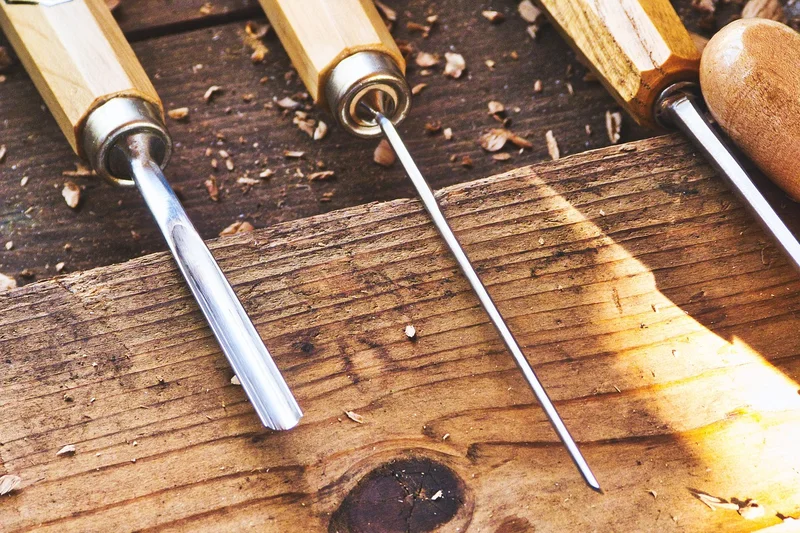
The Maloof Joint: Why There Are No Visible Screws
The detail that actually separates a genuine Maloof-style chair from a generic sculpted chair is the joint where the legs meet the seat – woodworkers call it the Maloof joint. It’s a rabbeted, three-sided housed joint (two-sided on the back legs) cut with a 1/4-inch rabbeting bit so the front and rear legs interlock directly into the seat and lock each other in place. Maloof treated the joint as a sculpture problem as much as an engineering one: the parts are cut oversized and glued up looking almost crude, then the whole leg-to-seat assembly is carved and sanded down together until the transitions read as one continuous, flowing shape. That’s why a real Maloof chair has no visible screws, brackets, or stretchers holding the legs on – the joint geometry and glue do the structural work, and the shaping happens after assembly, not before. For the full step-by-step version of how this joint gets built on a rocker, see our breakdown of Maloof’s woodworking process.
Ergonomics: Why It’s Comfortable Without Upholstery
There’s no foam or padding on an original Maloof low-back – the comfort comes entirely from how the seat and backrest are carved. The seat is scooped and contoured to follow the body rather than left flat, and the backrest curves to meet the lower back at the point where a flat backrest would normally dig in. This is also where the design overlaps with the broader Maloof design philosophy across his whole body of work: organic, hand-fitted shapes standing in for engineered cushioning.
Caring For A Hand-Shaped Wood Chair
- Keep it out of direct sunlight – walnut and sapele both shift color with UV exposure, and uneven fading is hard to reverse.
- Dust with a dry or barely-damp soft cloth; skip spray polishes, which build up in a hand-rubbed oil finish over time.
- Re-oil once or twice a year with a wipe-on oil finish to keep the wood from drying out, especially in low-humidity winters.
- Because there are no mechanical fasteners to re-tighten, a loose-feeling joint on an old chair usually means a glue failure, not a screw backing out – that’s a re-glue job, not a tightening job.
Where To See Or Buy One Today
Original vintage Maloof low-back chairs turn up at auction and in museum collections (the Smithsonian American Art Museum holds one), and prices for authenticated originals run into the tens of thousands of dollars. The Sam Maloof Woodworker workshop, still run by his family and former apprentices, continues to build new low-back chairs to order in walnut or sapele – that’s the legitimate source if you want an authentic piece rather than a reproduction. If you’re set on building your own version rather than buying, start with the tools below and see our guide to finding real Maloof chair templates before you cut anything.
Frequently Asked Questions
What Is The Maloof Low Back Chair?
It’s a dining-height chair designed by American woodworker Sam Maloof, distinguished from his taller rocker by a shorter backrest meant for sitting upright rather than reclining. Maloof called it his personal favorite among all the chairs he designed, after refining the shape over roughly four decades.
How Is The Maloof Low Back Chair Made?
The legs lock into the seat using the Maloof joint, a rabbeted housed joint that’s assembled oversized and then hand-carved down afterward so the leg and seat read as one continuous shape. There are no visible screws or brackets – the joint geometry and glue carry the structural load.
What Materials Are Used In The Maloof Low Back Chair?
The workshop that still builds them today offers black walnut and sapele, both chosen for how cleanly they carve along tight curves and how they darken attractively under a hand-rubbed oil finish. Historic examples are not built from oak or maple, despite that claim appearing in some older articles online.
Where Can I Buy A Maloof Low Back Chair?
Authenticated vintage originals occasionally surface at auction houses and design galleries. For a new, authentic piece, the Sam Maloof Woodworker workshop – run by his family and former apprentices – still builds low-back chairs to order. Reproductions and Maloof-inspired versions also appear from independent furniture makers, but they are not originals and should be described as such.
Bottom Line
The Maloof low-back chair earns its reputation from decisions most competitors’ write-ups skip past: real wood species, a specific hidden joint, and four decades of Maloof’s own refinement. If you want to see the design principles behind it in more depth, read our guide to Sam Maloof’s chair design philosophy next.
Sponsored / affiliate links. As an Amazon Associate I earn from qualifying purchases. I may earn additional commission from eligible campaigns.