Melamine Cabinets vs Wood: Where Each One Holds Up and Fails
Wood cabinets last longer and can be refinished; melamine cabinets cost less and resist everyday scratches and stains. The catch most guides skip is that melamine is only as tough as its edges. The surface shrugs off spills, but the board underneath does not, and once water gets past a peeled edge the damage cannot be sanded out or repaired invisibly.
This guide compares the two on the points that actually decide the purchase: what each is made of, where each one fails, how repairs and refinishing work, what the price gap looks like, and how to inspect cabinets in a showroom. The short version is that the right answer depends on the room. Melamine is a sensible pick for a laundry room, garage or closet, and a much riskier one around a sink.
Melamine vs Wood Cabinets at a Glance
Best Melamine Edge Repair Pick
 |
Edge Supply White Melamine Edge Banding, 3/4 in x 25 ft: $15.99 On melamine cabinets the exposed edges are where damage starts, so a roll of matching pre-glued banding is the most useful repair item to own.
|
Use this table as a first filter, then read the sections below for the reasoning behind each row.
| Point of comparison | Melamine | Wood |
|---|---|---|
| Surface | Resin-coated paper fused to a board core | Real wood, veneer or painted wood |
| Scratch and stain resistance | Strong on the face | Depends on finish; wood can dent |
| Water at the surface | Wipes clean | Finish protects it until worn |
| Water at edges and cut-outs | Weak point: core swells | Better, and often repairable |
| Refinishing | Not practical | Sand and refinish, or repaint |
| Chip or gouge repair | Filler pencil or putty, visible | Filler and touch-up, blends better |
| Design range | Solid colors, printed grain | True grain, stains, carved profiles |
| Typical price position | Low end | Mid to high end (solid wood highest) |
What Melamine Cabinets Really Are
Melamine cabinets are usually made from particleboard or MDF that has been faced with decorative paper and melamine resin under heat and pressure. Industry sources call this thermally fused laminate, or TFL. The factory cuts the panels, then covers the cut sides with a thin edge band of PVC or melamine, glued on with hot-melt adhesive.
That construction explains almost every strength and weakness. The face is hard and sealed. The core is made of wood particles or fibers, which act like a sponge if they are exposed. Everything depends on the edge band staying stuck.
Melamine vs thermofoil vs laminate
These three terms get mixed up in showrooms, and they are different products. Melamine is a resin-coated paper fused to the panel. Thermofoil is a vinyl film vacuum-pressed over an MDF door, which can wrap around routed profiles but can peel if heat gets behind it, for example above an oven or beside a dishwasher. High-pressure laminate is a thicker plastic sheet glued to a core and is generally tougher than melamine. If a quote just says laminate, ask which one it is and what the core is. For the material-versus-material angle, see our difference between MDF and melamine guide.
Where Melamine Cabinets Fail (And How to Slow It Down)
A common belief is that melamine is waterproof. It is more accurate to say the melamine surface is water resistant, while the board underneath is not. Our is melamine waterproof page goes deeper, but the practical pattern is the same everywhere.
- Sink bases. A slow drip or steam soaks the bottom panel and the cut-outs around the plumbing. Swelling is permanent.
- Edge banding near heat. Steam and heat from a dishwasher vent, kettle or oven can soften the adhesive, so the band lifts at the corners first.
- Exposed cut edges. Holes drilled for shelf pins, cut-outs for pipes and any cut made on site expose bare core unless they are sealed.
- Heavy shelves. Particleboard and MDF sag under weight over time. A rule of thumb many builders use is to keep 3/4 inch shelves to roughly 24 inches between supports, and add a center support beyond that.
Prevention is cheap. Wipe up standing water right away, run the range hood or a fan, seal any cut you make yourself, and check the under-sink panel a couple of times a year. If a band is peeling, re-glue it early with an iron and pre-glued banding before water reaches the core.
Where Wood Cabinets Fail
Wood has its own problems, and they are different in kind. Solid wood swells and shrinks with seasonal humidity, mostly across the width of a board. A wide door panel can move a noticeable fraction of an inch over a year, which is why quality doors use a floating panel inside a frame. In a dry winter you may see a hairline gap at a joint, and in a humid summer a door may feel snug.
Finish wear is the other issue. Around the sink and stove, the clear coat or paint wears through first at the handles and lower door edges, and bare wood then darkens. The good news is that this is repairable. A worn wood door can be sanded and refinished, or painted, and our guide on cabinet refacing vs painting cost is a useful next step.
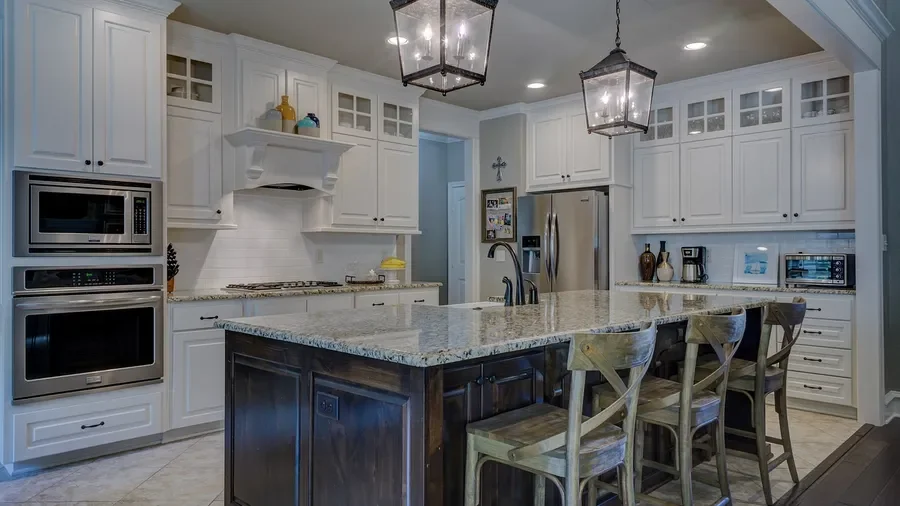
One more myth worth correcting: wood cabinets on a quote does not always mean solid wood. Many wood cabinets are veneer over plywood or MDF, or use solid wood doors on plywood boxes. Ask what the doors, the boxes and the shelves are each made of. Our MDF vs plywood for kitchen cabinets guide explains why cabinet shops mix materials.
Cost: What You Are Really Paying For
Melamine sits at the budget end of the market, and solid wood at the top, with veneered and painted wood cabinets in between. Exact prices swing with brand, box construction, hardware and region, so treat any single per-foot number you read online with caution and get at least two written quotes on the same layout.
What matters more than the sticker price is the cost over time. A melamine set that is kept dry can serve for many years. A set that gets one sink leak may need a base cabinet replaced, since the panel cannot be dried and restored. Wood is more expensive up front, but a worn door can be refinished several times, which spreads the cost across decades.
Air Quality: What the Formaldehyde Label Means
Particleboard and MDF are bonded with resins that can release formaldehyde. In the United States, EPA rules under TSCA Title VI set emission limits of 0.09 parts per million for particleboard and 0.11 ppm for MDF, and hardwood plywood has a lower limit of 0.05 ppm. Regulated panels sold now must be certified compliant. So the useful question is not whether a cabinet uses composite panels, but whether it carries the TSCA Title VI compliant marking. If you are building a nursery or are sensitive to fumes, ask about ultra-low-emitting or no-added-formaldehyde panels, which are available from some makers. Also see our is melamine wood safe page.
The Middle Path: Mix the Materials
You do not have to pick one material for the whole kitchen. A common approach is to use wood or plywood for the sink base and the cabinets nearest water, and melamine for the dry upper cabinets, pantry and garage storage. Melamine also works well inside wood cabinets as shelving and drawer boxes, where its smooth face keeps things clean. If you are weighing painted particleboard as a cheaper wood look, read can you paint particle board cabinets first.
Checklist: Inspecting Cabinets Before You Buy
- Run a fingernail along the edge band. It should be flush and tight, with no lifting at the corners.
- Open the sink base. The bottom panel should be sealed or coated, and the plumbing cut-outs should not be raw and fuzzy.
- Ask what the core is. Particleboard, MDF or plywood makes a big difference to sag and water tolerance.
- Check the box back and shelf span. Thin backs and long unsupported shelves are the first things to bow.
- Look at the hinge bores. Screws held in particleboard edges loosen sooner than in plywood or solid wood.
- Ask for the formaldehyde documentation. Reputable makers can show TSCA Title VI compliance.
Frequently Asked Questions
Are melamine cabinets better than wood?
Neither is better everywhere. Melamine costs less and resists scratches and stains on the surface, while wood lasts longer and can be refinished. Melamine suits dry rooms, and wood is the safer choice near sinks.
Can melamine cabinets get wet?
The surface can be wiped with a damp cloth, but the core is not water resistant. Standing water or steam that reaches a peeled edge or a cut-out can make the board swell, and the swelling is permanent.
Can you paint or refinish melamine cabinets?
You can paint them with a bonding primer, but the result is usually less durable than paint on real wood, and you cannot sand and restain melamine the way you can wood. Thorough cleaning, light scuffing and a bonding primer are the usual steps.
How long do melamine cabinets last?
There is no single number. In a dry room with intact edges they can last many years, while one leak under a sink can end the life of a base cabinet. Moisture control matters more than age.
Is melamine or thermofoil better?
They are different products. Melamine is a hard fused surface with visible edge banding, while thermofoil is a vinyl film that can wrap profiles but can peel with heat. Keep thermofoil away from ovens and dishwasher vents.
Final Thoughts
Choose melamine when the priority is a low price, a clean easy-care surface and a dry location. Choose wood, or a wood and plywood build, for kitchens and baths where water, heat and long-term refinishing matter. Whichever you pick, inspect the edges and the sink base first, seal every cut you make, and keep a roll of matching edge banding on hand.
Sponsored / affiliate links. As an Amazon Associate I earn from qualifying purchases. I may earn additional commission from eligible campaigns.