Must-Have Table Saw Accessories For Safety
Getting started with a table saw can feel a bit overwhelming. There are so many things to think about, and knowing which tools will actually help you the most is tough. Many beginners wonder about the best way to improve their cuts and stay safe.
This guide is here to make it simple. We’ll walk through the essential items that will make your woodworking projects easier and more successful, step by step. Get ready to boost your table saw skills.
Essential Table Saw Accessories For Your Workshop
Table saws are powerful tools, and having the right accessories can change how you work with them. These additions aren’t just for making things look fancy; they are key to improving accuracy, efficiency, and, most importantly, safety. For anyone wanting to get more from their table saw, from hobbyists to those doing more serious projects, understanding these accessories is vital.
This section looks at the core items that every table saw owner should consider adding to their setup.
Improving Cut Accuracy With Guides
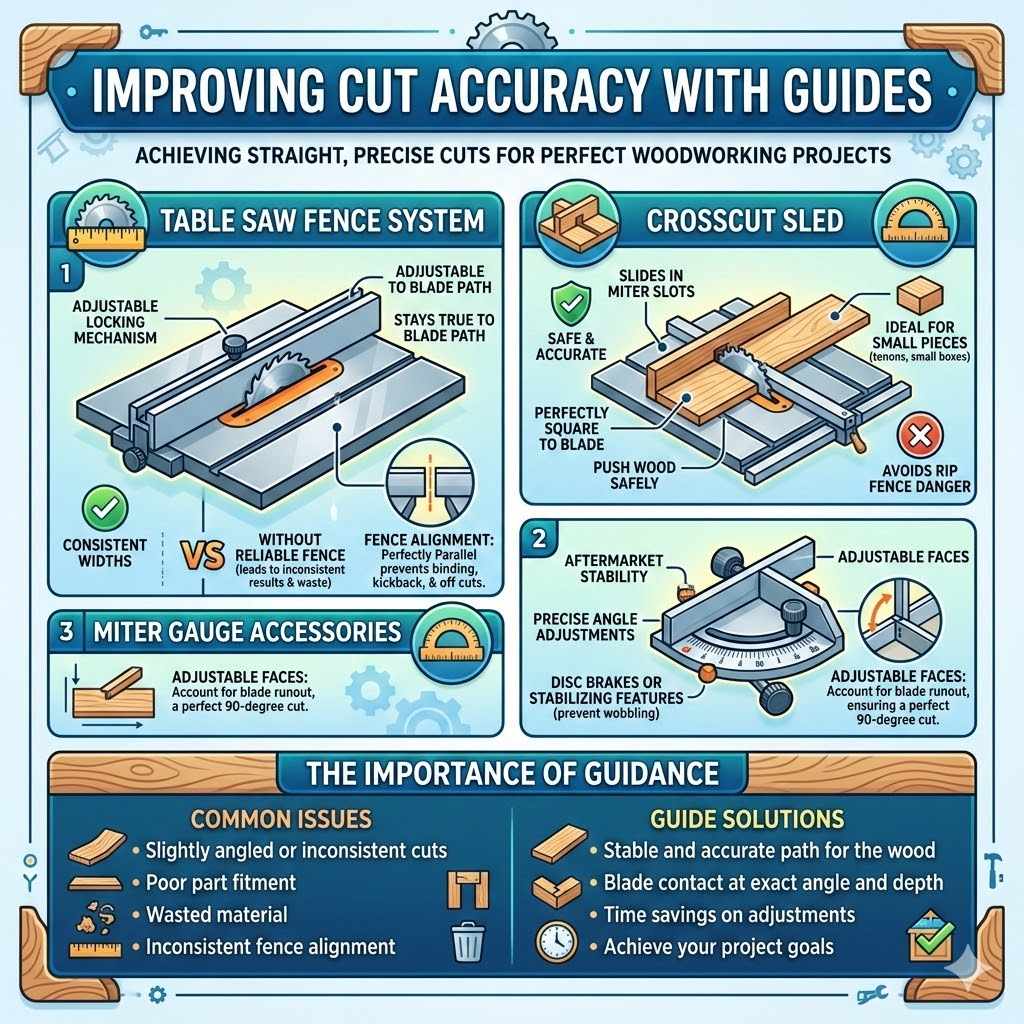
Achieving straight, precise cuts is the goal for any woodworking project. Without proper guidance, table saws can sometimes produce slightly angled or inconsistent cuts, especially on longer boards or when making repeated passes. This can lead to parts that don’t fit together well, requiring extra time for adjustments or even leading to wasted material.
The right accessories provide a stable and accurate path for the wood, ensuring that the blade makes contact at the exact angle and depth needed.
One of the most common issues for beginners is inconsistent fence alignment. A fence that isn’t perfectly parallel to the blade can cause binding, kickback, or cuts that are slightly off. This is where a good quality fence system or aftermarket alignment tools come into play.
They help ensure that the distance between the fence and the blade remains constant throughout the entire length of the cut.
- Table Saw Fence SystemA good table saw fence is a game-changer. It’s a guiding rail that runs parallel to the saw blade. You set the distance between the fence and the blade to determine the width of your cut.
A well-designed fence system is adjustable, locks securely in place, and stays true to the blade’s path. This means every piece of wood you cut to a specific width will be exactly that width. Without a reliable fence, achieving consistent results is very difficult, leading to frustration and wasted wood.
- Crosscut SledA crosscut sled is a jig that attaches to your table saw. It has a fence that slides in the saw’s miter slots, ensuring it’s perfectly square to the blade. You then place your wood against the sled’s fence and push it through the blade.
This is ideal for making precise crosscuts on smaller pieces of wood, like tenons or small boxes. It’s much safer and more accurate than using the rip fence for crosscuts on narrow pieces, which can be dangerous due to kickback risks.
- Miter Gauge AccessoriesMost table saws come with a basic miter gauge. This tool fits into the miter slots and is used for angled crosscuts. However, many aftermarket miter gauges offer better stability and more precise angle adjustments.
Adding disc brakes or other stabilizing features to your miter gauge can prevent wobbling, which is crucial for accuracy. Some advanced miter gauges even have adjustable faces to account for slight blade runout, ensuring a perfect 90-degree cut every time.
Safety First Must-Have Accessories for Table Saws
Safety is paramount when working with any power tool, and table saws are no exception. Their powerful blades can cause serious injury if proper precautions are not taken. Investing in safety accessories is not an option; it’s a necessity for anyone who values their well-being.
These items are designed to prevent common accidents like kickback, blade contact, and dust inhalation, creating a safer working environment and allowing you to focus on your woodworking.
Kickback is one of the most dangerous occurrences on a table saw. It happens when the wood is suddenly thrown back towards the operator. This can occur due to a variety of reasons, including blade binding, improper setup, or feeding the wood unevenly.
Accessories that help control the wood’s path and prevent it from getting pinched are vital in mitigating this risk.
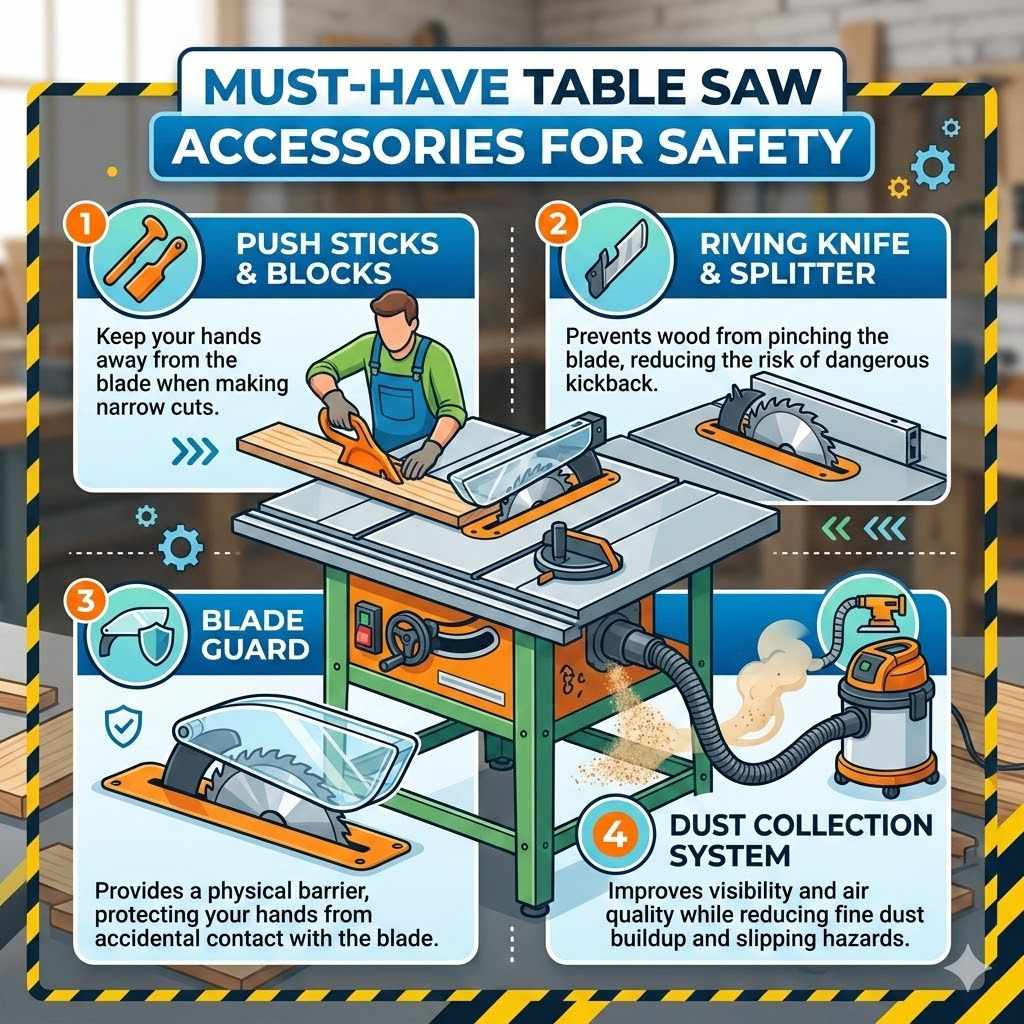
- Blade Guard and Dust Collection PortMost modern table saws come with a blade guard. This is a protective cover that fits over the blade. It prevents accidental contact with the spinning blade and often incorporates a dust collection port.
Dust collection is incredibly important for health and shop cleanliness. Fine wood dust can cause respiratory problems over time, and reducing airborne dust makes the workspace safer and more pleasant. A good dust collection system connects to the guard and the saw’s base, capturing most of the sawdust as it’s created.
- Riving Knife or SplitterA riving knife is a thin piece of metal that sits behind the saw blade. It’s similar to a very thin blade but doesn’t cut. Its main purpose is to prevent the kerf (the slot the blade makes) from closing and pinching the back of the blade as the wood is cut.
This is a critical component for preventing kickback, especially when making dado cuts or cutting smaller pieces. Splitters are similar but are usually mounted to the blade guard assembly.
- Push Sticks and Push BlocksThese are simple but essential safety tools. A push stick is a long, thin piece of wood or plastic with a notch at the end. It’s used to push short pieces of wood past the blade, keeping your hands away from the danger zone.
Push blocks are similar but have a larger base and often a handle, providing more control and downward pressure, especially when working with thinner stock or when you need to keep the wood firmly against the fence or the table. They are indispensable for maintaining safe hand positioning.
- Blade BrakeA blade brake is a device that rapidly stops the saw blade once the motor is turned off. This significantly reduces the time the blade continues to spin. A spinning blade can cause severe injury if accidentally touched.
With a blade brake, the downtime is minimal, meaning you can safely remove your workpiece or make adjustments much sooner after finishing a cut. This is a highly recommended safety feature, especially in busy workshops.
Enhancing Versatility with Specialized Attachments
While the basic table saw is great for ripping and crosscutting, specialized attachments can vastly expand its capabilities. These accessories allow you to perform tasks that might otherwise require multiple different tools or complex setups. They transform your table saw from a single-purpose machine into a versatile woodworking station.
Consider the common need for dado cuts, which are grooves cut into wood to join pieces together. Making these without the right setup can be challenging and inaccurate. Specialized attachments address these needs, making advanced joinery accessible and efficient.
- Dado Stack SetA dado stack set is a collection of blades and chippers that mount onto your table saw arbor, replacing the standard blade. This setup allows you to cut wide grooves or channels (dados) in wood in a single pass. These are essential for making strong joints like those used in cabinets, bookshelves, and drawers.
The width of the dado is determined by the combination of blades and chippers you use. It’s important to ensure your table saw is rated for dado use and that you have the appropriate guard to accommodate the wider cut.
- Router Table Insert and FenceMany table saw cabinets can be adapted to house a router. By installing a router table insert into the table saw top and mounting a router underneath, you create a powerful router table. This is fantastic for tasks like creating decorative edges, rabbets, and profiles on your workpieces.
The table saw’s own fence can often be repurposed as a router fence, or you can add a dedicated router fence for more precise control. This essentially gives you two major tools in one footprint.
- Jig for Tapering and Angled CutsWhile a miter gauge can handle simple angles, making consistent tapers (cuts that gradually decrease in width) or more complex angled cuts requires specialized jigs. A taper jig, for example, allows you to set a specific angle and feed the wood past the blade to create identical angled sides for legs or other furniture parts. These jigs ensure uniformity across multiple pieces, saving time and improving the professional look of your projects.
Dust Management and Shop Air Quality
Working with wood creates a lot of dust. This isn’t just messy; it’s a health hazard and can make your workshop an unpleasant place to be. Effective dust management is crucial for a safe and clean working environment.
Table saws, in particular, generate a significant amount of fine sawdust that can quickly fill the air and settle on surfaces.
A clean shop not only improves air quality but also helps maintain your tools. Fine dust can get into motor bearings and mechanisms, reducing their lifespan. Proper dust collection systems capture sawdust at the source, minimizing its spread and making cleanup much easier.
- Shop Vacuum and Dust Collection SystemA powerful shop vacuum or a dedicated dust collection system is essential. These systems connect to your table saw’s dust port (often found on the blade guard and the saw’s base). They use a strong airflow to pull sawdust away from the blade and into a collection bag or bin.
For serious woodworkers, a dedicated dust collector with a fine-particle filter is ideal. These machines are designed to handle larger volumes of dust and provide cleaner air compared to standard shop vacs, though a good vac is a great starting point.
- Dust Collection Bag or Bin Filter EfficiencyThe filter in your dust collection system matters. Many shop vacuums have basic filters that don’t capture the finest wood particles. These microscopic particles are the most harmful to your lungs.
Look for collection bags or filters rated for fine dust (e.g., MERV ratings or HEPA filters for vacuums). A two-stage dust collection system, which first collects larger debris and then filters finer particles, is very effective at maintaining cleaner air. Regularly cleaning or replacing your filters is key to efficient dust removal.
- Air Filtration UnitEven with a good dust collection system connected to your saw, some fine dust can still become airborne. An air filtration unit placed in your workshop can help clean the air of any remaining particles. These units are essentially air purifiers designed for woodworking environments.
They continuously draw in air, filter it, and release cleaner air back into the space. Running one during and after woodworking sessions significantly improves the air quality, making your shop a healthier place to spend time.
Table Saw Accessories Comparison
Choosing the right accessories depends on your needs, budget, and the types of projects you tackle. Here’s a quick look at how some key accessories stack up against each other for common tasks.
| Accessory | Primary Use | Ease of Use | Impact on Safety | Impact on Accuracy | Versatility |
|---|---|---|---|---|---|
| Fence System | Rip cuts, width control | High | High (prevents binding) | Very High | Moderate |
| Crosscut Sled | Crosscuts, small pieces | High | Very High (prevents kickback) | Very High | Moderate |
| Riving Knife | Prevents blade pinch | High (once installed) | Very High (kickback prevention) | Moderate | Low |
| Push Sticks/Blocks | Feeding small stock | High | Very High (hand safety) | Low | High |
| Dado Stack | Cutting grooves | Moderate | Moderate (requires guard) | High | High |
Real-Life Application Examples
Imagine a woodworker named Sarah who wants to build a bookshelf. She needs to cut many pieces of wood to exact widths for the shelves and the vertical supports. Her table saw has a basic fence, but she notices that some shelves are slightly wider than others.
By upgrading to a high-quality table saw fence system, Sarah can now set her desired shelf width with confidence. The fence locks down firmly and stays parallel to the blade. She achieves perfectly uniform shelves in half the time, and the bookshelf pieces fit together without gaps.
This saves her hours of sanding and adjustment, and the final product looks much more professional.
Another woodworker, Mark, is building a small wooden box. He needs to make several precise crosscuts on thin pieces of plywood. Using just the table saw’s miter gauge, he struggles to get perfectly square cuts, and he’s worried about the wood shifting.
He decides to build or purchase a crosscut sled.
With the crosscut sled, Mark places his plywood pieces against the sled’s fence, which is guaranteed to be square to the blade. He pushes the sled smoothly through the cut. The result is clean, perfectly square edges on all his box parts.
This makes assembling the box much easier, and the finished corners are tight and precise, a testament to the accuracy the sled provides.

Frequently Asked Questions
Question: What is the single most important safety accessory for a table saw?
Answer: While many accessories enhance safety, a riving knife or splitter is arguably the most critical. It directly prevents the wood from pinching the back of the blade, a primary cause of dangerous kickback. Always ensure your saw has one installed and operational.
Question: Can I use a regular shop vacuum for dust collection?
Answer: Yes, a good quality shop vacuum can be a starting point for dust collection. However, for optimal air quality, especially with fine wood dust, a dedicated dust collector with better filtration or an air filtration unit is highly recommended for long-term health and workshop cleanliness.
Question: How often should I check my table saw fence alignment?
Answer: It’s a good practice to check your fence alignment regularly, especially if you move your saw or if it experiences any bumps. A quick check before each major project or at the start of a work session can prevent inaccurate cuts and potential safety issues.
Question: Are aftermarket push sticks better than homemade ones?
Answer: While you can make effective push sticks from scrap wood, aftermarket ones are often made from durable plastics with better grip and ergonomic designs. They can offer more consistent performance and may include features like notches for better stock control, but a well-made homemade one is perfectly adequate for many tasks.
Question: Do I need a dado blade set if I only do occasional projects?
Answer: If your projects involve joinery that requires grooves or dadoes, a dado stack set is essential for efficiency and accuracy. For very occasional, simple projects that don’t need these types of cuts, you might be able to get by with other methods, but for anything beyond basic cuts, a dado set is a worthwhile investment.
Summary
Equipping your table saw with the right accessories transforms it into a safer, more accurate, and versatile tool. From ensuring precise cuts with fences and sleds to preventing accidents with safety guards and push sticks, these items are vital. Effective dust collection further enhances your workspace.
These essential additions make your woodworking projects more enjoyable and professional.