Ash Wood Knife Handle: 1,320 Janka, Grip and Water Limits
Ash makes a solid knife handle for outdoor and workshop knives, but a weak one for wet kitchen use unless you seal it. White ash rates 1,320 lbf on the Janka scale and has excellent shock resistance, yet its open pores and perishable heartwood take on water. This guide covers strength numbers, grip, moisture limits, and a head-to-head table against maple, walnut, and hickory.
Is Ash Wood Good for Knife Handles?
Best Handle Sealing Oil Pick | |
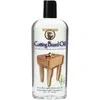 |
Howard Products Food Grade Mineral Oil, 12 oz A colorless, odorless food-grade mineral oil that soaks into open-pored woods like ash and slows water uptake.
|
As an Amazon Associate we earn from qualifying purchases. | |
It depends on the knife. The Wood Database calls white ash “one of the most commonly used hardwoods for tool handles” because of its toughness and impact resistance. That reputation comes from hammers, axes, and shovels, tools that take hard, repeated shocks.
A knife handle lives a different life. It rarely takes a sledgehammer-style blow, but it is constantly gripped with wet, greasy, or sweaty hands. So the property that made ash famous for tool handles is not the one that decides whether it is a good knife handle. Moisture behavior and finish matter more.
A common myth worth correcting: “Ash is shock resistant, so it must be the best handle wood for any knife.” Shock resistance helps if you baton or pry with a camp knife. For a kitchen knife that is washed daily, the same wood can swell, darken, and loosen around the tang unless it is sealed. Ash earns its place on some knives, not all of them.
For the wider tool-handle picture, including striking tools, see our comparison of the most durable woods for handles. This page stays focused on knives.
Ash Wood Properties That Matter for a Knife Handle
Hardness and strength
According to the Wood Database, white ash has a Janka hardness of 1,320 lbf, a modulus of rupture of 15,000 lbf/in2, a modulus of elasticity of 1,740,000 lbf/in2, and a crushing strength of 7,410 lbf/in2. Its average dried weight is 42 lb/ft3 (675 kg/m3). In plain terms, it is hard enough to resist dings from a pocket or a drawer, and strong enough that a full-size handle will not snap under normal cutting force.
If you want the density and hardness numbers in more depth, our page on ash wood density, weight and Janka hardness covers them, and whether ash is a hardwood explains where it sits among hardwoods.
Grain, pores and grip
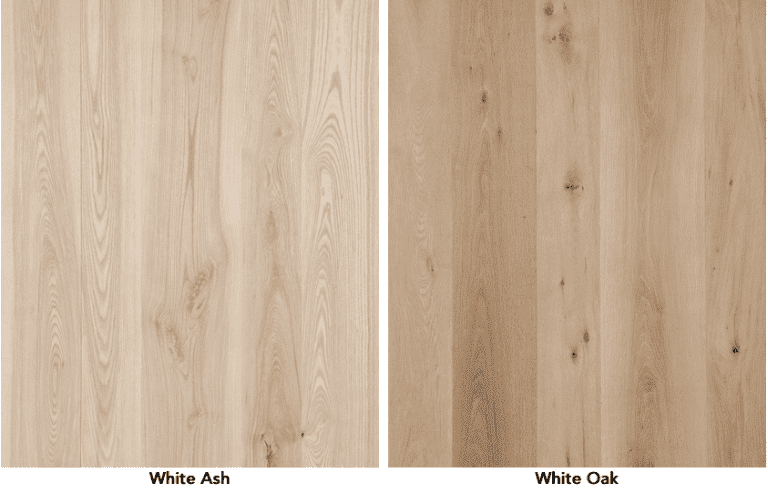
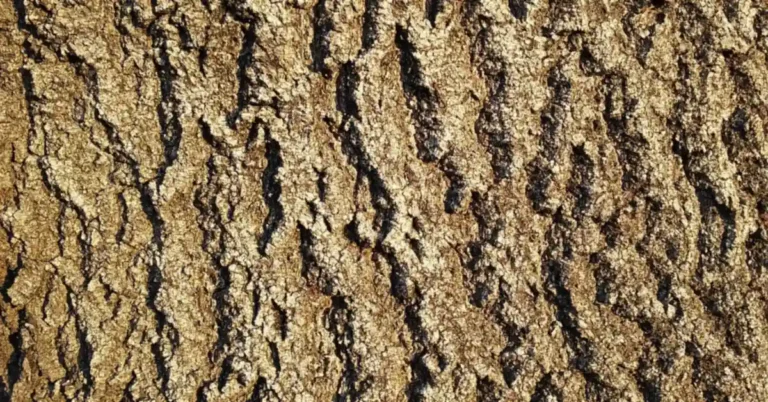
White ash has a medium to coarse texture with grain that is “almost always straight and regular,” and it is ring-porous, with large earlywood pores 2 to 4 rows wide. That open, ridged surface gives a bit of natural tooth under the hand, which many people find grippy compared with tight-pored woods. It also means the surface can feel slightly textured unless you sand it very fine and fill or oil the pores.
Straight grain matters for a handle because the fibers run along the length of the grip. A handle blank cut with grain running crosswise or with a runout is far more likely to crack near a pin hole or at the narrow neck by the bolster.
Rot resistance and moisture
This is ash’s real weakness on a knife. The Wood Database rates the heartwood of white ash as perishable, or only slightly durable, and not resistant to insect attack. Black walnut, by comparison, is rated very durable in terms of decay resistance. Ash also moves more than you might expect: shrinkage is 4.9% radial, 7.8% tangential, and 13.3% volumetric from green to dry.
For a knife, that translates into a simple rule. Keep ash handles dry, oiled, and out of standing water. A handle that repeatedly soaks and dries will shrink and swell around pins and epoxy joints, and a sealed one will not.
Ash vs Maple vs Walnut vs Hickory for Knife Handles
Here are the numbers side by side. All values are from the Wood Database pages for each species (white ash, hard maple, black walnut, shagbark hickory). The last column is our own calculation: modulus of rupture divided by dried weight, a rough strength-for-the-weight score.
| Wood | Janka (lbf) | Rupture (lbf/in2) | Weight (lb/ft3) | Strength per lb (calc.) |
|---|---|---|---|---|
| White ash | 1,320 | 15,000 | 42 | 357 |
| Hard maple | 1,450 | 15,800 | 44 | 359 |
| Black walnut | 1,010 | 14,600 | 38 | 384 |
| Shagbark hickory | 1,880 | 20,200 | 50 | 404 |
What the table shows that most guides miss: ash is almost identical to hard maple on strength for its weight (357 versus 359), and it is lighter than maple. Black walnut edges ahead on that measure and is far more decay resistant, even though it is the softest of the four. Hickory is in a different league for strength, but at 50 lb/ft3 it makes a noticeably heavier handle.
So on paper, ash is not weaker than maple; the gap is moisture behavior and finish. If you are choosing between ash and hickory for a striking tool, our guide to whether ash is harder than hickory and the ash vs hickory axe handle comparison go deeper.
Where an Ash Knife Handle Makes Sense
- Bushcraft and camp knives: a tough, shock-tolerant handle that you can re-oil in the field and easily reshape if it wears.
- Workshop and utility knives: a light, comfortable grip that stays dry most of the time.
- Hobby and first-time knife making: straight grain, good workability, and it “glues, stains, and finishes well” per the Wood Database.
- Not ideal: daily-use kitchen knives that get washed and left wet, or knives kept in humid, damp storage.
Ash also works well as an inexpensive practice wood. It responds well to hand and machine tools, so shaping a handle with rasps and files is forgiving for a beginner.
How to Seal and Care for an Ash Knife Handle
- Sand through the grits: finish at 220 grit or finer so the pores are clean but still give some grip.
- Soak it with food-safe mineral oil: flood the handle, let it absorb for 15 to 20 minutes, and wipe off the excess.
- Repeat until it stops drinking: the first coats soak in quickly; stop when the surface stays wet after 20 minutes.
- Hand wash and dry immediately: never soak the knife and avoid the dishwasher, which is hard on any wood handle.
- Re-oil when it looks dry: pale, dull wood means it is time to oil again.
The same care routine used on spoons and boards works here. Our guide to caring for wood spoons so they never crack or warp covers the oiling steps in more detail.
Safety note: the Wood Database reports that ash dust has been linked to skin irritation and a decrease in lung function. Wear a dust mask and work with dust collection or outdoors when sanding or shaping ash handles.
Making a Handle From Ash: Practical Tips
- Pick blanks with straight grain running the length of the handle, with no runout or knots near the tang or pin holes.
- Let the wood acclimate to the room before shaping so it does not shrink around a finished handle.
- Seal the wood, including the end grain near the bolster, before final assembly so water cannot wick in there.
- Round every edge: a handle with sharp corners is uncomfortable long before it fails.
These are general shop practices for wooden handles rather than test results from our own shop, so treat them as a starting point and adjust for your knife and tang design.
Frequently Asked Questions
Is ash wood good for kitchen knife handles?
It can work if it is well sealed, but it is not the best choice. Ash heartwood is rated perishable and its large pores absorb water, so kitchen knives that are washed often need regular oiling. Black walnut is rated very durable against decay and is often a safer pick for kitchen use.
Is ash strong enough for a knife handle?
Yes. White ash has a Janka hardness of 1,320 lbf and a modulus of rupture of 15,000 lbf/in2, which is comparable to hard maple on strength for its weight. A properly built handle will not fail under normal cutting force.
Is ash wood heavy for a knife handle?
No. White ash averages 42 lb/ft3, lighter than hard maple at 44 and shagbark hickory at 50, and only slightly heavier than black walnut at 38. Most of a knife’s balance comes from the blade and tang design rather than the handle wood.
How do I keep an ash knife handle from cracking?
Use straight-grained blanks, seal the wood with food-safe mineral oil including the end grain near the bolster, and keep it out of standing water. Avoid the dishwasher and dry the handle right after washing to limit swelling and shrinking.
Does ash wood get slippery when wet?
Ash has a medium to coarse, ring-porous texture, which tends to keep some tooth when lightly oiled. A thick film finish can smooth it out and reduce grip, so a penetrating oil is usually the better choice for a working knife.
Final Thoughts
Ash is a tough, light, good-looking handle wood with numbers that match hard maple, and it is a natural fit for camp and workshop knives. Its weak spot is water, so seal it well and skip it for knives that live wet. For a broader look at the species, read about the advantages of ash wood, or compare it with other handle woods in our handle wood guide.
Sponsored / affiliate links. As an Amazon Associate I earn from qualifying purchases. I may earn additional commission from eligible campaigns.