Oak Grain vs Pine Grain: What’s the Difference?
If you’re new to woodworking or choosing materials for a project, you might wonder about Oak Grain vs Pine Grain: What’s the Difference? It can seem confusing at first because both are popular woods. This guide will make it super simple. We’ll walk through everything step-by-step so you can easily tell them apart.
Get ready to learn how to spot the unique looks of each wood!
Understanding Oak Grain vs Pine Grain What’s The Difference
Oak and pine are two of the most common woods used in homes and furniture. Many people find it tricky to tell them apart just by looking at the wood grain. This is because each type of wood has its own special pattern.
Knowing the difference helps you pick the right wood for your needs. It also lets you appreciate the natural beauty of each kind of timber.
What Makes Wood Grain Unique
Wood grain refers to the pattern created by the wood’s fibers and growth rings. These patterns appear as lines and swirls on the surface of the wood. The way the tree grew, the type of tree, and how the wood was cut all affect the grain pattern.
Different species of trees have very distinct grain characteristics. These characteristics make them easy to identify once you know what to look for.
For example, some woods have very tight, straight grain. Others have a more open, wavy pattern. The color of the wood also plays a role, but the grain is often the most telling feature.
Learning about these differences is key for anyone working with wood.
Comparing The Visual Characteristics
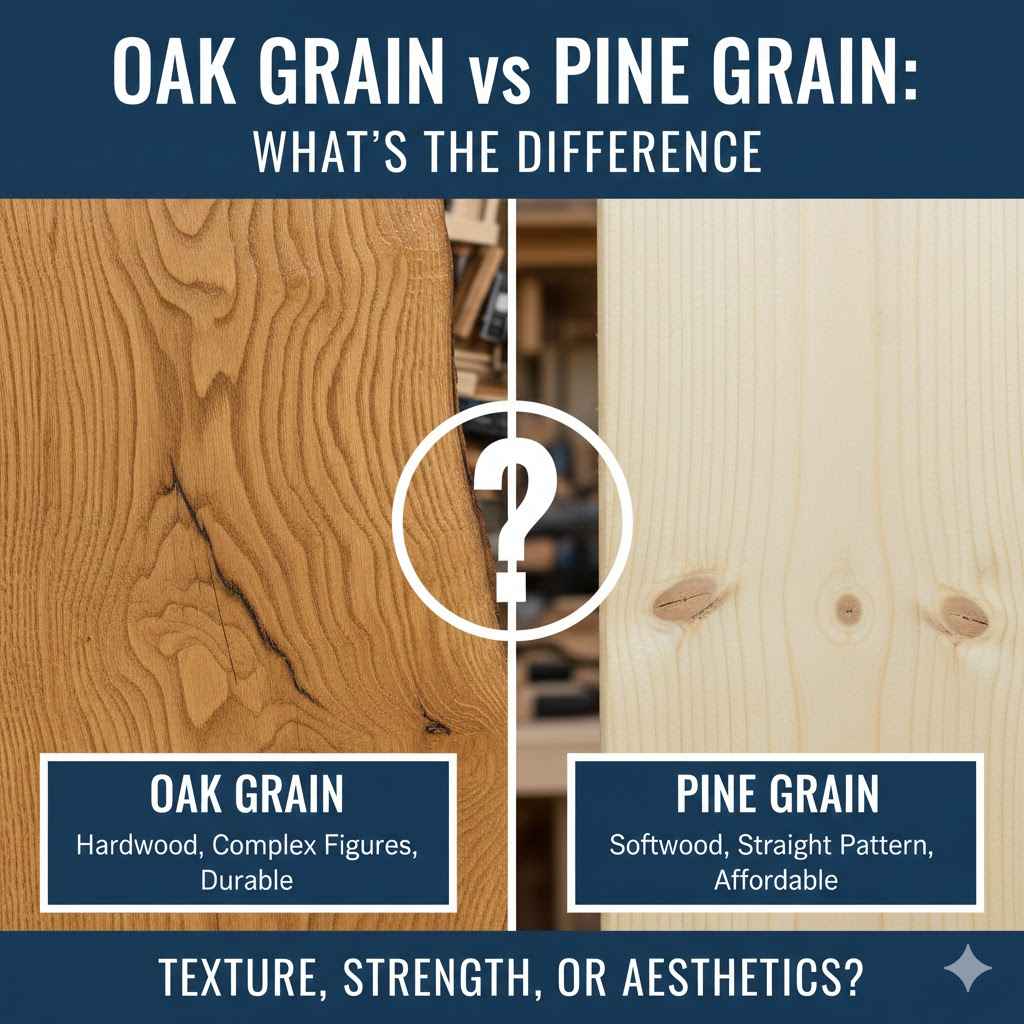
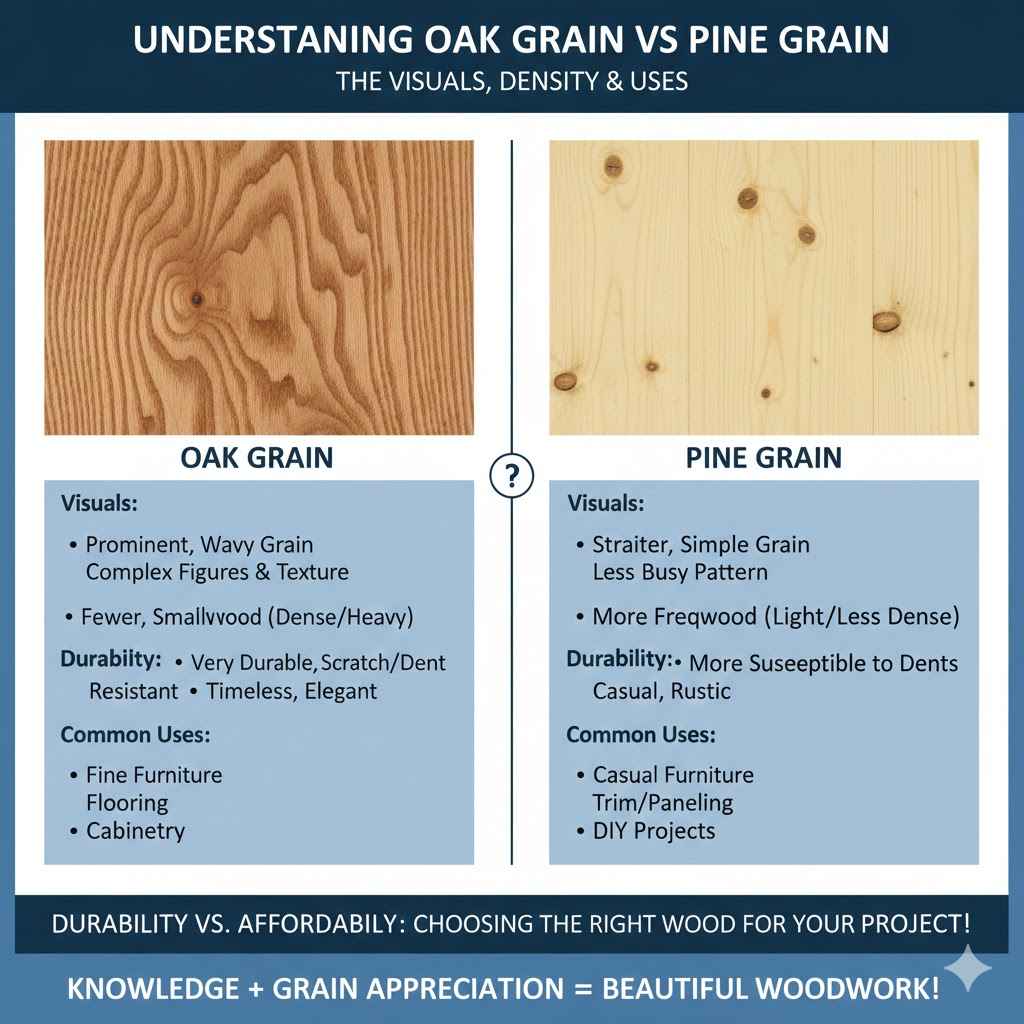
When you look closely at wood, the grain is what stands out. Oak typically shows a prominent, often wavy, grain pattern. You might see a lot of texture.
Pine, on the other hand, usually has a straighter, simpler grain. It looks less busy. The color can also be a hint, with oak often being a bit darker or having a reddish tint compared to the paler yellow of pine.
The knots in the wood are another visual cue. Pine often has more knots, and they can be quite noticeable, sometimes appearing as dark circles. Oak knots are usually smaller and less frequent.
These visual cues help woodworkers and decorators choose the best material for their projects.
The Role Of Wood Density And Hardness
The difference between oak and pine isn’t just about looks; it’s also about how strong and dense they are. Oak is a hardwood. This means it’s denser and tougher.
It stands up well to wear and tear, making it great for floors and furniture that get a lot of use. Pine is a softwood. It’s lighter and easier to cut and shape, which is why it’s often used for framing in houses or for less heavily used furniture.
This difference in density affects how the wood feels and how it behaves. Hardwoods like oak are harder to scratch or dent. Softwoods like pine can be dented more easily.
This is an important factor when deciding which wood to use for a specific purpose.
Durability And Longevity In Different Woods
When you want something to last a long time, durability is key. Oak, being a hardwood, is very durable. It resists damage from everyday use.
This makes oak furniture and flooring excellent choices for high-traffic areas. It can last for many decades, even centuries, with proper care. Its strong structure means it’s less likely to warp or break over time.
Pine, while not as hard as oak, can still be quite durable, especially if it’s a denser variety of pine. However, it is more susceptible to dents and scratches. For projects where extreme durability isn’t the main concern, or where a rustic look is desired, pine is a good choice.
Its lifespan can still be very long, depending on the environment and use.
Common Uses For Oak And Pine
Oak’s strength and beauty make it a popular choice for many things. You’ll see it in fine furniture, kitchen cabinets, and hardwood flooring. Its distinctive grain pattern adds character and elegance to any space.
Many people choose oak for its timeless appeal and how well it holds up over many years. It’s a wood that is often passed down through generations.
Pine is also used for furniture, especially for more casual or country-style pieces. It’s also a go-to wood for trim, paneling, and shelving. Because it’s easier to work with, it’s a favorite for DIY projects.
Pine is also used for doors and window frames. Its lighter color can make rooms feel brighter and more open.
Oak Grain vs Pine Grain What’s The Difference Explained
This section breaks down the key differences between oak and pine grain patterns. It covers how to identify each type by looking at the pores, rays, and overall texture. Understanding these specific grain features will help you become an expert at telling oak and pine apart in no time.
Open Grain vs Closed Grain Characteristics
One of the most significant differences in wood grain is whether it’s considered “open” or “closed” grain. This refers to the size of the pores, which are the small channels within the wood that once carried water and nutrients. Oak is known for its open grain.
This means it has larger pores that are easily visible to the naked eye. These pores create a more textured surface. When you run your hand over oak, you can often feel this texture.
Pine, in contrast, is generally considered a closed-grain wood. Its pores are much smaller and harder to see without magnification. This results in a smoother surface compared to oak.
The closed-grain nature of pine also makes it less likely to absorb stains unevenly, which can be an advantage in some finishing applications. However, some pine varieties can have larger pores, making the distinction not always absolute.
Pore Structure And Its Impact
The structure of the pores in oak is what gives it its characteristic grain. Oak is a diffuse-porous hardwood. This means its pores are generally evenly distributed throughout the wood.
However, oak also has visible growth rings, and the pores can appear more prominent within these rings. This creates a distinct, often dramatic, grain pattern. The pores in oak are also typically larger than those found in pine.
Pine, being a softwood, has a different pore structure. It is typically considered a hard pine, which means it has distinct growth rings. The pores in pine are generally smaller and more uniform.
You won’t see the same dramatic texture that oak offers. This less pronounced pore structure contributes to pine’s smoother appearance. The arrangement of these pores significantly influences how the wood looks and how it takes finishes.
Growth Rings And Their Appearance
Growth rings are a fundamental part of wood grain. They are formed each year as the tree grows, with lighter wood (earlywood) and darker wood (latewood). In oak, the growth rings are usually quite distinct and can create a wavy or cathedral-like pattern.
The earlywood in oak tends to be porous, while the latewood is denser. This difference in density and pore size makes the rings stand out, contributing to oak’s visually rich grain.
Pine also has growth rings, but they tend to be straighter and more uniform. The contrast between the earlywood and latewood in pine is generally less pronounced than in oak. This leads to a less dramatic and more consistent grain pattern.
You’ll often see straighter lines in pine wood. While you can see the growth rings, they are usually less pronounced and don’t create the same textural feel as oak.
Medullary Rays Visual Cues
Medullary rays are another important feature that helps distinguish oak from pine. These are thin, ribbon-like structures that run from the center of the tree outwards, perpendicular to the growth rings. In many oak species, especially quarter-sawn oak, these rays are very prominent and appear as shiny flecks or streaks on the wood’s surface.
They add a unique visual appeal and can significantly change the look of the grain. These rays are a hallmark of oak’s character.
Pine typically has very small or no visible medullary rays. If they are present, they are usually so fine that they are not noticeable to the untrained eye. The absence of prominent medullary rays in pine contributes to its simpler and more uniform grain pattern.
When you see those distinctive flecks or shiny lines, you’re likely looking at oak, not pine. This is a key identifier for experienced woodworkers.
Texture And Feel Of The Wood Surface
The texture of oak and pine feels quite different. Because of its larger pores and prominent grain, oak often feels rougher or more textured to the touch, even when sanded smooth. The open-grain structure means there are slight depressions and ridges that you can feel.
This texture adds a tactile dimension to oak’s natural beauty. It’s a wood that you can both see and feel.
Pine, with its closed grain and straighter patterns, generally feels smoother. Even with visible grain lines, the surface is less likely to have the pronounced texture of oak. This smoothness makes pine a comfortable wood to handle and a good choice when a very sleek finish is desired.
The difference in texture is noticeable and contributes to the overall impression of each wood type.
Key Differences In Oak Grain vs Pine Grain What’s The Difference
This section provides a direct comparison of the main distinguishing features. It uses a table for clarity. This will help you quickly reference the critical points when identifying oak versus pine.
You’ll see a side-by-side look at their pores, rays, and grain appearance.
Comparison Table
| Feature | Oak | Pine |
|---|---|---|
| Grain Type | Open grain (large pores) | Closed grain (small pores) |
| Pore Visibility | Easily visible, prominent | Small, difficult to see |
| Medullary Rays | Often prominent, visible flecks/streaks | Very small or absent, not visible |
| Growth Rings | Distinct, can be wavy or cathedral-like | Straighter, more uniform |
| Texture | More textured, slightly rough feel | Smoother feel |
| Color | Light to dark brown, sometimes reddish | Pale yellow to light brown |
| Hardness | Hardwood | Softwood |
This table summarizes the most important ways to tell oak and pine apart. By checking these features, you can confidently identify which wood you are looking at. The differences are clear and consistent across most types of oak and pine.
Examples In Real Life
Imagine you’re in a furniture store. You see a sturdy dining table with a rich, textured surface. The grain has a beautiful, flowing pattern with noticeable flecks.
This is likely oak. It looks solid and feels substantial. Now, imagine you’re looking at some simple bookshelves that are lightweight and easy to move.
The wood has a lighter color and a straighter grain pattern. You might also notice a few knots. This is probably pine.
These everyday examples show how the wood’s characteristics match its use.
Another example is flooring. If you see hardwood floors that have a lot of character, with visible pores and ray flecks, it’s probably oak. Oak floors are known for their durability and classic look.
If you see a wood floor that looks a bit simpler, perhaps with straighter lines and fewer noticeable textures, it might be pine. Both can be beautiful, but they offer different aesthetic qualities. The choice often depends on the desired style and the amount of wear the floor will experience.
How Wood Cuts Affect Grain Appearance
The way wood is cut from the log can greatly change how the grain looks. Plain-sawn wood, the most common cut, shows the widest range of grain patterns. For oak, this can result in those dramatic cathedral patterns.
For pine, it leads to more straightforward, straight grain. This is often the most cost-effective cut.
Quarter-sawn wood is cut perpendicular to the growth rings. This process makes the growth rings appear more or less at a 90-degree angle to the face of the board. For oak, quarter-sawn wood really highlights the medullary rays, creating a beautiful, flecked appearance.
This cut is prized for its unique look and stability. For pine, quarter-sawn wood will show straighter grain lines, but without the prominent rays that oak displays.
Rift-sawn wood is cut at a slight angle, somewhere between plain-sawn and quarter-sawn. This results in a very straight, uniform grain pattern with minimal ray fleck. It’s known for its stability and clean look.
If you see a wood with extremely straight, parallel lines and no noticeable rays, it could be rift-sawn oak or pine. However, the absence of prominent rays still points towards pine if the pores are not visible.
The Importance Of Wood Species Within Oak And Pine
It’s important to remember that “oak” and “pine” are broad categories. There are many different species within each. For example, red oak and white oak are common types of oak, and they have slightly different grain characteristics and colors.
White oak tends to have more prominent rays and a generally more open pore structure than red oak. Red oak often has a reddish hue.
Similarly, there are various types of pine, such as Southern yellow pine and Eastern white pine. Southern yellow pine is a denser, harder type of pine with a more pronounced grain. Eastern white pine is a softer, lighter wood with a finer grain.
These variations mean that not all oak looks exactly the same, and not all pine looks exactly the same. However, the fundamental differences in pore structure and ray presence still hold true for the most part.
Benefits Of Knowing Oak Grain vs Pine Grain What’s The Difference
Understanding the distinction between oak and pine grain isn’t just for experts. It offers practical advantages for everyone. This knowledge helps you make informed decisions, save money, and appreciate the natural beauty of wood.
It empowers you as a consumer and a creator.
Making Informed Purchasing Decisions
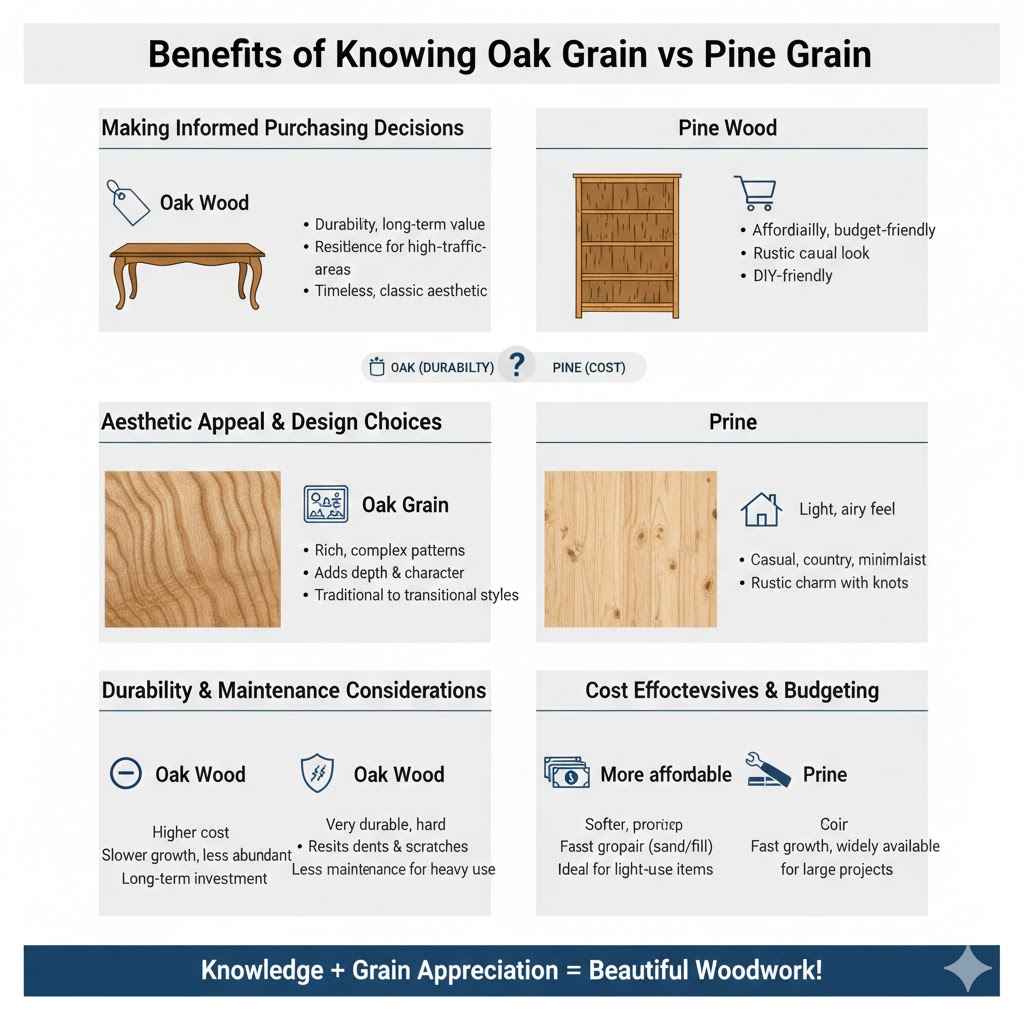
When you’re buying furniture, flooring, or lumber for a project, knowing the difference is crucial. If you want the look and durability of oak, you need to be able to spot it. If you’re on a budget and a similar aesthetic can be achieved with pine, you can make a smarter choice.
Mistaking pine for oak could lead to paying more for a material that might not be as durable as you expect. Conversely, choosing oak when pine would suffice might mean overspending unnecessarily.
For instance, if you’re looking for a rustic, farmhouse-style dining table, a pine table might be perfect. It’s often more affordable and easier to find with the knots and imperfections that add to the charm. If you’re building a high-traffic floor in your home, you’ll want the resilience of oak.
Being able to identify the grain helps you get exactly what you’re paying for and ensures the material fits your needs and budget.
Aesthetic Appeal And Design Choices
The grain pattern of a wood significantly impacts its aesthetic appeal. Oak’s pronounced grain and potential for prominent medullary rays give it a rich, classic, and sometimes formal look. It can add depth and character to a room.
The texture of oak can also complement various design styles, from traditional to transitional.
Pine’s straighter, simpler grain often lends itself to a more casual, country, or minimalist aesthetic. It can make a space feel lighter and more airy. The knots in pine can contribute to a rustic or country feel.
Understanding these differences allows you to choose wood that perfectly matches your desired interior design style. It’s about selecting the right material to achieve the look and feel you want in your home.
Durability And Maintenance Considerations
As mentioned, oak is a hardwood, making it very durable. This means it can withstand more wear and tear, dents, and scratches. For high-use items like kitchen cabinets, tabletops, and flooring, oak is an excellent choice because it holds up well over time and requires less frequent repair or replacement.
Its robust nature contributes to its longevity.
Pine, being a softwood, is more prone to damage. While this means it might require more careful handling and maintenance, it also makes it easier to repair. Minor dents or scratches in pine can often be sanded out or filled.
For furniture that isn’t subjected to heavy use, or for projects where ease of modification is important, pine is a practical option. The choice between oak and pine often comes down to balancing the need for extreme durability with other factors like cost and ease of workability.
Cost Effectiveness And Budgeting
Generally, pine is more affordable than oak. This price difference is due to several factors, including the growth rate of pine trees and the abundance of pine forests compared to mature oak forests. For projects with a limited budget, pine is often the more accessible choice.
It allows for achieving a beautiful wooden look without the higher cost associated with hardwoods like oak.
For example, if you’re building a simple set of shelves for a garage or storage area, pine is a practical and budget-friendly option. The strength of pine is sufficient for most shelving needs, and the cost savings are significant. If you’re undertaking a large flooring project, the price difference between oak and pine can amount to thousands of dollars.
Knowing the difference helps you allocate your budget effectively, ensuring you get the best value for your money without compromising too much on your desired outcome.
Project Suitability And Application
The suitability of oak versus pine depends heavily on the intended application. For structural elements in construction, such as framing, pine is overwhelmingly the preferred choice due to its lighter weight and ease of use. Its cost-effectiveness also makes it ideal for large-scale construction needs.
When it comes to fine furniture, cabinetry, and flooring, oak is often chosen for its superior durability, elegant appearance, and timeless appeal. Its ability to resist wear and tear makes it a wise investment for pieces that are meant to last for generations. However, pine can also be used for furniture, especially for rustic, country, or children’s furniture, where its softer nature and lower cost are advantages.
The key is to match the wood’s properties to the demands of the project.
Frequently Asked Questions
Question: How can I easily tell if wood is oak or pine by looking at it
Answer: Look for large, visible pores and potential flecks or streaks called medullary rays for oak. Pine usually has smaller, less visible pores and straighter grain lines with fewer or no visible rays.
Question: Is oak or pine better for flooring
Answer: Oak is generally better for flooring due to its hardness and durability, resisting dents and scratches well. Pine is softer and can dent more easily, though it can be used for flooring if a less formal look is desired.
Question: Which wood is stronger oak or pine
Answer: Oak is significantly stronger and harder than pine. Oak is classified as a hardwood, while pine is a softwood. This means oak can bear more weight and withstand more impact.
Question: Can I stain pine to look like oak
Answer: It’s challenging to make pine look exactly like oak because their grain patterns are so different. While you can use stains to achieve a similar color, the underlying texture and pore structure will still be distinct.
Question: Which wood is more expensive oak or pine
Answer: Oak is generally more expensive than pine. This is because oak is a hardwood with a slower growth rate and higher demand for its durability and appearance, while pine is a softwood that grows faster and is more abundant.
Summary
Oak and pine grains differ significantly in pore size, ray presence, and overall texture. Oak features prominent pores and rays, creating a rich, textured look, while pine has smaller pores and straighter grain, offering a smoother appearance. Understanding these distinctions helps you choose the right wood for durability, style, and budget.