Prevent Cedar Apple Rust: Proven Control Tips
Dealing with cedar apple rust can feel tricky, especially when you’re just starting to grow apples. You see those orange spots and know it’s a problem, but figuring out the best way to stop it can be confusing. Don’t worry, though!
This guide is here to make things simple. We’ll break down exactly how to Prevent Cedar Apple Rust: Proven Control Tips so your apple trees can stay healthy and give you a great harvest. We’ll walk through easy steps that anyone can follow.
Why Prevent Cedar Apple Rust
Preventing cedar apple rust is important for anyone who loves growing apples or enjoys the beauty of ornamental crabapples. This fungal disease, caused by the fungus Gymnosporangium juniperi-virginianae, has a peculiar life cycle that involves two very different hosts: apple trees (or crabapples) and junipers (including cedars). Without proper management, this rust can significantly weaken your apple trees, reduce fruit yield and quality, and even lead to leaf drop, making them more susceptible to other issues.
Understanding the disease’s unique needs helps us create effective strategies to keep it at bay.
The Disease Lifecycle Explained
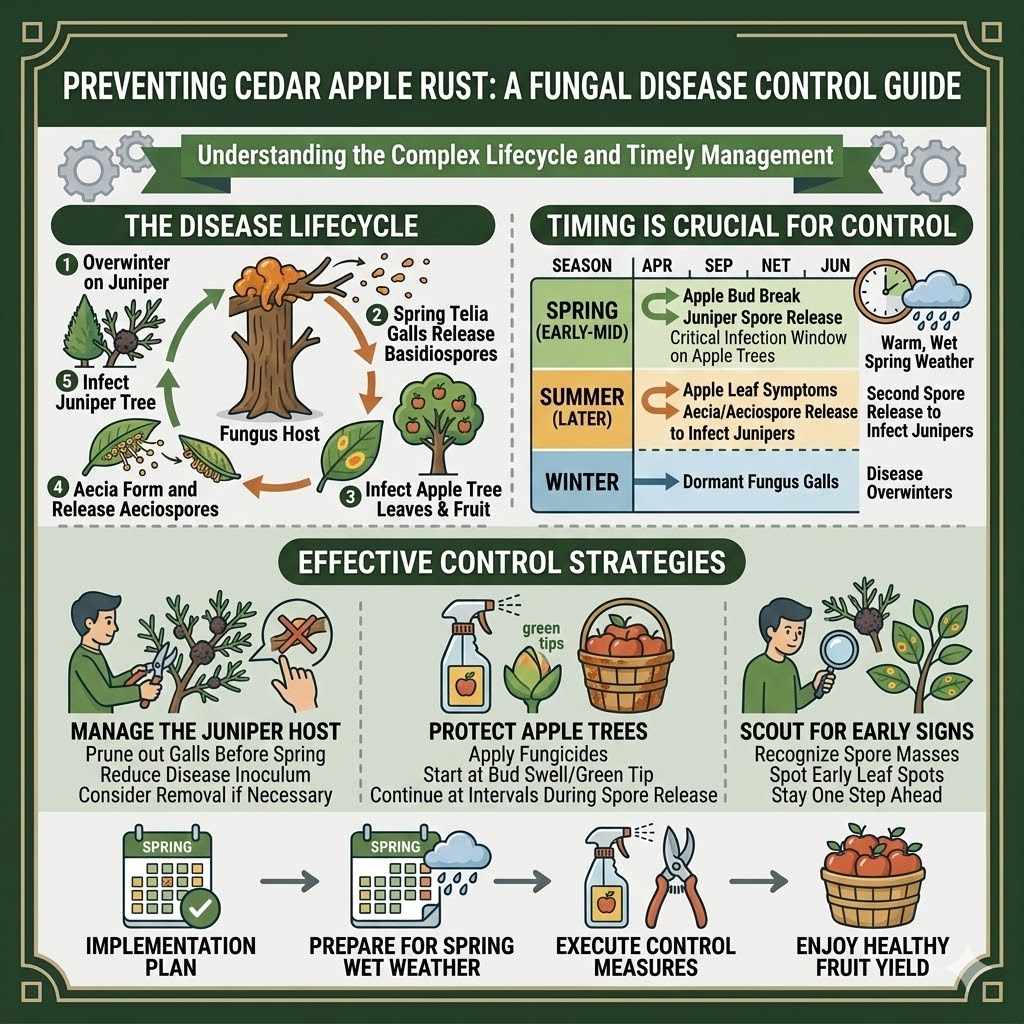
The cedar apple rust disease is fascinatingly complex, making its prevention a bit challenging but entirely manageable once understood. It all starts with the fungus overwintering on juniper or cedar trees. When spring arrives, especially after periods of rain and mild temperatures, these infected junipers release brightly colored, jelly-like spore masses called telia.
These are the first type of spores.
These telial horns, when mature and wet, release airborne spores called basidiospores. These basidiospores are then carried by the wind to nearby apple or crabapple trees. This is the critical infection stage for your apple trees.
The spores land on the leaves, twigs, or fruit of the apple tree and, if conditions are right (warm and moist), they germinate and begin to infect the plant tissues. This is where the visible symptoms start to appear.
On the apple trees, the fungus grows within the leaf, developing small, yellow spots on the upper surface. As the infection progresses, these spots enlarge and often turn orange. Later in the summer, on the underside of these leaves, small, tube-like structures called aecia will form.
These aecia produce another type of spore, aeciospores. These aeciospores are the ones that will eventually be blown back by the wind to infect juniper or cedar trees, thus completing the cycle. This second set of spores is crucial for the disease to persist year after year.
The timing of these spore releases is key to prevention. Basidiospores are released from junipers primarily in early to mid-spring, coinciding with apple bud break and leaf emergence. This is the window when apple trees are most vulnerable.
Aeciospores are released from apple trees later in the summer. Understanding this two-host, two-spore cycle is the first step in developing a robust control plan.
Why Timing is Crucial for Control
The effectiveness of controlling cedar apple rust hinges directly on precise timing. Because the fungus requires both junipers and apple trees to complete its life cycle, understanding when each stage of the disease is active allows for targeted interventions. The disease begins its annual cycle on junipers in the spring, when they produce those distinctive orange, jelly-like spore masses.
These masses release windborne spores that travel to nearby apple trees.
The infection of apple trees typically occurs during warm, wet spring weather, often when the apple trees are just beginning to leaf out and blossom. This is a critical period. If you wait until you see the obvious yellow and orange spots on your apple leaves, the infection has already taken hold and is much harder to manage.
The fungal pathogen has already invaded the plant’s tissues, and efforts at that point are largely focused on managing spread rather than eliminating the initial infection.
Therefore, preventative measures must be implemented before or during this spring infection window. This might involve applying fungicides to apple trees just as their buds begin to swell or show green tips, and continuing applications at recommended intervals as long as the weather remains conducive to spore release and infection. Similarly, managing the juniper host can also be timed.
Removing or pruning infected juniper branches before the spring spore release can reduce the disease’s inoculum. Spotting the early signs on both host plants is essential for proactive management.
By recognizing the specific times of spore release and infection, you can employ control strategies that intercept the disease at its weakest points. This proactive approach is far more successful than trying to cure an established infection. It’s about being one step ahead of the fungus to protect your apple trees from its damaging effects, ensuring a healthier tree and a better yield.
Strategies to Prevent Cedar Apple Rust
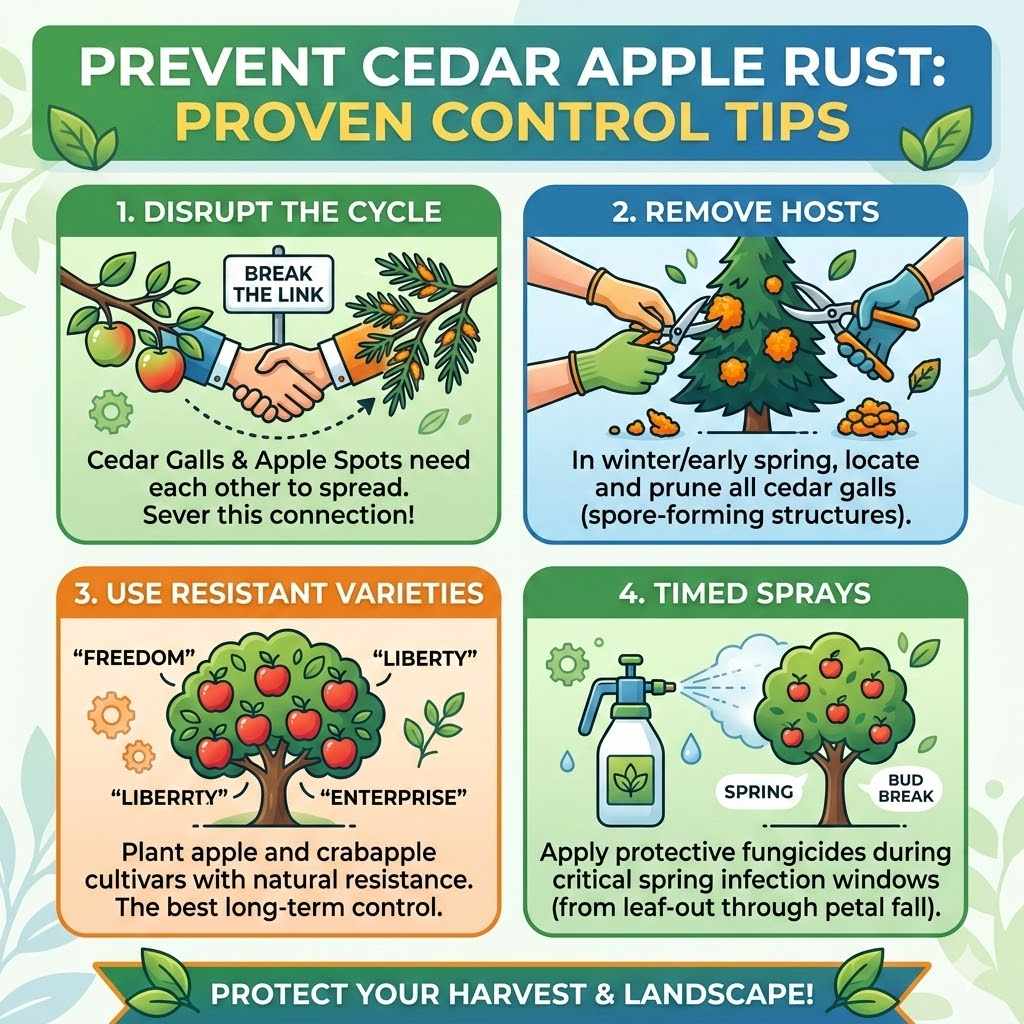
Successfully managing cedar apple rust involves a multi-pronged approach that combines sanitation, genetic selection, and chemical or biological controls, all timed strategically. The goal is to break the disease’s life cycle by reducing the amount of infectious spores available or by making the apple trees less susceptible during the infection periods. Implementing these strategies diligently can significantly improve the health of your apple trees and the quality of your fruit.
Cultural Control Methods
Cultural controls are the foundation of any good disease management plan for cedar apple rust. They involve practices that make the environment less favorable for the disease or that physically remove sources of infection. These methods are often the first line of defense and are vital for long-term success.
Sanitation and Cleanup
One of the most effective cultural controls is diligent sanitation. This means removing all fallen leaves and fruit from under infected apple trees and crabapples at the end of the growing season. The cedar apple rust fungus overwinters in these infected plant parts that fall to the ground.
By removing them, you eliminate a primary source of inoculum for the following spring’s infection. Similarly, removing any visibly infected twigs or branches from your apple trees can help reduce the overall disease load. Be sure to dispose of this debris properly, ideally by burning it or placing it in a sealed bag to be sent to a landfill, rather than composting it where the fungus might persist.
Proper Pruning and Spacing
Good air circulation is key to drying out foliage quickly, which makes it harder for fungal spores to germinate and infect. Prune your apple trees to maintain an open canopy. This involves removing any crossing branches, water sprouts, and dead wood.
Proper spacing between trees also allows for better airflow and sunlight penetration. If your apple trees are planted too close together, especially near junipers, the risk of disease spread is much higher. Adequate spacing creates an environment where leaves dry out faster after rain or dew, reducing the time the fungus has to establish itself.
Strategic Planting Locations
The most impactful cultural control for cedar apple rust is to avoid planting apple trees and junipers in close proximity. If possible, plant apple trees at least 100-200 feet away from any juniper or cedar trees. This distance significantly reduces the chance that windborne spores from infected junipers will reach your apple trees.
If you have both on your property, try to place them on opposite sides or in different areas. If you have ornamental junipers, consider replacing them with resistant varieties or alternative plants that do not host the rust. This principle of host separation is fundamental to preventing the disease from establishing.
Resistant Apple Varieties
Choosing apple varieties that are naturally resistant to cedar apple rust can be one of the most effective and least labor-intensive methods of prevention. While no variety is completely immune to all diseases, many have a high degree of resistance to rust, meaning they are far less likely to become infected or show severe symptoms. This resistance is a genetic trait that has been bred into these apple cultivars.
When selecting new apple trees, it is highly recommended to consult local agricultural extension services or reputable nurseries. They can provide lists of apple varieties that perform well in your specific region and are known for their resistance to common diseases like cedar apple rust. This research can save you a lot of trouble down the line.
For instance, some widely planted varieties like ‘Liberty’, ‘Gold Rush’, and ‘Enterprise’ are known for their excellent rust resistance. Others, like ‘McIntosh’ or ‘Golden Delicious’, are much more susceptible.
Using resistant varieties doesn’t mean you can completely ignore other management practices, especially if you have susceptible junipers nearby. However, it greatly reduces the need for frequent fungicide applications and minimizes the damage to the tree and its fruit. It’s a proactive step that ensures your apple-growing efforts are more fruitful and less frustrating.
Over time, relying on resistant varieties can lead to healthier trees and a more sustainable approach to apple cultivation.
Fungicide Applications
When cultural controls and resistant varieties are not enough, or when you have highly susceptible apple varieties in an area with junipers, fungicide applications become a necessary part of preventing cedar apple rust. The timing of these applications is absolutely critical. They must be applied before the fungus has a chance to infect the apple tree.
The infection period for cedar apple rust typically begins in early spring when temperatures are mild and there is sufficient moisture, often coinciding with apple bud swell and bud break. This is when the junipers release their primary spores. Therefore, the first fungicide application should ideally occur when apple buds show the first signs of green tip, or at bud break.
Subsequent applications are usually needed every 7 to 14 days, depending on the specific fungicide used and the weather conditions.
Common fungicides used for rust control include those containing active ingredients like myclobutanil, propiconazole, or sulfur. It is essential to read and follow the label instructions on any fungicide product carefully. The label will specify the correct dosage, application frequency, pre-harvest interval (the time between the last application and when you can safely harvest the fruit), and any necessary precautions.
It’s also important to rotate fungicides with different modes of action to prevent the development of resistant fungal strains. Using a protective fungicide rather than a curative one is key; these sprays form a barrier on the plant surface that prevents spores from germinating and entering the plant tissue.
A common mistake is waiting until you see the tell-tale orange spots on the leaves. By that time, the infection is already established, and fungicides will have very little effect. Therefore, a proactive spraying schedule based on weather forecasts and apple tree development is vital for effective rust prevention.
Consulting with local agricultural extension agents can provide specific recommendations for your area and the most effective products available.
Biological Control Options
While chemical fungicides are often the most effective method for preventing widespread cedar apple rust, there are also biological control options that can play a role, especially in organic gardening or as a supplement to other methods. These often involve introducing or encouraging beneficial microorganisms that can compete with or suppress the rust fungus.
One common biological approach involves using beneficial bacteria or fungi that are antagonistic to the cedar apple rust pathogen. These beneficial microbes can be applied to the plant surfaces. They work by competing for nutrients and space, or by producing compounds that inhibit the growth of the rust fungus.
Products containing Bacillus subtilis or certain strains of Trichoderma fungi are examples of such biological agents. These are often applied as sprays and work best when applied preventatively, much like chemical fungicides, as they create a protective barrier.
Another aspect of biological control can be improving the overall health and vigor of the apple tree. A strong, healthy tree is naturally more resilient to disease. This can involve ensuring proper soil health, adequate watering, and appropriate fertilization.
Encouraging a diverse soil microbiome can also support plant health and potentially deter disease pathogens. While biological controls may not offer the same level of immediate protection as synthetic fungicides, they are an important component of an integrated pest management (IPM) strategy, especially for those seeking more environmentally friendly solutions.
It’s important to note that the effectiveness of biological controls can be more variable than chemical fungicides and may depend heavily on environmental conditions and the specific strains used. They are often best used in conjunction with other control methods and require consistent application. Research continues to explore and refine biological solutions for plant diseases like cedar apple rust.
Managing the Juniper Host
Since cedar apple rust relies on both apple trees and junipers (or cedars) to complete its life cycle, managing the juniper host is a critical component of a comprehensive prevention strategy. If junipers are present in the vicinity of your apple trees, they can serve as the source of the initial fungal spores that infect your apple crop. Therefore, targeting these junipers can significantly reduce the disease pressure on your apple trees.
Identifying Infected Junipers
The first step in managing the juniper host is being able to identify which junipers are infected with the cedar apple rust fungus. The most obvious sign of infection on junipers are the distinctive “cedar apples.” These are roughly 1/4 to 2 inches in diameter, woody galls that form on the juniper branches. In the fall and winter, they appear as small, brown, knob-like growths.
However, their most significant transformation occurs in the spring.
As temperatures rise and humidity increases, typically in late winter to mid-spring, these cedar apples swell and extrude bright orange, gelatinous tendrils or spore masses. These are called telial horns, and they look like blobs of orange jelly. This is the stage where the fungus is releasing its primary infectious spores, the basidiospores, which are then carried by the wind to apple trees.
If you see these orange, jelly-like structures on your junipers during spring, they are actively spreading the rust to your apple trees.
It is important to note that not all junipers will show severe galls every year. The fungus requires specific environmental conditions to develop these structures. However, if you have junipers that have shown cedar apples in the past, it’s wise to monitor them closely each spring.
Even smaller, less conspicuous galls can harbor the fungus. Identifying these infected junipers helps you know where your primary risk of infection is coming from and allows you to focus your management efforts effectively.
Removing or Treating Infected Junipers
Once infected junipers are identified, several strategies can be employed to manage them and reduce spore production. The most direct approach is removal, but this may not always be feasible or desirable, especially if the junipers are large landscape specimens. If removal is an option, consider replacing them with rust-resistant juniper varieties or entirely different types of ornamental plants that do not serve as hosts for cedar apple rust.
If removal is not an option, pruning can help. Infected cedar apples (the galls) can be pruned off the juniper branches before they mature and produce spores in the spring. This is a labor-intensive process, especially for large trees, and requires careful timing.
The galls should be removed before they swell and extrude the orange, jelly-like telial horns. Dispose of the pruned material properly, as the fungus can still mature and release spores even after being cut.
There are also some chemical treatments that can be applied to junipers to suppress spore production. Fungicides containing active ingredients like mancozeb or copper-based fungicides can be sprayed onto the juniper galls in late winter or early spring, before spore release. This can help kill the spores or prevent them from maturing and being dispersed.
However, the effectiveness of these treatments can vary, and thorough coverage of the galls is essential. It’s also crucial to follow label directions precisely for safe and effective application. Remember, managing the juniper is just as important as managing the apple tree for complete rust control.
Creating Buffer Zones
A highly effective strategy for preventing cedar apple rust is to create buffer zones between your apple trees and any junipers or cedars. This means strategically planting or maintaining areas that act as a physical barrier, disrupting the flight path of the windborne spores. The further the spores have to travel, the less likely they are to reach your apple trees in sufficient numbers to cause significant infection.
The ideal buffer zone is typically considered to be at least 100 to 200 feet. This distance is generally sufficient to prevent most of the basidiospores released from junipers from reaching apple trees. If you have a large property, this is a very practical approach.
You can plant a row of rust-resistant trees or shrubs, or even just a dense area of non-host plants, between your apple orchard and any nearby junipers.
Even if you cannot achieve a full 100-200 foot buffer, any distance is better than none. Try to maximize the separation as much as possible. If you have ornamental junipers in your yard that are close to your apple trees, consider relocating the junipers to a far corner of your property, or replacing them with varieties that are not susceptible to rust, such as some of the upright junipers that tend to have fewer galls.
The goal is to make it as difficult as possible for the fungal spores to complete their journey and infect your susceptible apple trees.
Monitoring and Early Detection
Once you have implemented your prevention strategies, ongoing monitoring and early detection are key to ensuring their effectiveness and catching any problems before they become severe. This involves regularly observing both your apple trees and any nearby junipers for signs of the disease.
Signs of Infection on Apple Trees
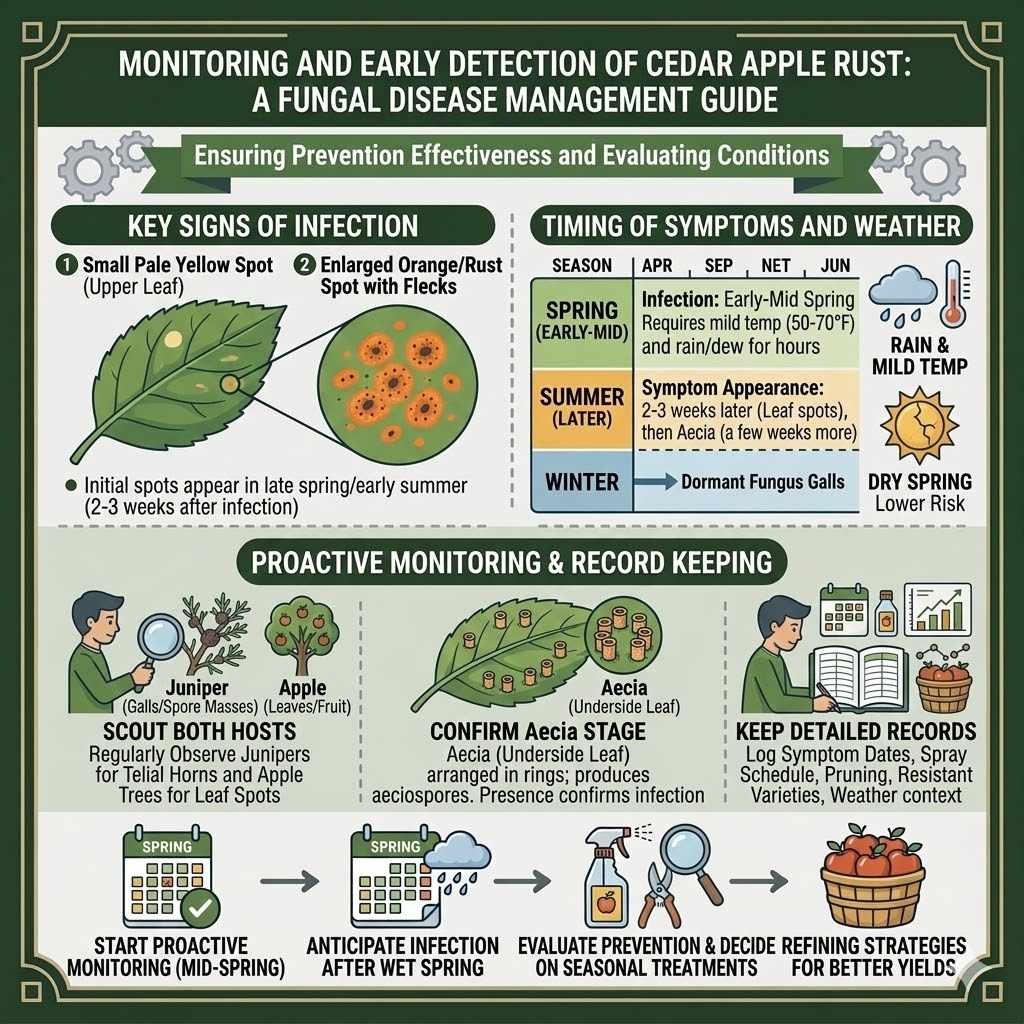
The first visible signs of cedar apple rust on apple trees usually appear in late spring or early summer, about two to three weeks after the initial infection. Look for small, pale yellow spots on the upper surface of the leaves. These spots are often quite small at first, sometimes no larger than a pinhead.
As the infection progresses, these yellow spots will enlarge and turn a brighter orange or rust color. They may also develop small, dark flecks in the center, which are the developing spores of the fungus. You might notice these spots primarily on the leaves, but they can also appear on the fruit and twigs.
On the fruit, the spots may appear as small, sunken, dark areas surrounded by a yellow halo, and can lead to deformed fruit.
A few weeks after the orange spots appear on the upper leaf surface, you will likely see the second stage of the rust on the underside of the leaves. This stage involves the formation of small, cylindrical, tube-like structures called aecia. These aecia are usually arranged in rings and are often a yellowish-orange color.
They are the structures that produce the aeciospores, which are then carried by the wind back to junipers to continue the disease cycle. The presence of these aecia confirms a cedar apple rust infection.
Early detection allows you to respond quickly. If you spot these symptoms, you can assess the severity of the infection and determine if additional treatments, such as targeted fungicide applications, are necessary for the remainder of the season or for the following year. It also helps you evaluate the effectiveness of your chosen prevention methods.
Timing of Symptoms and Weather
The appearance of cedar apple rust symptoms on apple trees is closely tied to weather patterns. The fungus requires specific conditions to infect the host plants and then to produce visible signs of disease. Understanding this connection helps in monitoring and predicting when to look for symptoms.
As mentioned earlier, the initial infection of apple trees by basidiospores from junipers typically happens in early to mid-spring. This is when temperatures are mild (ideally between 50-70°F or 10-21°C) and there is consistent moisture from rain or heavy dew. When these conditions persist for several hours, the spores can germinate and penetrate the apple leaves.
The time it takes for symptoms to appear after infection depends on the apple variety and environmental conditions, but it’s usually around two to three weeks.
Therefore, if you have a cool, wet spring, you should be particularly vigilant in monitoring your apple trees for symptoms of rust, starting from mid-spring onwards. Conversely, a very dry spring might lead to less infection, but it’s still important to check. After the initial infection and the appearance of yellow/orange spots, the development of the aecia on the underside of the leaves typically occurs a few weeks later, often in late spring or early summer, again favored by warm, moist conditions.
Observing the weather can give you clues. If there’s been a prolonged period of rain and mild temperatures in early spring, you can anticipate that spore release from junipers and subsequent infection of apples may have occurred. This knowledge helps you know when to start looking for those first tell-tale yellow spots.
This proactive monitoring, combined with an understanding of the disease’s life cycle and weather influences, is crucial for effective rust management.
Record Keeping for Future Seasons
Keeping detailed records of your cedar apple rust management efforts is an invaluable practice for future seasons. It allows you to learn from your experiences, track what works best for your specific situation, and refine your strategies over time. This information becomes a powerful tool for improving the health of your apple trees and ensuring a good harvest year after year.
Start by noting down the date when you first observe symptoms of cedar apple rust on either your apple trees or your junipers. Record the specific apple varieties that show the most severe symptoms. Also, document the date when you observe the orange jelly-like spore masses (telial horns) on your junipers, as this indicates spore release and the period of highest risk for apple trees.
This will help you pinpoint the timing of the disease’s life cycle in your specific location.
In your records, include all the control measures you implemented. This means noting the dates you applied any fungicides, the specific products you used, and the recommended dosage. If you pruned infected branches from junipers or apple trees, record when you did this.
Also, note down if you planted any new rust-resistant apple varieties and how they performed. Information about weather patterns, such as periods of heavy rain during spring, can also be helpful context.
By reviewing these records at the end of each season, you can identify which strategies were most effective. For example, you might notice that a particular fungicide application timing resulted in significantly less rust. Or, you might find that a certain apple variety consistently suffers from rust, reinforcing the need for its replacement or increased protection.
This data-driven approach helps you make more informed decisions for the following year, leading to more efficient and successful prevention of cedar apple rust.
Frequently Asked Questions
Question: How can I tell if my apple tree has cedar apple rust?
Answer: Look for small yellow spots on the upper side of the leaves in late spring or early summer. These spots will grow larger and turn orange. Later, you might see small, tube-like structures on the underside of the leaves.
Question: Do I need to remove my juniper trees if they have rust?
Answer: Not necessarily. Removing infected galls from junipers or planting apple trees far away from junipers are often enough. If the junipers are very old or large, pruning or targeted fungicide sprays might be better options than complete removal.
Question: When should I start spraying fungicides for cedar apple rust?
Answer: You should start spraying in early spring when your apple trees’ buds just begin to swell and show a bit of green, or at bud break. Continue spraying every 7 to 14 days if weather is wet and mild.
Question: Can cedar apple rust kill my apple tree?
Answer: While cedar apple rust can weaken your apple tree, especially if it’s heavily infected year after year, it rarely kills a healthy, mature tree on its own. However, it can significantly reduce fruit production and quality.
Question: Are there any apple varieties that are completely immune to cedar apple rust?
Answer: No apple variety is completely immune to all forms of rust. However, many varieties have high resistance, meaning they are much less likely to get infected or show severe symptoms. It’s always good to choose resistant varieties when possible.
Conclusion
Preventing cedar apple rust is achievable with a clear plan. By understanding the disease cycle, managing junipers, choosing resistant apple varieties, and timing your treatments, you can keep your trees healthy. Diligent monitoring and record-keeping will help you improve your methods each year.
Protect your apple harvest and enjoy healthy trees.