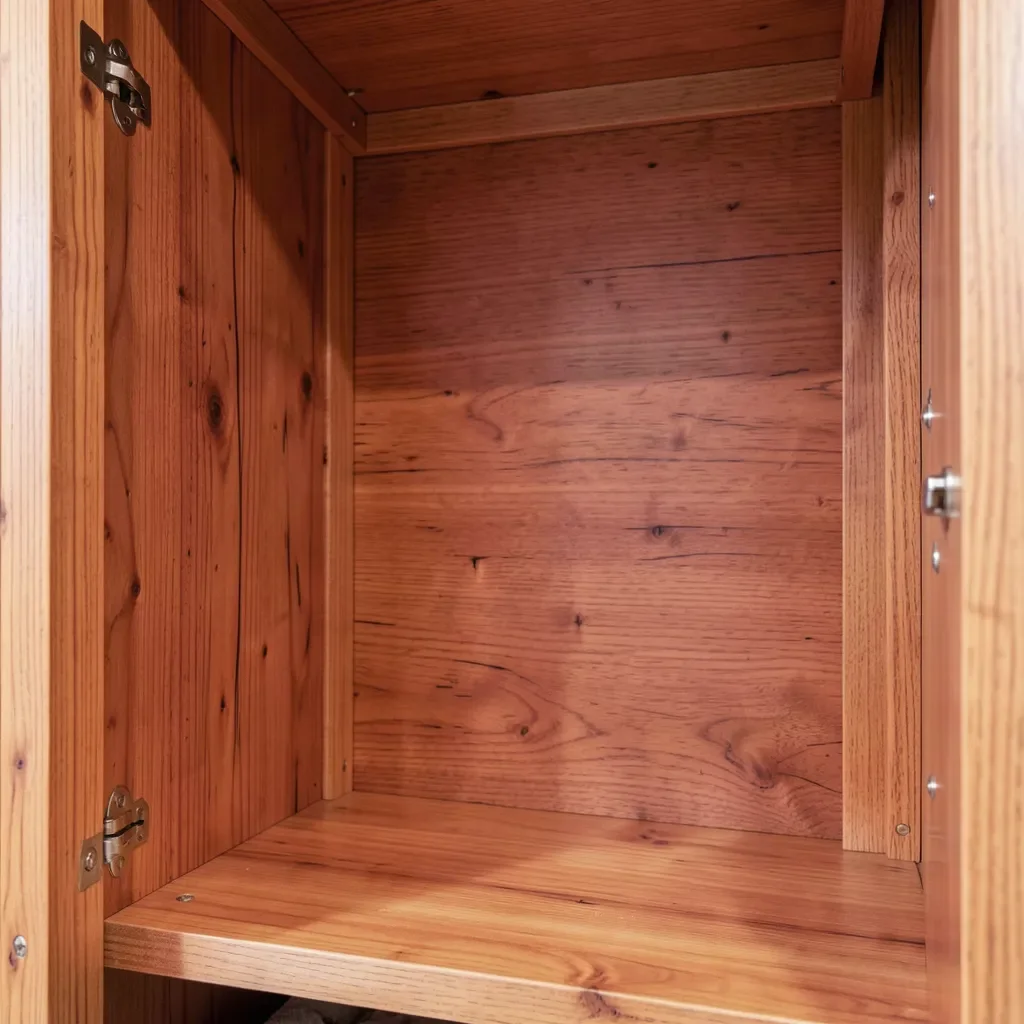
Does Cedar Prevent Mold? Yes, But Only With Humidity Control
Cedar’s natural oils genuinely resist mold — but cedar does not prevent mold outright, and it is not a substitute for humidity control. In a damp closet, basement, or humid climate, mold can still grow on (or near) cedar if moisture and poor airflow persist. This guide to cedar wood covers the real science behind cedar’s mold resistance, what actually causes mold despite it, and how to keep cedar spaces mold-free long term.
Quick Answer
Cedar heartwood contains natural extractives called thujaplicins that inhibit mold, mildew, and decay fungi — documented by the USDA Forest Products Laboratory. This makes cedar closets and chests genuinely more mold-resistant than closets built from pine or drywall. But thujaplicin levels vary by cedar grade and fade over years, and no wood species stops mold when humidity stays above roughly 60-70% with no ventilation. Cedar reduces the risk; it does not eliminate the need for airflow and moisture control.
Cedar’s Natural Properties
Cedar helps, but active humidity control closes the gap
Best Cedar Closet Dehumidifier Pick
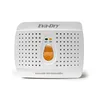
Eva-Dry E-333 Renewable Mini Dehumidifier
Cordless, battery-free unit covering up to 333 cubic feet; absorbs up to 6 oz of moisture before recharging in a wall outlet. Around $15.
- Best for: sealed cedar closets and chests where you can’t run a vent fan
- Why we picked it: reusable for up to 10 years, no batteries or cords, works alongside cedar’s own resistance instead of replacing it
- Main drawback: covers one closet-sized space at a time, not a whole basement
Compare more moisture absorber options
 Option 1 DampRid Hanging Moisture Absorber (3-Pack)
|
 Option 2 Arm & Hammer Moisture Absorber Tub (3-Pack)
|
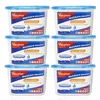 Option 3 Vacplus Moisture Absorber Boxes (6-Pack)
|
As an Amazon Associate we earn from qualifying purchases.
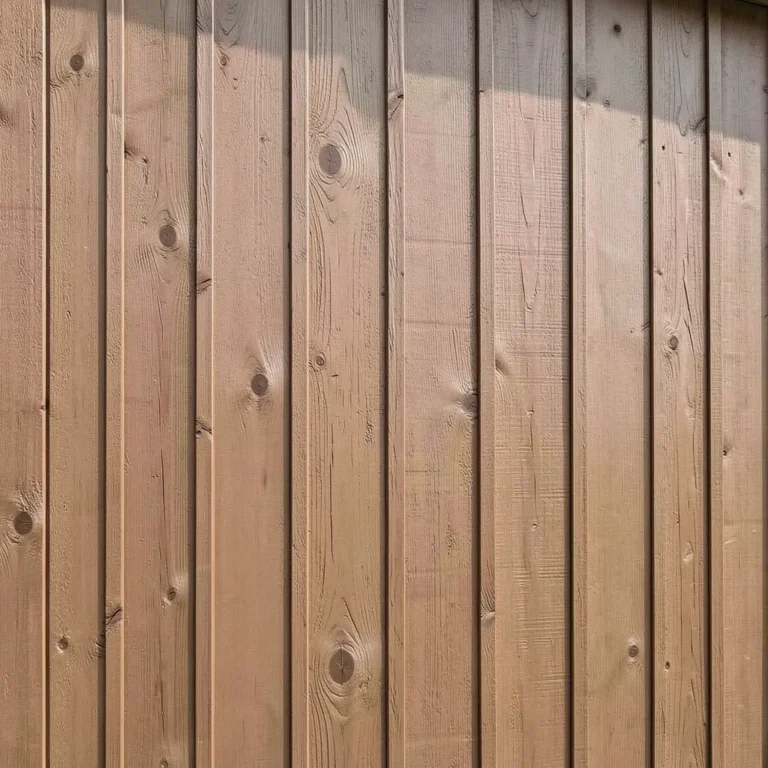
Cedar heartwood, especially Eastern red cedar and Western red cedar, contains natural oils called thujaplicins and related extractives. These compounds give cedar a real, measurable resistance to mold, mildew, and wood-decay fungi, which is why cedar has been used for closet linings, chests, and outdoor siding for generations.
Data point: Western redcedar heartwood contains natural extractives that give it real decay and fungal resistance — but that resistance is not permanent. Source: USDA Forest Service, Silvics of North America (Agriculture Handbook 654)
Western redcedar heartwood is rated “resistant to very resistant” to decay by the USDA Forest Products Laboratory, largely because of this extractive content. Thujaplicin concentration is highest in the outer heartwood and generally increases with tree age, which is also why older, denser cedar boards tend to outperform young, fast-grown cedar at resisting mold and rot.
Mold Growth Conditions: What Actually Grows Mold Near Cedar
Cedar’s natural oils raise the humidity threshold mold needs to take hold, but mold still needs only three things to grow: moisture, an organic food source, and stagnant air, conditions cedar cannot fully override. Cedar’s aromatic oils slow mold on the wood itself, but fabric, cardboard, dust, and adjacent drywall in the same closet have no such protection.
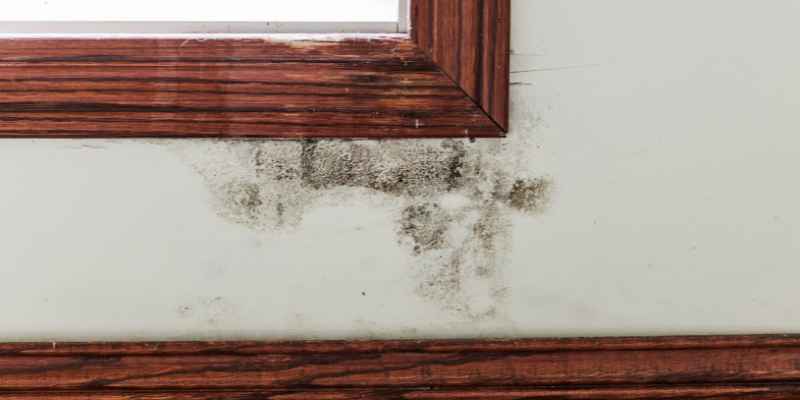
Mold most commonly appears in these conditions, cedar or not:
- Relative humidity staying above 60-70% for extended periods
- Basements, crawl spaces, and below-grade closets with poor drainage
- Bathrooms, kitchens, and any space adjacent to plumbing leaks
- Attics and roof lines with hidden leaks
- Closets and chests with no airflow, sealed tight, rarely opened
- Humid coastal or subtropical climates without dehumidification
A cedar-lined closet in a humid coastal home with the door kept shut can still develop mold on stored fabric. The cedar slows mold on the wood surface itself, but it doesn’t dehumidify the air trapped inside.
Scientific Evidence Behind Cedar’s Mold Resistance
Independent research backs cedar’s reputation, with real limits. Cedar’s natural oils show measurable antimicrobial activity in lab testing against decay and blue-stain fungi, and Western redcedar consistently outperforms pine, fir, and spruce in decay-resistance ratings.
“More than 200 fungi are found on western redcedar, but it is less susceptible to pathological attacks than are most of its associates… the heartwood extractives that provide decay resistance are eventually detoxified through biodegradation by a series of invading fungi.”
That’s why sapwood-heavy cedar boards (the pale outer rings) resist mold noticeably less than heartwood-heavy boards. If you’re buying cedar specifically for mold resistance, that heartwood-to-sapwood ratio matters more than the species label alone.
Why Cedar Alone Won’t Stop Mold in High-Humidity Conditions
This is the part most cedar product listings leave out: cedar siding, closets, and chests can and do develop mold in sustained high-humidity climates. Building-science forums and contractors report mold on cedar siding in humid coastal regions despite the wood’s natural resistance — because once ambient humidity stays above roughly 60-70% for weeks at a time, surface moisture overwhelms what the extractives can hold back.
The practical takeaway: treat cedar as a real head start, not a mold-proof guarantee. Pair it with the same basics that control mold anywhere else — ventilation, a moisture absorber or small dehumidifier in enclosed spaces, and periodically opening closets and chests to let air circulate.
Cedar In Modern Construction
Cedar remains a popular building material for siding, decking, and closet lining because of its durability and natural resistance to decay and insects, alongside its mold resistance. Cedar shingles and siding create a moisture-resistant exterior layer, and cedar paneling is a common choice for closets and wardrobes for the same reason.
- Natural resistance to mold, mildew, and decay fungi
- Durable and rot-resistant compared to most softwoods
- Natural insect-repellent properties
- Aesthetic appeal for interior and exterior use
- Still requires normal moisture management — not a waterproofing substitute
Maintenance And Care
Cedar’s mold resistance fades with age and exposure, so upkeep matters. To preserve cedar’s protective qualities:
- Lightly sand the surface every 1-2 years — this exposes fresh oil-rich wood and restores scent and resistance
- Keep cedar away from standing water and direct plumbing leaks
- Avoid sealing cedar with a film-forming finish in closets — it can trap moisture underneath instead of releasing it
- Store cedar-lined furniture in a ventilated, temperature-stable space
Limitations And Considerations
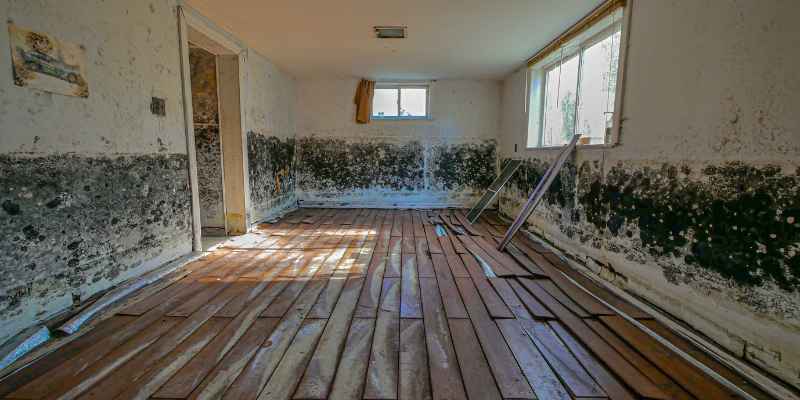
Cedar’s mold resistance is influenced by humidity levels, air circulation, and proximity to water sources. It is a preventative measure, not a cure — cedar will not remove existing mold, and its effectiveness diminishes over years as the surface oxidizes and thujaplicin content near the surface depletes.
Alternative And Complementary Materials
Cedar isn’t the only mold-resistant option, and combining it with other measures works better than relying on cedar alone:
- Bamboo: naturally mold-resistant and fast-renewing, though softer than cedar
- Teak: high natural oil content, strong moisture resistance, higher cost
- Aluminum or plastic shelving: non-porous, won’t feed mold at all, but no aromatic pest-deterrent benefit
Many closet installers combine cedar-lined walls with a small moisture absorber or vent fan — the cedar handles odor and mild moisture, the mechanical solution handles the humidity spikes cedar can’t.
Making The Right Choice For Your Space
Before relying on cedar for mold prevention, check your specific conditions: humidity levels, existing ventilation, and whether the space has ever had a mold or moisture problem before. If you’re storing cedar-lined items in a naturally humid region, budget for a small dehumidifier or moisture absorber from the start rather than waiting for a musty smell to show up. See also our guide on whether cedar helps with moisture generally, beyond just mold.
Frequently Asked Questions
Does cedar wood repel mold?
Yes, cedar wood’s natural oils (thujaplicins) inhibit mold growth on the wood surface itself, per USDA Forest Products Laboratory research. But this resistance is a deterrent, not a guarantee — in consistently humid, poorly ventilated spaces, mold can still form on fabric, dust, or surfaces near cedar even if the cedar itself resists longer.
Does cedar keep moisture out?
Cedar doesn’t block moisture like a vapor barrier does. It’s mildly hygroscopic and its oils slow surface mold and mildew, but it does not dehumidify a room or stop moisture from entering a space. For real moisture control, cedar should be paired with ventilation or a dehumidifier, not used alone.
Does a cedar closet prevent mold?
A cedar closet reduces mold risk on the wood and helps mask musty odors, but it does not prevent mold outright. If the closet stays sealed and humid, mold can still grow on stored fabric. Keeping the closet ventilated and occasionally open, alongside the cedar lining, is what actually keeps it mold-free.
Do cedar balls or blocks prevent mold?
Cedar balls and blocks add a small amount of localized mold resistance and a strong scent, but their surface area is too small to meaningfully affect humidity in a room-sized space. They work best as a supplement to good ventilation, not as a standalone mold-prevention method.
How long does cedar’s mold resistance last?
Cedar’s surface-level mold resistance fades over roughly 1-3 years as the outer layer oxidizes and its natural oils evaporate from the exposed surface. Light sanding restores the fragrance and exposes fresher, oil-rich wood underneath, effectively renewing the mold-resistant properties for years more.
Can mold still grow on cedar in a humid climate?
Yes. Building-science reports and contractors confirm that cedar siding and cedar-lined spaces can develop mold in sustained high-humidity climates, particularly coastal or subtropical regions, once relative humidity stays above roughly 60-70% for extended periods. Cedar slows this process; it doesn’t stop it without added ventilation or dehumidification.
Conclusion
Cedar’s natural oils give it a genuine, science-backed edge against mold — but that edge only holds up alongside real humidity control. Use cedar-lined closets and chests as your first layer of defense, and add ventilation or a small dehumidifier in humid climates or sealed spaces to close the gap cedar can’t cover on its own.
Sponsored / affiliate links. As an Amazon Associate I earn from qualifying purchases. I may earn additional commission from eligible campaigns.