How Many Cedar Shingles Are in a Bundle? Sizes & Coverage Chart
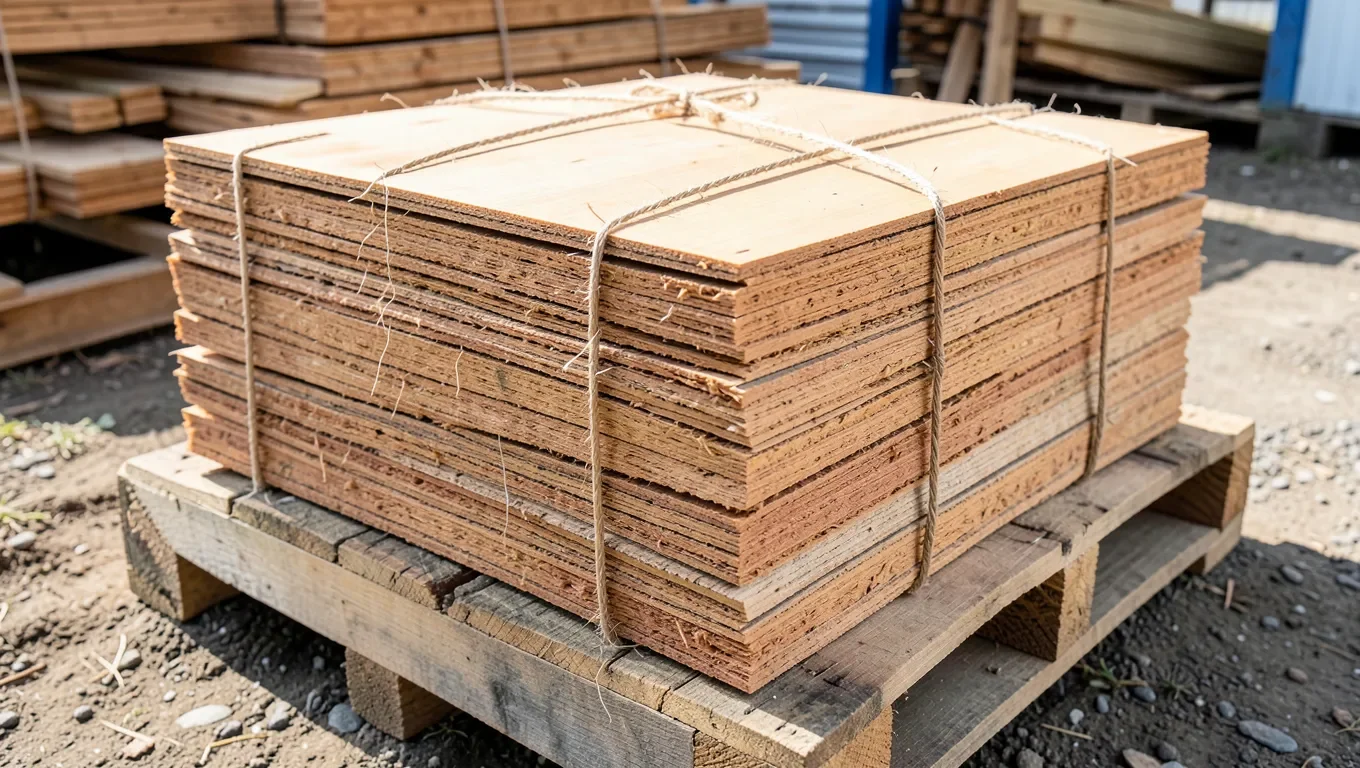
A cedar shingle bundle doesn’t actually hold a fixed number of shingles, and that’s the detail most buying guides get wrong. Cedar shingles are cut in random widths, so a bundle is rated by the roof area it covers (a “square”), not by a piece count. The Cedar Shake & Shingle Bureau (CSSB) defines coverage in linear inches and square footage per bundle, and four bundles cover one 100-square-foot “square” for standard shingles at normal exposure. Here’s how that actually breaks down by shingle and shake length, and how to use it to order the right amount for your roof.
How Many Cedar Shingles Are in a Bundle?
There’s no single correct answer in pieces, and any source that gives you one fixed number (like “70” or “100”) is oversimplifying. Certigrade cedar shingles are milled in random widths from 3 to 14 inches, so a bundle with wider shingles holds fewer pieces than a bundle of the same size with narrower ones – even though both cover the same roof area. That’s why the CSSB grading rules define a bundle by linear coverage (the total edge-to-edge width of “on grade” shingles, measured in inches) rather than by a piece count. For 18-inch Perfection shingles, for example, a bundle must contain at least 635 inches of on-grade coverage, and four bundles are built to cover one square (100 square feet) at the standard 5½-inch exposure.
In practical terms, most 16 to 24-inch cedar shingle bundles work out to somewhere in the 60 to 120-piece range at standard exposure, but that number will shift depending on the width mix in that specific bundle. If you’re estimating material for a job, use the bundles-per-square and coverage figures below instead of counting individual shingles – that’s what roofing suppliers and contractors actually order by.
Best Tool for Setting Shingle Exposure
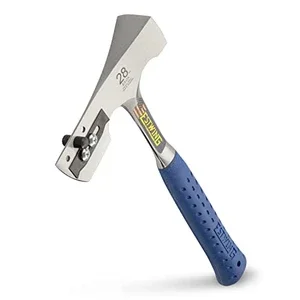 |
Estwing E3-CA Shingler’s Hammer, 28oz Roofing Hatchet – $36.99 Its built-in adjustable gauge locks in a consistent 4″, 5″, or 5-5/8″ exposure on every course – the same exposure settings used in the bundle coverage math above.
|
Cedar Shingle and Shake Bundle Coverage by Size
Shingles (sawn, tapered) and shakes (split, thicker) are packaged differently and cover different amounts of roof per bundle. Here are the standard figures used in the industry, based on CSSB Certigrade and Certi-Split grading rules at typical roof exposure:
| Product | Length | Standard Roof Exposure | Bundles per Square | Coverage per Bundle |
|---|---|---|---|---|
| Shingle (“5X”) | 16″ | 5″ | 4 | 25 sq ft |
| Shingle (“Perfections”) | 18″ | 5½” | 4 | 25 sq ft |
| Shingle (“Royals”) | 24″ | 7½” | 4 | 25 sq ft |
| Shake (handsplit/resawn) | 18″ | 8½” | 5 | 20 sq ft |
| Shake (handsplit, medium) | 24″ | 10″ | 5 | 20 sq ft |
Notice that shingle bundles and shake bundles don’t follow the same math. Shingles are sawn thin and tapered, so four bundles cover a full square. Shakes are thicker and split by hand, so they’re packaged and sold five bundles to the square instead of four. If you’re pricing out a shake roof using shingle coverage numbers (or vice versa), you’ll be short.
How to Calculate How Many Bundles You Need
Start by measuring the total roof area in square feet, including dormers and any other sections you’ll be shingling. Divide that number by 100 to get the number of squares. From there, multiply the squares by the bundles-per-square figure for the product you’re using (4 for standard shingles, 5 for shakes).
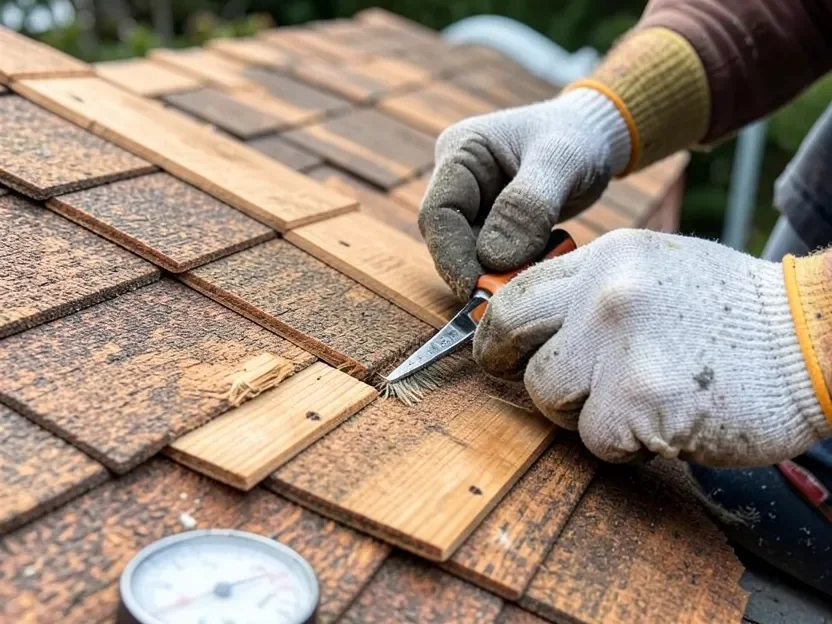
Example: a 1,800-square-foot roof is 18 squares. At 4 bundles per square for 18-inch shingles, that’s 72 bundles. Add roughly 10 to 15% extra for waste, cutting at hips and valleys, and starter courses along the eaves – so round that job up to around 80 bundles. Ridge caps are typically ordered separately by the linear foot, not by the bundle, so ask your supplier for a ridge-cap count on top of the field total.
Exposure also changes your bundle count. A narrower exposure (shingles overlapping more) uses more material per square foot of roof, so it takes more bundles to cover the same area. The exposures in the table above are the CSSB maximums for roofs with at least a 4-in-12 slope; a lower-slope roof or a sidewall installation typically uses a tighter exposure, which means you’ll need more bundles than the roof-only math suggests.
Why Grade Affects Coverage Too
Cedar shingles are graded No. 1 (Blue Label), No. 2 (Red Label), and No. 3 (Black Label) based on how much clear, defect-free wood each piece contains. No. 1 Blue Label shingles are 100% heartwood, edge grain, and clear – the grade required for roofing. No. 2 and No. 3 grades allow some sapwood, flat grain, or limited defects and are generally sold for sidewalls or secondary buildings rather than main roofs. Grade doesn’t change the bundle math above, but it does affect how much usable coverage you actually get once you account for pieces you’ll trim around knots or defects – budget slightly more bundles when working with a lower grade.
Bundle Weight and Handling
A cedar shingle bundle typically weighs anywhere from about 45 pounds to 85 pounds, and moisture content is the biggest reason for the spread. A kiln-dried bundle of 18-inch Perfections runs closer to the low end, while a green (undried) bundle of the same shingles can weigh close to double that. Grade matters less for weight than for coverage, but thicker butt-grade shingles and shakes will always sit at the heavier end of the range.
That weight matters for two reasons beyond just lifting bundles onto the roof. First, order timing: if you’re buying green shingles and storing them before installation, budget extra drying time and don’t seal them in plastic, or they’ll trap moisture and start to mold. Second, exposure setting on the roof itself needs to be accurate and consistent, since a shingler working off a tape measure alone will drift over a long run. A dedicated shingling hatchet with a built-in adjustable gauge sets the same exposure automatically on every course, which is the difference between a roof that lines up and one that visibly wanders by the time you reach the ridge.
Buying Tips: What to Check Before You Order
Confirm the grade and length on the bundle label before you buy – a No. 1 Blue Label 18-inch bundle and a No. 2 Red Label 18-inch bundle are priced differently and aren’t interchangeable for a main roof. If you’re weighing cedar against other materials, our guide to the pros and cons of cedar shingles covers durability and upkeep in more detail, and our breakdown of cedar cost by project can help you budget once you know your bundle count.
Order 5 to 10% more bundles than your calculation for a straightforward gable roof, and closer to 15% extra for roofs with lots of hips, valleys, or dormers. It’s also worth ordering from a single production run when possible – cedar color varies batch to batch, and mixing runs on a visible section of roof or sidewall can leave a patchwork look until the wood weathers to its natural silver-gray over a year or two.
Frequently Asked Questions
How many cedar shingles are in a bundle?
There’s no fixed piece count. Cedar shingles are milled in random widths, so bundles are rated by coverage, not by how many individual shingles they contain. At standard exposure, most 16 to 24-inch bundles work out to roughly 60 to 120 pieces, but the CSSB standard measurement is four bundles per 100-square-foot square, not a shingle count.
How much area does one bundle of cedar shingles cover?
A standard shingle bundle covers about 25 square feet at normal roof exposure (4 bundles per 100-square-foot square). Shake bundles cover less, about 20 square feet each, because shakes are sold 5 bundles to the square instead of 4.
How many bundles of cedar shingles make a square?
Four bundles make one square (100 square feet) for standard 16, 18, and 24-inch cedar shingles at their typical roof exposure. Cedar shakes require five bundles per square instead of four.
Do cedar shakes and cedar shingles use the same bundle coverage?
No. Shingles are thin and sawn, packaged four bundles to the square. Shakes are thicker and hand-split, packaged five bundles to the square. Using shingle coverage math to order shakes (or the reverse) will leave you short on material.
How much does a bundle of cedar shingles weigh?
A bundle typically weighs 45 to 85 pounds, mostly depending on moisture content. Kiln-dried bundles are lighter and closer to the low end of that range, while green (undried) bundles can weigh nearly double.
Conclusion
Skip trying to count shingles per bundle – it’s not how the industry measures coverage, and the number changes bundle to bundle anyway. Work from squares instead: figure your roof area, divide by 100, and multiply by 4 bundles per square for shingles or 5 for shakes, then add 10 to 15% for waste and cuts. That’s the same math suppliers use to quote a job, so it’ll get you a materials order that actually matches what you need.
Sponsored / affiliate links. As an Amazon Associate I earn from qualifying purchases. I may earn additional commission from eligible campaigns.