Sharpen Chainsaw Chain Dremel: Effortless Precision Tips
To sharpen a chainsaw chain with a Dremel, use a 1/8-inch grinding bit specifically designed for chainsaw chains. Maintain the correct angle and apply consistent pressure for effective sharpening.
Sharpening a chainsaw chain is essential for optimal performance and safety. A sharp chain cuts through wood effortlessly, reducing strain on the engine and preventing kickback. Using a Dremel tool for this task offers precision and ease. The Dremel allows for quick adjustments, making it a popular choice among DIY enthusiasts and professionals alike.
Regular maintenance not only prolongs the life of your chainsaw but also enhances cutting efficiency. Mastering this skill can save you time and effort, ensuring your chainsaw is always ready for any job. Invest in the right tools and techniques to keep your chainsaw in top condition.
Importance Of A Sharp Chainsaw
A sharp chainsaw is crucial for effective cutting. It reduces effort and enhances safety. Dull chainsaw chains can lead to accidents and inefficiency. Regular sharpening using a Dremel helps maintain performance.
Safety Considerations
Using a sharp chainsaw improves safety in various ways:
- Less Kickback: A sharp chain minimizes the risk of kickback.
- Controlled Cuts: Sharp chains allow for more precise cuts.
- Reduced Strain: Less effort means less physical strain.
Always wear protective gear while operating a chainsaw. This includes:
- Safety goggles
- Cut-resistant gloves
- Hearing protection
Efficiency And Performance
A sharp chainsaw offers significant benefits:
| Benefit | Description |
|---|---|
| Faster Cutting | Sharp chains cut through wood quickly. |
| Less Fuel Consumption | Efficient cutting uses less fuel. |
| Longer Chain Life | Regular sharpening extends the chain’s lifespan. |
Regularly sharpen your chainsaw chain with a Dremel. It ensures optimal performance and safety. A well-maintained chainsaw is a reliable tool.
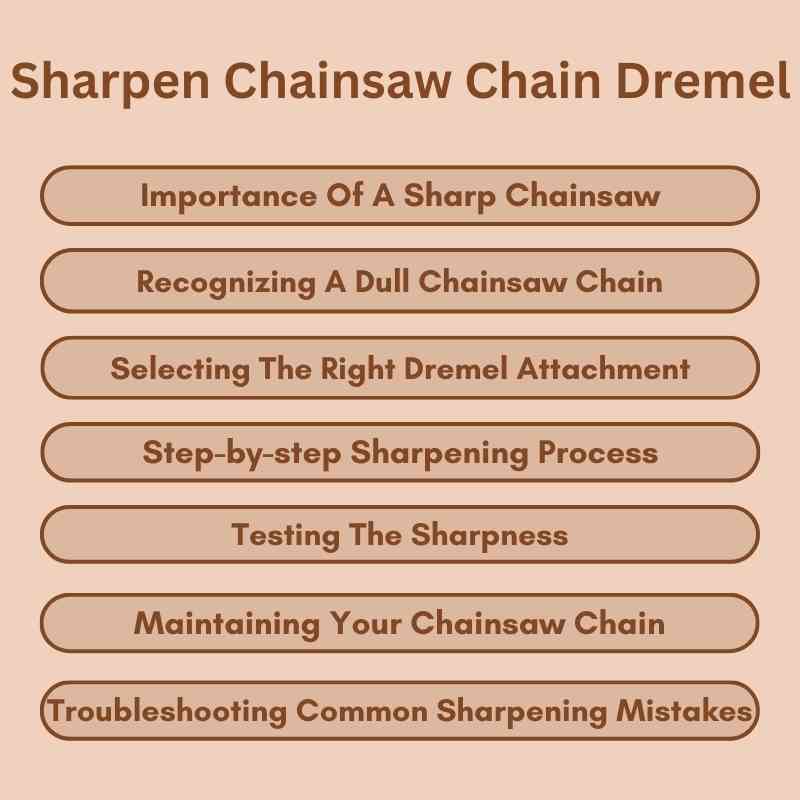
Recognizing A Dull Chainsaw Chain
Identifying a dull chainsaw chain is crucial for safety and efficiency. A sharp chain cuts smoothly and quickly. A dull chain causes frustration and can lead to accidents.
Signs Of Wear
- Burn Marks: Look for dark streaks on the wood.
- Uneven Cuts: The chain may cut at an angle.
- Frequent Stalling: The chainsaw may stop suddenly.
- Sawdust Texture: The sawdust will appear fine and powdery.
Impact On Cutting Ability
A dull chain affects performance significantly. It increases effort and time needed for cutting.
| Condition | Cutting Performance |
|---|---|
| Dull Chain | Slow and requires extra force |
| Sharp Chain | Fast and effortless |
Safety risks rise with a dull chain. It can kick back and cause injuries. Regular checks ensure safety and efficiency.
Selecting The Right Dremel Attachment
Choosing the right Dremel attachment is crucial for sharpening your chainsaw chain. The right bit makes the process easier and more effective. Understanding different bit types helps you achieve the best results.
Dremel Bit Types
Different Dremel bits serve unique purposes. Here are the most common types for sharpening chainsaw chains:
- Diamond Bits: Great for precision and durability.
- Carbide Bits: Effective for aggressive sharpening.
- Grinding Wheels: Ideal for broader surfaces.
- Polishing Bits: Used for finishing touches.
Each type has its strengths. Select based on your specific needs.
Choosing The Correct Size
Size matters in Dremel bits. Using the right size ensures efficiency. Here’s a quick guide to help you:
| Chain Pitch | Recommended Bit Size |
|---|---|
| 1/4″ | 3/16″ (4.8 mm) |
| 3/8″ | 5/32″ (4.0 mm) |
| 0.325″ | 1/8″ (3.2 mm) |
Ensure the bit size matches your chain pitch for best results.
Using the correct attachment saves time and effort. It also prolongs the life of your chainsaw chain.
Setting Up Your Workspace
Creating a safe and efficient workspace is essential for sharpening your chainsaw chain. A well-organized area helps you focus and complete the task effectively. Follow these tips to set up your workspace properly.
Safety Gear
Wearing the right safety gear protects you from accidents. Essential gear includes:
- Safety goggles: Protect your eyes from debris.
- Gloves: Keep your hands safe while handling tools.
- Hearing protection: Prevent damage from loud noises.
- Dust mask: Avoid inhaling fine particles.
Always wear this gear before starting any work. Safety should be your top priority.
Securing The Chainsaw
Securing your chainsaw properly is crucial. Follow these steps:
- Place the chainsaw on a stable, flat surface.
- Use a vise to hold the chainsaw firmly in place.
- Ensure the chain is easily accessible.
- Double-check that all parts are secure before starting.
A well-secured chainsaw makes sharpening easier and safer. Take your time to set it up correctly.
Step-by-step Sharpening Process
Sharpening your chainsaw chain with a Dremel tool is simple. Follow these steps for a sharp, efficient chain. A sharp chain cuts smoothly and lasts longer. Let’s dive into the process.
Aligning The Dremel
Proper alignment is crucial for effective sharpening. Here’s how to do it:
- Place your chainsaw on a stable surface.
- Secure the chain using a clamp or vice.
- Position the Dremel tool parallel to the chain.
- Use a depth gauge to check alignment.
- Adjust the Dremel until it is perfectly aligned.
Double-check the alignment before you start grinding. This ensures even sharpening on all teeth.
Grinding Technique
Grinding requires a steady hand and focus. Follow these tips:
- Hold the Dremel at a 30-degree angle.
- Apply light pressure as you grind.
- Move the Dremel in a smooth, even motion.
- Do not rush; take your time for best results.
Check your progress frequently. A few light passes are better than heavy grinding.
Working On Each Tooth
Sharpen each tooth individually for the best performance:
| Step | Action |
|---|---|
| 1 | Identify the first tooth to sharpen. |
| 2 | Grind the left side of the tooth first. |
| 3 | Then grind the right side of the tooth. |
| 4 | Move to the next tooth and repeat. |
Continue this process for all teeth. Regularly check sharpness. A sharp chain ensures safety and efficiency.
Testing The Sharpness
Testing the sharpness of your chainsaw chain is essential. A sharp chain cuts smoothly and efficiently. Two simple methods can help you determine sharpness: the paper test and a practical wood cutting test.
Performing A Paper Test
The paper test is a quick way to check sharpness. Follow these steps:
- Grab a piece of regular paper.
- Hold the paper firmly with one hand.
- Run the chainsaw chain against the paper.
Observe the results:
- If the chain cuts through the paper easily, it is sharp.
- If it tears the paper or struggles, it needs sharpening.
This test is quick and effective. Use it often to ensure optimal performance.
Practical Wood Cutting Test
The practical wood cutting test gives real-world results. Here’s how to perform it:
- Select a small piece of wood.
- Secure the wood in place.
- Use your chainsaw to make a cut.
Evaluate the cut:
- If the cut is clean and smooth, the chain is sharp.
- If the cut is rough or slow, it needs sharpening.
Always test your chainsaw chain before heavy use. A sharp chain saves time and energy.
Maintaining Your Chainsaw Chain
Keeping your chainsaw chain in top shape is essential. A well-maintained chain cuts faster and lasts longer. This section covers key maintenance practices. Regular cleaning, proper storage, and monitoring for damage are crucial.
Regular Cleaning
Cleaning your chainsaw chain improves performance. Dust, sap, and debris can affect cutting efficiency. Follow these steps for effective cleaning:
- Turn off the chainsaw and unplug it.
- Remove the chain from the guide bar.
- Use a brush to remove debris.
- Soak the chain in a cleaning solution.
- Rinse and dry the chain thoroughly.
Cleaning should be done after every use. This practice helps maintain sharpness and performance.
Proper Storage
Storing your chainsaw chain correctly extends its life. Here are some tips:
- Keep the chain in a dry place.
- Use a protective case or container.
- Store in a cool area, away from direct sunlight.
Proper storage prevents rust and damage. This keeps your chain ready for the next job.
Monitoring For Damage
Regularly check your chainsaw chain for damage. Look for the following signs:
| Damage Type | Description | Action Required |
|---|---|---|
| Worn Teeth | Teeth appear dull or chipped. | Sharpen the chain. |
| Cracks | Visible cracks or breaks. | Replace the chain. |
| Rust | Signs of rust on the chain. | Clean and oil the chain. |
Addressing damage quickly keeps your chainsaw safe and efficient. Regular monitoring ensures the chain remains in peak condition.
Safety Tips For Using A Sharpened Chainsaw
Using a sharpened chainsaw increases cutting efficiency. It also raises the risk of accidents. Knowing safety tips is essential. Proper handling and protective gear can prevent injuries.
Handling Precautions
- Inspect the Chainsaw: Check for damage before use.
- Grip Firmly: Hold the chainsaw with both hands.
- Maintain Balance: Stand with feet shoulder-width apart.
- Cut at Waist Level: Avoid cutting above shoulder height.
- Watch for Kickback: Be aware of sudden movements.
Personal Protective Equipment
Wearing the right protective gear is vital. It can save you from serious injuries. Here’s a table showing essential gear:
| Protective Gear | Purpose |
|---|---|
| Helmet: | Protects your head from falling debris. |
| Goggles: | Shields eyes from dust and chips. |
| Ear Protection: | Reduces noise exposure from the chainsaw. |
| Cut-Resistant Gloves: | Prevents cuts and injuries to hands. |
| Chaps: | Protects legs from accidental cuts. |
Always check your gear for damage. Replace any worn-out items immediately.
Troubleshooting Common Sharpening Mistakes
Sharpening your chainsaw chain with a Dremel can be simple. Yet, mistakes often occur. Understanding these errors helps improve your skills.
Uneven Teeth
Uneven teeth can lead to poor cutting performance. Look for these signs of uneven sharpening:
- Choppy cuts
- Chainsaw pulls to one side
- Inconsistent cutting speed
To fix uneven teeth:
- Check each tooth’s length.
- Adjust your Dremel tool for consistent pressure.
- Sharpen each tooth equally.
Overheating The Chain
Overheating can damage the chain. Signs of overheating include:
- Blue discoloration on the teeth
- Burnt smell
- Difficulty cutting through wood
To prevent overheating:
- Use light pressure while sharpening.
- Sharpen in short intervals.
- Allow the chain to cool between sessions.
Incorrect Angle
The correct angle is crucial for effective sharpening. Common mistakes include:
- Incorrect angle settings on the Dremel
- Inconsistent hand positioning
- Failing to follow manufacturer guidelines
To ensure the right angle:
- Consult your chainsaw manual.
- Use a guide for the Dremel tool.
- Practice maintaining a steady hand.
Advanced Techniques For Experienced Users
Sharpening a chainsaw chain with a Dremel can elevate your cutting performance. Experienced users can explore advanced techniques for precision and efficiency. Mastering these methods can extend chain life and improve cutting speed.
Custom Angles For Specific Woods
Different types of wood require unique sharpening angles. Adjusting the angle enhances cutting efficiency. Here are some common wood types and their recommended angles:
| Wood Type | Recommended Angle |
|---|---|
| Softwood | 25° – 30° |
| Hardwood | 30° – 35° |
| Composite | 20° – 25° |
Adjust your Dremel to these angles for optimal performance.
Sharpening Chain Modifications
Modify your sharpening technique for better results. Consider these options:
- Depth Gauge Adjustment: Lowering the depth gauge can increase chip removal.
- Raker Height: Keep raker height consistent for smooth cutting.
- Tooth Configuration: Change the tooth shape for different cutting needs.
Experiment with these modifications. Find the right balance for your cutting tasks.
Using the Dremel tool effectively enhances your chainsaw’s performance. Practice these advanced techniques for superior results.
The Role Of Professional Sharpening Services
Sharp chainsaw chains are crucial for efficient cutting. Many people choose to sharpen their chains at home. Sometimes, professional help is a better option. Experts provide precision and experience. This section explores when to seek professional help and the benefits of expert maintenance.
When To Seek Professional Help
Knowing when to get professional help can save time and effort. Here are some signs:
- Chain shows visible damage.
- Cutting is slow and uneven.
- You lack sharpening tools or skills.
- Chain is excessively worn.
- Frequent adjustments are needed.
Benefits Of Expert Maintenance
Using a professional sharpening service offers several advantages:
| Benefit | Description |
|---|---|
| Precision | Experts use specialized tools for accurate sharpening. |
| Time-Saving | Professionals can complete the job faster. |
| Safety | A well-sharpened chain reduces accidents. |
| Longevity | Proper maintenance extends the life of your chain. |
Choosing professional sharpening services can enhance your chainsaw’s performance. Experts ensure that your equipment remains in top condition.
Frequently Asked Questions
How Do You Sharpen A Chainsaw Chain With A Dremel?
To sharpen a chainsaw chain with a Dremel, use a grinding stone attachment. Position the Dremel parallel to the chain and gently grind each tooth. Ensure you maintain the factory angle for optimal cutting performance. Regularly check your progress to avoid over-sharpening or damaging the teeth.
What Tools Do I Need For Sharpening Chains?
For sharpening your chainsaw chain, you will need a Dremel tool, specific grinding stones, and a depth gauge tool. A flat file can also be helpful for finishing touches. Ensure you have safety goggles and gloves to protect yourself during the sharpening process.
How Often Should I Sharpen My Chainsaw Chain?
You should sharpen your chainsaw chain after every five uses or when you notice a decrease in cutting performance. Factors like wood type and chain quality can affect sharpening frequency. Regular maintenance ensures better cutting efficiency and prolongs the life of your chainsaw.
Can I Use Any Dremel Bit For Sharpening?
No, not all Dremel bits are suitable for sharpening chainsaws. Use specific grinding stones designed for chainsaw chains. These bits maintain the correct angle and reduce the risk of damaging the chain. Always refer to your chainsaw’s manual for recommended sharpening accessories.
Conclusion
Sharpening your chainsaw chain with a Dremel can enhance performance and efficiency. Regular maintenance ensures safer and smoother cuts. This simple process saves time and prolongs your tool’s life. Follow the tips shared in this guide for the best results.
Keep your chainsaw ready for any task that comes your way.