How to Crank a Poulan Chainsaw: Choke, Prime & Pull-Start Steps
To crank a Poulan chainsaw, prime the bulb 5 to 6 times, pull the choke knob to full, and pull the starter rope up to 5 times before pushing the choke halfway in for the final pulls. Skipping that halfway step is the single biggest reason a cold Poulan floods on pull six or seven. This guide covers the exact choke sequence, the bracing stance that keeps the bar still, and what to check if it still won’t fire.
Safety Gear to Have On Before You Crank It
A chainsaw kicks the hardest in the half-second right after it fires, so the protective gear goes on before the primer bulb gets a single press, not after.
- Eye protection: safety goggles or a mesh visor to block bar oil spray and wood chips the moment the chain starts turning.
- Hearing protection: ear muffs or plugs; a two-cycle chainsaw engine runs well above 100 decibels at idle.
- Cut-resistant gloves: heavy-duty gloves that protect your grip hand on the starter rope and your support hand on the front handle.
- Steel-toed boots: needed for the bracing stance in the next section, where one boot rests near the rear handle.
Best Chainsaw Safety Helmet Pick
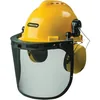 |
Oregon Chainsaw Safety Helmet with Visor & Ear Muffs Combo Covers all three protective items this section calls for (eyes, ears, and face) in one ANSI-rated helmet instead of buying goggles and muffs separately.
|
As an Amazon Associate we earn from qualifying purchases.
What “Cranking” a Chainsaw Actually Means
Cranking is a common rural and Southern U.S. term for pulling a small gas engine to life, used for chainsaws, mowers, and tillers interchangeably with “starting.” On a Poulan chainsaw, cranking specifically means pulling the recoil starter rope after the engine has been primed and the choke set; it has nothing to do with electric ignition, which some new owners assume from the word alone.
If your saw fires up fine but won’t keep running, or dies the moment you release the throttle, that’s a different problem than a hard crank. See our full Poulan starting and troubleshooting guide for spark plug, air filter, and fuel-line fixes. This page focuses specifically on the crank sequence and body position that gets a healthy saw running the first time.
The Full Choke-Prime-Pull Sequence, Step by Step
This order matters. Pulling before priming, or leaving the choke on full past the first sputter, are the two most common reasons a Poulan won’t crank on a cold morning.
- Engage the chain brake: Push the front hand guard forward until it clicks. The chain must not be able to spin while you’re cranking the engine.
- Set the choke to full: Pull the choke knob out to its full extension (or move the choke lever to the closed position on older models). This richens the fuel mixture for a cold start.
- Prime the engine: Find the small rubber primer bulb near the carburetor. Press and release it 5 to 6 times until you can see fuel moving through the return line.
- Brace the saw and take your stance: Set the saw on flat ground, put your right boot through the rear handle, and grip the front handle firmly with your left hand (see the bracing section below).
- Pull the starter rope up to 5 times: Grip the starter handle and pull with a firm, even motion. Stop after 5 pulls, or sooner if the engine sputters like it’s trying to catch.
- Push the choke halfway in: Once the engine sputters or briefly catches, push the choke knob halfway in (the run or warm-up position on lever models) before pulling again.
- Pull again until it starts: Pull the starter rope again with the choke halfway in. The engine should start within 1 to 3 more pulls.
- Let it idle, then engage the throttle: Let the saw run for about 5 seconds with the choke fully open, then squeeze the throttle trigger once to confirm it revs cleanly before cutting.
Bracing Stance: The Step Most Guides Skip
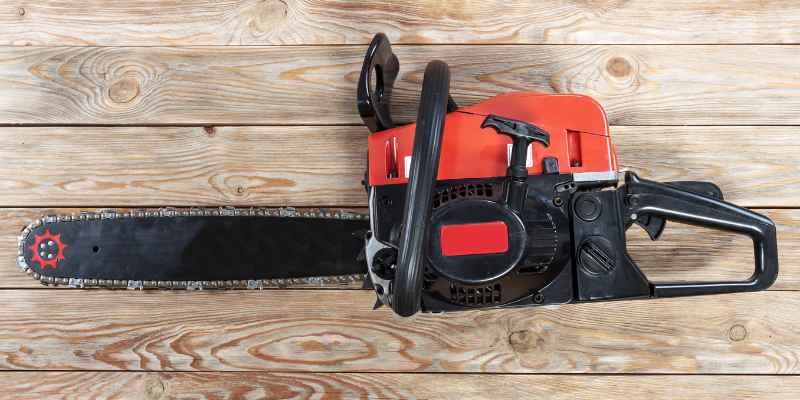
Most write-ups jump straight from “prime the bulb” to “pull the rope” and skip the one detail that determines whether the saw stays put or skates across the ground: how you brace it.
- Set the saw on flat, clear ground, never on your knee or held in the air for a cold start.
- Put the toe of your right boot through the rear handle, pressing down to pin the saw to the ground.
- Grip the front handle firmly with your left hand, keeping your arm straight to absorb the pull.
- Pull the starter rope with your right hand in a smooth, elbow-driven motion, not a short wrist snap, which is the most common cause of a rope that won’t engage the recoil spring.
- Keep your body clear of the guide bar’s path in case the chain brake disengages unexpectedly.
“The number one reason we see a customer struggle to crank a saw that starts fine on our bench is that they’re holding it off the ground with one hand instead of bracing it underfoot; the pull energy has nowhere to go but into wobbling the saw.”
Cold Start vs. Warm Start: What Changes
A Poulan that already ran in the last 15 to 20 minutes needs a shorter, gentler version of the same sequence. Using the full cold-start choke on a warm engine is the fastest way to flood it.
| Step | Cold Start | Warm Restart |
|---|---|---|
| Primer bulb | 5 to 6 presses | 1 to 2 presses, or skip if the fuel line is still full |
| Choke position | Full choke for first pulls | Half choke or run position only |
| Expected pulls | Up to 5, then 1 to 3 more at half choke | Usually 1 to 2 total |
| If it floods | Push choke fully in, pull 4 to 5 times with throttle held open | Same fix, usually clears in fewer pulls |
Getting the Fuel Mix Right First
No choke sequence fixes a bad fuel mix. Poulan chainsaws run on a 50:1 gas-to-oil ratio: 2.6 ounces of two-cycle oil per gallon of unleaded gasoline, at least 89 octane. Ethanol-blended gas above E10 breaks down faster in a small carburetor and is a common cause of a saw that cranked fine last season but floods or stalls this one.
Mix fuel in a container rated for gasoline, shake it for at least 10 seconds after adding the oil, and use it within about 30 days. Stale mix separates and starves the carburetor even when the crank sequence above is done perfectly. For exact ratios across different Poulan models, see our Poulan chainsaw fuel ratio guide.

If It Won’t Crank After 5 Pulls
- No fuel movement in the primer bulb: check the fuel filter inside the tank and the fuel line for cracks.
- Engine sputters but never catches: you likely need more pulls at half choke, not more at full choke; going back to full choke here is the flooding mistake.
- Smells like raw gas: the engine is flooded. Push the choke fully in, hold the throttle open, and pull 4 to 5 times without touching the choke again.
- Spark plug looks black or wet: clean or replace it, since a fouled plug won’t fire even with a perfect choke sequence.
- Rope pulls with no resistance or won’t retract: the recoil spring or starter assembly likely needs service; this isn’t a technique problem.
For a full breakdown of each fix above, including carburetor adjustment, see Poulan chainsaw won’t start: 9 fixes and how to adjust a Poulan chainsaw carburetor. For general chainsaw maintenance and buying advice, browse our full chainsaw hub.
Frequently Asked Questions
How Many Times Should You Pull the Cord to Crank a Poulan Chainsaw?
Up to 5 pulls at full choke, then 1 to 3 more pulls after pushing the choke halfway in: usually 6 to 8 pulls total on a cold engine. If it needs more than that, stop and check the fuel mix and spark plug rather than continuing to pull.
Do You Choke a Poulan Chainsaw When It’s Already Warm?
No, not on full choke. A warm engine that ran within the last 15 to 20 minutes only needs the choke in the half or run position; using full choke on a warm engine floods it almost immediately.
How Do You Know if a Poulan Chainsaw Is Flooded?
A strong raw-gas smell and an engine that won’t catch even after several pulls are the two signs. Push the choke fully in, hold the throttle trigger open, and pull the rope 4 to 5 times without adjusting the choke again.
What’s the Difference Between Cranking and Starting a Chainsaw?
Nothing; they’re the same action described two different ways. “Cranking” is a regional term (common in the South and rural Midwest) for pulling a small engine to life, while “starting” is the more universal term. Both refer to the same choke-prime-pull sequence.
Conclusion
Cranking a Poulan chainsaw comes down to the same sequence every time: prime, full choke, up to 5 pulls, half choke, then a few more pulls, all done while the saw is properly braced underfoot. Get that order right and most cold-start problems disappear on their own. If the saw still won’t catch, the fuel mix and spark plug are the next places to look, not more pulling.
Sponsored / affiliate links. As an Amazon Associate I earn from qualifying purchases. I may earn additional commission from eligible campaigns.