Spar Urethane Water Based Vs Oil Based: Ultimate Guide
Have you ever stood in the aisle of a hardware store, staring at the wide array of finishes available for your latest woodworking project? If so, you’re not alone.
Choosing between spar urethane water-based and oil-based options can feel like a daunting task. Both promise to protect and enhance the beauty of your woodwork, but each comes with its own unique benefits and drawbacks. Imagine the satisfaction of seeing your project not just finished, but finished perfectly.
The key to achieving this lies in understanding the nuances between these two types of spar urethane. Whether you’re looking for a quick-drying solution or a finish that withstands the elements for years, knowing which type suits your needs can make all the difference. You’ll discover the characteristics that set water-based and oil-based spar urethane apart, helping you make a decision that aligns with your project goals. Let’s dive into the details so you can confidently choose the right finish for your masterpiece. Your woodworking success story starts here.

Credit: www.youtube.com
Spar Urethane Basics
Spar urethane is a type of finish. It protects wood surfaces. It makes them shine. Spar urethane can be water-based or oil-based. Water-based dries fast. Oil-based gives a rich color. Both types resist weather changes. They keep wood safe. Spar urethane is used outdoors. It guards against sunlight and rain.
Spar urethane works well on boats. It keeps them strong. Outdoor furniture needs spar urethane too. It fights off moisture. Wood doors and trim benefit from it. The finish makes them last longer. Decks also use spar urethane. It prevents cracking. Spar urethane is good for many wood items. It protects and beautifies them.
Credit: www.targetcoatings.com
Water-based Spar Urethane
Water-based spar urethane dries fast. It has a low odor, making it safer indoors. The finish is clear and non-yellowing. Application is easy with brushes or sprayers. Cleanup requires only soap and water. This type offers great UV protection.
Low VOC levels mean it’s better for the environment. Fast drying saves time. Clear finish keeps wood looking natural. Easy cleanup is a plus. UV protection keeps surfaces safe from sun damage.
Water-based options can be less durable than oil-based ones. Coverage might need more coats for a strong finish. Price can be higher compared to oil-based options. Not suitable for extreme weather conditions.
Oil-based Spar Urethane
Oil-based spar urethane is known for its rich amber color. It adds a warm tone to wood surfaces. This type is more durable than water-based spar urethane. It offers better protection against UV rays and water. It also has a longer drying time, which allows for a smooth finish.
Oil-based spar urethane provides superior protection for outdoor wood. It is resistant to harsh weather conditions. This type is ideal for wooden decks and furniture. It offers excellent durability. Its rich finish enhances the wood’s natural beauty.
This urethane type has a strong odor. It takes longer to dry compared to water-based options. Cleaning brushes requires solvents like mineral spirits. It is more prone to yellowing over time. This can affect the wood’s color.

Credit: www.homedepot.com
Comparing Water-based And Oil-based
Water-based spar urethane dries quickly. It keeps a clear look. This is good for light woods. Oil-based urethane takes longer to dry. It gives a warm, rich glow. This is nice for darker woods. Each type has its own charm and use.
Oil-based urethane is very strong. It can handle harsh weather. Water-based urethane is also tough. It is good for indoor use. Both types protect wood from damage. Choose based on where you will use it.
Water-based urethane is easy to clean up. Use soap and water. Oil-based urethane needs mineral spirits for cleaning. Both need a brush or spray for applying. Wear gloves to protect your hands.
Environmental Considerations
Water-based spar urethane is better for the planet. It has low levels of volatile organic compounds (VOCs). This means less harmful chemicals in the air. People who care about the environment often choose this option.
Oil-based spar urethane has more VOCs. It can hurt the environment more. But it gives a shiny and lasting finish. Some people still like this choice.
Water-based spar urethane is safer for health. It has fewer fumes and smells. People can use it indoors without worry.
Oil-based spar urethane can cause headaches. It has strong fumes. People should use it outside or in open spaces. Wearing masks can help too.
Choosing The Right Spar Urethane
Spar urethane is a popular finish for wood. It comes in two main types: water-based and oil-based. Each type has its own benefits. Think about the project’s needs before choosing.
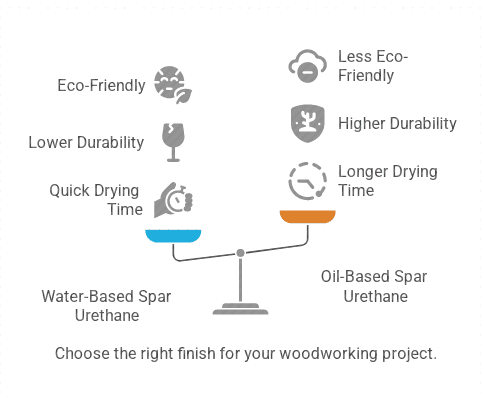
Water-based spar urethane dries quickly. It is easy to clean up with soap and water. This type is less smelly and better for the environment. It also keeps the wood’s natural color.
Oil-based spar urethane is more durable. It gives a warm, rich look to wood. This type takes longer to dry. It also has a stronger smell.
Choose water-based for fast projects. Pick oil-based for outdoor furniture or floors. Each type has its own special features. Consider what matters most for your project.
Tips For Application
Start by cleaning the surface well. Use a soft cloth to remove dust. For old surfaces, sand lightly to smoothen. Ensure no loose particles remain. Choose a dry, well-ventilated area. This helps the urethane dry faster. Always wear gloves to protect your skin. Safety first! Have a clean brush or roller ready. Stir the urethane gently before use. Don’t shake it. Shaking causes bubbles.
Use a brush for small areas. A roller works for large surfaces. Apply in thin, even coats. Thick coats take longer to dry. Wait for one coat to dry before the next. This prevents sticky layers. Check the label for drying times. Some types dry quicker than others. Keep the brush strokes in one direction. This gives a smooth finish. Avoid touching the wet surface. Let it dry completely.
Maintenance And Care
Regular cleaning keeps surfaces looking nice. Use a soft cloth with mild soap. Water-based spar urethane dries fast. Oil-based needs more time to dry. For best results, avoid harsh cleaners. They can damage the finish. Dusting weekly helps maintain shine.
Scratches may appear over time. Sand lightly to remove them. Use a fine-grit sandpaper. After sanding, clean the area well. Apply a fresh coat of urethane. Water-based urethane requires less time to dry. Oil-based may need overnight drying. Always follow product instructions for best results.
Frequently Asked Questions
Is Water-based Urethane As Good As Oil-based?
Water-based urethane dries faster and has low odor, while oil-based provides a durable finish. Both have pros and cons. Consider project needs, like drying time and durability. Water-based is eco-friendly, while oil-based offers deep color. Choose based on personal preference and specific requirements.
What Is The Downside Of Water-based Polyurethane?
Water-based polyurethane can be less durable than oil-based types. It might require more frequent recoating. Some users notice a less warm finish compared to oil-based options. It can be more expensive and sensitive to temperature and humidity during application.
Can You Use Water-based Spar Urethane Over Oil-based Stains?
Yes, you can apply water-based spar urethane over oil-based stains. Ensure the stain is fully dry before applying. Lightly sand the surface for better adhesion. Use a clean brush or applicator for even application. This combination provides a durable and protective finish.
Do You Have To Sand Between Coats Of Water Based Spar Urethane?
Yes, lightly sanding between coats of water-based spar urethane ensures a smooth finish. Use fine-grit sandpaper for best results.
Conclusion
Choosing between spar urethane water-based and oil-based depends on your needs. Water-based dries faster. It offers easier cleanup. Oil-based provides a richer finish. It also offers better durability. Consider the environment and project type. Indoors or outdoors? Each has unique benefits.
Think about the application process too. Water-based is low odor. Oil-based may need more ventilation. Both protect wood well. Make your choice based on your project requirements. This ensures the best results. Both can enhance wood beauty. Make a wise decision for your wood finish.