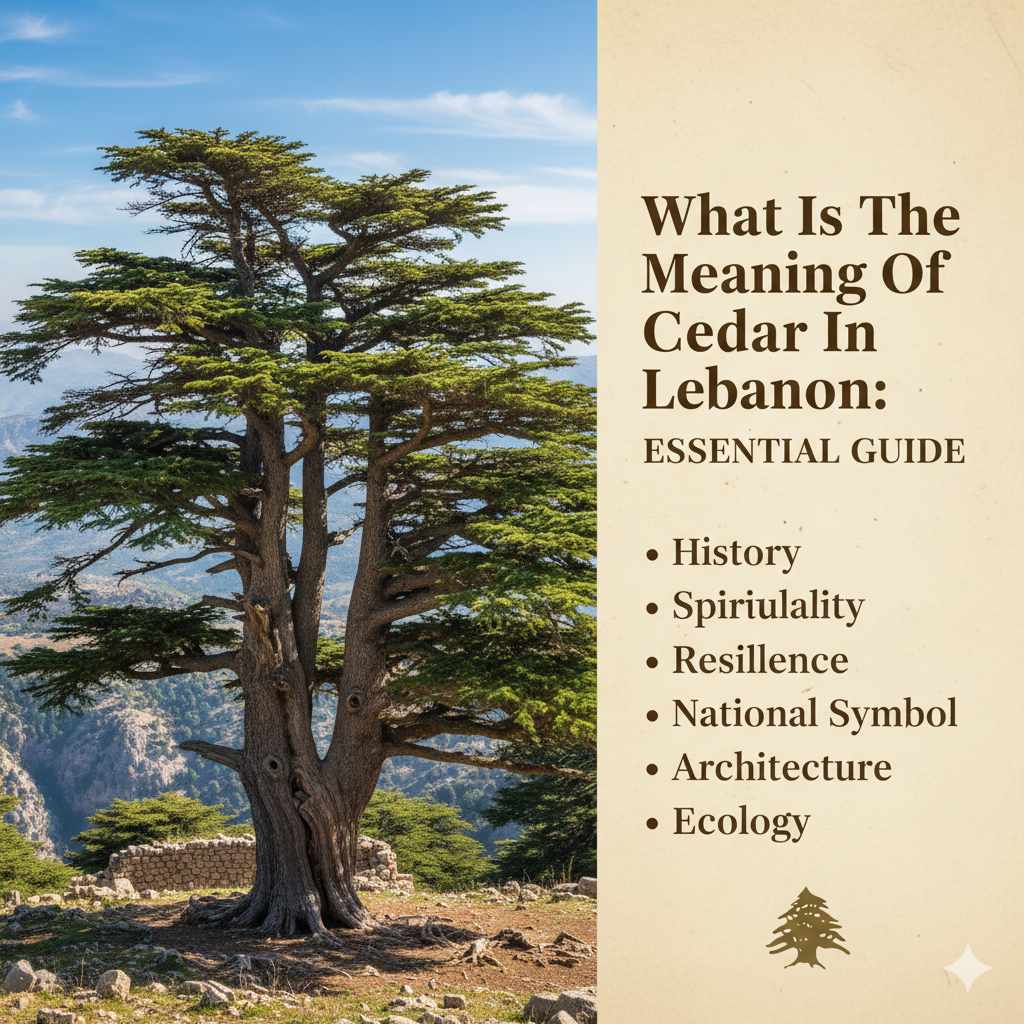
What Is The Meaning Of Cedar In Lebanon: Essential Guide
The Cedar of Lebanon is a powerful national symbol, representing strength, resilience, and enduring history for the country of Lebanon. It’s more than just a tree; it’s a deeply ingrained cultural icon, prominently featured on the national flag, signifying peace, eternity, and liberty.
Ever wondered about the deep meaning behind the majestic Cedar tree you see on Lebanon’s flag? It’s a common question for many, especially when learning about different cultures and their symbols. Sometimes, symbols can feel a bit mysterious, and you might wonder what makes a specific tree so important. Don’t worry, it’s not as complicated as it sounds! Think of it like your favorite tool – it has a special purpose and meaning. We’re going to break down exactly why the Cedar of Lebanon holds such a special place in the heart of its nation. We’ll explore its history, its significance, and what it truly represents. Get ready to uncover the story of this incredible tree.
The Cedar of Lebanon: A Symbol Rooted in History
The Cedar of Lebanon, scientifically known as Cedrus libani, isn’t just any tree; it’s a natural wonder with a history stretching back thousands of years. This magnificent evergreen has witnessed the rise and fall of empires, playing a vital role in the development of civilizations long before many of us were even born. Its story is woven into the very fabric of Lebanese identity.
Ancient Roots and Enduring Power
From biblical times to ancient Phoenician mariners, the Cedar of Lebanon has been a source of admiration and utility. The ancient Egyptians used its aromatic wood for sarcophagi and ships, valuing its durability and resistance to decay. The sheer size and longevity of these trees made them natural symbols of strength and stability. Imagine a tree standing tall for centuries, through all sorts of weather – that’s the kind of resilience the Cedar represents.
Throughout history, the Cedar forest was a source of tremendous wealth and prestige. Kings and pharaohs sought its timber for their grand palaces and temples. This widespread use, while showing its value, also led to a significant decline in its numbers over centuries.
A Symbol on the National Flag
Today, the most visible testament to the Cedar of Lebanon’s importance is its prominent placement on the Lebanese national flag. A vibrant green Cedar tree stands proudly in the center of a white stripe, bordered by two red stripes. This isn’t just a random design; each element is carefully chosen to convey deep meaning.
- The Cedar Tree: Represents eternity, peace, and liberty. Its evergreen nature symbolizes immortality and steadfastness, while its presence has historically linked the land to divine blessings.
- The Red Stripes: Symbolize the blood shed by those who fought for Lebanon’s freedom and independence.
- The White Stripe: Represents purity and peace, a hope for a tranquil future for the nation and its people.
This flag is a powerful reminder of the nation’s identity and its enduring spirit, much like the Cedar itself never truly loses its leaves.
What the Cedar of Lebanon Symbolizes Today
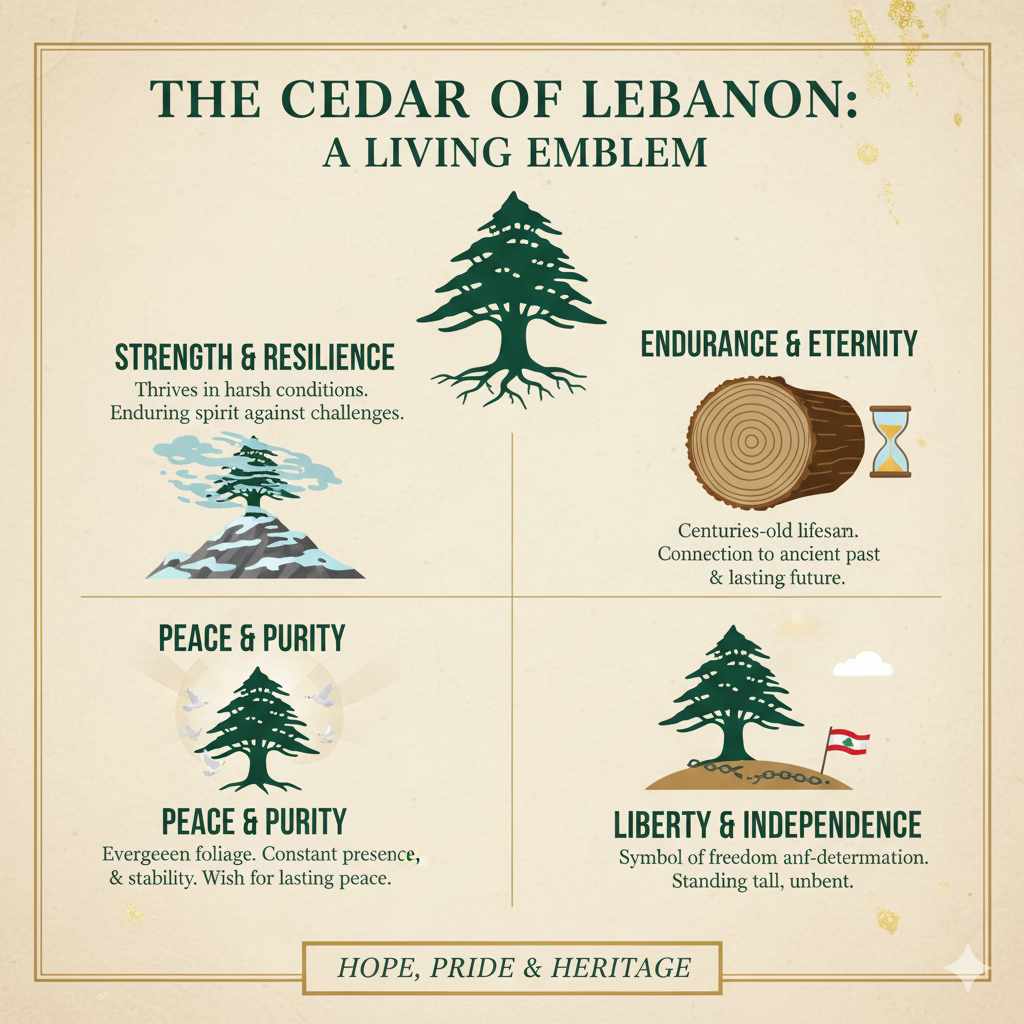
Beyond its historical significance and its place on the flag, the Cedar of Lebanon continues to embody key values for the Lebanese people. It’s a living emblem that inspires hope, pride, and a connection to their heritage.
Strength and Resilience
The Cedar is known for its incredible strength and ability to thrive in harsh mountainous conditions. It can withstand strong winds and grow on rocky slopes where little else can survive. This makes it a potent symbol of the Lebanese people’s own resilience and their capacity to endure challenges and overcome adversity. Like the tree that stands firm against the elements, the Lebanese spirit is seen as unwavering.
Endurance and Eternity
Cedar trees can live for hundreds, even thousands, of years. This immense lifespan naturally associates them with endurance, timelessness, and eternity. For Lebanon, a nation with a rich and ancient history, the Cedar signifies a connection to its past that stretches back into antiquity, and a hope for a continuous and lasting future. It’s a reminder that while times may change, the core identity and spirit can endure.
Peace and Purity
The evergreen nature of the Cedar, its deep green foliage that remains vibrant through all seasons, is often linked to concepts of peace and purity. In many cultures, evergreens are associated with life that continues, with a constant presence that brings calm and stability. For Lebanon, the Cedar on its flag is a wish for lasting peace and a symbol of the nation’s pure intentions and aspirations.
Liberty and Independence
In more recent historical contexts, the Cedar has also become a symbol of freedom and national liberation. Its presence on the flag is a declaration of independence and a steadfast commitment to liberty. The image of the Cedar standing tall and unbent by external pressures resonates with the nation’s struggle and desire for self-determination.
The Cedar in Lebanese Culture and Environment
The impact of the Cedar of Lebanon extends beyond national symbolism into the daily life, culture, and environment of the country. It’s a tree that inspires art, literature, and continues to be a vital part of its natural landscape.
Cultural Significance
The Cedar is deeply embedded in Lebanese folklore, poetry, and art. It’s a recurring motif that evokes a sense of national pride and belonging. Lebanese people often feel a profound personal connection to the tree, seeing it as a reflection of their own identity and heritage. It’s a shared icon that unites people from different backgrounds within the country.
From ancient myths to modern national anthems, the Cedar’s majestic presence is celebrated. It’s viewed as a guardian of the land, an ancient entity that has watched over Lebanon for millennia.
The Remaining Cedar Forests
While vast cedar forests once covered Lebanon, deforestation over centuries has reduced their numbers significantly. Today, the remaining ancient Cedar forests, such as the famed Cedars of God (Arz al-Rab) in Bsharri, are protected natural and cultural heritage sites. These sacred groves are more than just tourist attractions; they are living museums and vital ecosystems.
Efforts to preserve and replant Cedar trees are ongoing, reflecting a national commitment to safeguarding this precious national symbol. Organizations and the Lebanese government work together to protect these trees, understanding their immense value both environmentally and culturally. These forests are vital for biodiversity and for maintaining the ecological balance of the mountainous regions.
Visiting these ancient forests is often described as a spiritual experience, connecting visitors to the history and natural beauty of Lebanon. The sheer age and size of these trees are awe-inspiring.
Environmental Importance
Beyond its symbolic meaning, the Cedar of Lebanon plays an important ecological role. These trees help prevent soil erosion on steep mountain terrains, maintain water sources, and provide a habitat for various plant and animal species. Their ability to thrive in challenging environments makes them crucial for the health of the Lebanese mountain ecosystems.
The historical exploitation of Cedar wood for construction, shipbuilding, and fuel, while contributing to the development of past civilizations, highlights the need for sustainable practices today. Protecting these remaining forests ensures the continuation of their ecological benefits for generations to come.
Comparison: Cedar of Lebanon vs. Other National Symbols
To truly grasp the depth of the Cedar of Lebanon’s meaning, it helps to compare it with other national symbols. Many countries use animals, mythical figures, or objects to represent their identity. The Cedar, however, offers a unique connection to nature and history.
Consider the bald eagle for the United States, a symbol of power and freedom. Or the maple leaf for Canada, representing its vast forests and natural resources. While powerful, these symbols might represent specific aspects of a nation. The Cedar of Lebanon, however, is a living entity that has directly shaped the history, economy, and environment of the land for millennia.
Here’s a quick look at how it stacks up:
| Symbol | Country | Primary Meaning(s) | Nature of Symbol | Connection to History |
|---|---|---|---|---|
| Cedar Tree | Lebanon | Strength, resilience, eternity, peace, liberty | Living Natural Icon | Ancient and continuous, integral to development and identity |
| Bald Eagle | United States | Freedom, power, longevity | Animal | Chosen for symbolic representation, less directly tied to development |
| Maple Leaf | Canada | Nature, unity, peace | Plant (part) | Represents natural abundance and identity |
| Lion | Sri Lanka | Bravery, strength, monarchy | Animal | Associated with historical kingdoms |
The Cedar’s advantage lies in its tangible presence and its multi-faceted significance. It’s not just a chosen emblem; it’s a tree that has supplied building materials for ancient wonders, inspired religious texts, and endured as a geographical feature through changing times. This deep, practical, and enduring connection makes the Cedar of Lebanon particularly profound as a national symbol.
Preservation Efforts: Protecting a Living Legacy
The future of the Cedar of Lebanon hinges on dedicated preservation efforts. Recognizing the threats of climate change, disease, and past overexploitation, various initiatives are in place to protect these ancient trees and encourage new growth.
Challenges to Preservation
The remaining Cedar forests face several challenges:
- Climate Change: Shifting weather patterns can stress trees adapted to specific conditions.
- Pests and Diseases: Like any forest, Cedar groves can be vulnerable to outbreaks.
- Human Impact: While tourism is important, managing visitor impact is crucial to prevent damage to the sensitive environment.
- Historical Overexploitation: Centuries of logging have thinned populations, making recovery a long-term process.
Organizations and Initiatives
Several organizations are at the forefront of Cedar conservation in Lebanon:
- The Lebanon Reforestation Initiative (LRI): This organization works to restore degraded forest landscapes, including planting a variety of native trees, with a focus on Cedars. They aim to involve local communities in conservation efforts.
- Friends of the Cedars of God: A dedicated group focused on the protection and restoration of the historic Cedars of God forest in Bsharri. They work on maintenance, monitoring, and raising awareness.
- The Lebanese Ministry of Agriculture and Ministry of Environment: These governmental bodies play a crucial role in policy-making, protection laws, and managing national forest reserves.
The World Wildlife Fund (WWF) also supports conservation efforts in the region, contributing to habitat protection and sustainable land management practices that benefit species like the Cedar of Lebanon.
These efforts often involve scientific research to understand the trees’ needs better and innovative techniques for propagation and planting. Replanting initiatives aim not only to increase the number of Cedar trees but also to create diverse and resilient forest ecosystems.
Frequently Asked Questions About the Cedar of Lebanon
Here are some common questions beginners might have about the meaning of the Cedar of Lebanon:
What does the Cedar tree symbolize on the Lebanese flag?
The Cedar tree on the Lebanese flag symbolizes eternity, peace, and liberty. Its evergreen nature represents immortality and steadfastness, while its historical significance connects it to the nation’s enduring spirit.
Why is the Cedar so important to Lebanon?
It’s important because it’s a symbol deeply rooted in Lebanon’s history, culture, and environment. For thousands of years, its wood was prized, and today, it represents the nation’s strength, resilience, and aspirations for peace and freedom.
How old can Cedar of Lebanon trees get?
Cedar of Lebanon trees are incredibly long-lived. Individual trees can survive for hundreds, and in some cases, even over a thousand years. The oldest known specimens are estimated to be around 3,000 years old.
Are Cedar trees still found in Lebanon?
Yes, Cedar trees are still found in Lebanon, though their numbers have significantly decreased from ancient times. The most famous remaining ancient groves are protected sites, like the Cedars of God in Bsharri.
What is the difference between Cedar of Lebanon and other cedar trees?
The Cedar of Lebanon (Cedrus libani) is a distinct species within the genus Cedrus. While other trees are commonly called “cedars” (like Western Red Cedar or Eastern Red Cedar, which are actually in different families), the true cedars from the genus Cedrus are native to the Mediterranean region and the Himalayas. They are known for their unique cone structure and aromatic wood.
What is being done to protect the Cedar of Lebanon?
Various organizations and the Lebanese government are actively involved in conservation. This includes planting new trees, protecting existing ancient groves from harm, managing visitor access, and conducting research to combat threats like disease and climate change.
Can I visit the Cedar forests in Lebanon?
Yes, you can visit some of the most famous Cedar forests, such as the Cedars of God in Bsharri. These sites are often managed for tourism, allowing visitors to experience the majesty of these ancient trees while contributing to their preservation through entrance fees and responsible visiting practices.
Conclusion: The Enduring Spirit of the Cedar
As we’ve explored, the meaning of the Cedar of Lebanon goes far beyond its botanical classification. It is a profound symbol woven into the very identity of the nation. From its ancient uses by civilizations to its proud placement on the national flag, the Cedar represents strength, resilience, and an enduring spirit that has weathered millennia.
For the Lebanese people, the Cedar is a tangible link to their rich past and a hopeful beacon for their future. It embodies the nation’s ability to stand tall against adversity, its aspirations for peace, and its deep connection to its ancestral lands. The ongoing efforts to preserve these magnificent trees ensure that this living legacy will continue to inspire generations to come.
So, the next time you see that iconic Cedar on Lebanon’s flag, remember the deep history, the potent symbolism, and the unwavering spirit it represents. It’s a reminder that some symbols, like the Cedar itself, are truly timeless.