
What Kind of Japanese Maple Do I Have Easy ID
Lots of people wonder, “What Kind of Japanese Maple Do I Have? Easy ID seems tricky!” It’s true, these trees are beautiful, but telling them apart can feel a bit confusing at first. They have so many different leaf shapes and colors!
But don’t worry, it’s much simpler than you think. We’ll go step-by-step to help you figure out exactly which lovely Japanese maple is growing in your yard. Let’s get started identifying it!
Identifying Your Japanese Maple Tree
Figuring out what kind of Japanese maple you have is a fun gardening puzzle. These trees, known scientifically as Acer palmatum, come in hundreds of varieties, each with its own unique charm. Their appeal lies in their delicate foliage, beautiful bark, and stunning fall colors.
For many gardeners, the challenge comes from the sheer number of cultivars and the subtle differences that distinguish them.
Some maples have deeply cut, lacy leaves that look like fern fronds, while others have broader, more rounded leaves. The leaf color can range from vibrant greens and deep reds to oranges and even variegated patterns. Beyond the leaves, factors like tree shape, size, and bark texture also play a role in identification.
This guide breaks down the key features to look for, making the process straightforward and enjoyable.
Leaf Shape Is A Big Clue
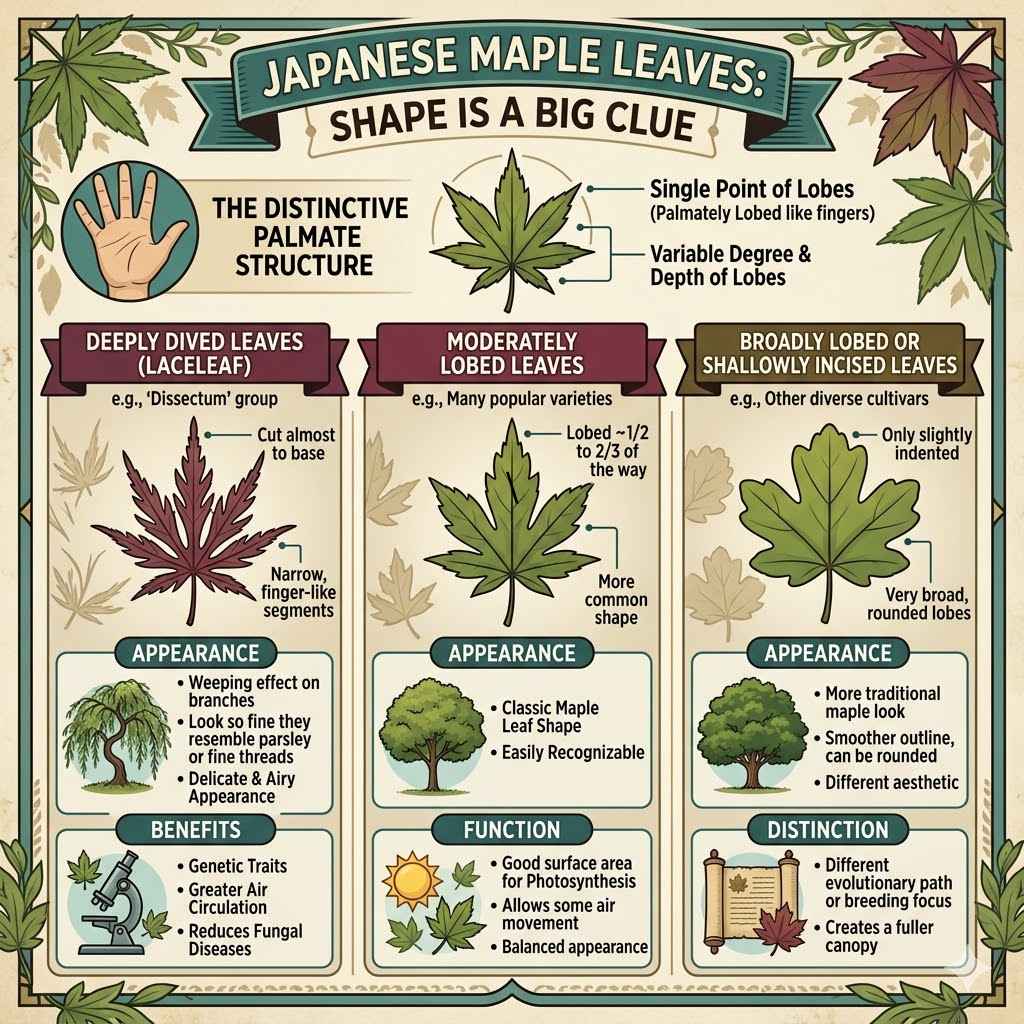
The leaves of Japanese maples are one of the most distinctive features to look at. They are generally palmately lobed, meaning the lobes radiate from a single point like the fingers of a hand. However, the degree and depth of these lobes vary greatly, offering a primary way to differentiate between varieties.
Some Japanese maples have very deeply divided leaves, often called dissected or laciniated. These leaves can look so fine that they resemble parsley or even fine threads. For example, the ‘Dissectum’ group, often called ‘laceleaf’ maples, are famous for this characteristic.
Their leaves are so finely cut that they create a cascading, weeping effect on the branches.
Deeply Lobed Leaves: If your maple’s leaves are cut almost all the way to the base, with narrow, finger-like segments, you likely have a dissected variety.
The explanation for deeply lobed leaves is that this characteristic is a result of specific genetic traits in the cultivar. This trait allows for greater air circulation around the leaf, which can be beneficial in certain climates by reducing the risk of fungal diseases. The fine texture also gives the tree a delicate and airy appearance, often making it a focal point in a landscape design.
Moderately Lobed Leaves: Many Japanese maples have leaves that are lobed about halfway to two-thirds of the way to the base. These are more common and include many popular varieties.
Moderately lobed leaves strike a balance between the deeply dissected types and those with simpler, broader leaves. This lobing pattern provides a good surface area for photosynthesis while still allowing for some air movement. Cultivars with moderately lobed leaves often exhibit a more classic maple leaf shape, making them easily recognizable as Japanese maples to many observers.
Broadly Lobed or Shallowly Incised Leaves: Some varieties have leaves that are only slightly indented or have very broad, rounded lobes. These might look more like a traditional maple leaf but are generally smaller and more refined.
The distinction of broadly or shallowly incised leaves signifies a different evolutionary path or breeding focus for that particular cultivar. These leaves often have a smoother outline and can sometimes be more rounded in overall shape. They contribute to a fuller, more solid canopy compared to the airy effect of dissected leaves, offering a different aesthetic appeal in garden settings.
Leaf Color Tells A Story
Beyond the shape, the color of the leaves is another crucial identifier for Japanese maples. This color can change throughout the seasons and even based on sun exposure, but the typical or dominant color is a strong clue.
The most common leaf color is green. These can range from a light, bright green in the spring to a deeper, richer green in the summer. Many green-leaved varieties are quite hardy and popular for their reliable growth and beautiful autumnal displays of yellow, orange, or red.
Green Leaves: A wide range of Japanese maples have green foliage. This is often the default color for many species.
Green leaves are essential for photosynthesis, the process by which plants convert sunlight into energy. The chlorophyll pigment is responsible for this green color. Many popular Japanese maple cultivars maintain a green hue throughout the growing season, providing a lush backdrop for other garden plants.
Their summer green can transition into stunning reds and oranges in the fall.
However, some of the most striking Japanese maples display colors other than green, especially when they emerge in spring or during their fall transformation. These can include vibrant reds, deep purples, oranges, and even variegated patterns with white or pink markings.
Red or Purple Leaves: Many beloved cultivars are known for their red or purple leaves that persist throughout the summer.
Red and purple Japanese maples get their unique coloring from pigments called anthocyanins. These pigments are produced in higher amounts than chlorophyll in certain cultivars, especially in cool temperatures or bright light. The intensity of the red or purple can vary, with some appearing almost blackish-red while others are a brighter, more vivid hue.
Orange or Yellow Leaves: Some maples are prized for their fiery orange or bright yellow foliage, often most intense in spring and fall.
Orange and yellow foliage in Japanese maples is often due to carotenoid pigments, which are present alongside chlorophyll. These colors become more apparent when chlorophyll production decreases, such as in cooler weather or less sunlight. Some cultivars have these colors as their primary foliage, offering a warm glow to the landscape.
Variegated Leaves: Look for leaves with patterns of white, pink, or cream mixed with green or red.
Variegated Japanese maples are highly sought after for their unique and decorative foliage. The variegation, which is the appearance of differently colored zones on a leaf, is caused by a lack of chlorophyll in certain cells. This can result in striking patterns that add visual interest to the tree, especially when viewed up close.
Tree Form and Growth Habit
The way a Japanese maple grows, its overall shape, also offers significant clues for identification. Japanese maples are not all upright, symmetrical trees. They can be upright, weeping, mounding, or spreading.
Upright varieties typically grow in a more vase-like or pyramidal shape, reaching upwards. These can become quite stately trees over time. They are often chosen for their structure and the way they frame a space.
Upright Growth Habit: The tree grows taller than it is wide, with branches that tend to reach upwards.
Upright Japanese maples are a cornerstone of many gardens, offering vertical interest and shade. Their structure can vary from narrow and columnar to broad and spreading, but the primary direction of growth is vertical. This habit makes them suitable for a variety of garden settings, from specimen trees to components of a mixed border.
Weeping varieties, on the other hand, have branches that droop downwards, creating a graceful, cascading effect. These are often stunning focal points, especially when planted on a small mound or near water.
Weeping Growth Habit: Branches arch or droop downwards, creating a flowing, fountain-like appearance.
Weeping Japanese maples are prized for their dramatic form and often delicate foliage. The branches can hang straight down, creating a curtain-like effect, or they can arch outwards before weeping. This habit makes them ideal for showcasing unique leaf shapes and colors, as the cascading branches draw the eye downwards.
Some maples have a more mounding or shrub-like form, growing wider than they are tall and developing a rounded outline. These are excellent for mass plantings or as ground cover for larger specimens.
Mounding or Bushy Habit: The tree grows wider than it is tall, forming a rounded or spreading shape.
A mounding growth habit is characteristic of certain Japanese maple cultivars that are bred for their compact size and rounded form. These maples are often used in smaller gardens or as understory plants where a less imposing silhouette is desired. They create a soft, naturalistic look and can be quite dense.
Bark Texture and Color
While often overlooked, the bark of a Japanese maple can also be a helpful identifier, especially in winter when the leaves are gone. The bark can be smooth, rough, textured, or even have striking colors.
Young trees generally have smoother bark that can be green, gray, or reddish-brown. As the trees mature, the bark can change. Some varieties develop prominent lenticels (small dots or lines on the bark), while others might become slightly fissured.
Smooth Bark: Many young Japanese maples have smooth, often greenish or grayish bark.
Smooth bark is typical of younger trees and many cultivars retain this smoothness even as they mature. The color can vary from light gray to greenish or even have a reddish tint. This smooth surface is a good starting point for identification, especially when combined with other features.
Some of the most striking bark is seen in winter, with varieties like Acer palmatum ‘Sango-kaku’ (Coral Bark Maple) displaying bright coral-red branches.
Textured or Colored Bark: Look for bark that is peeling, has striking patterns, or vibrant colors, especially on branches and stems.
Certain Japanese maple cultivars are specifically grown for their ornamental bark. ‘Coral Bark’ maple, for example, is famous for its vibrant red branches that provide a stunning splash of color in the winter landscape. Other varieties might have bark with peeling layers, adding to their visual interest and making them easily identifiable year-round.
Common Japanese Maple Cultivars to Know
Knowing a few of the most popular Japanese maple cultivars can help you narrow down your options. Each has distinct characteristics.
Acer palmatum ‘Bloodgood’ is a very popular upright variety known for its deep crimson-red leaves that hold their color well through the summer. It typically grows to about 15-20 feet tall and wide.
‘Bloodgood’ Cultivar Characteristics:
This cultivar is a classic choice for its reliable deep red foliage, which emerges bright red in spring and darkens to a rich, wine-red in summer. It maintains its color even in partial shade. ‘Bloodgood’ has a strong, upright, vase-shaped form, making it a substantial garden specimen.
Its palmate leaves are typically 5-lobed and medium-sized. It’s known for being quite hardy and adaptable to various conditions. Fall color is typically a brilliant red, adding to its appeal.
Acer palmatum ‘Crimson Queen’ is a popular laceleaf variety. It has deeply dissected leaves that are a beautiful deep red color. It often has a weeping or cascading growth habit.
‘Crimson Queen’ Cultivar Characteristics:
‘Crimson Queen’ is a standout among laceleaf Japanese maples, celebrated for its intensely dissected foliage and vibrant crimson color. The leaves are so finely cut they appear feathery or fern-like. This cultivar typically has a weeping or cascading growth habit, creating a graceful, fountain-like effect.
It can spread wider than it is tall, often reaching 5-6 feet in height but spreading 7-10 feet. Its deep red color is maintained throughout the summer, and it shows off a bright scarlet in the fall.
Acer palmatum ‘Katsura’ is a smaller, upright variety that is known for its striking spring color. Its leaves emerge a bright, apricot-orange, turning to a chartreuse green in summer before a golden fall color.
‘Katsura’ Cultivar Characteristics:
‘Katsura’ is a delightful Japanese maple that offers a spectacular color show, especially in the spring. Its new leaves emerge a vibrant apricot-orange, creating a warm, inviting glow. As the season progresses into summer, the foliage matures to a pleasing chartreuse green.
This cultivar has an upright, somewhat rounded growth habit, making it suitable for smaller gardens. It typically reaches around 6-10 feet in height. The fall color is a beautiful golden yellow, adding a final flourish to its seasonal display.
Acer palmatum ‘Viridis’ is a classic green laceleaf variety. Its leaves are finely dissected and a lovely bright green, becoming more yellow-green in summer. It has a strong weeping habit.
‘Viridis’ Cultivar Characteristics:
‘Viridis’ is one of the most iconic green laceleaf Japanese maples. Its finely divided leaves are a bright, vibrant green, giving it an airy and delicate appearance. This cultivar has a pronounced weeping habit, with branches that arch and cascade downwards, creating a lush, flowing effect.
It can grow to be wider than it is tall, often reaching 6-10 feet in height and spreading 10-15 feet. ‘Viridis’ is a versatile tree, providing delicate texture and beautiful color throughout the growing season, with good yellow to orange fall color.
Putting It All Together A Step-By-Step Guide
Now that you know the key features, let’s put them together to identify your Japanese maple. Follow these simple steps.
Observe the Leaf Shape: Are the leaves deeply cut and lacy, moderately lobed, or more broadly shaped?
Start by looking closely at the leaves. If they look like finely cut lace, resembling dill or fern fronds, you’re likely dealing with a dissected variety. If the cuts go about halfway or two-thirds down the leaf, it’s moderately lobed.
If the cuts are very shallow or the leaf is more rounded with just gentle indentations, it’s broadly lobed. This first observation will quickly narrow down the possibilities.
Note the Leaf Color: What is the dominant color of the leaves during the growing season?
Next, consider the leaf color. Is it a vibrant green, a deep red or purple, an orangey hue, or perhaps variegated with white or pink? Note whether the color is consistent throughout the summer or if it changes significantly.
If it’s red, how dark is it? If it’s green, is it light and bright or a darker shade? This will help distinguish between cultivars known for their specific foliage colors.
Assess the Tree’s Growth Habit: Does the tree grow upright, weep, or form a mound?
Observe the overall structure of the tree. Does it grow predominantly upwards with branches reaching for the sky? This is an upright habit.
Does it have branches that arch and droop downwards, creating a cascading effect? This indicates a weeping habit. Or does it grow wider than it is tall, forming a rounded, bushy shape?
This is a mounding habit. The growth habit is a major defining characteristic for many Japanese maple cultivars.
Examine the Bark (Especially in Winter): Is the bark smooth, textured, or colorful?
If possible, check the bark, especially during the dormant season when leaves aren’t present. Is it smooth and grayish, or does it have interesting textures like peeling or a vibrant color, such as the coral-red of Acer palmatum ‘Sango-kaku’? While bark is less often the primary identifier, it can confirm suspicions or provide a clue if other features are less clear.
Compare Your Observations to Known Cultivars: Use your findings to search for matching descriptions.
Once you have gathered these details—leaf shape, color, growth habit, and bark—you can start comparing them to descriptions of common Japanese maple cultivars. Websites, gardening books, and even plant identification apps can be invaluable resources. Look for combinations of these traits.
For instance, a deep red, deeply dissected, weeping maple is likely a ‘Crimson Queen’ or a similar laceleaf variety. A bright red, upright maple with 5-lobed leaves is likely ‘Bloodgood’.
Troubleshooting Common Identification Challenges
Sometimes, identifying a Japanese maple isn’t straightforward. Several factors can make it a bit trickier.
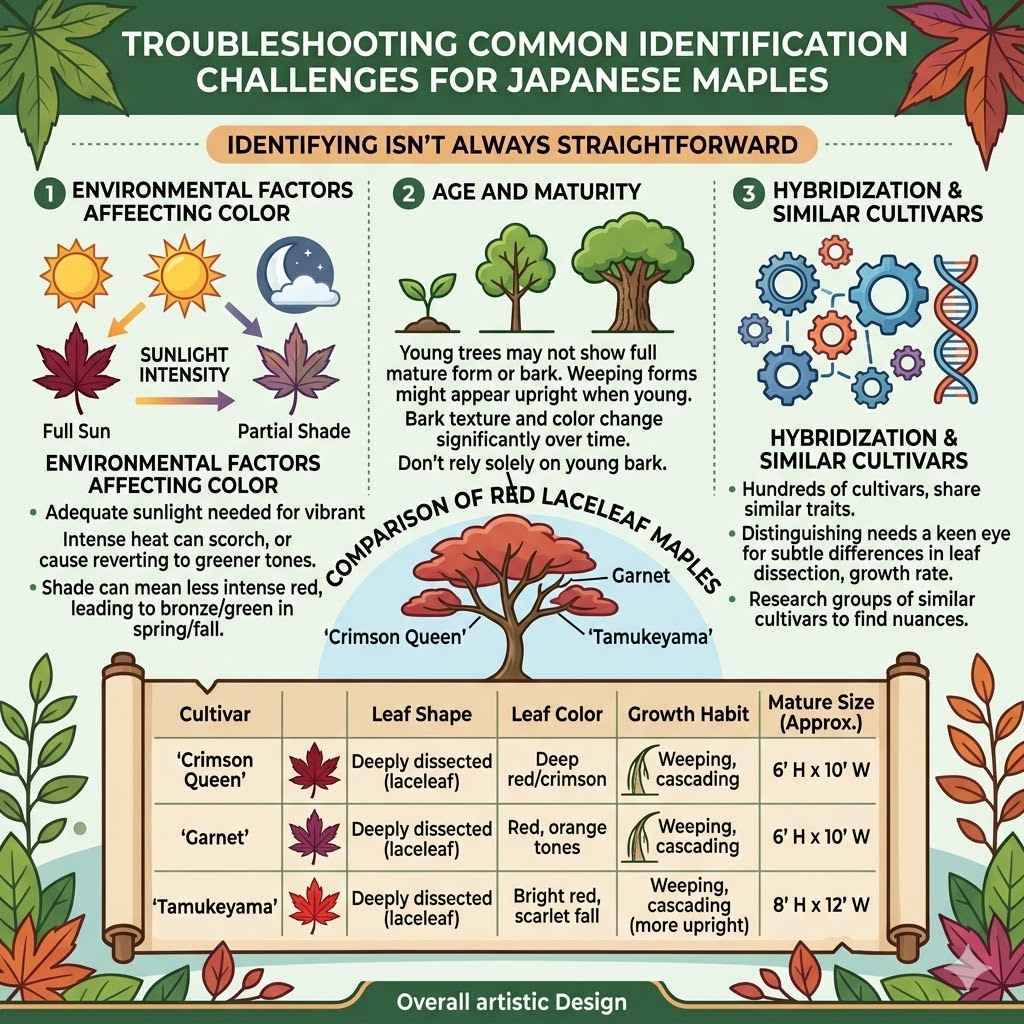
Environmental Factors Affecting Color: Sunlight intensity can dramatically alter leaf color. A maple that looks deep red in full sun might appear more purplish or even bronze in partial shade. Conversely, some red varieties may revert to greener tones in very hot conditions.
The way a Japanese maple displays its color is highly responsive to its environment. For example, many red-leafed cultivars produce their most vibrant hues when exposed to adequate sunlight. However, too much intense sun, especially in hot climates, can scorch the leaves or cause them to lose their deep color and turn a duller brown or even green.
Shade, on the other hand, might result in a less intense red or purple, sometimes leaning towards a bronze or green tone, especially in spring and fall.
Age and Maturity: Young trees may not display the full characteristics of their mature form or bark.
A young Japanese maple might not yet show the full extent of its mature growth habit or bark characteristics. For instance, a tree that will eventually develop a dramatic weeping form might appear more upright when it’s just a few years old. Similarly, bark texture and color can change significantly as the tree ages.
Relying solely on bark appearance from a young specimen can be misleading.
Hybridization and Similar Cultivars: Some cultivars look very similar and may be confused with each other.
The world of Japanese maples is vast, with hundreds of cultivars, and some share very similar traits. For example, several laceleaf varieties exist that are all red and weeping but have subtle differences in leaf dissection or growth rate. Distinguishing between these can sometimes require a very keen eye or knowledge of the subtle genetic variations that define each cultivar.
It’s helpful to research groups of similar cultivars to understand their nuances.
To help with this, here is a comparison table of a few very similar cultivars:
| Cultivar | Leaf Shape | Leaf Color | Growth Habit | Mature Size (Approx.) |
|---|---|---|---|---|
| ‘Crimson Queen’ | Deeply dissected (laceleaf) | Deep red/crimson | Weeping, cascading | 6′ H x 10′ W |
| ‘Garnet’ | Deeply dissected (laceleaf) | Red, sometimes with orange tones | Weeping, cascading | 6′ H x 10′ W |
| ‘Tamukeyama’ | Deeply dissected (laceleaf) | Bright red, can turn scarlet in fall | Weeping, cascading | 8′ H x 12′ W |
These three are all popular red laceleaf maples with weeping habits. ‘Crimson Queen’ is known for its deep, consistent red. ‘Garnet’ often has a slightly richer, almost purplish-red and can sometimes have a more layered branching pattern.
‘Tamukeyama’ tends to be a bit more upright in its weeping form and often displays a brighter, more scarlet red in the fall.
Frequently Asked Questions
Question: How do I know if my Japanese maple is getting enough sun?
Answer: Most Japanese maples prefer partial shade, especially in hotter climates, to prevent leaf scorch. If the leaves are browning or looking crispy around the edges, especially during hot, sunny periods, it might be getting too much direct sun. Conversely, if it’s not getting enough light, it might produce fewer leaves or less vibrant color, though this is less common.
Question: Can I identify my Japanese maple by its roots?
Answer: No, it is not practical or possible to identify a Japanese maple by its roots. Root systems are largely hidden underground and do not possess the distinctive visual characteristics needed for identification purposes like leaves, bark, or overall form do.
Question: My Japanese maple has red leaves year-round. What kind could it be?
Answer: If your Japanese maple has deep red or purple leaves that persist throughout the summer, it is likely a cultivar known for its stable red foliage, such as ‘Bloodgood’, ‘Emperor I’, or many of the red laceleaf varieties like ‘Crimson Queen’ or ‘Garnet’. These cultivars produce high levels of anthocyanin pigments that maintain the red color.
Question: What is the difference between Acer palmatum and Acer japonicum?
Answer: While both are Japanese maples, Acer palmatum cultivars are generally smaller and have more delicate, often deeply lobed leaves. Acer japonicum, known as the fullmoon maple, typically has larger, more rounded leaves that are only shallowly lobed and often display spectacular fall color.
Question: Are there any Japanese maples that stay very small?
Answer: Yes, there are several dwarf Japanese maple cultivars that are perfect for small gardens or containers. Examples include ‘Shishigashira’, which is a compact, upright grower with dense foliage, or ‘Mikawa yatsubusa’, a slow-growing, mounding variety. These often reach only 3-6 feet in height over many years.
Summary
You can now identify your Japanese maple by looking at its leaf shape and color, its growth habit, and its bark. Comparing these key features to descriptions of popular cultivars makes it easy. Even with tricky factors like sun exposure or age, you have the tools to make a good guess.
Enjoy your beautiful tree!