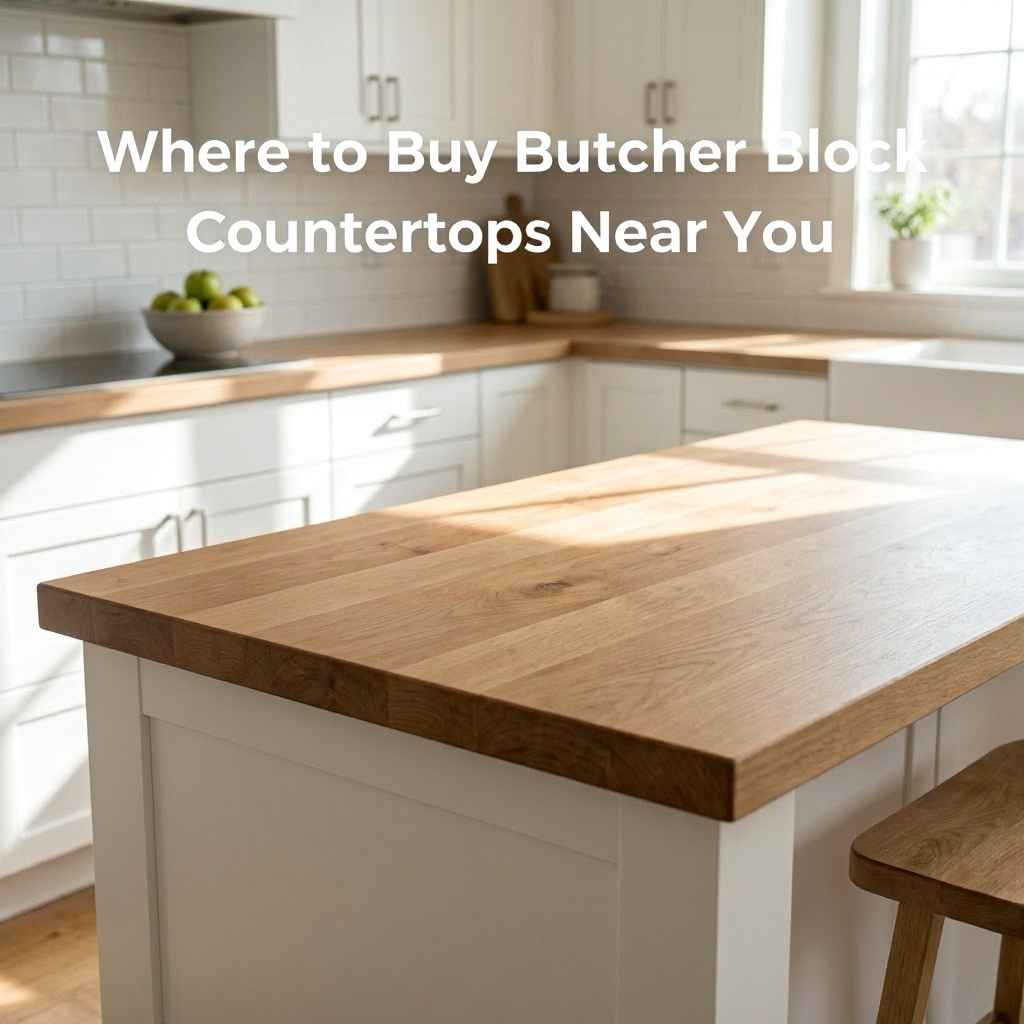
Where to Buy Butcher Block Countertops Near You
Finding the perfect butcher block countertops can feel like a puzzle, especially when you’re just starting. You might wonder, “Where to Buy Butcher Block Countertops Near You” and feel a bit lost with all the choices. But don’t worry!
It’s easier than you think to find exactly what you need. This guide will walk you through it step-by-step. We’ll explore the best places to look and what to consider to make your kitchen dreams a reality.
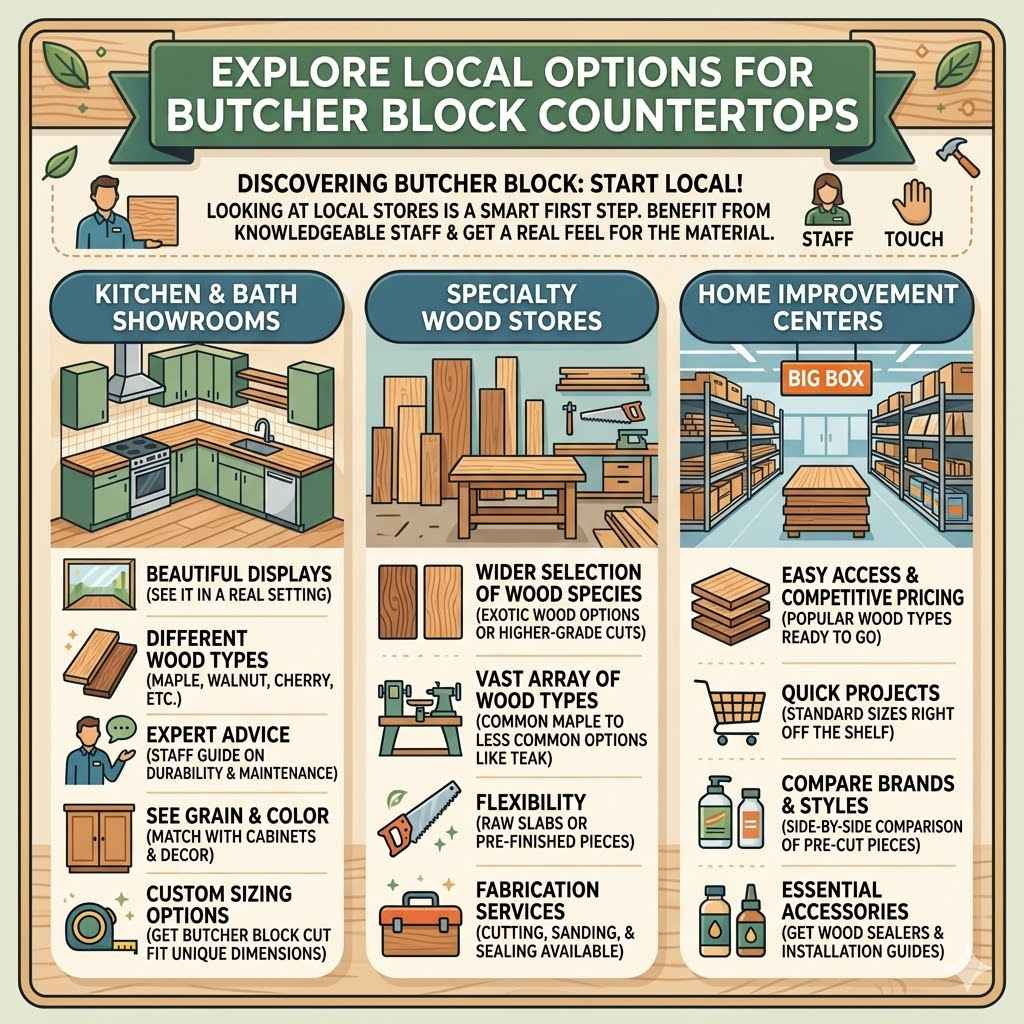
Explore Local Options For Butcher Block
When searching for butcher block countertops, looking at local stores is a smart first step. These places often have knowledgeable staff who can help you pick the right wood and finish. They also let you see and touch the material before buying, which is super helpful.
You can get a feel for the grain and weight. This direct experience helps avoid surprises later.
Kitchen and Bath Showrooms
Many local kitchen and bath showrooms carry butcher block options. These stores specialize in home renovation materials. They often have beautiful displays showing how butcher block looks in a real kitchen setting.
You can see different wood types like maple, walnut, and cherry. The staff can explain the pros and cons of each.
- Seeing the actual wood grain and color is important. This helps you match it with your existing kitchen cabinets and decor. You can compare different finishes too, like natural oil or polyurethane.
- Staff at these showrooms can guide you on durability and maintenance for each wood. They understand how different woods stand up to daily use and moisture. This advice is invaluable for making a long-lasting choice.
- You might find custom sizing options here. If your kitchen has unique dimensions, a showroom can help you get butcher block cut to fit perfectly. This ensures a seamless look.
Specialty Wood Stores
For a wider selection of wood species and quality, specialty wood stores are great. These places focus specifically on lumber and woodworking materials. They might have more exotic wood options or higher-grade cuts.
- These stores offer a vast array of wood types. You can find everything from common maple and oak to less common options like teak or bamboo. Each wood has its own unique look and hardness.
- You can often buy butcher block in raw slabs or pre-finished pieces. This gives you flexibility based on your DIY skills or professional installer’s needs. Raw slabs allow for complete customization.
- Wood stores sometimes offer fabrication services. They can cut, sand, and seal your butcher block countertops. This saves you time and ensures a professional finish.
Home Improvement Centers
Big box home improvement stores are a convenient option for finding butcher block. Stores like Home Depot or Lowe’s usually have a dedicated countertop section. They offer popular wood types and sizes ready to go.
- These centers provide easy access and often have competitive pricing. You can pick up standard sizes right off the shelf for quick projects. They are great for DIYers on a budget.
- You can compare different brands and styles side-by-side. Look at pre-cut pieces and see how they feel. It’s a good way to get a general idea of what you like.
- They offer essential accessories like wood sealers and installation guides. You can get everything you need for your project in one trip. This saves you multiple stops.
Online Retailers and Manufacturers
Shopping online opens up a world of options for butcher block countertops. You can find sellers specializing in custom wood surfaces or large online marketplaces. Online shopping offers convenience and a wide variety of choices, sometimes at better prices than local stores.
It is a popular way to find exactly what you want without leaving home.
Custom Butcher Block Websites
Many companies now specialize in creating custom butcher block countertops online. You can design your perfect piece by selecting wood species, dimensions, edge profiles, and finishes. They ship directly to you or a local installer.
- These websites allow for deep customization. You can specify exact lengths, widths, and thicknesses. Some even offer unique edge treatments and specialized finishes for a truly bespoke look.
- You can get high-quality wood species not always available locally. Options might include exotic hardwoods or premium domestic woods. This allows for unique kitchen aesthetics.
- Many custom online sellers offer detailed product information and customer reviews. This helps you make an informed decision. You can read about other people’s experiences with specific woods and finishes.
Large Online Marketplaces
Platforms like Amazon, Wayfair, or Overstock have a broad selection of butcher block countertops. You can find products from various manufacturers and sellers all in one place. This makes comparison shopping very easy.
- These sites offer a vast range of styles and price points. You can filter by wood type, brand, price, and customer ratings. It’s a great way to discover new brands and deals.
- Customer reviews are abundant on these platforms. Reading about others’ experiences can highlight potential issues or great features you might have missed. This social proof is very valuable.
- Delivery options are usually straightforward. Many sellers offer free shipping on large items like countertops, which can save you a lot of money.
Direct from Manufacturers
Some butcher block manufacturers sell directly to consumers through their own websites. This can sometimes offer lower prices because you cut out the middleman. It’s a good way to get a direct connection to the source.
- Buying directly can lead to better pricing. Eliminating retail markups often results in cost savings for you. You are essentially buying wholesale.
- You might gain access to more specialized products or factory seconds. This can be a way to get premium quality at a discount. Keep an eye out for clearance items.
- Direct communication with the manufacturer can be beneficial. You can ask detailed questions about the wood sourcing, production process, and warranties. This ensures you get exactly what you expect.
Factors to Consider When Buying
Before you decide where to buy butcher block countertops near you, think about a few key things. The type of wood, its thickness, and how it’s finished all matter. These choices affect the look, durability, and maintenance needs of your countertops.
Making informed decisions now will save you time and money later.
Wood Type and Durability
Different wood species offer varying levels of hardness and grain patterns. Maple is a popular choice because it is very hard and has a fine, uniform grain. Walnut is darker and has a richer grain, while oak is known for its strength and prominent grain.
- Hardwoods like maple, walnut, and cherry are excellent for kitchen use. They resist scratches and dents better than softer woods. Maple is often recommended for its smooth surface and durability.
- Softer woods might be more budget-friendly but can show wear more quickly. If you plan to do a lot of heavy chopping directly on the surface, a harder wood is a better investment.
- Consider the visual appeal. Maple offers a light, clean look that fits modern kitchens. Walnut provides a warm, luxurious feel for traditional or contemporary spaces. Oak has a classic, rustic charm.
Thickness and Construction
Butcher block countertops come in various thicknesses, typically from 1.5 inches to 2 inches or more. Thicker countertops generally look more substantial and can be more durable. The construction method also matters, with end-grain, edge-grain, and face-grain being common.
- End-grain construction is the most traditional for butcher blocks. It involves cutting wood into blocks and gluing them together with the grain running vertically. This self-healing surface is ideal for chopping.
- Edge-grain construction uses strips of wood glued together along their edges. This is a very stable and durable option, often used for countertops. It has a linear, striped appearance.
- Face-grain construction uses the widest part of the wood planks. It shows off the wood’s natural beauty and grain patterns the most. This is also a durable choice for countertops.
Finishing Options
The finish protects the wood and affects its appearance and maintenance. Options include natural oil finishes, polyurethane, and epoxy. Each has different pros and cons.
- Oil finishes, like mineral oil or tung oil, penetrate the wood. They create a natural look and feel and are easy to repair. However, they require regular reapplication and offer less protection against stains and water.
- Polyurethane and other varnish-based finishes create a protective film on the surface. They offer excellent resistance to moisture and stains. However, repairs can be more difficult, and they might not look as natural.
- Epoxy resin finishes are very durable and waterproof. They can be clear or colored, offering a modern, seamless look. These are great for high-traffic areas but can be more expensive and require professional application.
Budget and Installation
Butcher block prices vary significantly based on wood type, thickness, and the seller. Always factor in installation costs, especially if you’re not a DIY expert. Getting quotes from local fabricators or installers is wise.
- Standard maple or oak butcher block from a home improvement store will be more affordable than exotic hardwoods from a specialty online retailer. Set a clear budget before you start shopping.
- Consider if you will install it yourself or hire a professional. DIY installation can save money but requires tools and skill. Professional installation ensures a perfect fit and finish but adds to the total cost.
- Always ask about delivery fees or shipping costs. For local purchases, delivery might be included or a separate charge. Online orders can have significant shipping expenses for large, heavy items.
Tips for Finding the Best Deal
Once you know what you’re looking for, finding a good deal on butcher block countertops is within reach. It involves a bit of research and comparing options. Keep an eye out for sales and consider different purchasing strategies.
Compare Prices from Multiple Sources
Don’t settle for the first price you see. Check prices at local lumber yards, home improvement stores, and several online retailers. Websites that aggregate prices from different sellers can also be helpful.
- Visit at least three different types of retailers if possible—a big box store, a local specialty shop, and one or two online options. This gives you a broad understanding of the market.
- Look for any hidden costs, such as delivery fees, cutting charges, or finishing fees. These can add up quickly and change the overall price significantly.
- Consider the quality of the wood and construction. Sometimes a slightly higher price means a much better product that will last longer and look better.
Look for Sales and Discounts
Many retailers offer seasonal sales, holiday discounts, or clearance items. Signing up for email newsletters from your favorite stores can alert you to upcoming promotions.
- Many stores have “anniversary sales” or “presidents’ day sales” where countertops might be discounted. Keep a calendar of major retail holidays.
- Factory seconds or “blemished” items can offer significant savings. These are usually perfectly functional pieces with minor cosmetic flaws that won’t be visible once installed.
- Contractors or cabinet makers might have access to special pricing or deals. If you’re working with a professional, ask if they can get a better rate for you.
Consider Refurbished or Reclaimed Wood
For a unique and eco-friendly option, explore reclaimed wood countertops. These can offer a distinctive aesthetic and a compelling story. You might find these at architectural salvage yards or specialized online sellers.
- Reclaimed wood adds character and history to your kitchen. It’s a great choice for those who love a rustic or antique look. Each piece is unique.
- This can be a more budget-friendly option, especially if you find a source that sells by the board foot. However, ensure the wood is properly treated and sealed for kitchen use.
- Look for sources that specialize in preparing reclaimed wood for countertops. They will ensure it’s stable, clean, and ready for installation.
Local Pros and Cons
Buying locally has its own set of advantages and disadvantages. While it might feel more convenient to support nearby businesses, it’s important to weigh these against other options.
Advantages of Local Shopping
Shopping locally means you can see the materials firsthand. This helps in making a confident purchase. Also, local businesses often offer personalized service and can provide quick support if you have issues.
- Immediate visualization: You can touch, feel, and inspect the butcher block before buying. This eliminates guesswork about color, grain, and quality.
- Personalized advice: Local experts can offer tailored recommendations based on your kitchen’s needs and your personal style. They know their products well.
- Easier returns and support: If there’s an issue, returning items or getting help from a local store is often simpler and faster than dealing with a distant online company.
Disadvantages of Local Shopping
Local stores may have a more limited selection compared to online retailers. Prices might also be higher due to overhead costs. Delivery options can also be less flexible.
- Limited selection: You might not find as many wood species, sizes, or finishing options as you would online.
- Potentially higher prices: Local retailers often have higher operating costs, which can be reflected in their pricing.
- Less flexible delivery: Delivery schedules and costs might be more restrictive compared to the wide range of options available from national online sellers.
Online Pros and Cons
Online shopping for butcher block countertops offers convenience and variety. However, it also comes with its own set of challenges that you should be aware of.
Advantages of Online Shopping
Online retailers offer a vast selection of products from various manufacturers worldwide. You can often find competitive pricing and read reviews from a wide customer base. Delivery to your doorstep is also a major perk.
- Wider selection: Access to an immense variety of wood types, sizes, finishes, and styles from global sellers.
- Competitive pricing: Often find better deals due to lower overhead for online businesses and bulk purchasing power.
- Convenience: Shop anytime, anywhere, and have items delivered directly to your home or project site.
Disadvantages of Online Shopping
The biggest challenge is not being able to see the actual product before purchase. There’s also the risk of shipping damage and potential difficulties with returns or customer service.
- Cannot see or touch the material: Relying on photos and descriptions can lead to unmet expectations regarding color, grain, or texture.
- Shipping risks: Large, heavy items are susceptible to damage during transit. Inspecting shipments carefully upon arrival is crucial.
- Return and support issues: Dealing with returns or customer service for online purchases can sometimes be more complicated and time-consuming.
Choosing the Right Wood Species for Your Kitchen
The wood you choose for your butcher block countertops impacts their appearance, durability, and maintenance. Each species has unique characteristics that make it suitable for different kitchen styles and usage patterns. Understanding these differences will help you make the best selection for your home.
Maple Countertops
Maple is one of the most popular choices for butcher block countertops. It’s a hardwood known for its dense grain and pale, creamy color. This makes it resistant to scratches and dents, ideal for a busy kitchen.
- Durability: Maple is a hard, dense wood that holds up well against knife marks and daily wear. It’s a long-lasting material for high-traffic kitchen areas.
- Appearance: Its fine, uniform grain and light color offer a clean, modern look that complements various cabinet styles. It can be stained to achieve different shades.
- Maintenance: Maple can be finished with oil for a natural look or sealed with polyurethane for increased protection. Oil finishes require more frequent upkeep.
Walnut Countertops
Walnut butcher block offers a rich, dark color and beautiful grain patterns. It provides a luxurious and warm aesthetic to any kitchen. While slightly softer than maple, it’s still a durable choice for countertops.
- Aesthetic appeal: Walnut’s deep, chocolaty tones and striking grain variations add elegance and depth to kitchen designs. It stands out as a premium material.
- Durability: It’s a strong hardwood that can withstand daily kitchen activities. Its natural oils offer some resistance to moisture.
- Cost: Walnut is generally more expensive than maple or oak, reflecting its premium quality and appearance.
Oak Countertops
Oak butcher block is a classic choice, known for its strength and distinctive grain. It has a yellowish-brown hue and prominent patterns that lend a rustic or traditional charm to kitchens. Red and white oak are common varieties, with white oak being more resistant to moisture.
- Strength and stability: Oak is a very hard and sturdy wood, making it a practical choice for countertops that see a lot of use. It is known for its longevity.
- Visual character: The pronounced grain of oak adds texture and visual interest. It pairs well with country, farmhouse, or traditional kitchen styles.
- Versatility: Oak can be stained in various shades, from light to dark, allowing for flexibility in matching your kitchen decor.
Other Wood Options
Beyond the most common choices, many other wood species can be used for butcher block countertops. Teak, cherry, and bamboo offer unique benefits and aesthetics.
- Cherry wood: Offers a warm, reddish-brown color that darkens beautifully with age. It has a fine grain and is moderately hard, making it a good balance of beauty and durability.
- Teak wood: Known for its exceptional water resistance and durability, teak is a premium choice. It has a distinctive golden-brown color and is often used in marine applications due to its natural oils.
- Bamboo: A sustainable and rapidly renewable resource, bamboo offers a modern, light appearance. It’s very hard and durable, making it an excellent choice for eco-conscious consumers.
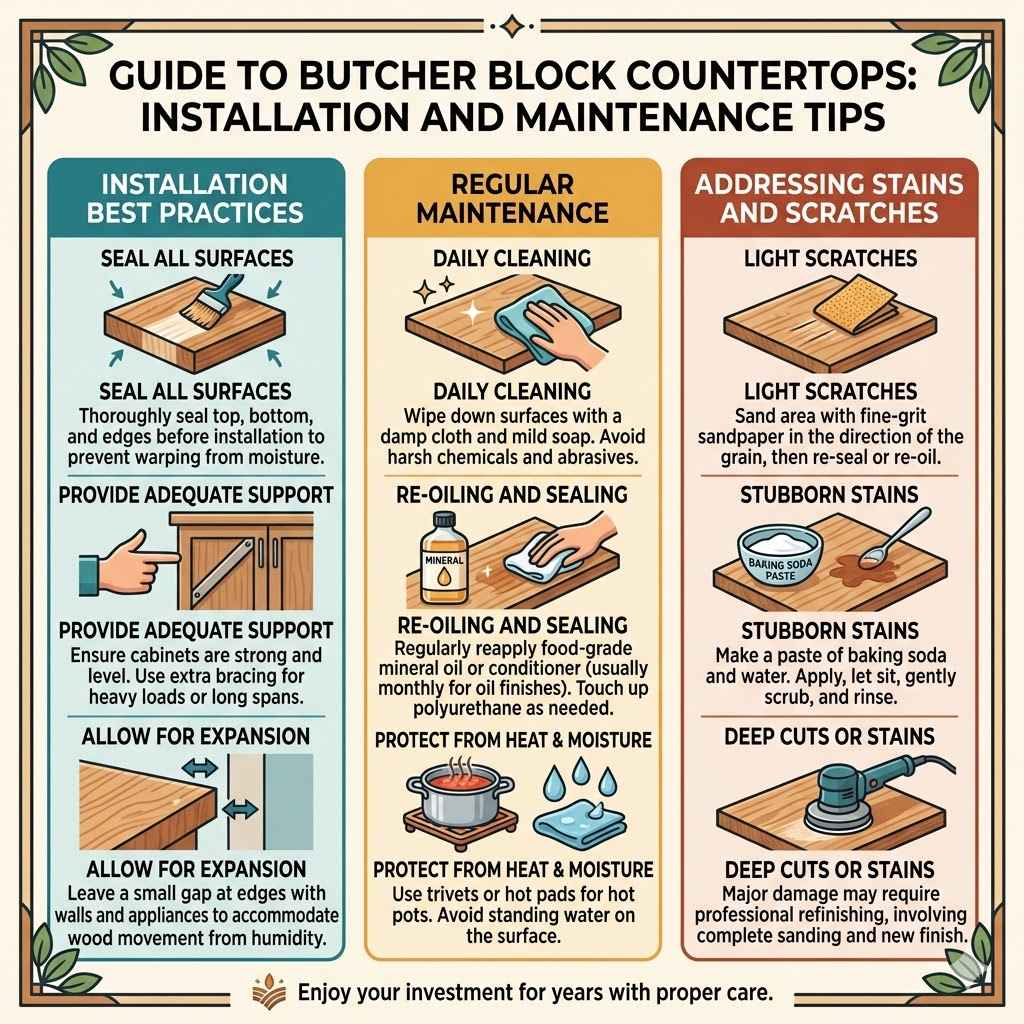
Installation and Maintenance Tips
Proper installation and regular maintenance are key to ensuring your butcher block countertops look great and last for years. Understanding the best practices will help you enjoy your investment.
Installation Best Practices
Whether you are installing yourself or hiring a professional, certain steps are crucial for a successful installation. This includes proper sealing, support, and fitting.
- Seal all surfaces: Before installation, and especially if using oil finishes, thoroughly seal all sides, edges, and the underside of the butcher block. This prevents moisture absorption and warping.
- Provide adequate support: Butcher block countertops can be heavy. Ensure your cabinets provide strong, even support. Use additional bracing if needed, especially for longer spans.
- Allow for expansion: Wood expands and contracts with changes in humidity. Leave a small gap around the edges where the countertop meets walls or appliances to accommodate this movement.
Regular Maintenance
Keeping your butcher block countertops in top condition requires consistent care. This includes cleaning, oiling, and protecting the surface from damage.
- Daily cleaning: Wipe down surfaces with a damp cloth and mild soap after each use. Avoid harsh chemicals or abrasive scrubbers, which can damage the finish.
- Re-oiling and sealing: If you have an oil finish, reapply mineral oil or a cutting board conditioner regularly, usually monthly or as needed. Polyurethane finishes require less frequent maintenance but may need touch-ups over time.
- Protect from heat and moisture: Use trivets or hot pads under hot pots and pans. Avoid letting water stand on the surface for extended periods.
Addressing Stains and Scratches
Minor stains and scratches are inevitable with butcher block, but they are often fixable. Knowing how to address these issues can restore your countertops to their former glory.
- For light scratches, you can often sand down the affected area with fine-grit sandpaper and then re-seal or re-oil it. Work with the grain for the best results.
- Stubborn stains can sometimes be removed using a paste of baking soda and water. Let it sit on the stain for a bit, then gently scrub and rinse.
- Deep cuts or stains might require professional refinishing. This involves sanding the entire countertop down to bare wood and applying a fresh finish.
Frequently Asked Questions
Question: Where can I find butcher block countertops locally?
Answer: You can find butcher block countertops at local kitchen and bath showrooms, specialty wood stores, and home improvement centers like Home Depot and Lowe’s.
Question: Are online retailers a good option for butcher block?
Answer: Yes, online retailers offer a vast selection and competitive prices. Just be sure to check reviews and consider shipping costs and potential damage.
Question: What is the most durable wood for butcher block?
Answer: Hardwoods like maple and oak are considered very durable for butcher block countertops due to their density and resistance to scratches and dents.
Question: How often should I oil my butcher block countertops?
Answer: If your butcher block has an oil finish, it typically needs re-oiling monthly or whenever the wood looks dry. Polyurethane finishes require much less frequent upkeep.
Question: Can I chop directly on my butcher block countertops?
Answer: Yes, butcher block, especially end-grain construction, is designed to be used as a cutting surface. However, it may show knife marks over time, which can be sanded out.
Summary
Finding the right place to buy butcher block countertops near you is straightforward. You can visit local showrooms and wood stores for hands-on selection, or explore the wide variety offered by online retailers. Consider wood type, thickness, and finish, compare prices from multiple sources, and remember that proper installation and maintenance will keep your new countertops beautiful for years.