What to Put on Wood to Make It Food Safe: Finishes & Wood Types (2026)
Food-safe wood takes two decisions, not one: a closed-grain, non-toxic species such as maple, walnut, cherry, or beech, and a finish that has a real food-contact basis, such as food-grade white mineral oil, beeswax, carnauba wax, or fully cured pure tung oil. Polyurethane, lacquer, varnish, and boiled linseed oil are the usual mistakes. Below: species, finishes, the regulation behind each one, cure times, and care.
Why “Food-Safe” Means the Wood Species AND the Finish
Best Food-Grade Mineral Oil Pick
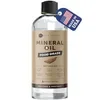 |
Kate Naturals Mineral Oil for Wood Cutting Board, Food Grade, 8 oz, $8.99 A USP, food-grade white mineral oil, the same class of oil covered by 21 CFR 172.878 and the base coat this guide recommends under any beeswax blend.
|
As an Amazon Associate we earn from qualifying purchases.
Most guides jump straight to oils and skip the first question: is the wood itself a sensible choice for something that touches food? Two properties matter, grain structure and toxicity.
Closed-grain hardwoods like maple, walnut, cherry, and beech have tight fibers that resist moisture. That matters for hygiene too: in a 1994 study in the Journal of Food Protection, Ak, Cliver, and Kaspar contaminated new and used boards of nine hardwoods and several plastics with bacteria and found that the common belief that plastic is more sanitary than wood is not supported. Our own breakdown of that research covers the details. Open-grain woods like oak and ash have larger pores that hold moisture and food particles, so they make a weaker primary cutting surface even though they are not toxic. Softwoods like pine dent and splinter, creating grooves a finish cannot seal.
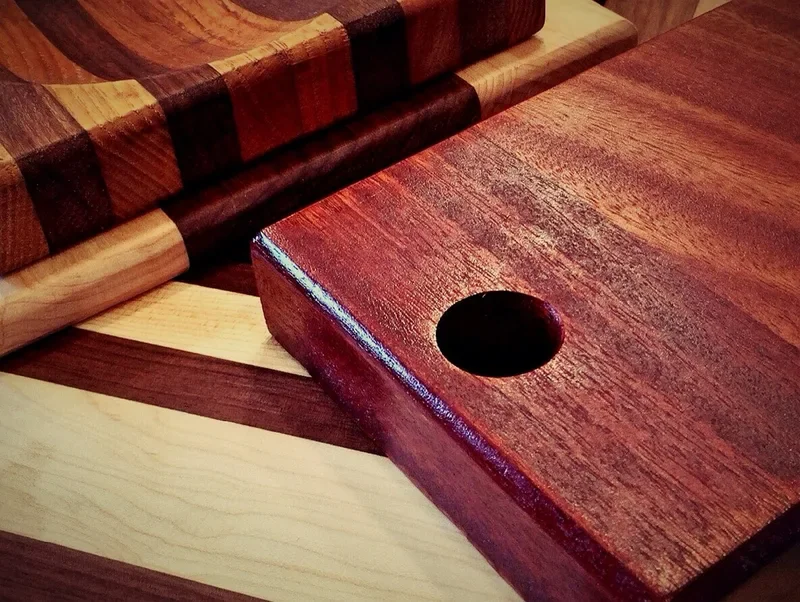
A few species this site has covered individually: walnut is food-safe (with a nut-allergy caution), acacia is food-safe with a few care rules, mahogany is safe once finished, and poplar is non-toxic but too porous to be a good primary cutting-board wood. For any species not listed, check its toxicity and grain tightness first, because no finish can compensate for the wrong wood.
Food-Safe vs. Not Food-Safe: The Finish Comparison
One mistake shows up constantly in wood-care advice: treating every “natural oil” as equally safe. The first table separates what is fine for food contact from what only sounds like it should be.
| Food-Safe | NOT Food-Safe |
|---|---|
| Food-grade (white, USP) mineral oil | Boiled linseed oil (sold with cobalt and manganese driers) |
| Pure beeswax and carnauba wax | Polyurethane, varnish, and lacquer on cutting or eating surfaces |
| 100% pure tung oil, fully cured (15 to 30 days) | “Tung oil finish” blends with varnish, driers, or mineral spirits |
| Walnut oil (not for anyone with a tree-nut allergy) | Oil-based stains and paints |
| Dewaxed shellac, cured | Hardware-store “mineral spirits” (a solvent, not mineral oil) |
The second table is the part most competitors skip: where each finish actually appears in the FDA rules (Title 21 of the Code of Federal Regulations). I found no FDA list of “approved wood finishes.” The rules attach to individual substances, and each row says what that does and does not tell you.
| Finish | Where it appears in 21 CFR | What it does NOT mean |
|---|---|---|
| White mineral oil | 172.878 (USP-grade specification and food uses) and 178.3620(a) (permitted as a component of nonfood articles that contact food) | It must be white, USP-grade oil. Industrial or lubricating oil is a different product. |
| Beeswax | 184.1973 (a GRAS substance; listed uses include surface-finishing agent) | Pure beeswax only, not a furniture paste blended with solvents. |
| Carnauba wax | 184.1978 (a GRAS substance; surface-finishing agent) | Same caveat: pure wax, not a solvent-based polish. |
| Tung oil | 175.300 lists “Chinawood (tung)” among drying oils for coatings on food-contact articles | Applies to the pure oil, not to blends, and not until the film has cured. |
| Shellac | 175.300 lists shellac as a natural resin for food-contact coatings | You still need the dewaxed grade and a full cure; check the can. |
| Polyurethane | No entry for polyurethane resins found in 175.300 | Absence is not proof of harm, but it means there is no regulatory basis to call a hardware-store can “food safe” without the maker saying so. |
Section 175.300 is written for industrial coatings on packaging and equipment, so read it as a signal about which substances have a food-contact basis, not as an endorsement of any hardware-store can. The practical rule that follows: pick the substance with a clear entry (mineral oil, beeswax, carnauba, pure tung oil, shellac), and buy the pure version.
Boiled linseed oil is the most commonly confused entry. Raw linseed oil is a drying oil, but “boiled” oil today is not heat-treated: one common retail product, Klean-Strip Boiled Linseed Oil, lists its safety-data-sheet composition as “linseed oil, manganese and cobalt driers.” Those metal driers are why boiled linseed oil is not food-safe, even though the oil underneath is not the problem.
Mineral Oil: The FDA-Compliant Default
Food-grade white mineral oil is where most guides, this one included, start, because it has the clearest regulatory footing. 21 CFR 172.878 sets the white mineral oil specification and lists its approved food uses, and 21 CFR 178.3620(a) allows that same grade as a component of nonfood articles that touch food, which is the category a board or utensil falls into. It is colorless, odorless, and does not go rancid the way a plant oil eventually can.
To condition a board, sand any rough spots, wipe off the dust, and rub in an even coat with a lint-free cloth. The brand named in the box above prints a 15 to 20 minute absorb time followed by wiping off the excess, then repeating about monthly. On a brand-new board, end grain and edges drink far more than the faces, so keep applying coats until the wood stops absorbing; that saturation step is common woodworking practice rather than a regulation. Wash with hot, soapy water, dry the board on edge, and never soak it or run it through a dishwasher.

Beeswax and Carnauba Wax: Sealing in the Oil
Wax finishes build on mineral oil rather than replace it. Beeswax and carnauba wax sit on the surface instead of soaking in, which slows moisture loss between oilings. Both have their own GRAS entries in the FDA rules (see the table above), with surface-finishing agent among their listed functions.
Commercial board conditioners are typically beeswax dissolved in mineral oil, applied like straight oil and buffed once the wax firms up. Buy pure beeswax or carnauba, not a furniture paste wax, which often carries solvents.
Dewaxed Shellac: The One Shellac That Qualifies
Shellac is a resin from the lac insect dissolved in denatured alcohol, and it appears as a natural resin in 21 CFR 175.300. Once the alcohol has evaporated and the film has cured, it is a reasonable finish for incidental food contact. Use the dewaxed grade: regular shellac contains natural wax that can leave a surface tacky or uneven. This site covers one specific product in its Zinsser shellac food-safety page; read the can for its current food-contact statement before you rely on it.
Is Varnish, Stain, or Paint Food Safe?
For surfaces you cut on or eat directly from, no: standard oil-based varnish, stain, and paint are not formulated for food contact, and none of them has an entry in the FDA sections discussed above. If you want color on a food-contact piece, the safest route is a species that already has it, such as walnut or cherry. Finishes that never touch food, such as the underside of a serving tray, can use any finish you like.
If you are choosing a finish for a butcher-block countertop rather than a movable board, our guide to butcher block finish options compares the choices for that specific surface.
What About Polyurethane or Polycrylic?
Neither water-based polyurethane nor polycrylic has an entry I could find in the FDA coating section, so there is no regulatory basis to call them food-safe on their own. Some makers state their cured films are safe for incidental contact; follow the specific can, and note that the cure time on the label is much longer than “dry to the touch.” Neither is a good choice for a board a knife will touch, because cutting through the film exposes bare wood and can shed film flecks. For anything a knife touches, mineral oil and wax remain the simpler choice.
Tung Oil and Walnut Oil: The Drying-Oil Alternative
Pure tung oil and walnut oil are drying oils: they cure by oxidizing into a hardened film instead of staying liquid in the wood like mineral oil. That film is more water-resistant, but the wait is much longer than most online guides say. One maker of pure tung oil, Real Milk Paint, puts full cure for food-contact use at 15 to 30 days, not the 7 to 10 days commonly repeated.
| Finish | How it works | Wait before food contact |
|---|---|---|
| Food-grade mineral oil | Non-drying, soaks in and stays liquid | Wipe off excess after the label soak time (15 to 20 minutes on one brand); usable that day |
| Beeswax or carnauba in mineral oil | Non-drying, wax layer on top | Buff once firm; usable that day |
| 100% pure tung oil | Drying oil, cures to a film | 15 to 30 days for full cure (one maker) |
| Walnut oil | Drying oil, slower and softer film | Varies by product; follow the label. A tree-nut allergen |
| Dewaxed shellac | Alcohol evaporates, resin film remains | Follow the can; allow the full cure |
Buy 100% pure tung oil, not a can labeled “tung oil finish.” Per the same maker, store-bought tung oil finishes often contain varnish, additives, dryers, or mineral oils, while pure tung oil contains no additives, no driers, and no synthetic resins. If the label or safety data sheet lists anything beyond tung oil (and possibly a citrus solvent), it is not pure. Apply thin coats and let each dry before the next.
How Often to Reapply and Maintain the Finish
A board that looks dry, feels rough, or has lightened is telling you it needs oil, regardless of the calendar. As a baseline, plan on about monthly for a board in regular use (the interval printed on the mineral oil label named above), and a little less often once a wax layer is in place. Wash with mild soap and hot water, dry it standing on edge, and never soak it. For spoons and other small pieces, see our guide to caring for wood spoons.
DIY Food-Safe Wood Finish Recipes
A basic board butter is easy to make: melt beeswax into food-grade mineral oil in a double boiler, stir until combined, and let it cool to a soft paste. A commonly used home ratio is about 1 part beeswax to 4 parts oil; that ratio is a woodworker rule of thumb, not a regulatory figure, so add more wax for a firmer paste and less for an easier spread. Apply with a cloth and buff.
The Real FDA Rule, Explained Correctly
The FDA does not publish a checklist of approved wood finishes; it regulates substances, as the table above shows. Standard varnish and polyurethane have no comparable entry that I found, which is the reason to keep them off cutting surfaces. In practice: look for a product explicitly labeled food-grade, check the ingredient list or safety data sheet for solvents and driers, and confirm it is cured or wiped off before use.
Frequently Asked Questions
What makes wood food safe?
Wood is food-safe when two things line up: the species is a dense, closed-grain, non-toxic hardwood (maple, walnut, cherry, beech), and the finish is one with a food-contact basis, such as food-grade white mineral oil, pure beeswax, carnauba wax, fully cured pure tung oil, or dewaxed shellac. Either one alone is not enough: a food-safe finish on a porous or toxic wood fails, and so does a great species coated in polyurethane.
Which wood species are naturally food safe?
Maple, walnut, cherry, and beech are the standard food-contact hardwoods because their tight grain resists moisture and food particles. Oak and ash are non-toxic but open-pored, so they are a weaker choice for a cutting surface. Softwoods like pine dent and splinter easily. Some exotic species cause allergic or skin reactions in some people, so check an unfamiliar species specifically before using it for kitchenware.
How do I treat wooden utensils for safety?
Wash and dry the utensils completely, rub on food-grade mineral oil with a clean cloth, let it soak in for 15 to 20 minutes (the timing printed on one major brand’s label), then wipe off the excess. Repeat until the wood stops soaking it up. Reapply roughly monthly, or sooner when the wood looks dry or pale.
Can I use varnish on food-contact surfaces?
Not on a surface you cut on or eat directly from. Standard varnish, polyurethane, and lacquer are not formulated for food contact, and none of them has an entry in the FDA food-contact sections reviewed for this guide. Use mineral oil, pure beeswax, or dewaxed shellac there, and keep varnish for decorative surfaces that food never touches.
How often should I oil wooden kitchen items?
About once a month for a board in regular use, based on the reapplication interval printed on a leading food-grade mineral oil label, and sooner whenever the wood looks dry, pale, or rough. Boards washed daily may need it more often. A new board should be oiled repeatedly at the start until the wood stops absorbing it.
Is tung oil food safe for cutting boards?
Pure tung oil is food-safe once fully cured, and one maker of pure tung oil puts full cure at 15 to 30 days, not the 7 to 10 days often repeated online. Products labeled tung oil finish often contain varnish, additives, driers, or mineral oils and should not be used on food-contact surfaces. Confirm the label or safety data sheet lists only tung oil.
What is the best food-safe finish for cutting boards?
Food-grade white mineral oil, followed by a beeswax and mineral oil blend to slow moisture loss. Mineral oil is the only option here that needs no cure time, is cheap, and is easy to reapply. Pure tung oil makes a harder, water-resistant film but demands a weeks-long cure before the first use.
Conclusion
Start with a dense, closed-grain hardwood such as maple, walnut, cherry, or beech, then finish it with food-grade mineral oil, beeswax, carnauba, pure tung oil (fully cured), or dewaxed shellac. Skip polyurethane, lacquer, varnish, and boiled linseed oil on anything that touches food. Reapply mineral oil about monthly and the wood will outlast most plastic alternatives in the kitchen.
Sponsored / affiliate links. As an Amazon Associate I earn from qualifying purchases. I may earn additional commission from eligible campaigns.