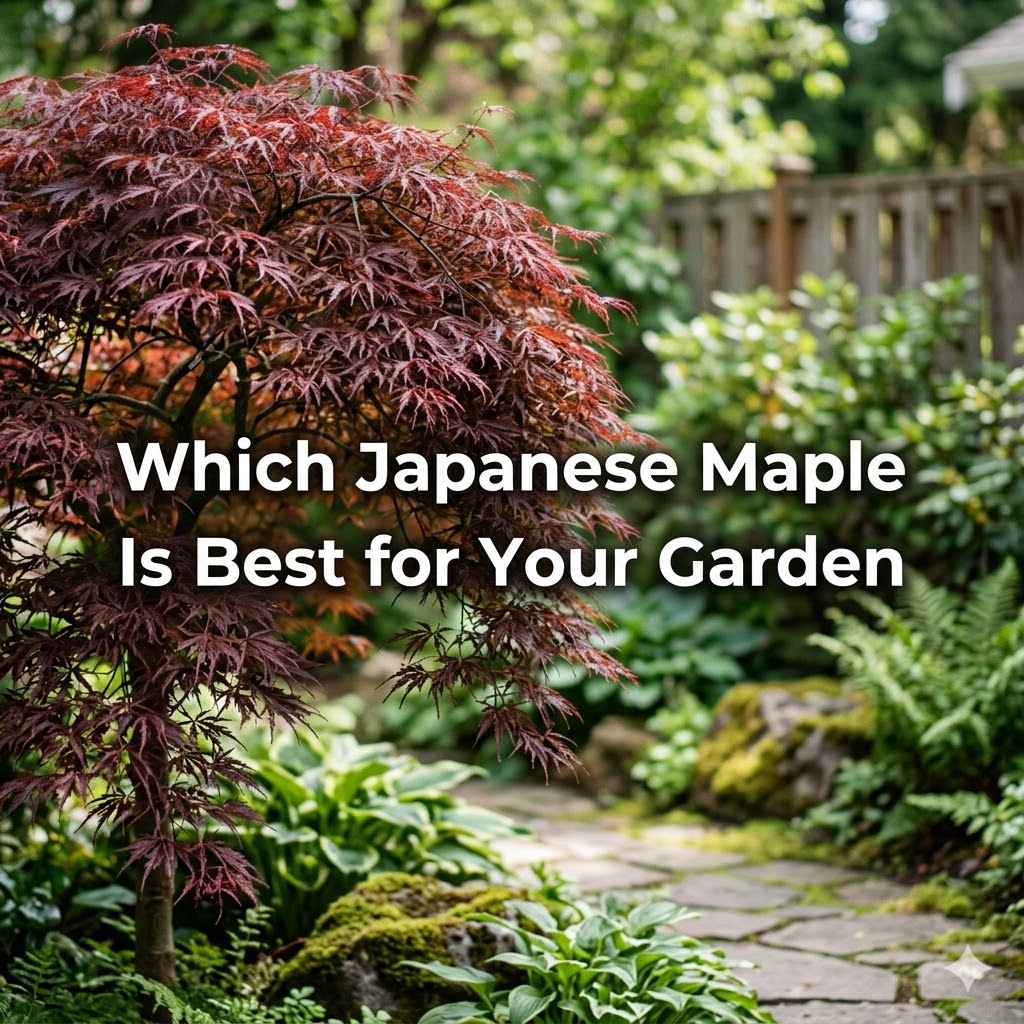
Which Japanese Maple Is Best for Your Garden
Choosing a Japanese maple can feel a bit tricky, especially when you’re just starting out with gardening. There are so many beautiful kinds, and knowing which one will be happiest in your yard can be a puzzle. Don’t worry, though!
We’ll make it super simple. We’ll go through everything step-by-step to help you find the perfect maple. Get ready to discover which Japanese maple is best for your garden.
Let’s find out what makes each one special.
Finding Your Perfect Japanese Maple Tree
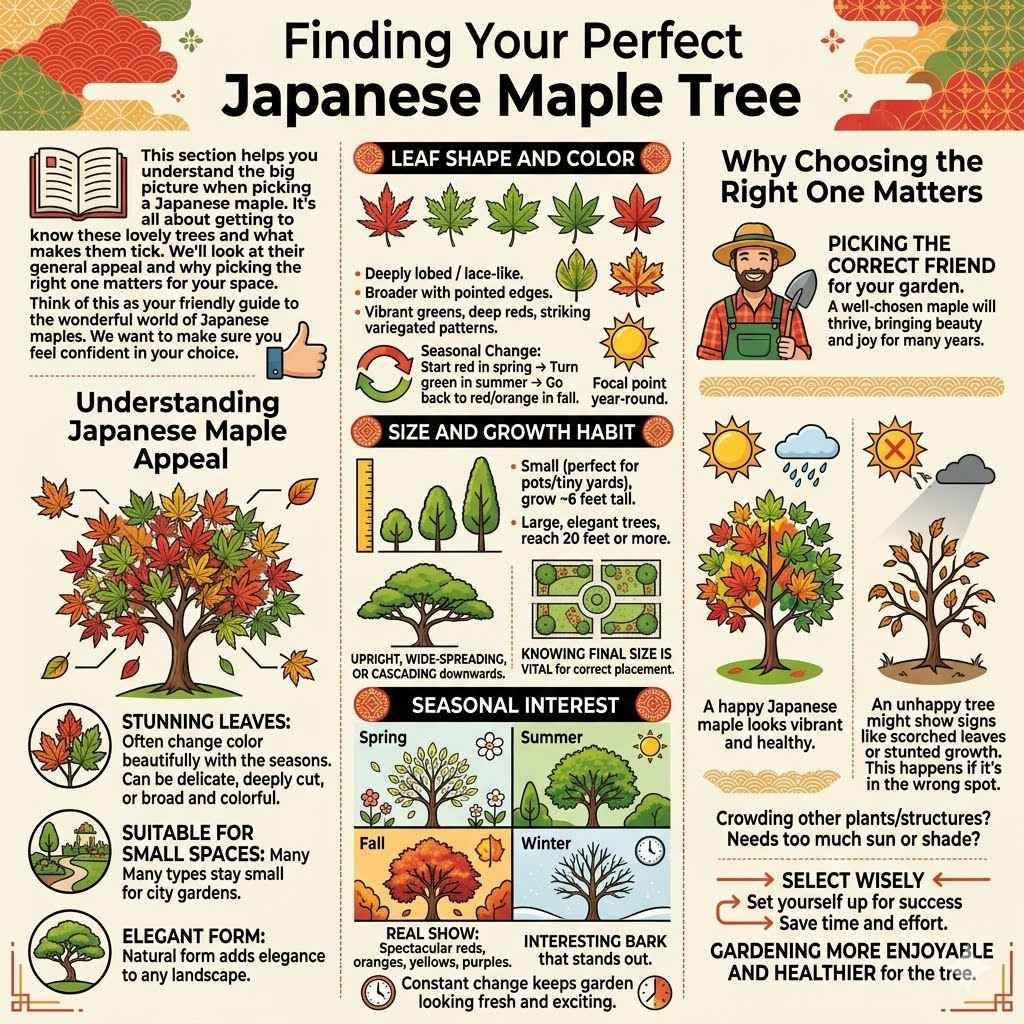
This section helps you understand the big picture when picking a Japanese maple. It’s all about getting to know these lovely trees and what makes them tick. We’ll look at their general appeal and why picking the right one matters for your space.
Think of this as your friendly guide to the wonderful world of Japanese maples. We want to make sure you feel confident in your choice.
Understanding Japanese Maple Appeal
Japanese maples are famous for their stunning leaves. These leaves often change color beautifully with the seasons. They can be delicate, deeply cut, or broad and colorful.
Many types stay small enough for city gardens. Others grow into graceful, tree-like shapes. Their natural form is often very attractive, adding elegance to any landscape.
Leaf Shape and Color
The shape of Japanese maple leaves is incredibly diverse. Some have deeply lobed leaves that look like lace. Others have broader leaves with pointed edges. The colors are a huge part of their charm. You’ll find vibrant greens, deep reds, and even striking variegated patterns. Some leaves start red in spring, turn green in summer, and then go back to red or orange in the fall. This seasonal change makes them a focal point year-round.
Size and Growth Habit
Japanese maples come in many sizes. Some are small, perfect for pots or tiny yards. These might only grow to be 6 feet tall. Others can become large, elegant trees, reaching 20 feet or more. Their growth habit can also differ. Some grow upright, while others spread wide or cascade downwards. Knowing how big the tree will get is vital for placing it correctly in your garden.
Seasonal Interest
Beyond just the leaves, many Japanese maples offer other seasonal delights. Some have interesting bark that stands out in winter. Others have delicate spring flowers. The real show, however, is often the fall color. Reds, oranges, yellows, and purples can create a breathtaking display. This constant change keeps your garden looking fresh and exciting throughout the year.
Why Choosing the Right One Matters
Picking the correct Japanese maple is like finding the perfect friend for your garden. If it’s too big, it might crowd other plants or structures. If it needs too much sun or shade, it won’t look its best.
A well-chosen maple will thrive, bringing beauty and joy for many years. It’s about matching the tree’s needs with what your garden can offer.
A happy Japanese maple looks vibrant and healthy. Its leaves will be full and its colors bright. A tree that’s unhappy might show signs like scorched leaves or stunted growth.
This happens if it’s in the wrong spot. For example, some need full sun to show off their best colors, while others need shade to avoid leaf burn.
When you select wisely, you save yourself time and effort later. You won’t have to move a tree or constantly try to fix problems. It’s about setting yourself up for success.
This makes gardening more enjoyable for you and healthier for the tree.
Popular Japanese Maple Varieties for Your Garden
Now, let’s get to the fun part! We’ll explore some of the most loved Japanese maple types. Each one has its own unique look and needs.
We’ll help you see which one might be the star of your backyard. Think about what kind of look you want and how much sun your garden gets. This will guide you to the best choice.
Crimson Queen Acer Palmatum Dissectum
The Crimson Queen is a showstopper. It’s a type of “dissectum” maple, meaning its leaves are deeply cut, giving them a delicate, feathery appearance. This gives it a graceful, weeping form.
The leaves are a stunning deep red all season long. It’s a popular choice for its dramatic color and elegant shape.
Appearance
Crimson Queen has incredibly fine, lacy, red leaves. It grows into a beautiful, rounded shape with branches that cascade downwards. This gives it a weeping or umbrella-like look. In the fall, the red color can deepen or turn to a brighter scarlet. It’s a medium-sized shrub or small tree.
Sunlight Needs
This maple prefers some shade, especially from the hot afternoon sun. Too much direct sun can scorch its delicate leaves, turning them brown or crispy. A spot with morning sun and afternoon shade is ideal. In cooler climates, it can tolerate more sun.
Size and Space
Crimson Queen typically grows to about 6 to 10 feet tall and spreads to about the same width. Its weeping habit makes it wider than it is tall over time. This makes it a great focal point in smaller gardens or as a specimen plant.
A common mistake with Crimson Queen is planting it in full sun. This can lead to leaf burn. In one garden, a Crimson Queen planted in an open, sunny spot struggled.
Its leaves turned brown by mid-summer each year. After it was moved to a location with dappled shade, it flourished. Its leaves remained a rich red and were much healthier.
This shows how important a little shade is for this variety.
Bloodgood Acer Palmatum
Bloodgood is a classic and very popular Japanese maple. It’s known for its consistent, deep red foliage that holds its color well through summer. It grows into an upright tree with a strong, elegant form.
This makes it a great shade tree and a beautiful specimen.
Appearance
Bloodgood trees have bold, star-shaped leaves that are a rich, dark red. They stay red from spring through fall. This tree has a more upright, vase-like shape compared to weeping varieties. It can grow into a medium to large tree.
Sunlight Needs
Bloodgood can handle more sun than many other red Japanese maples. It does best in full sun to partial shade. Full sun will bring out the best color. However, in very hot climates, some afternoon shade can be beneficial to prevent leaf scorch.
Size and Space
This variety can grow quite large, often reaching 15 to 20 feet tall and a similar width. It has a strong, upright form that will eventually create a good amount of shade. Plan for this space when you plant it.
Many people choose Bloodgood for its reliable performance. It’s a hardy tree that doesn’t demand too much fuss. It provides a wonderful splash of deep color to the garden.
Its structure also adds architectural interest, even in winter.
Sango Kaku Acer Palmatum (Coral Bark Maple)
Sango Kaku is truly special because of its bark. While its leaves are a lovely green in summer and turn yellow in fall, its bright coral-red bark is its star. This bark glows in winter, making it a beautiful sight when other plants are bare.
Appearance
The leaves of Sango Kaku are green in spring and summer, sometimes with a blush of pink. In autumn, they turn a vibrant yellow. The main attraction is its smooth bark, which is a brilliant coral-red or salmon color, especially on younger branches. This bark stands out dramatically against snow or dark backgrounds in winter.
Sunlight Needs
This maple thrives in full sun to partial shade. Similar to Bloodgood, full sun will encourage the best leaf color in fall. Too much intense heat and sun can cause its leaves to burn.
Size and Space
Sango Kaku typically grows into a medium-sized tree, reaching heights of 15 to 25 feet with a similar spread. It has an upright, somewhat spreading form.
The winter interest of Sango Kaku is a major reason people love it. Imagine a garden covered in snow, and suddenly, you see these bright red branches. It’s like nature’s own artwork.
This tree is a fantastic way to add color and visual appeal to your garden during the coldest months.
Kiyohime Acer Palmatum
Kiyohime is a charming dwarf Japanese maple. It stays small and compact, making it perfect for containers or small garden spaces. It has lovely green leaves and a naturally rounded shape.
It’s easy to care for and adds a touch of elegance without taking up much room.
Appearance
Kiyohime has small, green, star-shaped leaves that are densely arranged. It forms a compact, rounded mound. This dwarf habit makes it look like a miniature tree. Its growth is slow and controlled.
Sunlight Needs
This variety prefers partial shade. It can tolerate some morning sun but should be protected from harsh afternoon sun to prevent leaf scorch.
Size and Space
Kiyohime is a true dwarf, usually only reaching 3 to 5 feet tall and a similar width. Its small size makes it incredibly versatile. It’s perfect for patios, balconies, rock gardens, or as a border plant.
For those with limited garden space, Kiyohime is an ideal choice. It allows you to enjoy the beauty of a Japanese maple without needing a large area. Many people plant it in decorative pots, which can be moved to catch the best light or bring color to different parts of the yard.
Understanding Soil and Sunlight for Your Maple
Getting the soil and sunlight just right is super important for any Japanese maple. These trees are a bit particular, but once you know their preferences, it’s easy to keep them happy. This section will guide you through what they need to grow strong and beautiful.
Ideal Soil Conditions
Japanese maples love well-draining soil. This means water can flow through it easily. They don’t like “wet feet,” which can cause root rot.
The soil should also be slightly acidic. A pH level between 5.5 and 6.5 is usually perfect.
Drainage is Key
Good drainage prevents water from sitting around the roots. If your soil is heavy clay, you’ll need to amend it. You can do this by mixing in compost, sand, or perlite. This helps to loosen the soil and improve water flow.
Soil Acidity
Most Japanese maples prefer slightly acidic soil. You can test your soil’s pH with a simple kit. If it’s too alkaline, you can add amendments like sulfur or peat moss to lower the pH.
Richness of Soil
While they don’t need super-rich soil, a little organic matter is beneficial. Compost adds nutrients and improves soil structure. It helps the tree absorb water and nutrients more effectively.
One common issue is planting a Japanese maple in compacted or waterlogged soil. This can lead to root problems and a generally unhealthy tree. For example, a gardener in a region with heavy clay soil found their Japanese maple struggled to establish.
The leaves were pale and wilting. After digging a wider planting hole and mixing in plenty of compost and coarse sand, the tree began to improve significantly.
Sunlight Requirements Explained
Sunlight is crucial, but the amount needed varies by variety. Most Japanese maples like partial shade. This means they do well with morning sun and protection from the hot afternoon sun.
Some varieties can tolerate full sun, especially in cooler climates.
Morning Sun Best
Morning sun is gentler and provides light for photosynthesis without being too intense. Many Japanese maples look their best with this type of light exposure.
Afternoon Shade is Crucial
The hot afternoon sun can be very damaging to Japanese maple leaves. This is especially true for varieties with delicate or red leaves. Leaves can get scorched, turning brown and crispy.
Full Sun Tolerators
Some varieties, like Bloodgood, can tolerate full sun. However, even these trees can benefit from some relief during the hottest part of the day in very warm regions.
Understanding your local climate is key here. In cooler areas, like the Pacific Northwest, many Japanese maples can grow happily in full sun. In hotter, drier climates, like the Southwest, they absolutely need protection from the afternoon sun.
Planting a maple in a spot that gets too much direct, intense sun is a common mistake that leads to leaf burn.
A practical example: A gardener in Texas planted a ‘Crimson Queen’ in full sun. By July, its leaves were almost entirely brown. They then moved it to a spot under a large oak tree that provided dappled shade all day.
The next year, the tree bounced back with healthy red foliage. This illustrates the importance of matching sunlight to your climate and the specific tree.
Watering and Winter Care for Your Maple
Taking care of your Japanese maple through watering and winter is essential for its long-term health. These steps help protect your tree and ensure it looks its best year after year. It’s not complicated, just a matter of knowing what to do.
Proper Watering Techniques
Watering is one of the most important things you can do for your Japanese maple. You want to keep the soil moist, but not soggy. The best approach is to water deeply and less often.
This encourages roots to grow down into the soil.
Deep Watering
When you water, soak the soil thoroughly. This means letting the water penetrate deep into the root zone. A good rule of thumb is to water until the soil is moist about 6-8 inches down.
Check Soil Moisture
Before watering, check if the soil is dry. Stick your finger about an inch or two into the soil near the base of the tree. If it feels dry, it’s time to water. If it still feels moist, wait a bit longer.
Mulching Helps
Applying a layer of mulch around the base of the tree is very beneficial. Mulch helps to retain soil moisture, keep the roots cool, and suppress weeds. Keep the mulch a few inches away from the trunk to prevent rot.
Overwatering is just as bad as underwatering. It can lead to root rot. Underwatering can cause the leaves to droop and turn brown.
Finding that balance is key. For instance, a newly planted Japanese maple might need watering every few days in hot, dry weather. An established tree might only need it once a week or even less, depending on rainfall.
Protecting Your Maple in Winter
Japanese maples are generally hardy, but young trees or those in very cold climates can benefit from some winter protection. This helps them survive harsh weather and bounce back strong in spring.
Mulching for Insulation
A thick layer of mulch around the base of the tree in late fall provides insulation for the roots. This protects them from freezing and thawing cycles.
Burlap Wrap for Wind Protection
In areas with strong, cold winds, young trees or those with thin bark can be protected by wrapping them in burlap. This shields them from drying winds that can damage branches and leaves.
Container Care
If your Japanese maple is in a container, it’s more vulnerable to freezing. Move potted maples to a sheltered location, like an unheated garage or shed, for the winter. Ensure they still get some light and occasional watering.
A common problem in winter is frost damage. This can happen to branches and buds if they are exposed to extreme cold. Protecting the roots with mulch is vital.
For container trees, moving them indoors is often the best strategy. Many people in colder regions have lost potted Japanese maples because they left them exposed all winter.
Which Japanese Maple Is Best for Your Garden Summary
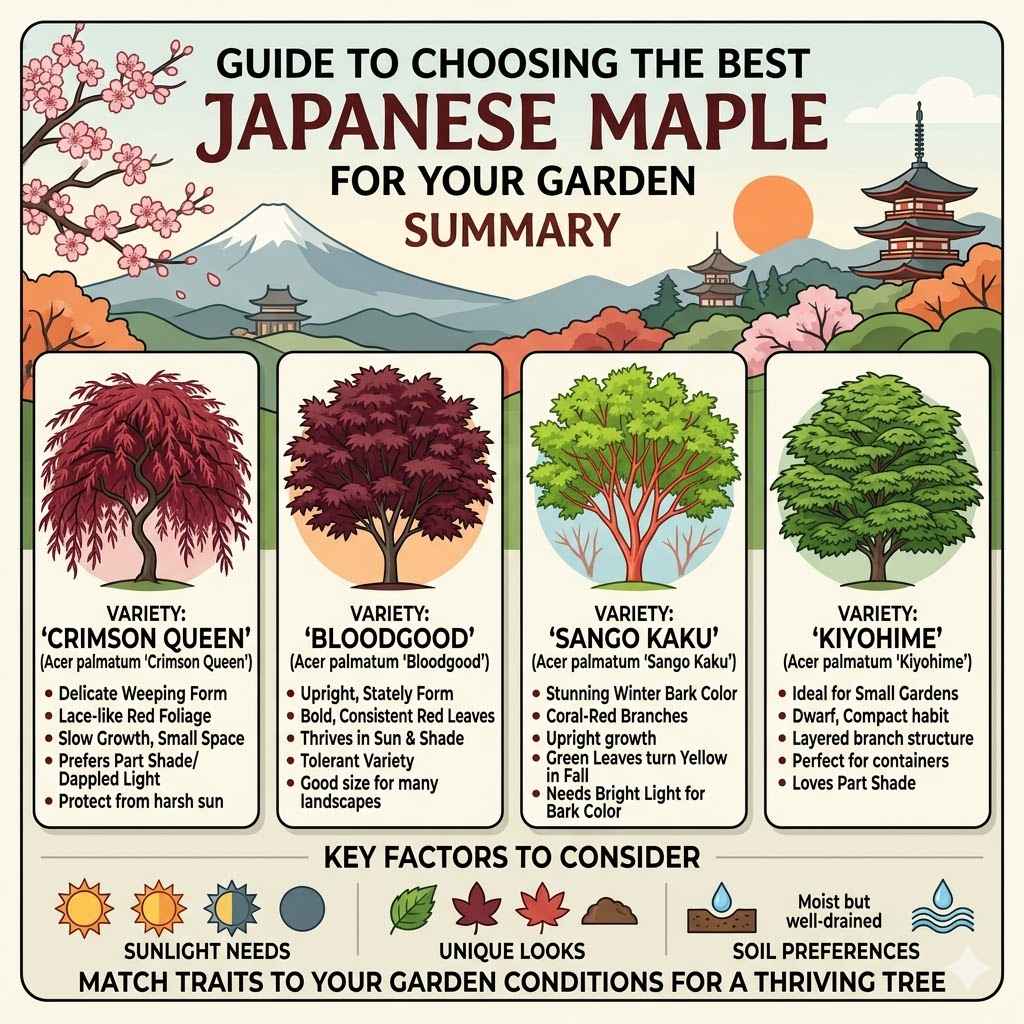
Choosing the perfect Japanese maple involves considering its unique looks, sunlight needs, and soil preferences. Varieties like Crimson Queen offer delicate red foliage, while Bloodgood provides a bold, upright red presence. Sango Kaku shines with its winter bark color, and Kiyohime is ideal for small spaces.
Matching these traits to your garden’s conditions ensures a thriving, beautiful tree.
Frequently Asked Questions
Question: Which Japanese maple is best for full sun?
Answer: Some varieties like Bloodgood can handle full sun, especially in cooler climates. However, most Japanese maples prefer partial shade. It’s always best to check the specific needs of the variety you are interested in.
Question: What is the smallest Japanese maple variety?
Answer: Dwarf varieties like Kiyohime are among the smallest, typically staying around 3-5 feet tall. They are perfect for containers or small gardens.
Question: Why are my Japanese maple leaves turning brown?
Answer: Brown leaves on a Japanese maple are often a sign of leaf scorch, usually caused by too much direct sun or not enough water. Ensure it has adequate moisture and protection from intense afternoon sun.
Question: How often should I water a Japanese maple?
Answer: Water deeply when the top inch or two of soil feels dry. Established trees need less frequent watering than young or newly planted ones. Avoid letting the soil become waterlogged.
Question: Can I grow a Japanese maple in a pot?
Answer: Yes, many Japanese maples, especially dwarf varieties, do very well in containers. Remember to choose a pot with good drainage and provide winter protection if you live in a cold climate.
Wrap Up
Finding the right Japanese maple for your garden is a rewarding experience. By understanding leaf shape, color, size, and specific light and soil needs, you can pick a tree that will thrive. Whether you choose a weeping red beauty or an upright specimen, your Japanese maple will add unique charm.
Enjoy the beauty it brings to your outdoor space.