Budget Garden Decking Ideas: Real Costs & No-Dig Layouts (2026)
A garden deck doesn’t need a big budget or a contractor’s crew to get right. The two moves that actually save money are picking a material that fits your climate and skill level, and choosing a framing method that skips digging footings altogether. Below is what pressure-treated wood, composite, and reclaimed lumber really cost per square foot, plus the ground-level deck-block technique that cuts a typical small-deck budget by several hundred dollars before you’ve bought a single board.
What Budget Decking Actually Costs Per Square Foot
Materials alone (not labor) run roughly $3-$6 per square foot for pressure-treated pine, $8-$15 for composite boards, and close to free to $2 per square foot for reclaimed or pallet wood you source yourself. A modest 10×12-foot deck (120 sq ft) works out to about $360-$720 in pressure-treated lumber, or $960-$1,800 in composite. Those numbers are for the decking boards, joists, and fasteners only — they assume you’re not paying a contractor and not pouring a full concrete footing system, which is where a lot of “budget” deck quotes quietly balloon.
Best No-Dig Floating Deck Support
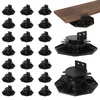 |
24-Pack Adjustable Deck Support Pedestals – $49.99 These no-dig, no-concrete pedestals are exactly what lets a ground-level budget deck skip the footings and permit hassle covered above.
|
Skip the Digging: Ground-Level and Floating Deck Framing
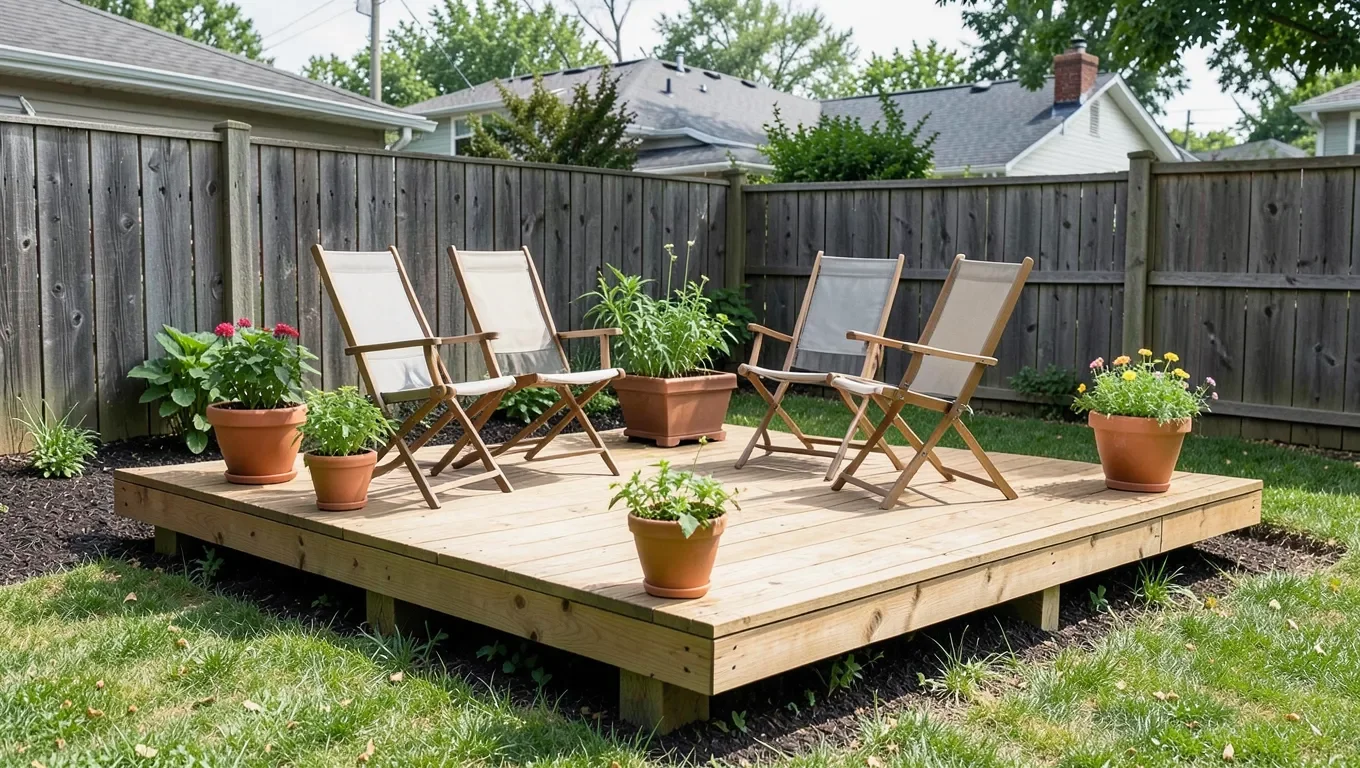
Most people assume any deck needs dug footings, poured concrete, and often a permit. That’s true for an elevated deck attached to a house, but it’s not true for a low, freestanding deck sitting a few inches off the ground — which covers most backyard budget decks. A floating (or “ground-level”) deck rests its joists directly on adjustable plastic support pedestals or pier blocks set on top of the soil, not buried in it. No digging, no mixed concrete, no multi-day cure time.
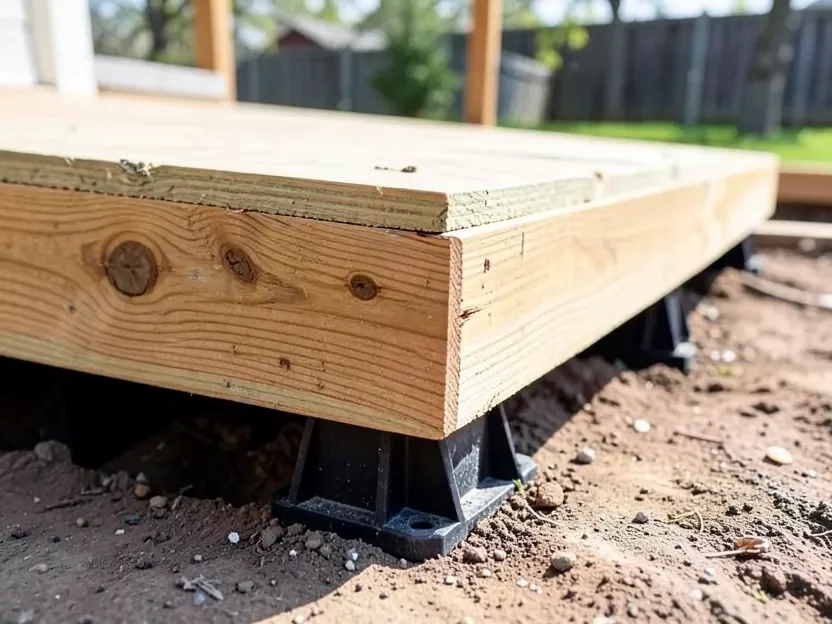
The pedestals sit on compacted, level ground (a thin bed of gravel underneath helps with drainage), and the joists screw or clip directly onto the bracket on top. Because there’s no concrete to cure, a small floating deck can go from cleared ground to finished boards in a weekend instead of spread across several trips to a job site. Check your local code first — some areas cap freestanding deck height or size before a permit kicks in, and that limit is exactly what keeps this method in the “budget” category anyway.
Affordable Decking Materials Compared
Pressure-treated pine is the default budget choice for a reason: it resists rot and insects out of the box, it’s sold at every lumberyard, and it takes stain or paint if you want a different look. It does need a sealant reapplied every 1-2 years and it can warp slightly as it dries if installed while still wet from the treatment process — let boards acclimate a few days before final fastening where possible.
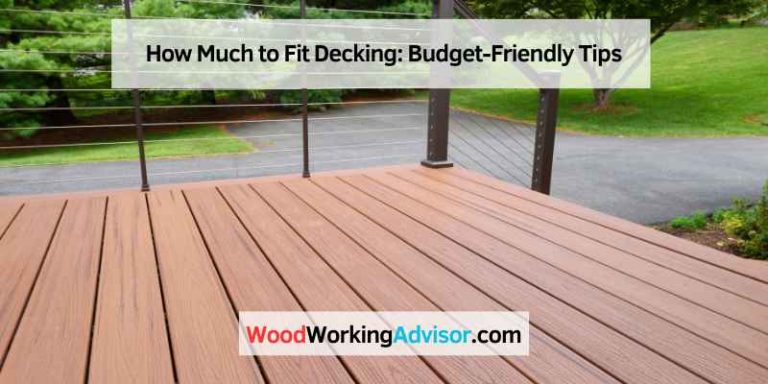
Composite decking costs more upfront but skips annual sealing, doesn’t splinter, and holds color longer in full sun than most stained wood. The budget move here isn’t avoiding composite entirely — it’s buying capped composite (a plastic shell over a wood-plastic core) from a previous year’s color run or a big-box clearance line, which regularly sells 20-30% under current-season pricing for the same core material.
Reclaimed and pallet wood is the lowest-cost option but the least predictable. Heat-treated pallets (stamped “HT,” never “MB” for methyl bromide fumigation) are safe to reuse; inspect every board for splits, embedded staples, and structural cracks before it goes anywhere near a walking surface. Reclaimed wood also needs a full sanding and re-sealing pass — the character is free, the prep labor isn’t.
Layout Tricks That Cut Material Waste and Cost
Standard decking boards come in set lengths (8, 10, 12, 16 ft). Sizing your deck’s dimensions to those lengths — a 12×12 deck instead of a 13×11, for example — means fewer cut-off scraps and less waste per board, which adds up fast on composite. Running boards diagonally looks custom but wastes 10-15% more material to end cuts; a straight, perpendicular run is both cheaper and faster to install for a first-time builder.
Multi-level decking (even a single low step down to a gravel patio) can also stretch a small budget further than it sounds — it lets you use a smaller footprint of actual decking boards for the “premium” zone (seating) while a cheaper gravel or paver surface fills the rest of the outdoor space.
DIY Build Basics for a Budget Deck
A ground-level deck build follows the same order regardless of material: lay out and level the support pedestals or blocks first, set pressure-treated joists on top spaced 16 inches on-center (12 inches for composite, which needs tighter support), fasten the decking boards perpendicular to the joists, then trim the edges flush. Wear eye protection and gloves when cutting pressure-treated lumber, and always check for buried utility lines before setting any support that goes even a few inches into the ground.
Tools-wise, a budget build doesn’t need much beyond what a lot of DIYers already own: a circular saw or handsaw, a drill/driver, a 4-foot level, a tape measure, and a speed square for marking straight cut lines. A string line stretched between corner stakes makes it much easier to keep the pedestal layout square before any lumber goes down — skipping this step is the most common reason a first-time ground-level deck ends up slightly out of square.
Maintenance That Keeps a Budget Deck Looking Good
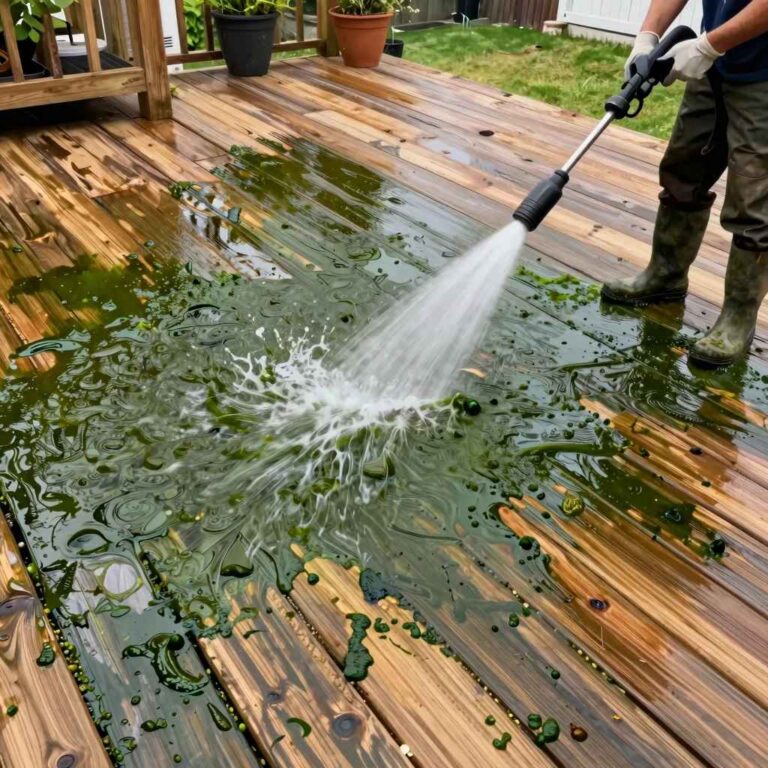
Wood decking needs a yearly check: sweep debris out of the gaps between boards (trapped leaves hold moisture against the wood), wash with mild soap and water rather than a high-pressure washer on its strongest setting, and reapply a water-repellent sealant once the old finish starts beading water unevenly. Composite needs far less — an occasional soap-and-water wash is usually enough, since there’s no wood grain to seal or rot to prevent. A mix of white vinegar and baking soda handles most mildew spots on either material without resorting to a harsh bleach solution that can discolor the boards.
Decorative Touches That Don’t Cost Much
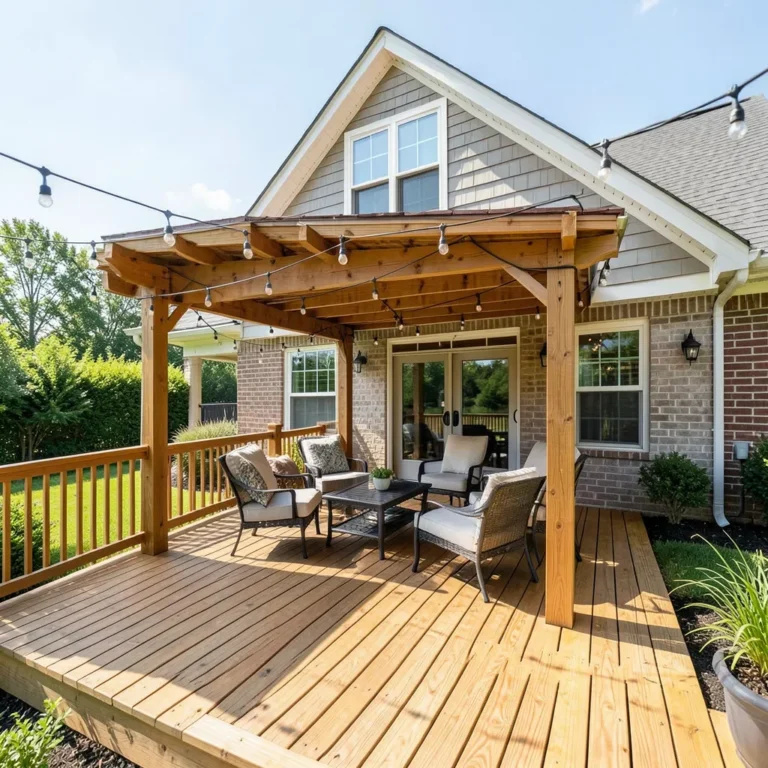
The deck itself is only part of how the space reads — a handful of low-cost additions do a lot of the visual work. Solar-powered string lights or stake lights avoid any wiring and typically run under $30 for a full set, and they recharge for free instead of adding to a power bill. Container plants in terracotta or plastic pots let you add greenery without committing to in-ground landscaping, and they’re easy to rearrange as the deck’s use changes through the season.
Secondhand or clearance outdoor furniture is worth checking before buying new — folding chairs and small bistro sets show up frequently at end-of-season sales for a fraction of in-season pricing. A coat of exterior paint turns a mismatched furniture set into a coordinated one for the cost of a single can. If storage is tight, a bench with a lift-up seat doubles as both seating and a place to keep cushions or tools out of the weather.
Frequently Asked Questions
What’s the cheapest decking material for a garden deck?
Reclaimed or pallet wood is the cheapest by material cost, often free to $2 per square foot, but it takes the most prep work (cleaning, sanding, resealing). Pressure-treated pine is the cheapest material that’s ready to use straight from the lumberyard, at roughly $3-$6 per square foot.
Do I need a permit or footings for a small garden deck?
Usually not for a low, freestanding deck under your local height/size threshold — a ground-level deck built on adjustable support pedestals instead of dug, poured concrete footings avoids both the digging and, in many areas, the permit requirement. Always confirm the exact limit with your local building department before you build.
How much does a small budget deck cost in total?
For a 120 sq ft deck, expect roughly $360-$720 in pressure-treated materials or $960-$1,800 in composite, plus $50-$150 for ground-level support pedestals if you skip poured footings. Add fasteners, sealant, and any tools you don’t already own on top of that.
Can I build a budget deck myself without construction experience?
A ground-level deck is one of the more approachable first builds since it skips concrete work and structural framing rules that apply to elevated, house-attached decks. Basic measuring, leveling, and screwing skills are enough for a small freestanding deck; an elevated deck attached to your house is a bigger structural undertaking and worth getting a second opinion on before you start.
Conclusion
A garden deck on a budget comes down to two decisions: pick a material you can actually afford to maintain (pressure-treated for the lowest upfront cost, composite if you want to skip yearly sealing, reclaimed if your time is worth more than your dollars), and build it low and freestanding on support pedestals instead of dug footings. Get those two right and a real backyard deck is well within reach of a weekend and a few hundred dollars.
Sponsored / affiliate links. As an Amazon Associate I earn from qualifying purchases. I may earn additional commission from eligible campaigns.