Why Won’t My Stihl Chainsaw Start?: Quick Fixes & Tips
Check these in order, since they cover the vast majority of no-start cases: old or stale fuel first, a fouled spark plug second, a clogged air filter third. Old gasoline that’s sat for more than a month or two is by far the most common culprit, followed by a spark plug that’s fouled from a rich fuel mixture or just worn out. Work through these three before assuming anything more serious is wrong. Ignition coil failures and low compression happen too, but they’re much rarer and worth ruling out last, not first.
Common Culprits Behind Starting Issues
Prevent the #1 Cause
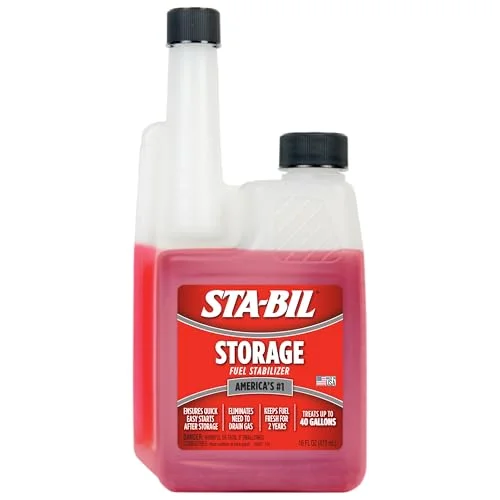 |
STA-BIL Storage Fuel Stabilizer A capful in the tank before storage keeps fuel from breaking down into the varnish deposits that cause most no-start calls.
|
Fuel Troubles
Fuel that’s more than 30-60 days old and wasn’t treated with a stabilizer is the single most common reason a two-stroke chainsaw won’t start. Ethanol-blended gas absorbs moisture and breaks down into a varnish-like residue that clogs the tiny passages in the carburetor. Drain old fuel completely and refill with fresh gas mixed to Stihl’s specified 50:1 ratio (check your model’s manual – some newer models use a different ratio). Inspect the fuel filter inside the tank and the fuel lines for cracks or clogs while you’re in there.
Air Filter Blockages
A clogged air filter starves the engine of the air it needs to mix with fuel, which can prevent starting entirely or cause rough running once it does catch. Pop the air filter cover, remove the filter, and tap out loose debris or wash it per Stihl’s cleaning instructions for that filter type (foam filters and paper filters are cleaned differently). Replace it if it’s cracked, torn, or so saturated with sawdust that cleaning won’t restore airflow.
Ignition Problems
Once fuel and air are ruled out, check the spark plug for fouling, damage, or an incorrect gap. A plug caked in black, oily residue usually means the fuel mixture is running too rich; a plug that looks fine but still won’t spark reliably may indicate a failing ignition coil, which is a job for a repair shop rather than a DIY fix.
Compression Issues
Low compression, usually from worn piston rings or a damaged cylinder, is the least common cause but the most serious one. If fuel, air, and ignition all check out and the saw still won’t fire, a compression test (or a trip to a Stihl service center) can confirm whether this is the issue – it’s not something to diagnose or fix without the right tools.
Spark Plug Solutions
Checking for Spark Plug Faults
- Disconnect the spark plug wire first, for safety, before touching the plug itself.
- Examine the plug for cracks, corrosion, or a worn electrode – any of these means it needs replacing.
- Check the gap with a feeler gauge against your Stihl model’s specified gap (this varies by model, so check the manual rather than assuming a standard gap).
- Inspect the plug wire itself for damage, since a cracked or worn wire can weaken the spark even with a good plug.
Replacing the Spark Plug
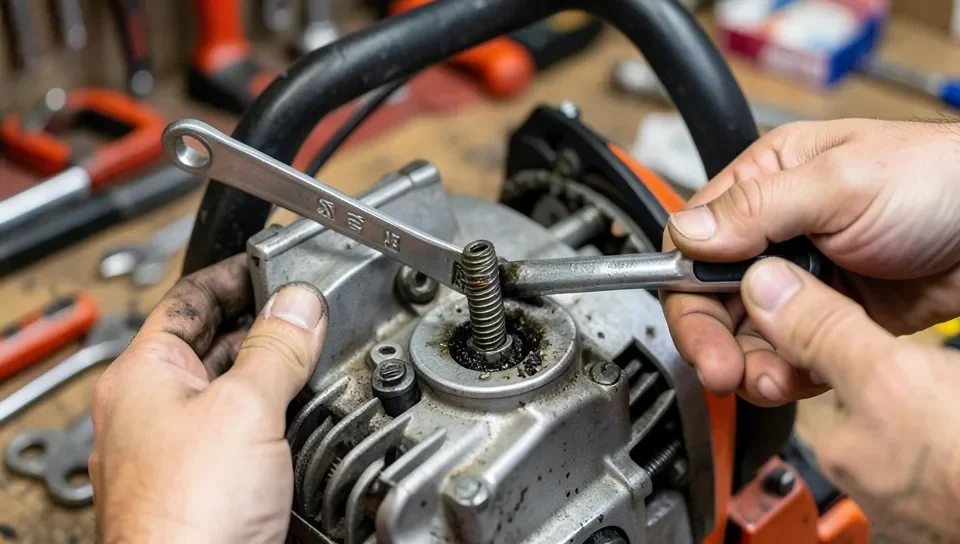
- Remove the old plug with a spark plug wrench, turning counterclockwise.
- Note the exact model number and get the matching replacement – Stihl saws use specific plugs, and a wrong substitute can cause its own starting problems.
- Hand-thread the new plug in, then snug it with the wrench – overtightening can damage the threads in the cylinder head.
- Reconnect the plug wire securely.
Fuel System Fixes
Fresh Fuel for the Win
Use fresh gas with a minimum 89 octane rating, mixed at the correct ratio with Stihl-approved two-stroke oil, and add a fuel stabilizer if the saw won’t be used again within a few weeks. Store fuel only in an approved container, since contaminants introduced during storage or transfer are a surprisingly common, easily avoidable cause of fuel-system problems.
Carburetor Cleaning
- Remove the air filter cover and filter to access the carburetor.
- Remove the carburetor from the saw per your model’s manual.
- Spray a carburetor cleaner made for small engines into all the passages and openings.
- Let it sit a few minutes, then scrub remaining residue with a soft brush.
- Reassemble and reinstall once clean and dry.
Airflow and Exhaust
Airflow works both directions: the engine needs clean air in through the filter and a clear path for exhaust out. A clogged or carbon-caked exhaust port restricts how well the engine can draw in the next fuel-air charge, which can look exactly like a fuel or ignition problem even though the real cause is on the exhaust side.
- Clean the air filter regularly and inspect it for damage each time.
- Check the exhaust port and muffler for carbon buildup, especially on a saw that’s run rich for a while, and remove deposits per the manual.
- Look for exhaust leaks at gasket surfaces and repair or reseal as needed.
Electrical System Examination
The ignition coil generates the high voltage that fires the spark plug. To test it: remove the plug, reattach the plug wire, ground the plug’s metal base against the engine block, and pull the starter cord while watching for a spark. A strong blue spark means the coil is working; a weak or absent spark points to a failing coil that likely needs professional replacement.
Wiring problems are worth ruling out too: inspect the harness for frayed or exposed sections, confirm connections are secure and free of corrosion, and use a multimeter to check continuity if you suspect a break. If either the coil test or the wiring inspection turns up a real fault, this is a good point to consult a professional or Stihl support rather than guessing further.
Cold Weather Starting
Cold engine oil and fuel are thicker and slower to atomize, which is why a saw that starts easily in summer can be stubborn in winter. Most Stihl models have a cold-start (choke) position specifically for this – use it for the first pull attempts, then move to the run position once the engine catches, rather than leaving the choke on and flooding the engine. If the saw has been stored somewhere very cold, letting it warm to closer to room temperature before starting, even 15-20 minutes, measurably improves first-pull reliability. Avoid the temptation to hold the throttle wide open on a cold pull – a slow, steady starting technique is more reliable than forcing it.
Routine Maintenance That Prevents No-Starts
Most starting problems are preventable with a short routine done between uses rather than only when something’s already wrong. Clean or replace the air filter and check the spark plug at the start of each cutting season at minimum, more often with heavy use. Before every use, check fuel level, bar oil, and chain tension – none of these cause starting problems directly, but catching a low-oil or loose-chain issue during the same pre-use check saves a separate headache later.
When to Call a Professional
Take it to a Stihl dealer or small-engine repair shop when: the problem involves the ignition coil, carburetor internals, or compression and you don’t have the specific tools to diagnose it safely; you’ve worked through fuel, air filter, and spark plug checks without success; or anything about the fault feels like an electrical or fuel-system safety risk rather than routine maintenance. For DIY troubleshooting, the manufacturer’s manual is the most reliable resource, followed by Stihl’s own support line and established chainsaw repair forums – video tutorials are useful for the visual steps but always double-check against your specific model’s manual, since procedures vary between models. A saw still under warranty should generally go to an authorized dealer rather than a DIY teardown, to avoid voiding coverage over a fix that would’ve been covered.
Frequently Asked Questions
Why is my Stihl chainsaw not starting?
Most often it’s old fuel, a fouled spark plug, or a clogged air filter, roughly in that order of likelihood. Check fuel freshness first, then the spark plug, then the air filter and carburetor before assuming a more serious issue.
How often should I replace the spark plug in my Stihl chainsaw?
Roughly every 100 operating hours, or at the start of each cutting season, whichever comes first.
What should I do if my Stihl chainsaw starts but then stalls?
Check the carburetor adjustment, air filter, and fuel flow. A saw that starts but stalls is often running too lean or too rich, or pulling air through a leak somewhere in the intake.
Conclusion
Work through the likely causes in order – fuel, spark plug, air filter, then ignition and compression – and most Stihl no-start problems resolve without a shop visit. A fuel stabilizer used consistently between seasons prevents the single most common cause before it ever becomes a problem.
Sponsored / affiliate links. As an Amazon Associate I earn from qualifying purchases. I may earn additional commission from eligible campaigns.