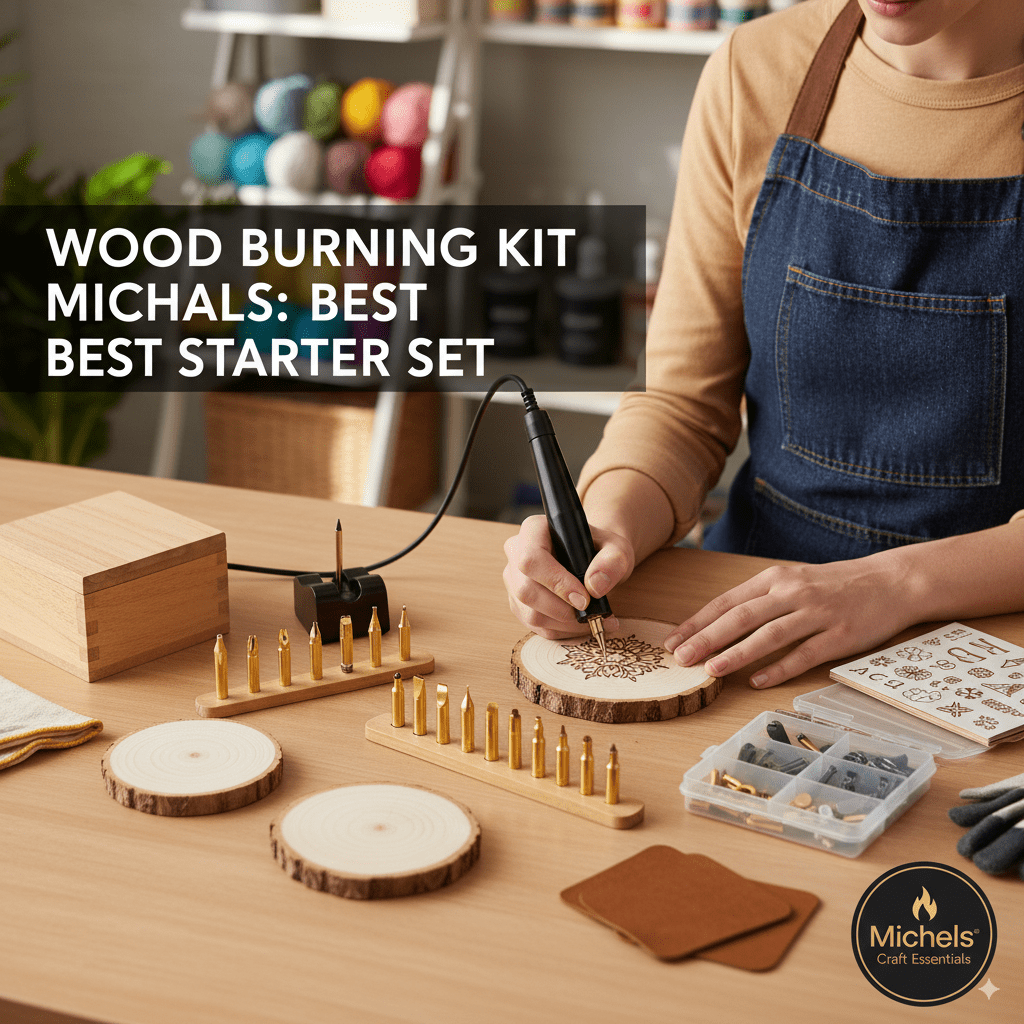
Wood Burning Kit Michaels: Best Starter Set
Looking for the best starter wood burning kit at Michaels? This guide breaks down top options, what to look for in beginner sets, and how to get started safely and creatively. Find your perfect kit to begin beautiful wood burning art today!
Picking out your very first wood burning kit can feel a bit overwhelming, right? You see all sorts of tools and think, “Where do I even begin?” It’s completely normal to feel that way! Wood burning, also known as pyrography, is a wonderfully relaxing and rewarding hobby. It lets you create stunning art on wood with just a bit of heat and practice. The good news is that Michaels often has some fantastic beginner-friendly options that make getting started super easy and affordable. In this guide, we’ll walk through exactly what makes a wood burning kit great for beginners, helping you choose the best starter set from Michaels so you can start creating beautiful pieces right away.
Why Wood Burning is a Fantastic Hobby for Beginners
Wood burning is an accessible art form that doesn’t require a huge investment or a lot of space. You can transform simple pieces of wood into personalized gifts, home decor, or unique artwork with a gentle touch. Unlike painting or drawing, wood burning offers a different kind of tactile experience. It’s about building up layers of tone and texture with heat, creating a warmth and depth that’s truly special. Many people find the process meditative, a perfect way to unwind and express their creativity. Plus, the results can be incredibly impressive, even for absolute beginners!

What to Look for in a Michaels Wood Burning Kit for Starters
When you’re just starting out, the most important thing is a kit that’s easy to use, safe, and includes the essential tools. You don’t need the most advanced equipment right away. Here’s what I recommend focusing on when browsing at Michaels:
Essential Components of a Good Starter Kit:
- Temperature Control: For beginners, a device with adjustable temperature settings is a huge plus. It helps you learn how different temperatures affect the wood and makes it easier to control your lines and shading. Look for kits that mention variable temperature control.
- Variety of Tips: Different tips allow for different effects. A starter kit should come with a few basic tips: a universal tip for general work, a shading tip for filling areas, and perhaps a line tip for drawing. More tips can be added later as you grow.
- Ergonomic Handle: You’ll be holding the tool for a while, so a comfortable, lightweight, and insulated handle is crucial. This prevents hand fatigue and reduces the risk of burns.
- Safety Features: Look for kits that include a sturdy stand to hold the hot tool when not in use. This is non-negotiable for safety. Also, ensure the cord is durable and well-insulated.
- Instructional Material: Some kits come with basic instructions or a guide to help you get started. This is a great bonus for absolute beginners.
- Power Rating: For beginners, a lower wattage (around 10-30W) is usually sufficient. Higher wattages heat up faster but can be harder to control initially.
Considerations for Michaels Shopping:
- Brand Reputation: While Michaels carries many brands, some are more known for their quality and durability. Researching brands like Walnut Hollow, Creative Wood, or the Michaels house brands can be helpful.
- Price Point: Starter kits at Michaels range from budget-friendly to mid-range. For your first kit, aim for something under $50-$75 if possible, to test the waters without a huge commitment.
- Customer Reviews: Always check online reviews for the specific kits available at Michaels. Other beginners’ experiences can be invaluable.
Top Picks: Potential Wood Burning Kits at Michaels (General Types)
Michaels typically stocks a few types of wood burning kits that are excellent for beginners. While specific brands and models can change, you can generally find these kinds of sets.
1. The Basic All-in-One Kit
This is often the most common and affordable option. These kits usually include a basic wood burning tool with a few interchangeable tips, a stand, and sometimes a small practice piece of wood. They are perfect for getting a feel for the tool and trying out simple projects.
Pros:
- Very affordable, great for a tight budget.
- Simple to use, designed for beginners.
- Includes essential tips for basic tasks.
Cons:
- Often lacks precise temperature control.
- Tips might be less durable than those in higher-end kits.
- Tool may have less ergonomic comfort for long sessions.
2. The Intermediate Kit with Temperature Control
If your budget allows, look for a kit that offers adjustable temperature settings. This feature is a game-changer for learning different techniques and achieving smoother results. These kits might also include a wider array of tips or a more robust tool.
Pros:
- Excellent control over heat, leading to better results.
- More versatile for various wood types and techniques.
- Often more comfortable and durable.
Cons:
- Higher price point.
- Might be slightly more complex to operate initially than a basic model.
- More features than an absolute beginner might need immediately.
3. Craft-Specific Kits (e.g., for Gourds, Leather)
Sometimes, Michaels carries kits geared towards specific crafts that use wood burning tools. While these can work for wood, they might come with specialized tips. For general wood burning art, stick to the more universal kits unless you have a very specific project in mind.
Safety First: Essential Precautions for Wood Burning
Wood burning involves heat, so safety is always the top priority. I can’t stress this enough! Following these guidelines will help you avoid accidents and enjoy your crafting time.
Key Safety Tips:
- Work in a Well-Ventilated Area: When wood burns, it produces smoke and fumes. Always work near an open window or use a fan to ensure good air circulation. Some materials can produce more fumes than others. For more information on air quality and safety, the Occupational Safety and Health Administration (OSHA) provides guidance on workplace ventilation.
- Use the Tool Stand: Never lay the hot burning tool directly on your work surface. Always place it on its designated stand when you’re not actively using it.
- Keep Flammable Materials Away: Ensure there are no papers, fabrics, aerosols, or other flammable items near your workspace.
- Wear Appropriate Clothing: Avoid loose, flowing sleeves or jewelry that could catch fire or get tangled.
- Handle with Care: The metal tips and the tip of the burning tool get extremely hot. Never touch them directly. Always use the handle.
- Unplug When Not in Use: Once you’re finished or taking a break, unplug the tool from the power outlet.
- Supervise if Children are Present: Wood burning is an adult activity. If children are in the same room, ensure they are supervised and kept at a safe distance from the hot tool and work area.
- Allow Cooling Time: The tool and tips remain hot for a considerable time after being unplugged. Let them cool down completely before storing them.
Getting Started: Your First Wood Burning Project
Ready to dive in? Here’s how to approach your very first wood burning project.
Step-by-Step Guide:
- Choose Your Wood: For a starter kit, opt for lightweight, smooth wood like pine, basswood, or poplar. These woods are forgiving and easy to burn. You can often find small wood slices or plaques at Michaels. Ensure the wood is dry – wet wood can cause splattering and uneven burning.
- Prepare Your Design: You can draw freehand, use a stencil, or transfer a design. For transferring, print your design in reverse, place it carbon-paper side down on the wood, and trace over it. Many beginners find starting with simple shapes, letters, or patterns effective.
- Set Up Your Workspace: Gather your kit, wood, design (if transferring), and safety gear. Make sure your ventilation is adequate and your tool stand is ready.
- Heat Up Your Tool: Plug in your wood burning tool and let it heat up according to the manufacturer’s instructions. If you have temperature control, start with a lower setting (around 200-300°C or 400-575°F) and adjust as needed.
- Practice Your Strokes: Before touching your main project, practice on a scrap piece of wood. Try different tips and pressures to see how they create lines, dots, and shading. Get a feel for how quickly the wood burns.
- Begin Burning:
- Outline: Use a fine-tipped pen (like a universal or writing tip) to carefully trace your design. Use light, consistent pressure and steady strokes.
- Shading: Switch to a shading tip if you have one. Hold the tool at an angle and use gentle, sweeping motions to create gradients and depth. If you don’t have a shading tip, you can use the side of a universal tip.
- Detailing: Use the finer tips for small details, dots, or textures.
- Cool Down and Finish: Once you’re happy with your burning, unplug the tool and let it cool completely on its stand. You can then clean up any stray pencil marks and, if desired, apply a sealant like a clear coat spray or beeswax polish to protect your artwork.
Common Wood Burning Techniques for Beginners
Once you’ve mastered the basics, you can explore different ways to use your wood burning tool to add more dimension and interest to your projects.
Technique Table
| Technique | Description | Best Tips to Use | Tips for Success |
|---|---|---|---|
| Line Work | Creating distinct outlines, patterns, or drawing details. | Universal tip, detail tip. | Keep your hand steady. Use consistent speed and pressure for even lines. |
| Shading (Value) | Creating smooth transitions from light to dark areas, adding depth and realism. | Shading tip, ball tip, or the side of a universal tip. | Work in layers, starting with lighter passes. Use gentle, overlapping strokes. Vary tool angle and contact time. |
| Dot Work (Stippling) | Creating textures and shading using patterns of dots. | Ball tip, or the tip of a universal tip. | Consistent spacing and size of dots is key. Denser dots create darker areas. |
| Burning Against the Grain | This is a technique to be cautious with, as it can lead to scratches. | Universal tip. | Use very light pressure and speed. Often best for very subtle effects or avoided until you have more experience. |
| Creating Texture | Mimicking the look of fur, grass, scales, or other natural surfaces. | Various tips depending on the desired texture (e.g., fine lines for grass, ball tip for fur). | Observe the texture in real life. Practice on scrap wood to replicate it. |
Wood Types and Their Burning Characteristics
The type of wood you choose can significantly impact your wood burning experience and the final look of your piece. Some woods are more forgiving for beginners, while others offer unique challenges and aesthetics.
Common Wood Types for Pyrography
- Basswood: This is a favorite among wood burners. It’s soft, lightweight, and has a fine, uniform texture, making it very easy to burn lines and shade smoothly. It’s also widely available.
- Pine: A very common and affordable wood. Pine burns well but can be a bit softer and have more prominent grain lines, which can sometimes be distracting or burn unevenly. Best for simpler projects when starting.
- Poplar: Similar to basswood in workability, poplar is a good choice for beginners. It’s a bit harder than pine and has a fine grain.
- Birch: Birch wood is smoother and harder than pine, offering a nice contrast. It burns well, but you’ll need to control your heat and pressure more precisely.
- Maple: A harder wood with a tighter grain than birch. Maple can produce beautiful, crisp lines and subtle shading but requires more patience and precise temperature control. Avoid very hard woods like oak for your first few projects, as their prominent grain can be difficult to work with.
For your first projects, I highly recommend sticking with basswood, poplar, or smooth pine. You can find great practice wood at craft stores like Michaels, often pre-cut into rounds, plaques, or even small boxes.
Maintaining Your Wood Burning Kit
Proper care will ensure your wood burning kit lasts and performs well. It’s simple maintenance that makes a big difference!
Tips for Kit Care:
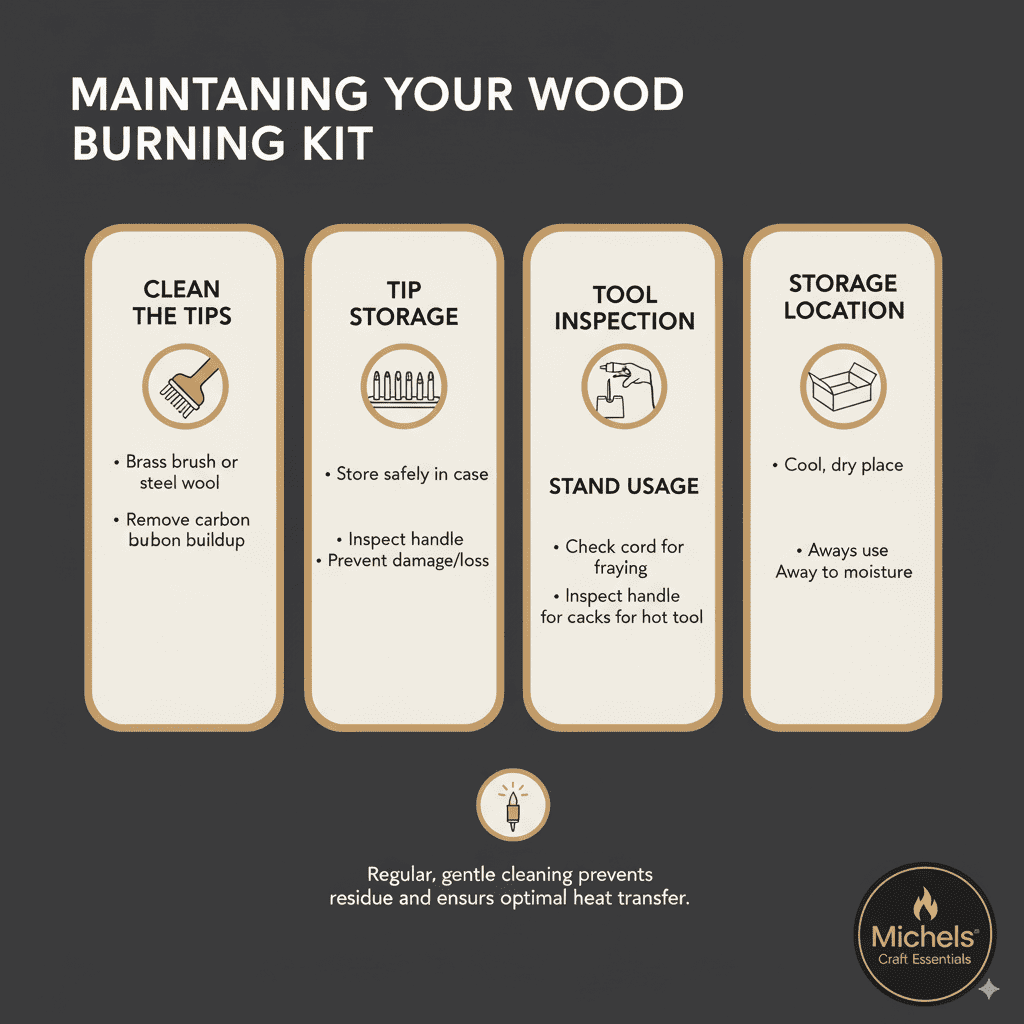
- Clean the Tips: After each use and once cooled, gently clean your burning tips. You can use a brass brush or steel wool for stubborn bits of wood or carbon buildup. Sometimes, a damp cloth is sufficient for regular cleaning.
- Tip Storage: Store your tips safely when not in use. Some kits come with a small case or container for this purpose.
- Tool Inspection: Periodically check the cord and handle for any signs of damage, fraying, or cracking. If you notice any issues, discontinue use and contact the manufacturer or consider replacing the tool.
- Stand Usage: Ensure the tool stand is stable and clean so it can safely support the hot tool.
- Storage Location: Store your entire kit in a cool, dry place away from moisture and extreme temperatures.
Regular, gentle cleaning will prevent residue from building up, which can affect heat transfer and the quality of your burns. For a deeper clean on stubborn carbon buildup on tips, some hobbyists use specialized tip cleaners or even a bit of fine-grit sandpaper, but always do so gently to avoid damaging the tip’s coating and allow it to cool completely first.
Frequently Asked Questions About Wood Burning Kits at Michaels
Q1: Are wood burning kits from Michaels good for beginners?
Yes, Michaels typically carries a variety of wood burning kits well-suited for beginners. They often focus on ease of use, safety, and affordability, providing essential tools to get you started without a large investment.
Q2: What is the average price range for a beginner wood burning kit at Michaels?
Beginner wood burning kits at Michaels can range from around $20 to $70, depending on the brand, features (like temperature control), and the number of tips included.
Q3: Do I need special ventilation for wood burning at home?
It’s highly recommended to always use your wood burning tool in a well-ventilated area, such as near an open window or with a fan. This helps dissipate smoke and fumes produced during the burning process.
Q4: How many tips does a good starter wood burning kit usually come with?
A good starter kit usually includes 3-5 interchangeable tips. This typically includes a universal tip for general use, a shading tip for filling areas, and perhaps a few accent tips for lines or dots.
Q5: What kind of wood is best for practicing wood burning?
For practice, soft, light-colored woods like basswood, poplar, or pine are excellent choices. They are easy to burn and allow you to experiment with different techniques without much difficulty.
Q6: Can I burn on surfaces other than wood with these kits?
While primarily designed for wood, some wood burning tools and tips can also be used on other materials like leather or gourds. However, always check the manufacturer’s recommendations for your specific kit and be aware that the results and safety considerations might differ.
Q7: How hot does a wood burning tool get?
Wood burning tools can reach temperatures ranging from 300°C to over 500°C (around 570°F to 930°F). This is why using the tool stand, handling it by the insulated handle, and keeping flammable materials away are crucial safety measures.
Conclusion: Your Creative Journey Begins Today
Embarking on your wood burning adventure is exciting, and choosing the right starter kit from Michaels is a fantastic first step. Remember to prioritize safety, practice patience, and have fun with the process. The skills you learn with a beginner-friendly kit will build a strong foundation for more intricate projects down the line. Don’t be afraid to experiment with different tips and techniques. With a good starter set, a bit of creativity, and careful practice, you’ll be creating beautiful, personalized wood art in no time. So grab a kit, find some wood, and let your creativity flow!