Wood Stoves Outside House: Essential Safety Tips
For safe outdoor wood stove use, prioritize proper placement away from structures, use approved chimneys with spark arrestors and rain caps, ensure adequate ventilation, and always follow manufacturer guidelines for operation and maintenance.
Wood Stoves Outside Your House: Essential Safety Tips for Beginners
Thinking about adding a wood stove outside your house can be exciting. It’s a wonderful way to enjoy a cozy fire, cook outdoors, or provide supplemental heat without taking up space inside. However, safety must be your top priority. Many beginners find setting up and using an outdoor wood stove a bit daunting, especially when it comes to ensuring it’s safe. Don’t worry! With a few straightforward guidelines, you can enjoy your outdoor wood stove confidently and securely. We’ll walk you through everything you need to know, step-by-step, so you can relax by the fire without a second thought.
Why Consider an Outdoor Wood Stove?
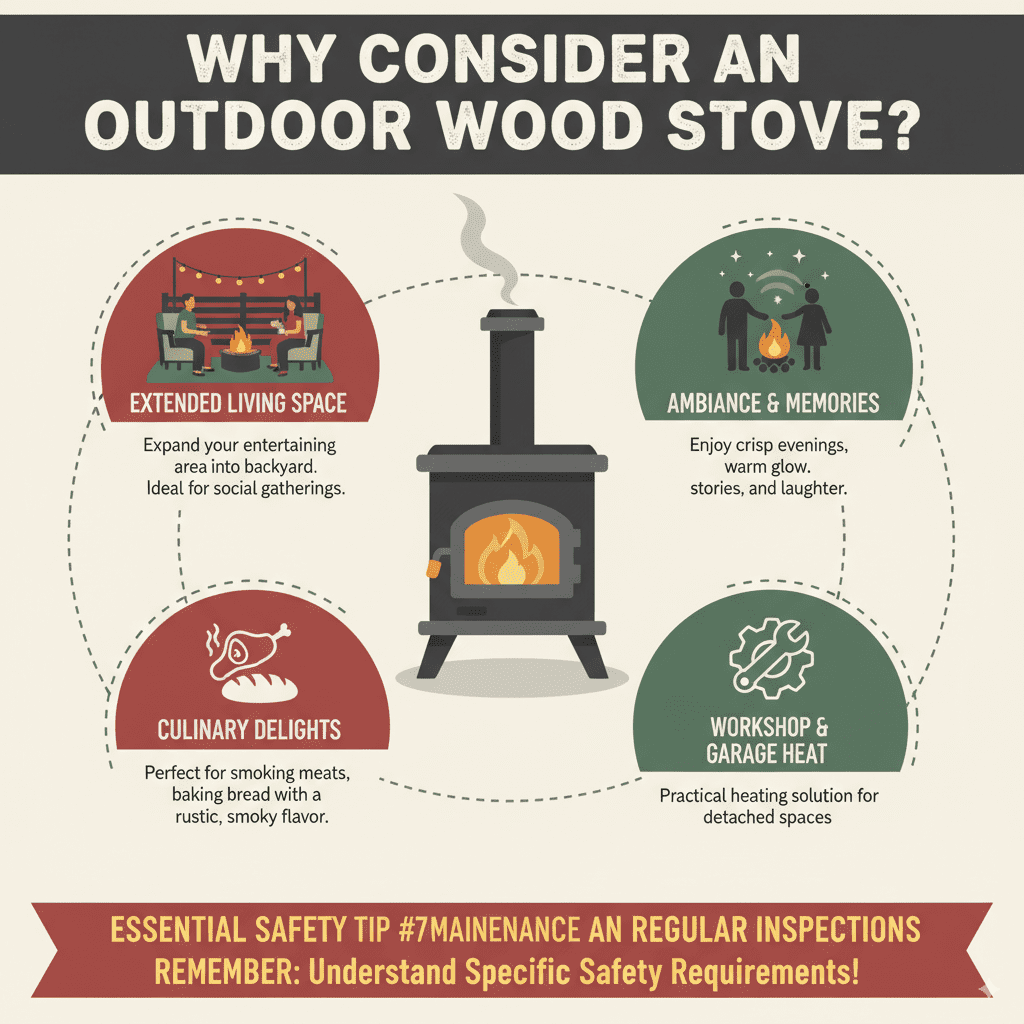
Outdoor wood stoves offer a unique charm and functionality that indoor stoves can’t replicate. They can extend your living space into the backyard, becoming a focal point for gatherings. Imagine crisp evenings spent around the warm glow, a perfect backdrop for stories and laughter. Beyond ambiance, they are fantastic for outdoor cooking, allowing you to smoke meats or bake bread with a rustic, smoky flavor. Some people even use them for workshops or garages where indoor heating isn’t practical. The key is understanding their specific safety requirements, which differ from their indoor counterparts.
Understanding the Types of Outdoor Wood Stoves
Before diving into safety, it’s helpful to know what kinds of outdoor wood stoves are available. This helps you choose one that fits your needs and understand its unique considerations.
- Portable Wood Stoves: These are often smaller units, sometimes resembling large kettles or barrels, designed for easy transport to campsites or temporary outdoor setups. They are generally simpler in design but still require careful placement.
- Permanent Outdoor Fireplace Stoves: These are usually more robust, fixed structures that are built to withstand the elements and more frequent use. They might be made of heavy-duty steel, cast iron, or even feature masonry elements.
- Pizza Ovens/Wood-Fired Cookers: While designed primarily for cooking, many of these also function as excellent outdoor wood stoves. Their insulated chambers and specific designs mean they have their own set of operating best practices.
- Boiler/Furnace Stoves: These are larger, more complex systems designed to heat water or air that can then be circulated to your house or other buildings on your property. They require significant installation and adherence to strict safety codes.
Essential Safety Tip #1: Location, Location, Location!
This is by far the most critical step. Where you place your outdoor wood stove directly impacts the safety of your home, property, and family. Think of it as giving your stove its own safe “personal space.”
Clearances are Crucial
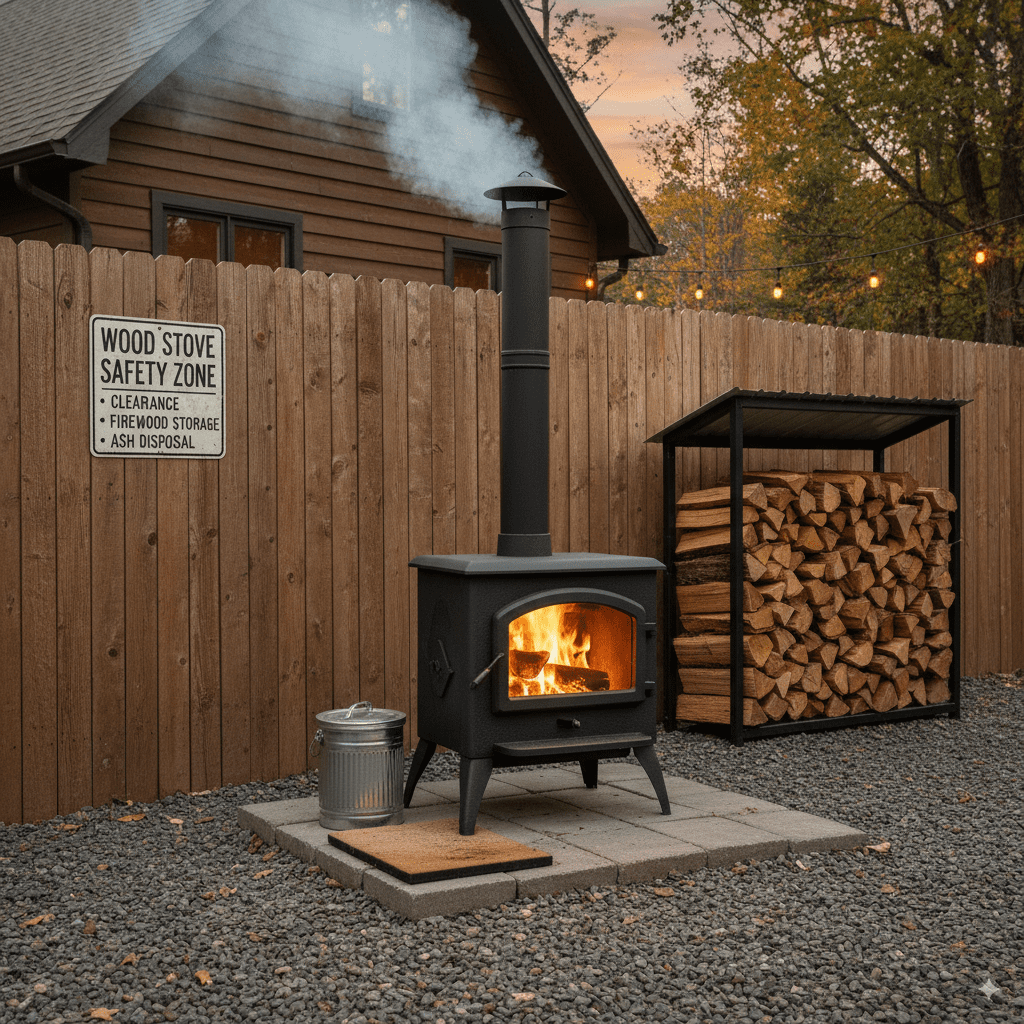
Always maintain a safe distance between your wood stove and anything that could catch fire. This includes your house, sheds, fences, decks, trees, bushes, and even stacked firewood. Refer to your stove’s manual for specific clearance requirements. These are not suggestions; they are vital for preventing accidental fires.
- From Structures: Most manufacturers recommend at least 10-25 feet from any combustible building. For larger, more powerful stoves like outdoor furnaces, this distance might need to be significantly greater, often 30, 50, or even 100 feet. Always check local building codes and the stove manufacturer’s specifications. The National Fire Protection Association (NFPA) provides comprehensive guidelines on heating equipment safety that you can consult.
- From Combustibles: Keep a clear zone around the stove free of dry leaves, grass, wood chips, furniture, or anything flammable. A minimum of 3 feet is a good rule of thumb, but more is always better.
- Overhead Clearance: Ensure there are no low-hanging branches or structures directly above the stove, especially where the chimney extends.
Stable and Non-Combustible Surface
Place your wood stove on a level, stable, and non-combustible surface. This could be concrete, pavers, or gravel. Avoid placing it directly on grass or wooden decks without proper heat shielding. This prevents the stove from tipping over and ensures that radiated heat doesn’t ignite the ground beneath it.
Essential Safety Tip #2: The Chimney is Your Lifeline
The chimney is essential for safely venting smoke and gases away from your stove and your living area. An improperly installed or maintained chimney is a major fire hazard.
Choosing the Right Chimney System
Use a chimney system specifically designed and approved for outdoor wood-burning appliances. These are typically made of stainless steel or other durable, heat-resistant materials. Double-wall insulated pipe is often recommended to reduce the risk of creosote igniting and to keep the exterior pipe cooler.
Spark Arrestor: Your First Line of Defense
A spark arrestor is a mesh screen fitted to the top of the chimney. Its job is to catch sparks and embers that would otherwise fly out and potentially land on your roof or nearby dry vegetation. Make sure it’s installed correctly and kept clean; clogged arrestors can impede draft and become a fire hazard themselves.
Rain Cap: Keeping the Weather Out
A rain cap prevents rain, snow, and debris from entering the chimney. This is important for maintaining proper draft and preventing moisture from causing damage or creating excessive creosote. It should be securely attached but allow for easy cleaning.
Proper Height and Termination
The chimney should extend a sufficient height above the stove and any nearby structures. The general rule of thumb is at least 3 feet higher than anything within a 10-foot radius, and it should terminate at least 2 feet above the highest point of the roof it passes near. Always consult your stove’s manual and local building codes for precise requirements. For example, the InspectAPedia website offers detailed information on chimney height regulations, illustrating the importance of proper termination.
Regular Inspection and Cleaning
Chimneys must be inspected regularly for creosote buildup, blockages, and structural integrity. Creosote is a flammable byproduct of burning wood that can ignite and cause a chimney fire. If you see significant buildup, it’s time to clean your chimney. Most homeowners hire a certified chimney sweep for this task, especially the first few times.
Essential Safety Tip #3: Ventilation is Key to Preventing Carbon Monoxide Dangers
Wood stoves produce carbon monoxide (CO), an odorless, colorless gas that is deadly. Proper ventilation is crucial for both the fire’s performance and your safety.
Draft and Air Supply
Your wood stove needs a good draft to pull smoke up the chimney efficiently. This draft is created by temperature differences and air pressure. Ensure the stove’s air intake vents are not blocked and are adjusted according to the manufacturer’s instructions for optimal combustion and venting.
Carbon Monoxide Detectors are Non-Negotiable
Install working carbon monoxide detectors inside your home, especially in areas near where the outdoor stove might be used (for example, if smoke could drift towards open windows or doors). Test them regularly and replace batteries as needed. Some safety experts recommend CO detectors even in outdoor living spaces if they are enclosed or covered.
- Choose detectors that are specifically designed for the area in which they will be used.
- Ensure they have battery backup in case of power outages.
- Follow the manufacturer’s lifespan recommendations for CO detectors.
What to Do If Your CO Detector Sounds
If your carbon monoxide detector goes off, don’t ignore it. Immediately evacuate everyone from the area. If you suspect CO poisoning (symptoms include headache, dizziness, nausea, and difficulty breathing), call 911 for emergency medical assistance. Open windows and doors to ventilate the area as you leave.
Essential Safety Tip #4: Safe Fuel Handling and Storage
The wood you burn and how you store it significantly impact safety and stove performance.
Use Seasoned Firewood
Burn only seasoned (dried) hardwood. Wet or green wood burns inefficiently, produces more smoke and creosote, and is harder to ignite. Seasoned wood has been dried for at least 6-12 months, reducing its moisture content to below 20% for optimal burning. You can check this with a moisture meter.
What NOT to Burn
- Never burn treated lumber, painted wood, or particle board, as they can release toxic chemicals.
- Avoid burning garbage, plastics, or accelerants like gasoline.
- Do not burn highly resinous woods like pine as your primary fuel, as they can create excessive creosote.
Proper Storage
Store firewood away from your house and the outdoor stove. A general rule is to keep it at least 10-20 feet away to prevent it from becoming a fuel source for a stray ember. Store wood in a way that allows air circulation, such as on a rack or elevated platform, to keep it dry and prevent rot.
Essential Safety Tip #5: Operating Your Outdoor Wood Stove Safely
Safe operation involves understanding your stove’s limits and respecting the fire.
Read the Manual!
This cannot be stressed enough. Every outdoor wood stove is different. Your owner’s manual is the best resource for understanding its specific operation, maintenance, and safety features. Failure to follow the manufacturer’s instructions can void warranties and, more importantly, lead to unsafe conditions.
Start Small and Learn
When you first start using your stove, begin with small fires to get a feel for how it drafts and burns. Gradually increase the amount of wood as you become more comfortable. Don’t overload the firebox; this can lead to overheating and inefficient burning.
Never Leave Unattended
Treat an outdoor wood stove like any other fire. Never leave it burning unattended, especially if children or pets are around, or if there are strong winds. Always ensure the fire is completely out and the stove has cooled down before leaving the area for an extended period.
Ash Removal
Remove ashes regularly. Let them cool completely in a metal container with a lid before disposing of them. Store the container away from any combustible materials for at least 24-48 hours to ensure no embers remain. Dispose of ashes in a designated area, far from structures or flammable items. Some people find a metal ash bucket with a lid to be an invaluable tool for safe ash removal.
Extinguishing the Fire
Allow the fire to burn down naturally. If you need to extinguish it quickly, use a shovel to spread the embers thinly and then carefully douse them with water. Ensure all embers are completely out before leaving the stove.
Essential Safety Tip #6: Wind and Weather Awareness
Weather conditions can dramatically affect the safety of your outdoor wood stove.
High Winds
Avoid using your outdoor wood stove on very windy days. Strong winds can fan flames, carry sparks further, and make it difficult for the chimney to vent properly. If you must use it during breezy conditions, be extra vigilant about clearances and monitor for flying embers.
Drought Conditions
During periods of drought, the risk of outdoor fires increases significantly. Consider refraining from using your wood stove altogether during these times. Check local fire advisories and “burn bans” issued by authorities. You can often find this information on your local fire department’s or forestry service’s website.
Essential Safety Tip #7: Maintenance and Regular Inspections
Like any appliance, your outdoor wood stove requires regular maintenance to remain safe and functional.
Annual Inspections
Schedule an annual inspection of your stove and chimney. This should include checking for rust, cracks, damaged seals, and proper operation of all components. A professional inspection can catch potential issues before they become serious problems.
Cleaning and Lubrication
Keep the stove clean, both inside and out. This includes cleaning the glass doors (if applicable), air vents, and the firebox. Lubricate any moving parts like dampers or door hinges as recommended by the manufacturer.
Repairs
Address any needed repairs promptly. A damaged stove or chimney is a safety hazard. If you notice a problem, consult the owner’s manual or a qualified technician.
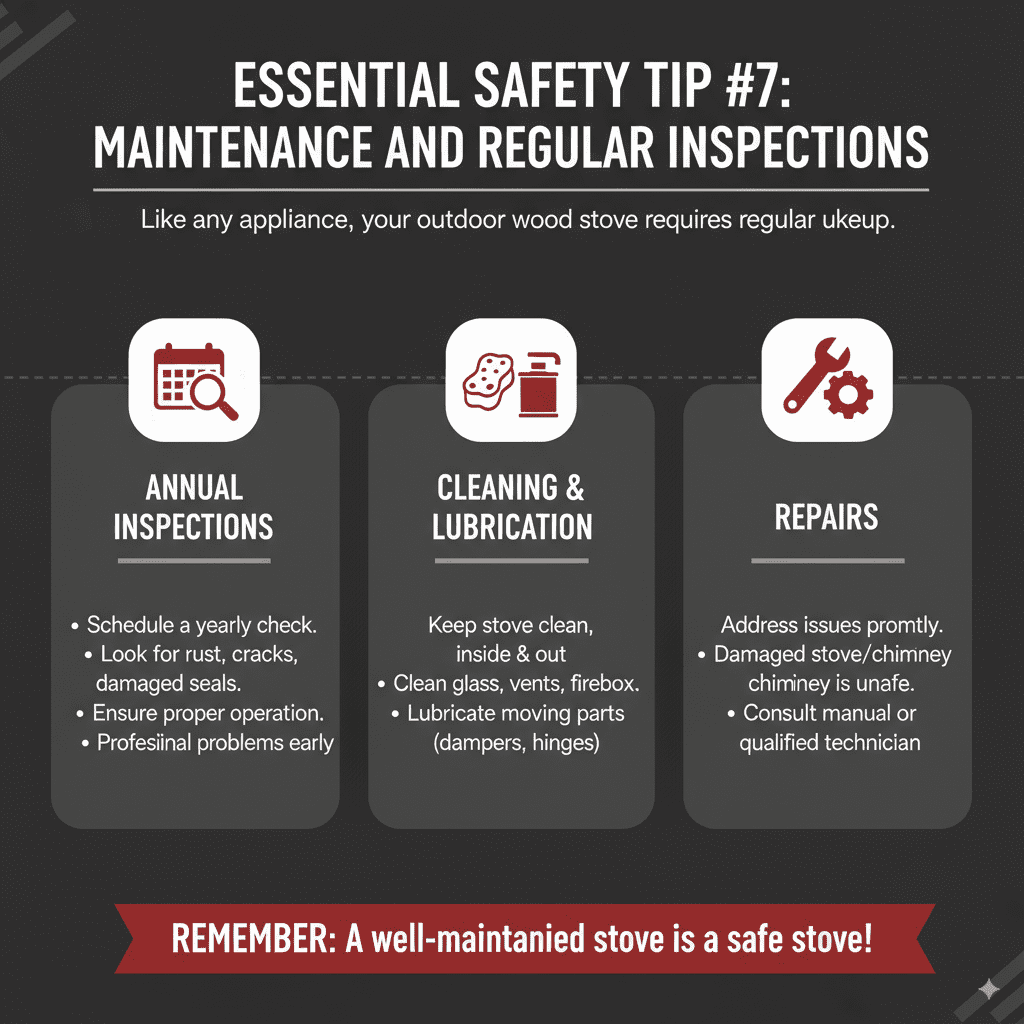
Table: Outdoor Wood Stove Safety Checklist
Use this checklist to ensure you are following all essential safety tips:
| Safety Area | Action/Check | Notes |
|---|---|---|
| Location | Clearance from structures (house, shed) | Min. 10-25 ft (check manual/codes) |
| Clearance from combustibles (trees, furniture) | Min. 3 ft all around | |
| Foundation is level and non-combustible | Concrete, pavers, gravel | |
| Chimney | Approved chimney system used | Double-wall insulated recommended |
| Spark arrestor installed and clean | Essential for ember control | |
| Rain cap installed and secure | Keeps moisture and debris out | |
| Proper height and termination | Refer to manual/codes (e.g., 3ft above structures within 10ft) | |
| Regular chimney inspection/cleaning | Prevent creosote fires | |
| Ventilation & CO Safety | Adequate air supply for combustion | Check and adjust air vents |
| Working Carbon Monoxide detectors installed | Test regularly, replace batteries | |
| Fuel | Using seasoned hardwood only | Below 20% moisture content |
| No prohibited materials burned (treated wood, plastic, etc.) | Avoid toxic fumes and hazards | |
| Firewood stored 10-20 ft from structures | Allows airflow, prevents fire spread | |
| Operation | Stove manual read and understood | Follow manufacturer’s guidelines |
| Fire never left unattended | Constant monitoring required | |
| Ashes removed safely (cooled, metal container) | Store ash container away from combustibles | |
| Weather | Avoid use in very high winds or drought | Check local burn bans and wind advisories |
| Maintenance | Annual professional inspection | Check for damage and wear |
| Regular cleaning of stove and chimney components | Promotes efficiency and safety |
Frequently Asked Questions (FAQ) About Outdoor Wood Stoves
Q1: How close can an outdoor wood stove be to my house?
A: The general recommendation is at least 10 to 25 feet from any combustible structure, including your house. However, this can vary significantly based on the specific stove model, its heat output, and local building codes. Always consult your stove’s owner’s manual and your local fire department or building authority for precise minimum clearances.
Q2: What kind of wood should I burn in my outdoor stove?
A: You should burn only dry, seasoned hardwoods. Seasoned wood has been dried for at least six months to a year, meaning its moisture content is below 20%. This ensures efficient burning, less smoke, and reduced creosote buildup. Never burn treated lumber, painted wood, particle board, or garbage, as these can release toxic fumes and create dangerous conditions.
Q3: Do I need a permit to install an outdoor wood stove?
A: In many areas, yes, you will need a permit for installing an outdoor wood stove, especially for permanent installations or those connected to a heating system. Regulations vary widely by municipality. It’s essential to contact your local building department or fire marshal’s office before purchasing or installing an outdoor stove to understand all permit requirements, zoning laws, and safety codes.