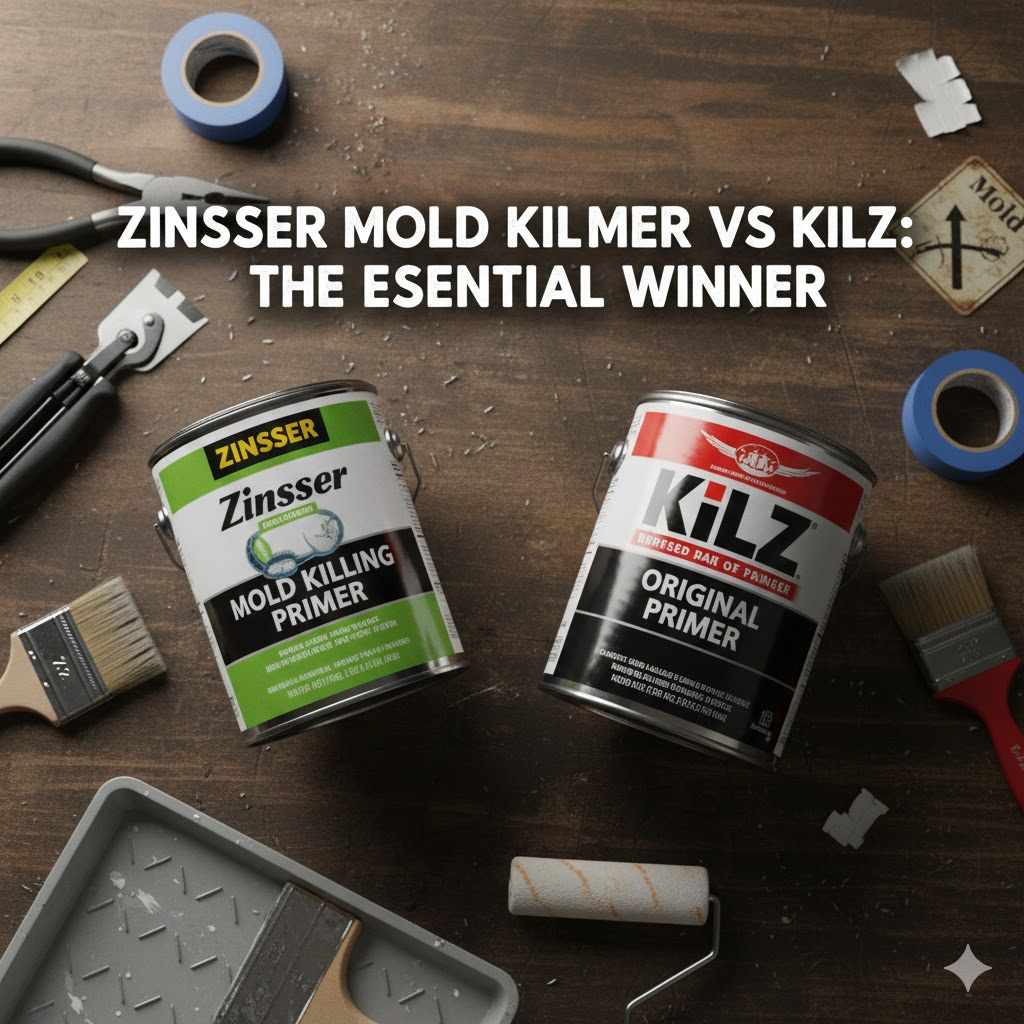
Zinsser Mold Killing Primer Vs Kilz: The Essential Winner
For actively killing existing mold and mildew, Zinsser Mold Killing Primer is the clear winner. It’s an EPA-registered mildewcide specifically designed to kill mold spores on contact. While Kilz is excellent for blocking stains and preventing future mildew growth on the primer film, it is not formulated to kill active, existing mold.
Hello there! I’m Md Meraj, and in my workshop, I’ve seen my fair share of projects big and small. One of the most common—and frustrating—problems homeowners face is mold and mildew. It can appear in bathrooms, basements, or anywhere moisture is a problem. You might think any old primer can cover it up, but that’s a big mistake.
Dealing with mold isn’t just about looks; it’s about creating a healthy home. The good news is, you can handle it yourself with the right tools and a little guidance. In this guide, we’ll look at two of the biggest names in the game: Zinsser Mold Killing Primer and Kilz. We’ll break down what they do, when to use each one, and crown the essential winner for your mold project. Let’s get you started on the right foot!
What Is Mold and Why Do You Need a Special Primer?
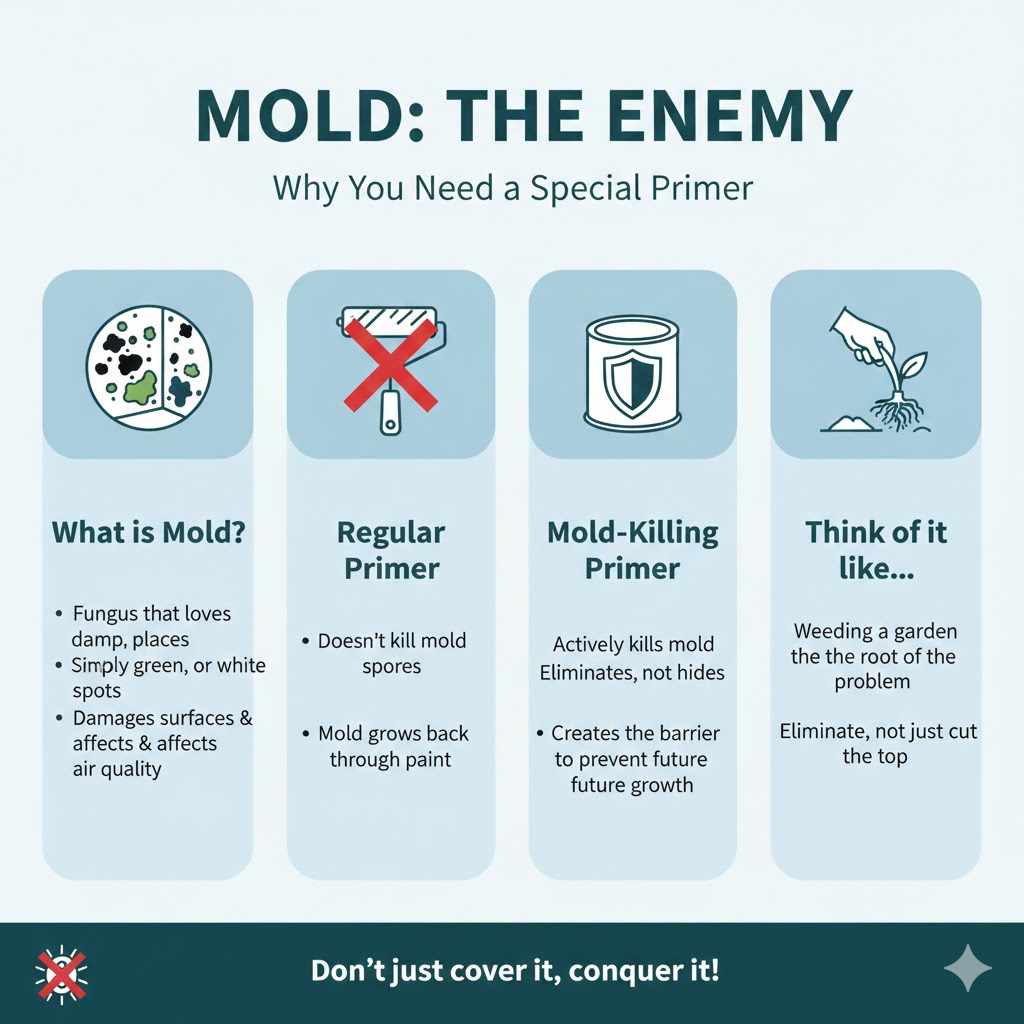
Before we pick a winner, let’s talk about the enemy. Mold is a type of fungus that loves damp, dark places. You might see it as black, green, or white spots on your walls or ceiling. It’s not just ugly; it can damage surfaces and affect your home’s air quality.
So, why can’t you just use regular paint or primer? Here’s why:
- Regular primer doesn’t kill mold. It simply covers the stain. The mold is still alive underneath and will eventually grow right through your new paint job.
- Mold needs to be eliminated, not just hidden. A specialized mold-killing primer contains ingredients that actively kill the mold spores.
- Mold primers prevent future growth. They create a barrier that makes it much harder for mold to come back in that same spot.
Think of it like weeding a garden. You wouldn’t just cut the top off a weed and hope it goes away. You need to pull it out by the roots. A mold-killing primer helps you get to the root of the problem.
The Contenders: A Closer Look at Zinsser and Kilz
When you walk into a hardware store, these are the two names you’ll see everywhere. They are both trusted brands, but they serve slightly different purposes when it comes to mold. Let’s break them down.
Zinsser Mold Killing Primer
Zinsser Mold Killing Primer is a specialist. Its main job, as the name says, is to kill mold. This water-based primer is registered with the EPA (Environmental Protection Agency) as a mildewcide, which means it’s been proven to kill existing mold, mildew, and odor-causing bacteria.
Key Features:
- EPA-Registered Mildewcide: This is its biggest advantage. It is legally certified to kill mold and mildew.
- Water-Based Formula: This makes it easy to apply and clean up with just soap and water. It also means it has a low odor, which is great for indoor projects.
- Binds Chalky Surfaces: It works well on surfaces like old drywall or paint that have become a bit powdery.
- Stain Blocking: It does a decent job of covering the stains left behind by mold and water.
- Paintable: You can topcoat it with any latex or oil-based paint in just one hour.
Kilz Mold & Mildew Primer
Kilz is a legendary name in the world of primers, especially for blocking tough stains. The Kilz Mold & Mildew Primer is designed to be a heavy-duty stain blocker that also has properties to help with mildew. It contains an agent that prevents mildew from growing on the surface of the primer film.
Key Features:
- Excellent Stain Blocking: Kilz is fantastic at covering stubborn stains from water, smoke, or tannin.
- Mildew-Resistant Film: It creates a surface that is not friendly to future mildew growth. However, it is not designed to kill existing, active mold colonies.
- Great Adhesion: It sticks well to almost any surface, creating a solid base for your paint.
- Water-Based and Low Odor: Like the Zinsser product, it’s easy to work with and clean up.
- Fast Drying: It’s also ready for a topcoat in about an hour.
Zinsser Mold Killing Primer vs. Kilz: The Head-to-Head Battle
Alright, let’s put these two primers side-by-side and see how they stack up in the areas that matter most for your project. This is where we find our true winner.
Category 1: Mold Killing Power
This is the most important category. If you have visible mold, you need something that will kill it dead.
Zinsser: This is Zinsser’s specialty. The EPA registration means it has been tested and certified to kill existing mold and mildew spores on contact. It doesn’t just cover the problem; it eliminates it.
Kilz: Kilz Mold & Mildew Primer is designed to be preventative. The mildewcide in its formula protects the primer itself from future mold growth. It is an excellent choice for a humid bathroom where you don’t have mold yet, but it is not formulated to kill a patch of mold that’s already growing.
Winner: Zinsser Mold Killing Primer. It’s not even a close fight. If your goal is to kill existing mold, Zinsser is the only choice between the two.
Category 2: Stain Blocking
After you’ve killed the mold, you’ll be left with an ugly stain. How well do these primers hide it?
Zinsser: It does a pretty good job blocking the faint, grayish stains left by mold. For most situations, one or two coats will be enough.
Kilz: This is where Kilz shines. For decades, Kilz has been the go-to brand for covering the toughest stains—from major water damage to smoke and nicotine. If you have dark, severe stains, Kilz often has a slight edge in coverage.
Winner: Kilz. While Zinsser is effective, Kilz is a true stain-blocking powerhouse. However, you could always kill the mold with Zinsser and then use a Kilz topcoat if the stain is particularly bad!
Category 3: Application and Ease of Use
For any DIYer, a product that is easy to use is a huge bonus. Both primers are designed with homeowners in mind.
Zinsser: It has a smooth, consistent formula that is easy to brush or roll on. Since it’s water-based, cleanup is a breeze with soap and water.
Kilz: Kilz is also water-based and very user-friendly. It flows on nicely and also cleans up easily. There is no significant difference here for a beginner.
Winner: It’s a tie. Both products are water-based, low-odor, and simple for beginners to use and clean up.
Side-by-Side Comparison Table
Here’s a simple table to help you see the differences at a glance:
| Feature | Zinsser Mold Killing Primer | Kilz Mold & Mildew Primer |
|---|---|---|
| Primary Function | Kills existing mold and mildew | Blocks stains and prevents future mildew on the primer film |
| EPA Registered? | Yes, as a mildewcide | No, not for killing existing mold |
| Best For | Areas with active mold growth (after cleaning) | High-humidity areas to prevent future mildew; covering stains |
| Base Type | Water-Based | Water-Based |
| Stain Blocking | Good | Excellent |
| Cleanup | Soap and Water | Soap and Water |
The Essential First Step: Prepping Your Surface for Primer
Before you even think about opening a can of primer, you have to prepare the surface. This is the most important step for success and safety. Skipping it means the mold will likely return, no matter which primer you use.
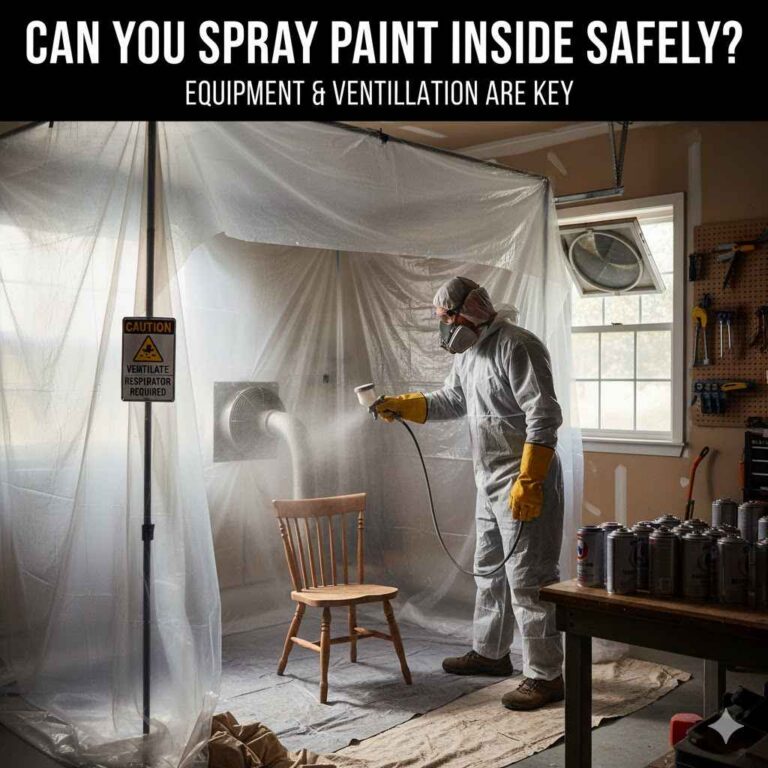
- Safety First! Always protect yourself. Wear old clothes, rubber gloves, safety goggles, and an N-95 respirator mask. Mold spores can be harmful if you breathe them in.
- Find and Fix the Moisture Problem. Mold only grows where there is moisture. Is it a leaky pipe? Poor ventilation in the bathroom? Condensation on a cold wall? You must fix the source of the water. If you don’t, the mold will always come back.
- Clean the Surface Mold. Gently clean the visible mold off the wall. You can use a simple solution of one part bleach to ten parts water, or a store-bought mold cleaner. Use a sponge or cloth to scrub the area. According to the U.S. Environmental Protection Agency, you should never mix bleach with ammonia or other household cleaners.
- Rinse and Dry Completely. After cleaning, wipe the area with a damp cloth to rinse away any remaining bleach solution. Then, let the area dry completely. Aim a fan at the spot to speed it up. The surface must be bone dry before you apply any primer.
Once these steps are done, you’re ready to prime!
So, Which Primer Should You Choose?
Now that we’ve seen the evidence, the verdict is clear, but it depends on your specific situation.
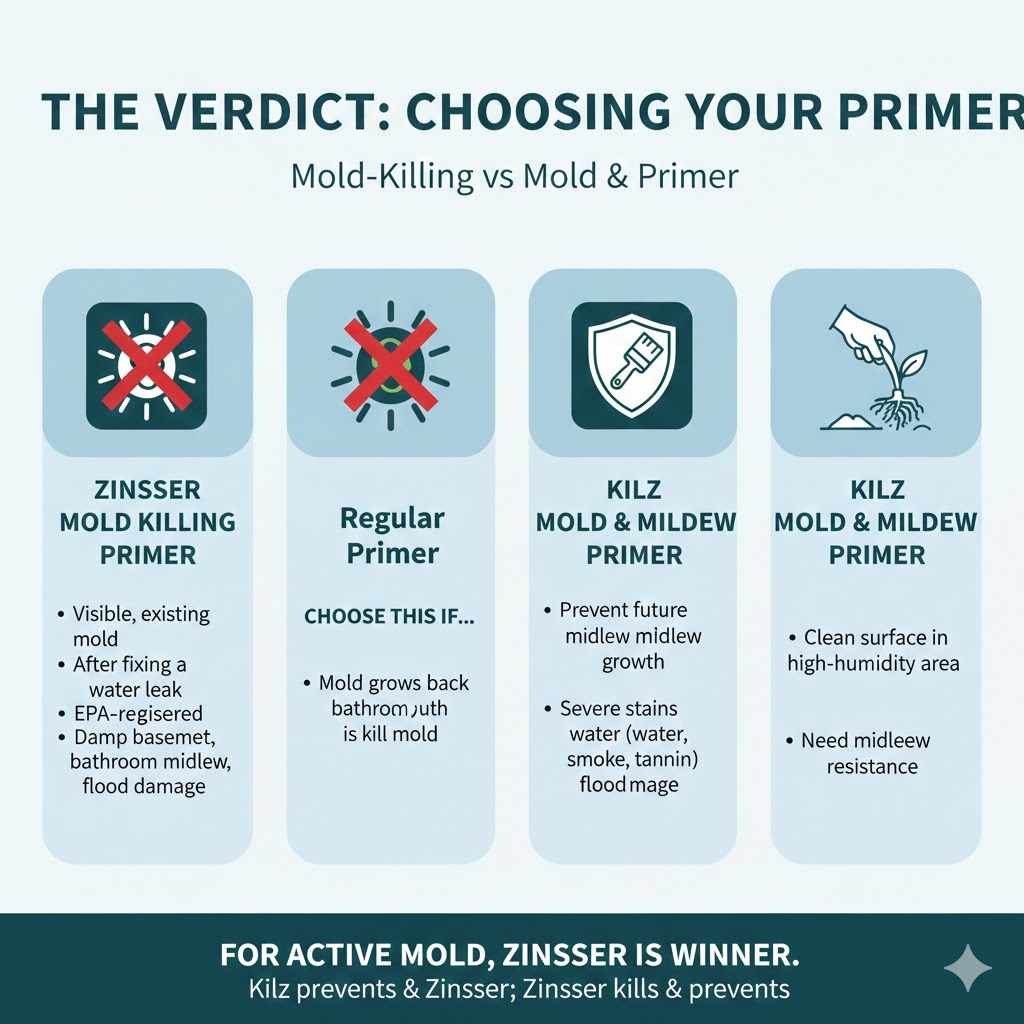
Choose Zinsser Mold Killing Primer If…
- You have visible, existing mold or mildew on the surface.
- You are treating an area after fixing a water leak.
- You need the peace of mind of an EPA-registered product that is proven to kill mold.
- You are priming a damp basement, a bathroom ceiling with mildew spots, or wall cavities after a flood.
Choose Kilz Mold & Mildew Primer If…
- You are priming a clean surface in a high-humidity area (like a bathroom or kitchen) to prevent future mildew growth.
- You do not have any active mold, but you have very severe stains from a past water issue.
- You are priming over other tough stains like smoke or tannin and also want some mildew resistance.
For the question “Zinsser Mold Killing Primer vs Kilz,” the essential winner for dealing with an active mold problem is unequivocally Zinsser. Its entire purpose is to kill what’s there and stop it from returning. Kilz is a fantastic preventative primer and stain blocker, but it’s not the right tool for an active mold infestation.
Frequently Asked Questions (FAQ)
1. Can I just paint over mold with Zinsser or Kilz?
No, you should never paint or prime directly over active mold. You must clean the surface first with a bleach solution or a dedicated mold cleaner. Priming over mold traps it, but doesn’t kill it (unless you use Zinsser), and it will often grow back through the paint.
2. Which primer is better for a bathroom ceiling with no current mold?
In this case, Kilz Mold & Mildew Primer is an excellent choice. Since there is no active mold to kill, you can focus on prevention. Kilz will block any minor old water stains and provide a mildew-resistant film to prevent future problems in that high-humidity environment.
3. Do I really need to wear a mask when using these primers?
Yes, absolutely. While both are low-odor, it’s always recommended to wear a mask for two reasons. First, you’ll be working in an area where mold spores were recently present. Second, any paint or primer can release vapors. Good ventilation (like an open window or a fan) and a proper mask are essential for safety.
4. How many coats of mold primer do I need?
For most situations, one good coat of primer is enough. However, if you are dealing with a particularly stubborn stain or a very porous surface, a second coat after the first has dried is a good idea to ensure a complete seal.
5. What’s the main difference between mold and mildew?
Think of mildew as a specific type of mold. Mildew tends to be a surface fungus that looks flat, powdery, or downy, often gray or white. Mold is often fuzzy or slimy and can be black, green, or other colors. From a homeowner’s perspective, the treatment is the same: clean it, fix the moisture, and use a proper primer.
6. Is Zinsser or Kilz cheaper?
Prices can vary by location and store, but generally, both products are competitively priced and are very close in cost. Don’t let a small price difference be the deciding factor; choose the product that is right for your specific problem.
7. Can I use these primers on outdoor surfaces?
Zinsser Mold Killing Primer can be used on some exterior surfaces like wood siding, fences, and stucco. Kilz also offers a range of exterior primers. Always check the product label on the can to confirm it’s suitable for outdoor use and for the specific material you’re painting.
Conclusion: Your Best Defense Against Mold
There you have it. When mold makes an unwelcome appearance in your home, you need a plan, and you need the right product. While both Zinsser and Kilz are fantastic brands that I trust in my own workshop, they are engineered for different jobs.
If you’re facing an active mold problem, Zinsser Mold Killing Primer is your champion. It’s an EPA-registered solution designed specifically to kill mold and give you a fresh, clean slate. For preventing future mildew growth or tackling intense stains on a clean surface, Kilz remains an outstanding choice.
Remember the golden rule: fix the moisture source, clean the surface properly, and then prime. By choosing the right tool for the job, you’re not just painting a wall; you’re protecting your home and your peace of mind. Now you have the knowledge to do it right. Grab your tools, stay safe, and get to it!