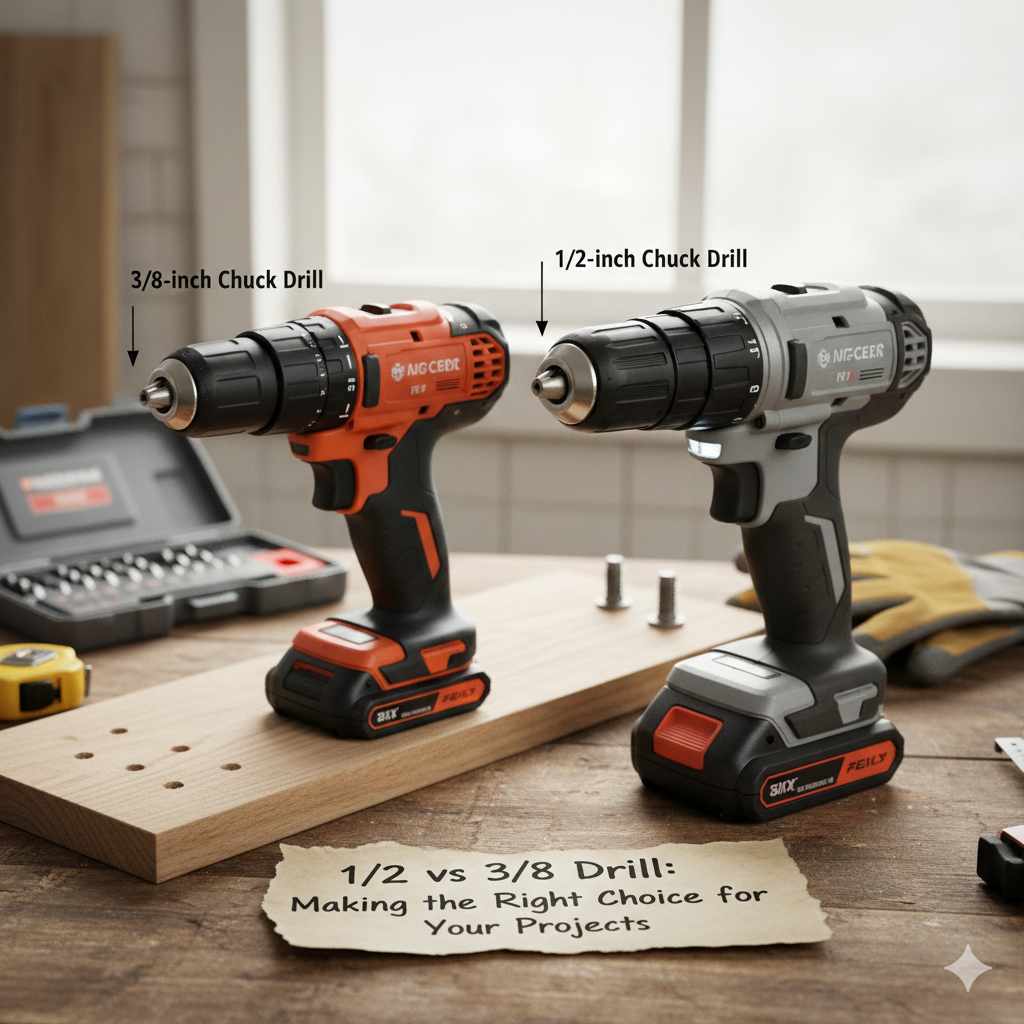
1/2 vs 3/8 Drill: Making the Right Choice for Your Projects
Choosing between a 1/2 vs 3/8 Drill: Which Should You Choose? can seem tricky, especially if you’re just starting. These drills look similar, but their sizes make a big difference in how they work. Don’t worry, though! It’s not as hard as it sounds. We’ll break down the key differences between these drills in a simple, step-by-step way. Get ready to learn how to pick the perfect drill for your next project, even if you’re a beginner. Let’s get started!
What Sets a 1/2-inch Drill Apart?
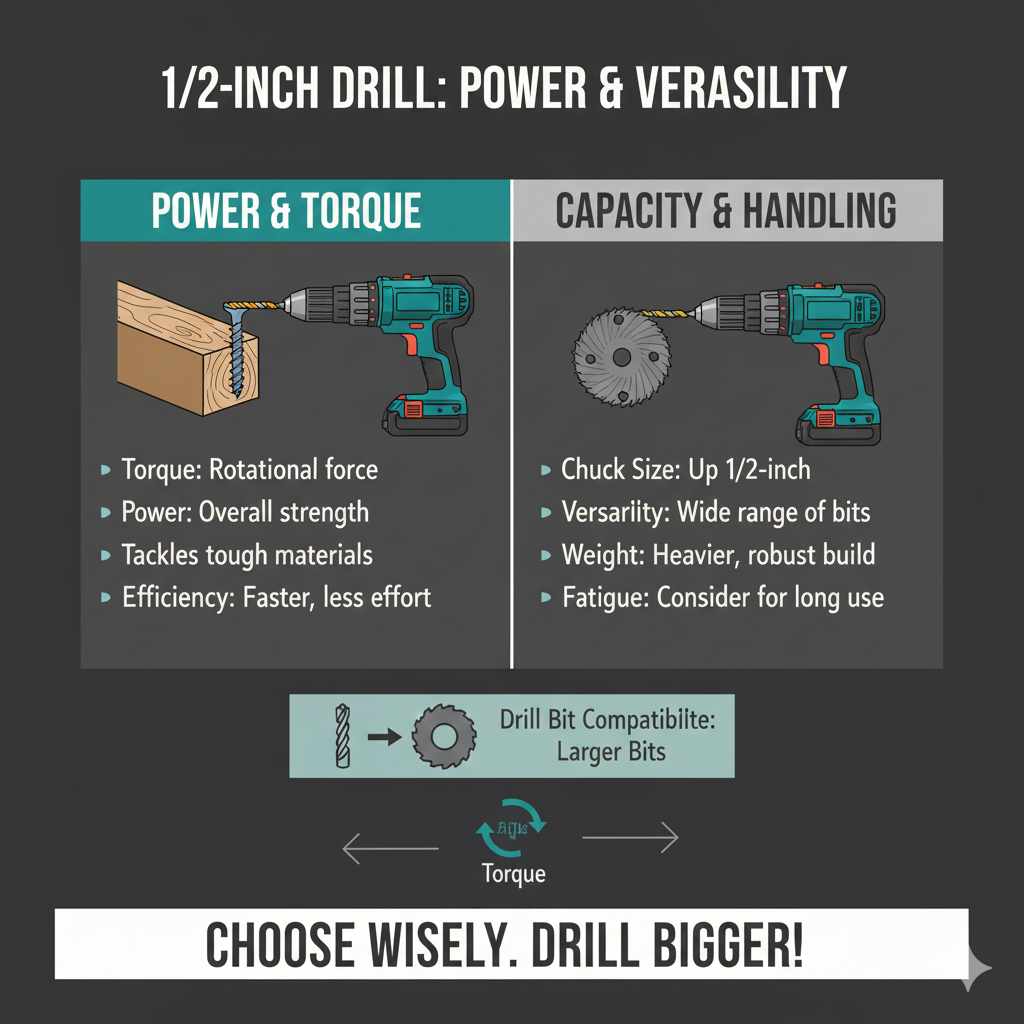
The 1/2-inch drill is a powerful tool often used for bigger projects. The “1/2-inch” refers to the maximum size of the drill bit it can hold. This means it can handle larger bits, allowing you to drill bigger holes and work with tougher materials. It’s a favorite for professionals and serious DIY enthusiasts. Its ability to generate more torque makes it a perfect fit for jobs that demand extra force, like drilling through thick wood or metal. It’s often heavier and more expensive than a 3/8-inch drill. Choosing the right one depends on the tasks you do the most.
Power and Torque Explained
When it comes to drills, power and torque are key. Power is the overall strength of the drill, which determines how efficiently it can work. Torque, on the other hand, is the twisting force that helps you turn the drill bit. A 1/2-inch drill generally boasts a higher torque than a 3/8-inch drill. This means it can drive screws more quickly and drill through tougher materials. Think of it like this: power is how hard the drill works, and torque is how much twist it has. More torque is great when you need to power through difficult materials. This is why 1/2-inch drills are frequently selected for construction work.
For example, imagine you are building a deck. You’ll need to drill through thick wooden planks to attach the deck boards to the frame. A 1/2-inch drill, with its increased torque, can power through the wood with minimal effort, unlike a 3/8-inch drill, which may struggle and overheat.
- Torque: This is the rotational force that allows the drill to twist.
- Power: A measure of the drill’s overall strength.
- Material Resistance: Stronger drills tackle tough materials easier.
- Efficiency: Less time and effort are needed with a powerful drill.
Drill Bit Compatibility
One of the main differences between the 1/2-inch and 3/8-inch drills lies in their drill bit capacity. The 1/2-inch drill can hold bits up to 1/2-inch in diameter. This greater capacity makes it a versatile tool for various projects. You can use large-diameter bits for drilling larger holes, such as those needed for installing pipes or running electrical wiring. The larger chuck size also means it can handle a wider range of accessories like hole saws and auger bits, which are essential for many construction and renovation tasks. This flexibility is a huge advantage when you have diverse projects.
Consider the task of renovating a kitchen. You might need to drill large holes in the cabinets for plumbing or electrical work. A 1/2-inch drill’s ability to use hole saws becomes extremely useful in this situation, allowing for quick and precise hole creation. The ability to use different sizes and types of bits is a key consideration when choosing a drill.
- Chuck Size: The maximum diameter of the drill bit it can accept.
- Hole Saw Compatibility: Essential for large-diameter holes.
- Auger Bit: Great for fast and efficient drilling in wood.
- Versatility: A 1/2-inch drill has a wider range of uses.
Weight and Handling
A 1/2-inch drill is usually larger and heavier than a 3/8-inch model. This can impact how easy it is to handle, especially for extended periods. The added weight comes from the more powerful motor and sturdy build. While this heft can make it feel more robust and stable, it can also lead to fatigue, particularly for overhead work or tasks requiring precise movements. This is a point to think about if you’re working on a job that involves a lot of drilling in tight spots or at awkward angles. Knowing about the weight helps you choose a tool that matches your comfort level and the specific tasks at hand.
Picture yourself working on a project where you are drilling overhead, such as installing a light fixture. The extra weight of the 1/2-inch drill could strain your arms quickly, making the task harder. For these scenarios, a lighter drill might be more practical.
- Weight: Generally heavier due to the bigger motor.
- Balance: The weight distribution affects stability.
- Ergonomics: Some drills are designed to reduce fatigue.
- Fatigue: Heavier drills can cause fatigue during long use.
Unpacking the 3/8-inch Drill’s Capabilities
The 3/8-inch drill is known for its compact size and ease of use, making it ideal for many home projects. The “3/8-inch” indicates the maximum drill bit size it can take. This means it is suitable for smaller projects like assembling furniture, light woodworking, or DIY tasks. Because it is usually lighter and more maneuverable than the 1/2-inch drill, you can use it in tight spaces. Although it may not provide as much power, its balance of portability and power makes it a popular choice for homeowners and those who do smaller projects.
Size and Portability
The 3/8-inch drill is a standout for its smaller size and portability. This characteristic makes it a favorite for handling tasks in tight spaces where a bigger drill won’t fit. Its lighter build makes it less tiring to use for long periods. You can easily move it around without feeling weighed down. This makes it perfect for projects where you need to get into corners or reach overhead. For anyone who needs to move around a lot during their tasks, the 3/8-inch drill is a winning option. It is easier to store, too.
Suppose you are working on assembling a flat-pack bookcase. The small size of the 3/8-inch drill allows you to reach the narrow areas within the frame. Its lighter weight reduces fatigue as you work through several steps.
- Compact Design: Easily fits in tight spaces.
- Weight: Lighter, so it is less tiring to use.
- Maneuverability: Easier to handle in various positions.
- Storage: Compact size takes up less space.
Usability and Control
The 3/8-inch drill excels in user-friendliness and control. The smaller size allows for better handling and control, resulting in more precision when drilling or driving screws. This is especially helpful for intricate tasks where accuracy is key. You can make more detailed work with a 3/8-inch drill. This ease of control makes it a great pick for beginner DIYers. It’s often easier to regulate the speed and pressure, reducing the chances of stripping screws or damaging materials. The balanced feel of the drill translates to a greater degree of control.
Think about doing a project where you need to hang picture frames on a wall. The precision and control offered by a 3/8-inch drill help you create accurately placed holes. Its ease of use keeps you from damaging the wall or the frames.
- Control: Offers better handling and precision.
- Precision: Makes intricate tasks easier.
- User-Friendly: A great choice for beginners.
- Speed Control: Allows for precise adjustments.
Applications and Common Uses
The 3/8-inch drill is perfectly suited for many jobs around the house, like putting together furniture, installing shelves, or doing light repairs. It excels at tasks where you don’t need the extra power of a larger drill. The drill is also very good for working with wood, plastic, and thin metal sheets. It is an excellent all-around tool for common household projects and DIY hobbies. It is perfect for those who do these kinds of projects because it is lightweight, easy to handle, and offers great control.
Consider the situation where you are building a small birdhouse. A 3/8-inch drill is perfect for this project. Its control makes it easier to drill precise holes in the wood without causing it to crack or split. It also works great for putting the birdhouse together with screws.
- Furniture Assembly: Ideal for putting together flat-pack furniture.
- Light Woodworking: Great for small projects and crafts.
- Home Repairs: Perfect for hanging pictures or installing shelves.
- DIY Projects: Suitable for many household tasks.
Key Differences: 1/2-inch vs 3/8-inch Drill
The primary contrast between 1/2-inch and 3/8-inch drills lies in their size, power, and the kinds of projects they are best suited for. The 1/2-inch drill is your go-to option for heavy-duty tasks where you require more power and the ability to drill large holes. The 3/8-inch drill is perfect for jobs requiring better control, maneuverability, and where smaller drill bits are sufficient. Recognizing these distinctions will help you make a good decision when buying the right tool.
Size and Weight: A Comparative Glance
The size and weight of a drill have a big impact on how you use it. Generally, a 1/2-inch drill is larger and heavier than a 3/8-inch model because of its bigger motor and stronger build. This added weight can make it feel more robust, which is good for tough jobs. However, it can tire you out, especially when working for longer periods or in difficult positions. A 3/8-inch drill, being lighter and more compact, is easier to move around. This makes it a great pick if you have to work in tight spaces or on tasks that demand a lot of movement.
| Feature | 1/2-inch Drill | 3/8-inch Drill |
|---|---|---|
| Size | Larger | Smaller |
| Weight | Heavier | Lighter |
| Maneuverability | Less | More |
| Storage | More space required | Less space required |
Imagine you’re trying to work on a job where you must drill overhead, like installing lights. The smaller size and weight of a 3/8-inch drill can make the task much easier. On the other hand, if you are working on a construction project, the added power of the 1/2-inch drill will make the job much faster.
- Weight and Balance: Heavier drills require more effort.
- Ergonomics: Consider the handle and grip comfort.
- Fatigue: Lighter drills reduce fatigue over time.
- Accessibility: Smaller drills work better in tight spaces.
Power and Performance: Match Your Needs
The power and performance of a drill are important factors to consider, and the difference between a 1/2-inch and 3/8-inch drill is significant. A 1/2-inch drill typically offers more power and torque. This is perfect for drilling through tough materials like thick wood and metal. Its higher torque allows you to drive screws more quickly and efficiently. The 3/8-inch drill provides less power, which means it is better for lighter jobs where greater control and precision are key. Choosing the right one depends on what you are using it for.
For example, if you are constructing a deck, the extra power of a 1/2-inch drill is helpful when driving long screws into the thick wooden boards. But if you are putting together a piece of furniture, the control and precision of a 3/8-inch drill will ensure the screws don’t strip the wood.
- Torque: 1/2-inch drills have higher torque for heavy-duty jobs.
- RPM: Speed matters for different materials and tasks.
- Variable Speed: Both types offer it, but it’s important.
- Motor Type: Corded versus cordless options.
Drill Bit Capacity and Versatility
The drill bit capacity and versatility of a drill are directly linked to the size of the chuck, which is the part that holds the drill bit. A 1/2-inch drill has a larger chuck, so it can handle larger drill bits. This is useful when you need to drill big holes. The 3/8-inch drill, with its smaller chuck, is suited for smaller bits. This makes it perfect for more common projects. The choice between them depends on the kinds of tasks you typically do. The 1/2-inch drill is perfect for projects where you need to drill into tougher materials, such as metal or thick wood. The 3/8-inch drill is ideal for more detailed work that requires precision.
Let’s say you’re doing a renovation and need to install new plumbing. The 1/2-inch drill allows you to use hole saws, which are great for drilling the large holes required to run pipes. If you are assembling a computer desk, the 3/8-inch drill offers enough capacity to drive screws and drill the smaller holes you need.
- Chuck Size: Impacts the maximum bit diameter.
- Hole Saw Compatibility: Essential for larger holes.
- Drill Bit Variety: Matching bits to material.
- Project Flexibility: Impacts range of tasks possible.
Choosing the Right Drill for the Task
To pick the perfect drill from the 1/2 vs 3/8 Drill: Which Should You Choose? set, think about what you are going to use it for. Think about the types of projects, the materials you will be working with, and the amount of power and control you will need. Here is a guide to help you decide. Considering these points will help you choose a drill that works well and is suited for your needs.
Understanding Your Projects
To pick the right drill, look at the kinds of projects you often do. If you mostly handle small tasks like assembling furniture or hanging pictures, a 3/8-inch drill is a great choice. It’s light, easy to handle, and gives you good control. For bigger projects, like deck-building or heavy woodworking, the 1/2-inch drill is a better choice. The 1/2-inch drill has more power, which will help you get through thick wood or metal. Considering the usual types of projects will help you select the most appropriate drill for your requirements.
- Small Projects: 3/8-inch drill is suitable for common household tasks.
- Large Projects: 1/2-inch drill for heavy-duty construction.
- Material Types: Choose based on material’s hardness.
- Project Scope: Think about the size and complexity of the tasks.
Considering Materials
The materials you will be working with should influence your drill choice. If you frequently work with soft materials like wood or drywall, a 3/8-inch drill will generally meet your needs. It gives you the control you require to prevent damaging the material. However, when working with tougher materials like metal or thick wood, a 1/2-inch drill is a better pick. Its increased power and torque will make the drilling process easier and quicker. Think about the materials you’ll be using the most.
- Wood: 3/8-inch for light to medium, 1/2-inch for heavy.
- Metal: 1/2-inch is ideal for drilling into metal.
- Plastic: Either works, based on hole size needed.
- Drywall: 3/8-inch provides sufficient control.
Matching Power and Control
Think about how much power and control you need. The 1/2-inch drill offers more power, which is great for jobs that require drilling through thick materials or driving long screws. If precision is crucial, like when putting together furniture or doing more intricate woodworking, the 3/8-inch drill is an excellent choice. It’s easier to handle and gives you better control. Also, think about adjustable speed settings. These are very helpful, allowing you to change the drill’s speed to match the material you’re working with. Always consider these features when making your decision.
- Power Needs: Choose based on the type of projects.
- Control Requirements: Essential for precise work.
- Variable Speed: Helpful for different materials.
- Torque Settings: Adjustable torque improves control.
Frequently Asked Questions
Question: What’s the main difference in size between a 1/2-inch and a 3/8-inch drill?
Answer: The difference lies in the size of the chuck, which determines the maximum size of drill bits they can hold. A 1/2-inch drill can hold bits up to 1/2-inch in diameter, while a 3/8-inch drill can hold bits up to 3/8-inch.
Question: Which drill is better for beginners?
Answer: For beginners, the 3/8-inch drill is often easier to handle. It is lighter, more maneuverable, and gives better control, making it easier to learn how to drill accurately.
Question: When should I choose a 1/2-inch drill?
Answer: Choose a 1/2-inch drill when you need more power for demanding jobs, such as drilling large holes, working with tough materials like metal, or driving long screws.
Question: Can I use a 1/2-inch drill for small tasks?
Answer: Yes, you can use a 1/2-inch drill for small tasks, but the extra weight and power may be overkill. The 3/8-inch drill is often more convenient for these jobs.
Question: What is more important, power or control?
Answer: It depends on the project. Power is important for tougher materials and big tasks, but control is essential for precise work and to prevent material damage. Choose based on the nature of the tasks.
Final Thoughts
When thinking about the 1/2 vs 3/8 Drill: Which Should You Choose? question, remember that there is no one-size-fits-all solution. The best choice depends on what you do. The 1/2-inch drill excels in power for demanding jobs, while the 3/8-inch drill is great when you need more control and maneuverability. Make sure that you consider the materials you usually work with and the kinds of projects you often do. Assess the importance of size, weight, and the amount of power and control you’ll need. Weigh these factors to pick the drill that best suits your needs, making your projects smoother and more fun. So go ahead, and choose the perfect drill to match the work you do!