#1 vs #2 Lumber: Knot Limits, Strength Gap and Which to Buy
No. 2 lumber allows bigger knots, steeper grain and more wane than No. 1, and in most species its published bending value is about 10 to 25 percent lower. Both are structural grades, but No. 1 earns its price on long spans, headers and boards you will see. This guide sets the grading-rule limits side by side, compares strength numbers across four species groups, and explains what “No. 2 and Better” really gets you.
Lumber Grades Overview
Best Lumber Moisture Check Pick
|
Klein Tools ET140 Pinless Moisture Meter, $49.14 A grade stamp tells you about knots and strength, not about water. The published design values assume dry service (19 percent moisture or less), so checking a stack before you build with it matters as much as picking No. 1 or No. 2.
As an Amazon Associate we earn from qualifying purchases. |
Lumber grading sorts boards by what is wrong with them. A grader looks at the size and location of knots, the slope of the grain, wane (missing wood on an edge), splits and checks, then assigns a grade. For framing-size lumber (2 to 4 inches thick) the structural grades run Select Structural, No. 1, No. 2 and No. 3, with Stud, Construction, Standard and Utility used for studs and light framing.
The grade number is not a thickness. “#1” and “#2” describe quality, while 1x and 2x describe nominal thickness (more on that below). And the grade is not only about looks: the same defects that make a board rough also set the strength numbers engineers use for span tables.
“the rules describe the poorest pieces permitted in a grade”
That line matters for buyers. A No. 2 stamp sets a floor, not an average: the rules say a maximum knot, a maximum slope of grain and a maximum wane, and most boards in the grade look better than the limit. The same rulebook allows graders a tolerance of up to 5 percent of pieces below grade, so inspect boards you are going to rely on.
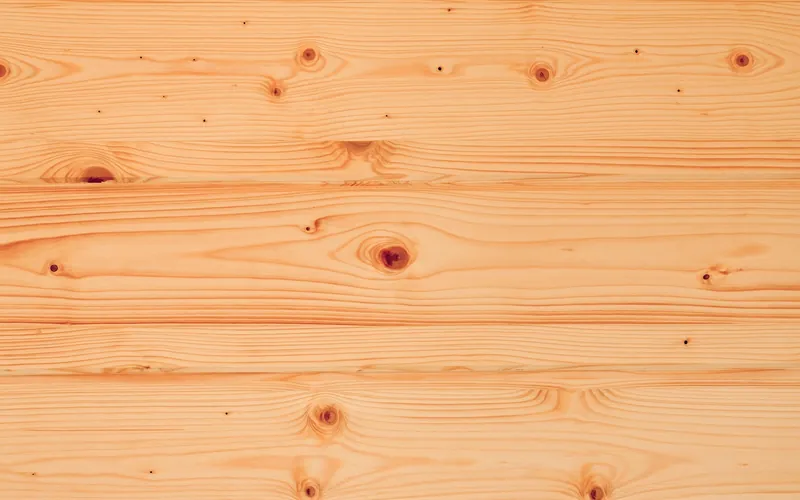
Characteristics Of #1 Lumber
#1 lumber is the tighter of the two grades. In the national grading rule, knots must be sound, firm, encased or pith knots that are tight and well spaced, and they are capped at smaller sizes than in No. 2. Slope of grain is limited to 1 in 10, meaning the grain may drift no more than 1 inch across 10 inches of length. Wane is limited to 1/4 of the thickness and 1/4 of the width over the full length.
In practice that gives you straighter, cleaner boards with fewer places for a crack or a split to start. It is the better choice for an exposed beam or post, a header, or any spot where you want the strongest board for the span you are using.
Characteristics Of #2 Lumber
#2 lumber has the same overall structure but looser limits. Well-spaced knots of any quality are allowed, including loose or unsound knots within a smaller size cap, up to a larger size than No. 1. Slope of grain may reach 1 in 8, wane may run 1/3 of the thickness and 1/3 of the width, and end splits may be as long as 1-1/2 times the board width, against one board width in No. 1.
Physical Properties
Expect larger and more frequent knots, more visible grain run-out and more rough edges. A No. 2 2×4 may carry a knot at the centerline of its wide face up to 2 inches across, which is more than half of the 3-1/2 inch face, while No. 1 stops at 1-1/2 inches (about 43 percent).
Durability And Strength
No. 2 is weaker on paper than No. 1, with lower published bending, tension and stiffness values in most species (full numbers in the strength table below). It is not weaker against weather or rot, because grade measures defects, not durability. Decay resistance comes from the species and any preservative treatment. Warp is limited by the grade, and No. 2 allows light warp while No. 1 allows 1/2 of medium, so No. 1 boards generally start out straighter.
Typical Applications
No. 2 is a common grade for floor and ceiling framing, rafters and deck framing where the wood is covered or painted, and the span tables published by the American Wood Council list No. 2 values alongside No. 1.
#1 vs #2 Lumber: Full Comparison Chart
Here is the grading rule side by side. Limits are for the 2- to 4-inch-thick structural grades; wider boards are allowed bigger knots because a knot takes up a smaller share of the face.
| Feature | #1 Lumber | #2 Lumber |
|---|---|---|
| Knot quality | Sound, firm, tight and well spaced | Well-spaced knots of any quality |
| Slope of grain | 1 in 10 | 1 in 8 |
| Wane (full length) | 1/4 thickness and 1/4 width | 1/3 thickness and 1/3 width |
| End splits | Up to the board width | Up to 1-1/2 times the board width |
| Warp | 1/2 of medium | Light |
| Bending design value, 2×12 Douglas fir-larch | 1,000 psi | 900 psi |
| Bending design value, 2×12 southern pine | 975 psi | 750 psi |
| Best for | Exposed beams, headers, long spans, visible framing | Covered or painted framing where the span table allows it |
The knot limits are where the two grades separate most clearly. This table gives the largest knot allowed on the wide face by nominal width (national grading rule, as published by NELMA):
| Nominal width | #1 knot at edge | #2 knot at edge | #1 knot at centerline | #2 knot at centerline |
|---|---|---|---|---|
| 4 inch (2×4) | 1 in | 1-1/4 in | 1-1/2 in | 2 in |
| 6 inch (2×6) | 1-1/2 in | 1-7/8 in | 2-1/4 in | 2-7/8 in |
| 8 inch (2×8) | 2 in | 2-1/2 in | 2-3/4 in | 3-1/2 in |
| 10 inch (2×10) | 2-1/2 in | 3-1/4 in | 3-1/4 in | 4-1/4 in |
| 12 inch (2×12) | 3 in | 3-3/4 in | 3-3/4 in | 4-3/4 in |
Edge knots matter more than centerline knots in a joist or rafter, because the top and bottom edges carry the highest bending stress. Both grades cap edge knots lower than centerline knots, which fits how a bent board loads its edges. In a 2×4, a No. 2 board can carry a 1-1/4 inch edge knot, against 1 inch in No. 1, a quarter inch difference that adds up across a long span.
How Much Weaker Is #2? Strength Numbers By Species
Strength depends on species as well as grade, so the gap between No. 1 and No. 2 changes with the wood. These are the reference design values published in the AWC 2018 NDS Supplement (tables 4A and 4B), all on the same 12-inch-wide basis so the species compare fairly:
| Species group | Bending Fb, No. 1 | Bending Fb, No. 2 | No. 2 vs No. 1 | Tension Ft, No. 1 / No. 2 | Stiffness E, No. 1 / No. 2 |
|---|---|---|---|---|---|
| Douglas fir-larch | 1,000 psi | 900 psi | 10% lower | 675 / 575 psi | 1.7 / 1.6 million psi |
| Hem-fir | 975 psi | 850 psi | 13% lower | 625 / 525 psi | 1.5 / 1.3 million psi |
| Southern pine | 975 psi | 750 psi | 23% lower | 575 / 450 psi | 1.5 / 1.4 million psi |
| Spruce-pine-fir | 875 psi (one combined No. 1/No. 2 grade) | 875 psi | No difference | 450 psi | 1.4 million psi |
Species can outweigh grade. On this table a Douglas fir-larch No. 2 (900 psi) beats a southern pine No. 2 (750 psi) and a hem-fir No. 2 (850 psi), and sits within 10 percent of a hem-fir or southern pine No. 1 (975 psi). Source: American Wood Council NDS Supplement, 2018
Two cautions. First, these are reference values before the adjustment factors an engineer applies, such as the 1.15 repetitive-member factor for joists and rafters spaced 24 inches or less apart, so do not size a beam from this table. Second, southern pine values depend on board width, and a 2×4 southern pine No. 2 is rated much higher (1,100 psi) than the 12-inch value above because the table already builds in a size factor. Compare the same width across species, as the table does.
What “No. 2 And Better” Means And How To Read The Stamp
Framing lumber is commonly stamped No. 2 and Better, which sets No. 2 as the minimum grade. A bundle can include No. 1 or Select Structural pieces, and you cannot tell from the stamp which ones. Sorting through the bundle for straight grain and small tight knots is the cheapest way to get No. 1 quality at a No. 2 price.
The stamp also carries a species group (such as SPF, Hem-Fir, DF-L or SP), a grading-agency or mill mark and a moisture mark. For a wider look at what each part means, see our guide to what SPF lumber means. SPF is the case in the table above where No. 1 and No. 2 share a single grade, so paying extra for a No. 1 stamp on SPF buys you nothing in published strength.
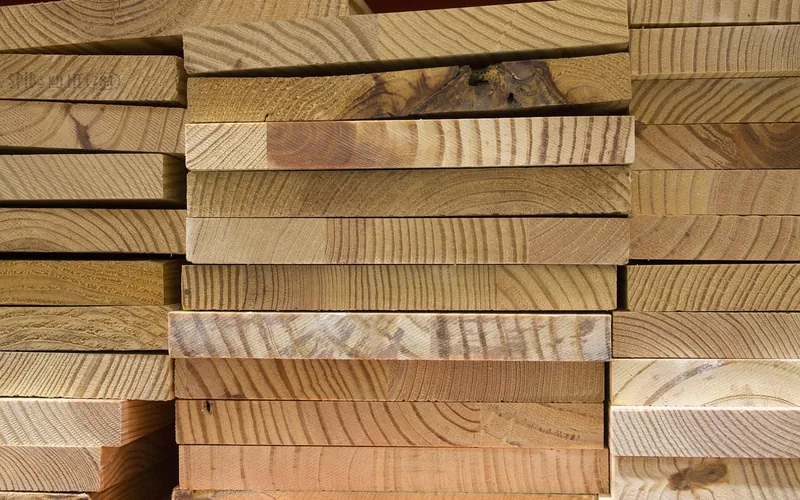
Not The Same As 1x vs 2x Lumber
Many searches for “1 lumber vs 2 lumber” mean nominal thickness, not grade. A 1x board is surfaced to a minimum of 3/4 inch thick and a 2x board to 1-1/2 inches, and neither is a full 1 or 2 inches. Our guide to S4S lumber and actual dimensions has the full dimension chart from the National Institute of Standards and Technology. A few of the common sizes:
| Nominal size | Actual dry size (inches) |
|---|---|
| 1 x 4 | 3/4 x 3-1/2 |
| 2 x 4 | 1-1/2 x 3-1/2 |
| 1 x 6 | 3/4 x 5-1/2 |
| 2 x 6 | 1-1/2 x 5-1/2 |
| 1 x 8 | 3/4 x 7-1/4 |
| 2 x 8 | 1-1/2 x 7-1/4 |
If you only need a quick size lookup, our nominal lumber size calculator does it for any board.
Choosing The Right Lumber
Pick the grade by what the board has to do. If it will be seen, spans a long distance, or is a header or beam where you cannot afford a big knot near an edge, buy No. 1 or sort a No. 2 and Better bundle carefully. If the lumber will sit inside a wall or under a deck, with the span checked against the published tables, a No. 2 board is a normal choice and costs less.
- Spans and headers: look up your species, size and spacing in the span table for your code; do not assume the grade without checking.
- Visible framing and furniture stock: No. 1 gives smaller knots and straighter grain, so you cut around less.
- Hidden framing: No. 2 and Better is fine where the span table allows it.
- Price: compare at your yard. The difference varies by region and species,.
Building a deck? Our do-it-yourself decking guide covers the framing, and our guide to buying lumber for woodworking shows how to inspect boards at the yard.
Frequently Asked Questions
Is #1 Or #2 Wood Better?
#1 is the higher grade: smaller knots, straighter grain and less wane, and a higher published bending value in most species. That does not make it the right buy every time. A No. 2 board is still a structural grade with design values, and the better choice is the one that fits your span, species and budget. Use No. 1 where a board is exposed or spans a long way.
Is #1 Or #2 Treated Lumber Better?
Treated lumber is graded with the same system, so the same knot and grain limits apply; the preservative treatment is a separate tag. For a visible post or a long beam, #1 treated lumber gives you smaller knots and less to cut around. For hidden framing, a No. 2 board with its knots well spaced is a normal choice. Read the end tag for both the grade and the ground-contact rating.
What Is The Difference Between #1 And #2 Pine?
For dimensional southern pine, a 2×8 in No. 1 has a reference bending value of 1,200 psi against 925 psi for No. 2, and the rules allow a knot up to 2 inches at the edge of a No. 1 board versus 2-1/2 inches in No. 2. Pine sold as 1x boards for shelves and furniture can use different grade names, so check what the store’s grade means.
What Does #2 Lumber Mean?
#2 lumber is the third step in the structural dimension grades after Select Structural and No. 1. It allows well-spaced knots of any quality up to a size limit, a slope of grain of 1 in 8, and more wane than No. 1. It is a sound structural grade with its own published design values, not a reject pile.
What Does No. 2 And Better Mean?
A No. 2 and Better stamp means every piece meets at least the No. 2 rules, so a bundle can include No. 1 or Select Structural pieces mixed in. You cannot tell which pieces are which from the bundle stamp, so sort by eye for straight grain and small, tight knots if you want the best boards.
Is #1 Lumber The Same As 1x Lumber?
No. The # number is a strength grade. The 1x and 2x labels are nominal thickness: a 1x is dressed to 3/4 inch and a 2x to 1-1/2 inch, so a 1×6 measures 3/4 by 5-1/2 inches while a 2×6 measures 1-1/2 by 5-1/2 inches. Either thickness can be sold in No. 1 or No. 2.
Why Does SPF Lumber Not Have A Separate No. 1?
Spruce-pine-fir is graded as one combined No. 1/No. 2 grade with a single set of design values, so an SPF board stamped No. 2 has the same published bending value as one stamped No. 1. Species groups such as Douglas fir-larch and southern pine do publish separate No. 1 and No. 2 values.
Conclusion
#1 lumber has tighter knot, grain and wane limits, and a higher published bending value in most species, with the gap running from none in SPF to about 23 percent in southern pine. #2 lumber is a sound structural grade that is fine for covered framing when your span table says so. When in doubt, buy the best bundle you can sort through, and check the species before you worry about the number.
Sponsored / affiliate links. As an Amazon Associate I earn from qualifying purchases. I may earn additional commission from eligible campaigns.