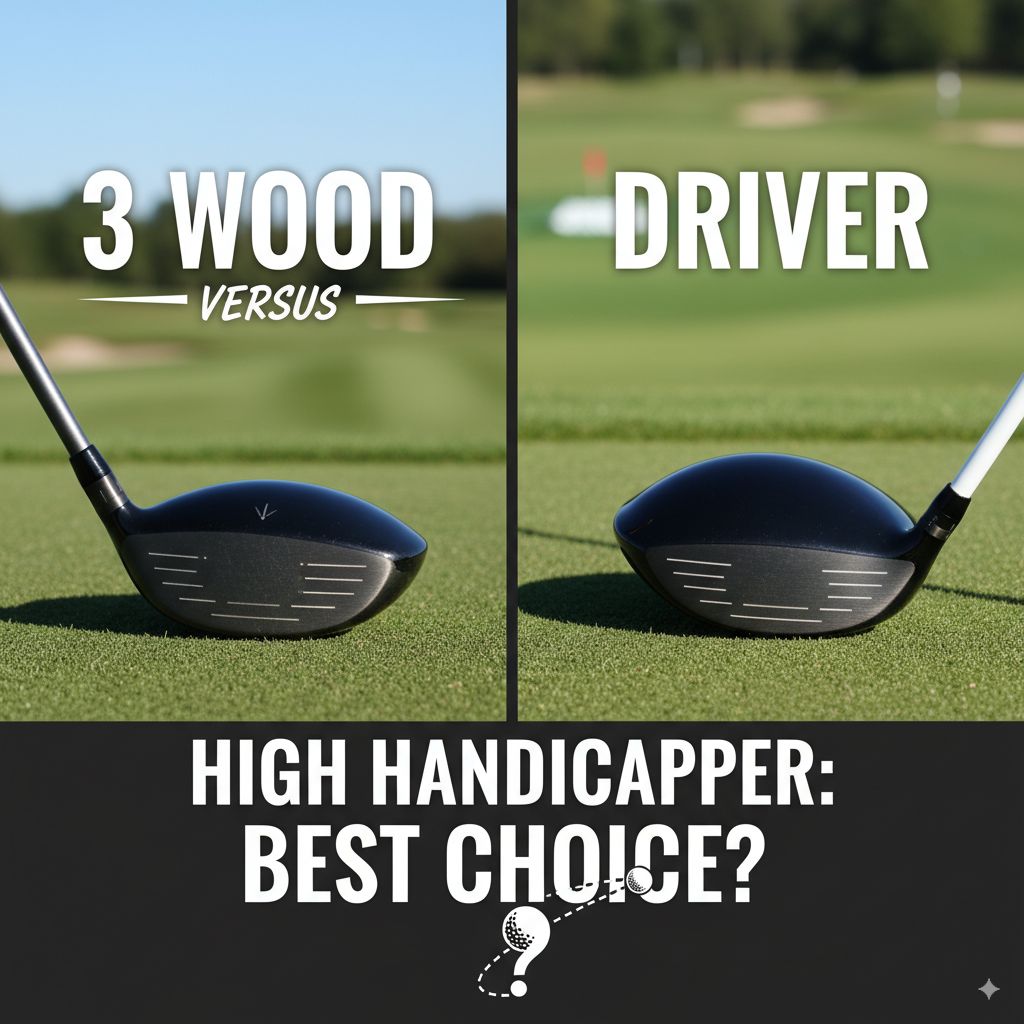
3 Wood vs Driver for High Handicapper: Best Choice
For high handicappers, a 3-wood is generally the better choice over a driver. Its shorter shaft and higher loft make it easier to control, leading to more consistent hits and less frustration on the course. Mastering the 3-wood first offers a solid foundation for future driver improvement.
Hitting the golf ball straight and far can feel like a puzzle, especially when you’re just starting out. Many golfers wonder if they should reach for their driver or their 3-wood when they need distance off the tee. It’s a common question, and honestly, quite a bit of a frustration point for those of us who aren’t pros yet. The good news is, understanding the difference between these two clubs can make a huge difference in your game. We’ll break down exactly why one might be a better friend to your golf game than the other, especially when you’re still building your swing. Get ready to feel more confident with every tee shot!
Understanding Your Golf Clubs: Driver vs. 3-Wood
Let’s start with the basics, like getting to know your tools in the workshop. In golf, your driver and 3-wood are your longest clubs, designed to send the ball the furthest. But they’re built quite differently, and that difference matters a lot to your swing.
The Driver: Your Longest Stick
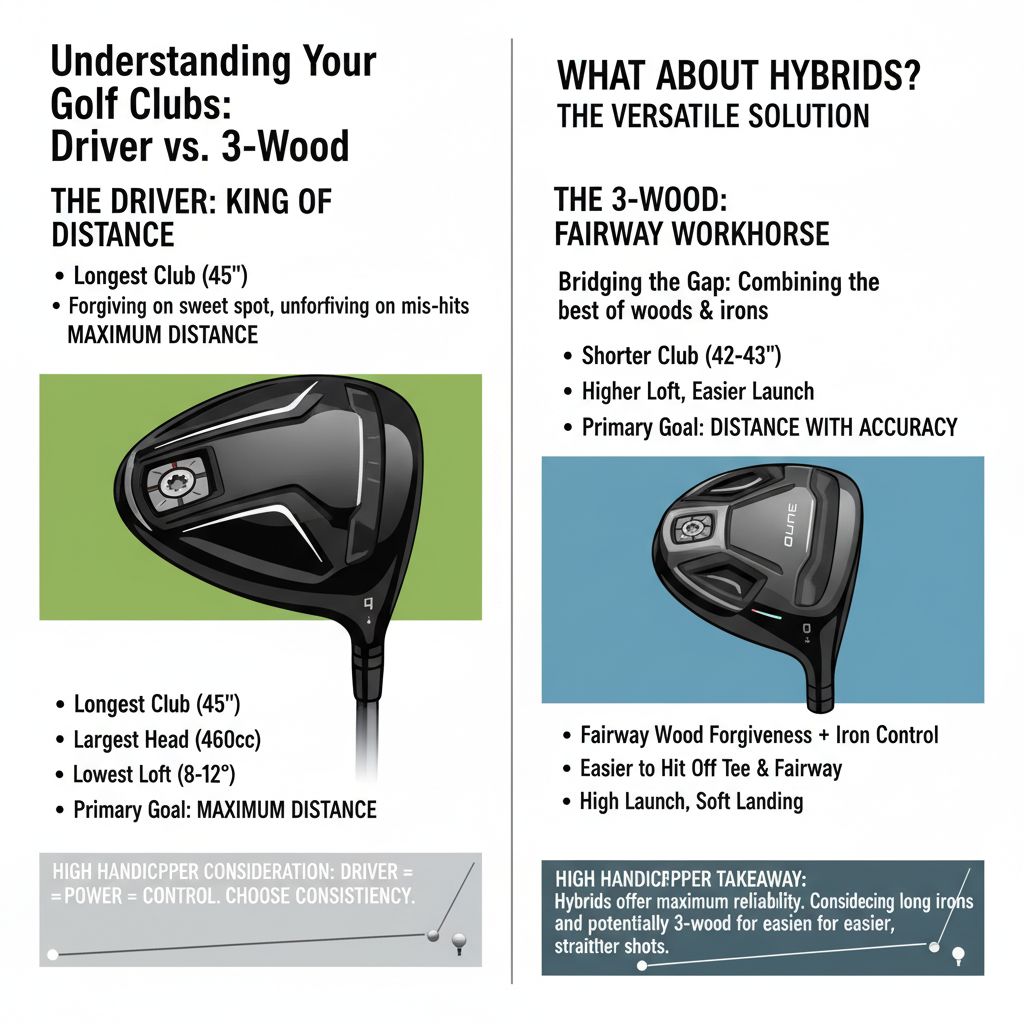
The driver is the king of distance. It’s the longest club in your bag, usually around 45 inches. Its head is the largest permitted by golf rules, designed to create maximum speed and a low-spinning, penetrating ball flight. It also has the least amount of loft – typically between 8 and 12 degrees. This combination makes it incredibly powerful when you hit it just right, but also unforgiving.
- Longest Shaft: Offers the potential for the most clubhead speed.
- Largest Head: Designed for maximum energy transfer.
- Lowest Loft: Promotes a lower, faster ball flight.
- Primary Goal: Maximum distance.
However, that long shaft and low loft mean it demands a precise swing. A slightly off-center hit, or a swing that’s not quite on plane, can send the ball wildly off course. For a beginner or high handicapper, consistently finding the sweet spot is tough, leading to sliced or hooked shots, or worse, topping the ball or hitting it thin.
The 3-Wood: The Fairway Wood Workhorse
The 3-wood is typically the second-longest club, usually about 42 to 43 inches. Its head is smaller than a driver’s, and crucially, it has more loft – generally between 13 and 17 degrees. This extra loft is a game-changer. It helps get the ball up in the air more easily and makes the club more forgiving on off-center hits.
- Shorter Shaft: Easier to control and swing with more consistency.
- Smaller Head: Still powerful, but more manageable.
- Higher Loft: Promotes a higher, more stable ball flight.
- Primary Goal: Distance with accuracy and playability.
Think of the 3-wood as a more reliable, albeit slightly less explosive, version of the driver. It’s still designed for distance, but it prioritizes getting the ball in play over pure maximum yards. This focus on playability is where it really shines for many golfers.
3 Wood vs Driver for High Handicapper: Key Differences Explained
When we look at these clubs through the eyes of a high handicapper, the differences become even more significant. It’s not just about the numbers on the spec sheet; it’s about how those specs affect your actual golf swing and your score.
Shaft Length and Control
The driver’s 45-inch shaft is long. This length is meant to generate speed, but it also requires a wider swing arc and more precision. For someone still developing their swing, managing that long lever can be difficult. It’s like trying to paint a fine detail with a giant brush – possible, but not ideal.
The 3-wood’s shorter shaft (around 42-43 inches) brings the clubhead closer to your body. This makes it easier to feel where the club is throughout your swing and to make solid contact. It promotes a more compact, repeatable motion, which is exactly what a high handicapper needs to build consistency.
Loft and Launch Angle
Loft is the angle of the clubface relative to the shaft. A higher loft means the face is angled more upwards. The driver’s low loft (8-12 degrees) means you need to hit the ball high on the face and with significant clubhead speed to get it airborne effectively. If your swing speed isn’t high enough, or your contact isn’t ideal, you can end up with a low, skittering shot that doesn’t go anywhere, or a “worm burner” that’s incredibly frustrating.
The 3-wood’s higher loft (13-17 degrees) makes it much easier to launch the ball into the air. Even with less speed, you’re more likely to get a good trajectory. This higher launch angle also tends to produce a softer landing for the ball, which can be helpful on approach shots from the fairway. For a high handicapper, this makes the 3-wood a much more forgiving option for getting the ball airborne and down the fairway.
Forgiveness and Sweet Spot
The larger head of the driver is designed to be forgiving, but its size is also its limitation. Precisely because it’s so large and has such a low loft, off-center hits can have dramatic consequences. A slight miss-hit on the toe or heel can send the ball veering wildly. The sweet spot, while large by design, still requires a good strike to work effectively.
The 3-wood, with its slightly smaller head and higher loft, tends to be more forgiving on mishits in terms of keeping the ball in play. While it won’t necessarily penalize you as much for a slightly off-center strike, it prioritizes getting you closer to your target. Golf is a game of managing misses, and the 3-wood helps you manage them better.
Ease of Use
This is arguably the most important factor for high handicappers. The driver demands a lot from your swing. You need to hit up on the ball (a positive angle of attack) to maximize its potential, which is an unnatural motion for many players. Trying to achieve this with a long club and a low loft can be a recipe for disaster.
The 3-wood is much easier to hit solid shots. Most amateurs can swing a 3-wood with a more neutral or slightly downward angle of attack and still achieve good distance. Its playability means you can use it with more confidence, which is critical for enjoying the game and improving.
When to Choose the Driver
Even with the advantages of the 3-wood, there are times when the driver might still be the right choice, even for a high handicapper. These situations still involve maximizing distance, but with a greater emphasis on control and course knowledge.
- Wide, Open Fairways: If the hole is wide open with no trouble on either side and a generous landing area, the driver’s extra distance can be a significant advantage.
- Long Par 4s and Par 5s: On holes where reaching the green in regulation is highly unlikely, or where a longer second shot is still daunting, the driver can help you cut down the distance significantly.
- Favorable Wind Conditions: A strong tailwind can help carry a driver shot further, making its extra yardage even more appealing.
- When you’ve practiced your driver swing: If you spend dedicated time on the driving range working on your driver swing, and you feel more confident with it, you might choose it on holes where you feel you can control it.
It’s important for a high handicapper to be honest about their ability. If you can’t consistently hit the driver within the fairway, the extra distance is useless. Many pro golfers adopt a strategy of simply hitting the fairway, even with a driver, as it sets up their game better for subsequent shots. For beginners, this often means prioritizing the 3-wood or even a hybrid club.
When to Choose the 3-Wood
For most high handicappers, the 3-wood will be the go-to club on the tee box for a significant majority of holes. It offers a fantastic blend of distance and control that the driver simply can’t match for players still developing their game.
- Tight Fairways: If the fairway is narrow or has significant hazards on the sides, the added control of the 3-wood makes it a much smarter play.
- Dogleg Holes: When playing a dogleg hole, you need to be precise with your tee shot to set yourself up for the next one. The 3-wood offers a better chance of navigating the corner accurately.
- When you need accuracy: Sometimes, distance isn’t the most important factor. Getting the ball in a good position on the fairway is prioritized. The 3-wood is your best bet for this.
- When your driver is erratic: If your driver is feeling particularly wild, or you haven’t practiced with it recently, switching to the 3-wood is a smart way to regain confidence and get the ball in play.
- Consistency is key: For high handicappers, minimizing big numbers on the scorecard is crucial. The 3-wood helps achieve this by reducing the chances of penalty strokes from going out of bounds or into thick rough.
A great way to think about it is that the 3-wood is often the “smart” play. It might not give you bragging rights for the longest drive, but it will likely lead to lower scores and a much more enjoyable round of golf. Most players can get 80-90% of the distance of their driver with a 3-wood, but with significantly higher accuracy.
Making the Choice: A Practical Guide for High Handicappers
So, how do you actually decide which club to use when standing on the tee? It comes down to a few key considerations:
1. Assess the Hole
Look at the fairway. Is it wide and forgiving, or narrow with trouble on both sides? Are there hazards to carry or avoid? Does the hole dogleg, and if so, how sharp is the turn? A quick assessment of the hole will often point you clearly towards one club over the other.
2. Assess Your Game Today
How are you feeling? Have you been hitting your driver well on the range? Or does it feel wild and unpredictable? Your current confidence and performance should heavily influence your decision. Don’t force the driver if you’re not feeling it.
3. Your Comfort Level
For many high handicappers, the 3-wood simply feels more comfortable to swing. It’s easier to control, and that comfort leads to a more relaxed and effective swing. Trust your instincts here.
4. Focus on a Solid Strike
The most important goal for a high handicapper is to make solid contact with the ball. A well-struck 3-wood will always outperform a poorly struck driver. Prioritize consistency and making good contact over potentially reaching for a club you can’t control.
Consider this: a well-hit 220-yard drive that finds the fairway is far better than a 250-yard drive that goes out of bounds. The penalty for a lost ball is usually 1 stroke plus distance, often effectively costing you 2-3 strokes. The 3-wood, by keeping you in play, often saves strokes even if it’s shorter.
Tips for Hitting Your 3-Wood (and Driver) Better
Whether you choose the 3-wood or the driver off the tee, improving your swing will always help. Here are some beginner-friendly tips:
For the 3-Wood:
- Ball Position: Place the ball slightly forward of the center of your stance, about an inch or two behind your driver’s ball position.
- Aim for a Level or Slightly Downward Swing: Unlike the driver, you don’t need to swing up significantly. Focus on hitting the ball with a neutral or slightly descending blow.
- Focus on Tempo: A smooth, unhurried swing is key. Don’t try to muscle the ball.
- Smooth Takeaway: Start your swing back slowly and deliberately, keeping your wrists relaxed.
- Finish Your Swing: Ensure you complete your swing, allowing your body to rotate naturally through the shot.
For the Driver:
- Ball Position: Play the ball off the inside of your lead heel.
- Tee it High: Tee the ball up so that about half of the ball is above the crown of your driver.
- Swing Up: You need to hit slightly up on the ball. Imagine your swing arc rising at impact.
- Maintain Balance: Avoid lunging at the ball. Stay balanced throughout your swing.
- Practice Regularly: The driver requires dedicated practice. Spend time on the range focusing on making solid contact.
For a comprehensive guide on building a better golf swing, exploring resources like those from the USGA (United States Golf Association) can offer insights into the rules and equipment that govern the game, which can indirectly contribute to understanding club dynamics.
Comparing Key Stats: Driver vs. 3-Wood
Let’s put some numbers to the differences. These are typical values and can vary by model and brand:
| Feature | Driver | 3-Wood |
|---|---|---|
| Typical Length | 45 – 46 inches | 42 – 43 inches |
| Typical Loft | 8 – 12 degrees | 13 – 17 degrees |
| Clubhead Size | Up to 460cc | Smaller than driver, but larger than irons |
| Shaft Flex | Often higher flex required due to length | Can use a slightly softer flex for control |
| Dispersion (off-center hits) | Can be larger | Generally smaller |
| Ease of Launch | More difficult without speed and proper angle of attack | Easier due to higher loft |
As you can see from the table, the 3-wood is inherently designed with features that promote easier launch and greater accuracy, which are paramount for a high handicapper. While the driver offers more raw distance potential, it demands a skill set that beginners are often still developing.
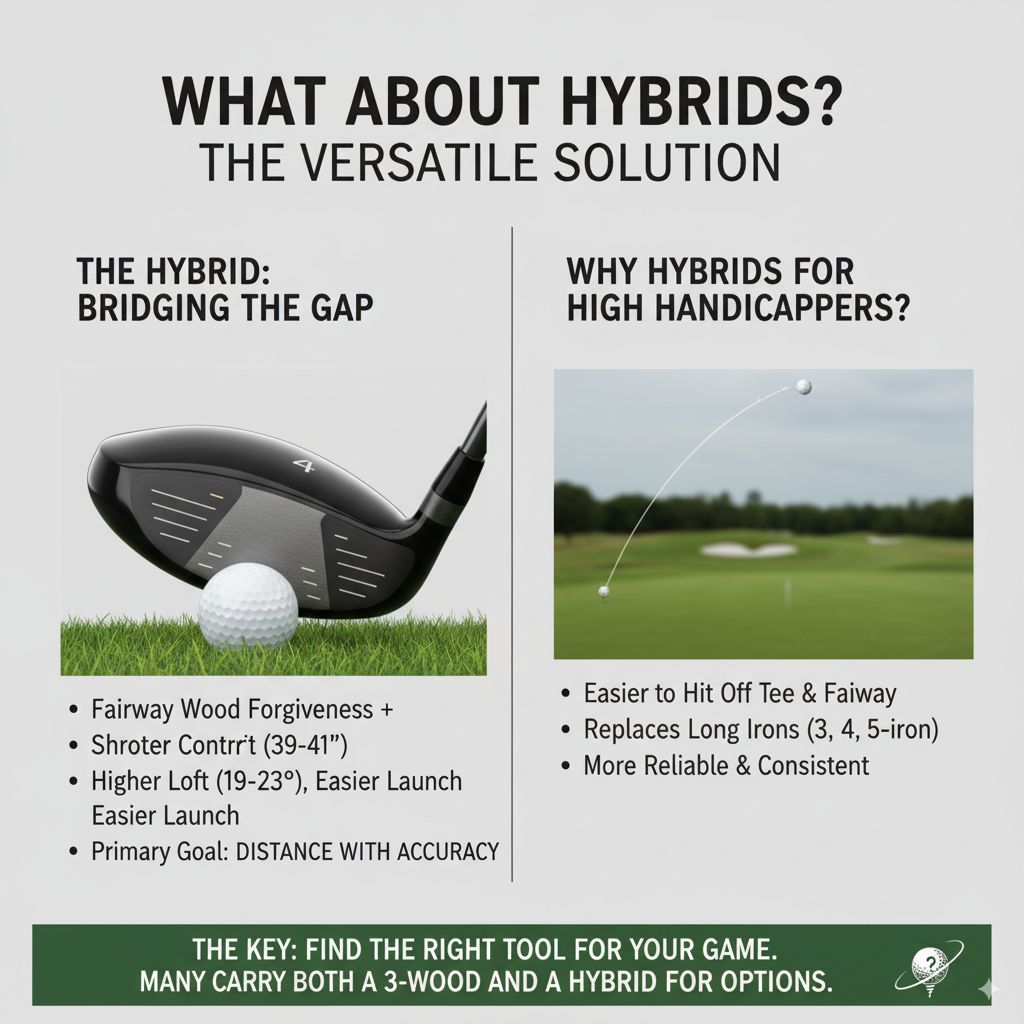
What About Hybrids?
Before we wrap up, it’s worth mentioning hybrids. Many high handicappers find hybrids (often numbered to correspond with traditional long irons, like a 3-hybrid, 4-hybrid, etc.) even easier to hit than a 3-wood. They combine the head size and forgiveness of a fairway wood with the length and shaft characteristics of an iron. For some, a hybrid might be the most reliable club off the tee for a straight tee shot, even if it sacrifices a few yards compared to a well-struck 3-wood.
The key takeaway is that there’s no single “right” club for everyone. It’s about finding the tool that best suits your current abilities and the demands of the course you’re playing. Many golfers carry both a 3-wood and a hybrid to give them options on the tee.
Frequently Asked Questions (FAQ)
Q1: Is a 3-wood easier to hit than a driver for a beginner golfer?
A: Yes, generally a 3-wood is significantly easier for beginners to hit. Its shorter shaft, higher loft, and slightly smaller head make it more controllable and forgiving, leading to more consistent contact and ball flight.
Q2: Will I lose a lot of distance by using a 3-wood instead of a driver?
A: You might lose some distance, but often not as much as you think, especially if your driver contact isn’t consistent. For many high handicappers, the difference might be only 10-20 yards, with a major gain in accuracy and consistency.
Q3: What golf balls should a high handicapper use?
A: High handicappers benefit from using balls designed for distance and forgiveness. Look for softer-feeling balls that are typically labeled as “distance” or “soft.” These often have lower compression ratings, making them easier to compress for greater distance with slower swing speeds. You can find good recommendations and explanations from resources like Golfweek’s equipment reviews which often cover equipment for all skill levels.