How Do You Get Dents Out of Finished Wood? (Steam vs Filler)
Steam and a hot iron pull most dents out of finished wood, but only when fibers are compressed, not torn — and only after sanding a dime-sized window through the varnish or polyurethane so steam can reach the wood. Skip that and the finish blocks the moisture, or clouds a lacquer finish white. This guide covers the steam method, when a dent needs wood filler instead, and how to fix prefinished floors and particleboard without a full refinish.
This post contains affiliate links. As an Amazon Associate, Woodworking Advisor earns from qualifying purchases.

Quick Decision: Which Fix Do You Need?
| Your Situation | Will Steam Work? | Best For |
|---|---|---|
| Shallow dent, fibers compressed (not torn) | Yes | Sand a small window through the finish, steam it, then touch up |
| Dent deeper than about 1/8″ or fibers torn/gouged | No | Color-matched wood filler or a burn-in stick |
| Small dent on a factory-finished floor (don’t want to sand) | Partial | Wax-based touch-up marker/kit made for that floor finish |
| Dent under a thin wax or oil finish (not varnish/poly) | Yes, easiest | Steam directly — thin finishes rarely block the moisture |
How to Get Dents Out of Finished Wood With Steam (Shallow Dents)
This works when the dent is shallow and the wood fibers underneath are compressed, not torn. On a hard finish like varnish or polyurethane, steam sitting on top of the coating usually cannot reach the wood, so the sanding step below is what actually makes this method work.
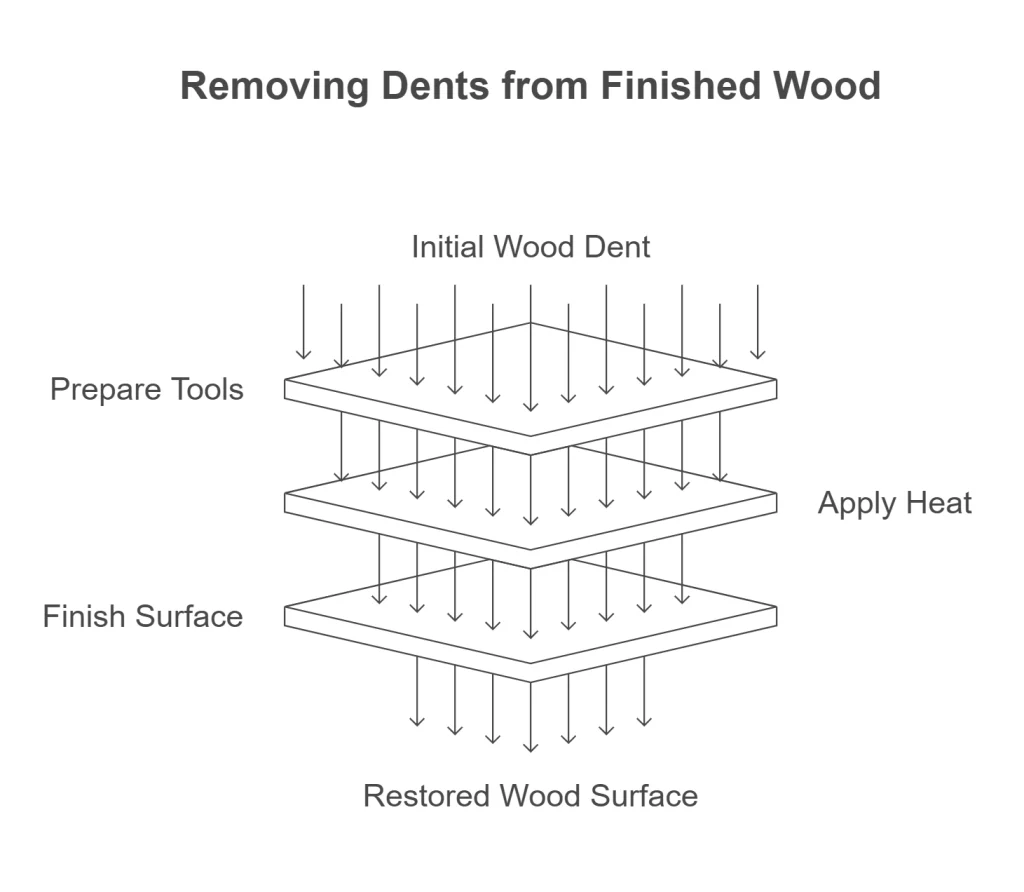
- Sand a small window: Using fine-grit sandpaper (see our sandpaper grit guide), lightly sand just the dented spot until the finish is broken through — you’re not stripping the whole piece, just opening a path for steam.
- Protect the surrounding area: Lay a towel or rag over the finish next to the dent so stray heat or moisture doesn’t damage it.
- Dampen a cloth: Wet a cotton rag so it’s damp, not dripping, and lay it directly over the sanded spot.
- Set the iron to steam: Medium-high steam setting is usually enough; save the highest dry-heat setting for large dents only, since it’s harder on delicate surfaces.
- Preheat the iron: Rest it face-down on a folded towel for about 30 seconds before touching the dent.
- Steam the dent: Press the iron onto the damp cloth over the dent in small circles for 10–15 seconds, checking often.
- Let it dry, then sand flush: Once the fibers have swelled back up, let the spot dry fully and sand it smooth with fine-grit paper.
- Touch up the finish: Reseal the sanded window with a matching varnish or finish touch-up so it blends with the rest of the piece.
Expert note: If you’re not sure what coating you’re dealing with, our guide on identifying the finish on wood furniture walks through a quick solvent test before you start sanding.
How to Fix a Dent That Won’t Steam Out (Wood Filler Method)
If the dent is deeper than about 1/8 inch, or you can see the wood fibers are actually torn rather than just pushed down, steam won’t bring it back — there’s nothing left to swell. Wood filler is the more reliable fix.
- Remove the finish over the dent: Use a sharp chisel or a utility knife to carefully scrape away just the finish in the damaged spot, without cutting into the wood itself.
- Fill the dent: Press a color-matched wood filler into the gap, slightly overfilling it since most fillers shrink a little as they cure.
- Let it cure fully: Give it the full cure time on the product label (often 24 hours) before sanding — rushing this step is the most common reason a filled dent shows through later.
- Sand it flush: Sand the cured filler level with the surrounding wood, working up to a fine grit.
- Match the finish: Stain or seal just that spot so the repair blends into the rest of the piece.
📊 Bona’s wood floor Repair kit paste is dry enough to walk on in about 2 hours, and is sold color-matched to specific wood species rather than a generic wood tone — Source: Bona.com product specifications
“The steam trick only works if the finish is thin enough to let moisture through — on a table that’s had years of polish and wax built up, I’ve held the iron there for a full minute with nothing to show for it. Sand a small window first and it works almost every time.”
Best Wood Filler & Touch-Up Picks For Finished Wood
Text-only picks — verified live on Amazon; no product photo included since we couldn’t source a verified, non-expiring image for these listings this session.
Minwax Blend-Fil Pencil (Brown Tone Medium)
- Best for: quick touch-ups on stained furniture or floors in common brown tones
- Why we picked it: no mixing required, dries in minutes, sold in matched stain shades
- Main drawback: only camouflages shallow marks — won’t fill a true gouge
FamoWood Latex Wood Filler (Natural, Pint)
- Best for: deeper dents and gouges that need filling before sanding and staining
- Why we picked it: takes stain like real wood, sold in a larger pint size for bigger repairs
- Main drawback: needs a full cure before sanding or staining, slight odor while wet
Katzco 13-Piece Wood Scratch Repair Kit
- Best for: households with furniture or floors in several different wood tones
- Why we picked it: markers, wax sticks, and a sharpener cover most common stain colors in one kit
- Main drawback: wax sticks are cosmetic only and won’t hold up on high-traffic floor spots
As an Amazon Associate we earn from qualifying purchases.
No Iron on Hand? The Ice Cube Alternative
Ice works on the same principle as steam — moisture swelling compressed fibers back into place — just slower and without heat. It has the same limits as the steam method: it helps shallow, compressed dents, but a heavily sealed finish can keep the water from soaking in at all, and it won’t fix a dent with broken or missing wood fibers.
- Place an ice cube directly on the dent (or a few drops of water first if the dent is very small).
- Let it melt fully and sit for a few hours so the moisture has time to soak in — check progress rather than fixing a rigid timer.
- Blot away any excess water with a dry rag once you remove the moisture; avoid rubbing hard.
- If the dent hasn’t fully risen, a hairdryer on low heat for 15–20 seconds can help finish swelling the fibers.
- Sand and touch up the finish the same way you would after the steam method.
Shallow Dents vs. Deep Dents: What’s the Real Difference?
Finished wood typically shows two kinds of damage. A shallow dent is a minor depression where the wood fibers are compressed but still intact — these are the ones steam, heat, or moisture can usually pop back up. A deep or compression dent means the fibers have been crushed past the point where moisture alone brings them back, or the surface has been gouged or torn.
Deep dents aren’t hopeless — they’re just a different repair. Instead of steam, they need the wood filler method above: fill, sand, and refinish the spot. Heavy furniture, appliances being moved across a floor, and dropped tools are the most common causes of both types.
What Causes Dents on Finished Wood?
A few everyday habits cause most of the dents we see readers ask about:
- Heavy objects falling or being dragged — tools, appliances, and furniture legs are the most common culprits.
- Shoes with metal studs or cleats walked across a finished floor.
- Heat from another object, like a hot pan or iron left on the surface, which softens the finish enough to indent under pressure.
- Standing water left too long, which can soften wood fibers even though a quick spill wiped up right away usually won’t leave a mark.
- Wood-boring insects such as carpenter bees, which tunnel through the surface rather than causing an impact dent — those holes are usually filled with a mixture of steel wool and fast-drying wood glue or a borate treatment, not steamed out.
6 Ways to Prevent Dents on Finished Wood Furniture
- Keep heavy fabric items (like folded denim) off finished surfaces long-term — some fabrics leave impressions and darken the finish.
- Use coasters under drinks and hot dishes rather than setting them directly on the finish.
- Use placemats to prevent scratches and moisture rings during meals.
- Use table pads under tablecloths when serving hot dishes.
- Add felt pads under lamps, vases, and picture frames so they don’t rub or press into the surface over time.
- Dust with a soft cloth rather than a feather duster or anything abrasive.
For more on choosing and repairing coatings, browse our full wood finishes hub, including tips on removing an old finish and fixing a sticky or damaged finish before it leads to bigger repairs.
Frequently Asked Questions
Can you get dents out of finished wood without sanding first?
Sometimes. On a thin wax or oil finish, steam alone often reaches the wood fibers. On a harder varnish or polyurethane coat, steam mostly sits on top of the finish, so most repairs need a light sanding to a small opening before the steam method works, followed by a matching touch-up.
Does steaming damage a wood finish?
It can. Heat and moisture from an iron can cloud or whiten lacquer and some varnish finishes, especially older ones. Test the technique in a hidden spot, like the underside of a shelf, before working on a visible dent.
What’s the difference between a dent and a gouge in wood?
A dent is compressed wood — the fibers are pushed down but still intact, so steam or moisture can often make them swell back up. A gouge or deep scratch has removed or torn wood fibers, so nothing is left to swell back; those need wood filler, not steam.
How do you fix a dent in a prefinished hardwood floor?
For a shallow dent, a wax-based floor touch-up kit made for prefinished floors is the least invasive option, since sanding a factory finish is hard to blend back in. For a deeper dent, sand a small area down to bare wood, steam it, then reseal with a matching finish or touch-up marker made for that floor’s coating.
Can you use wood filler on stained or varnished wood?
Yes. Choose a filler in a shade close to the wood, let it dry fully, sand it flush with fine-grit paper, then stain or seal just that spot so it blends with the surrounding finish.
Working on unfinished or freshly sanded wood instead? See our guide to getting dents out of bare wood with steam, which includes a hardness chart and a triage table.
Bottom Line
Most dents in finished wood come down to one question: are the fibers compressed, or are they broken? Compressed dents respond to steam and moisture, once you’ve opened a path through the finish. Broken fibers and deep gouges need filler, not heat. Match the method to the damage and the repair should be invisible once the finish is touched up.
Sponsored / affiliate links. As an Amazon Associate I earn from qualifying purchases. I may earn additional commission from eligible campaigns.