4×4 Pressure Treated Wood Posts: Setting Them the Right Way
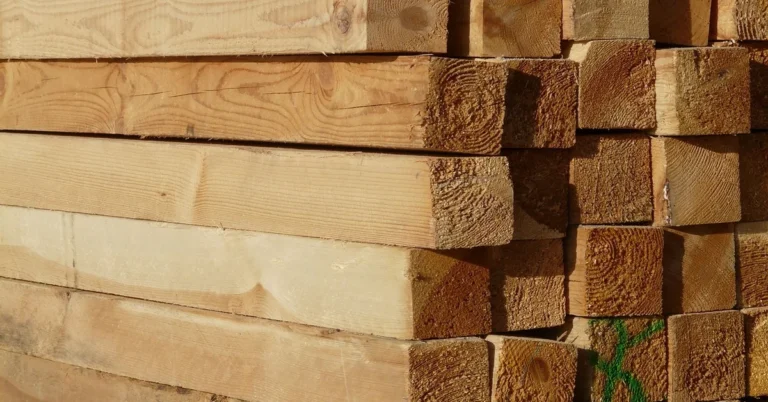
A 4×4 pressure-treated post is a 3.5″ x 3.5″ (actual size) softwood post infused with a preservative that resists rot and insects for decades in ground contact. The two things most DIY guides get wrong: how deep to set it, and whether to bury it in solid concrete at all. Both are covered below, along with the fastener compatibility issue that causes a lot of premature hardware failure.
Ground Contact vs. Above Ground Rating
Best Way to Keep a Post Plumb While Setting
 |
IRWIN Tools Magnetic Post Level – $5.99 Straps to the post and reads plumb on two adjacent faces at once, freeing both hands while the concrete sets.
|
Pressure-treated lumber is stamped with a use rating, and it matters more than most buyers realize. “Ground Contact” (GC) rated posts have a higher preservative retention level specifically for direct soil or concrete burial. “Above Ground” (AG) rated lumber has a lighter treatment meant only for wood that stays dry and off the ground. Using an AG-rated 4×4 as a buried fence or deck post voids the manufacturer’s warranty and can lead to rot well before the wood’s expected 15-20+ year lifespan — always check the stamp, don’t assume every treated post at the store is rated for burial.
How Deep to Set a Post (It’s Not Just “2 Feet”)
The common rule of thumb is to bury roughly one-third of the post’s total length — so an 8-foot post gets about 32″ in the ground, not a flat 24″ regardless of height. In colder climates, local frost depth also matters: if the ground below the post can freeze and thaw, frost heave can push a shallow post upward over a few winters. Check your local building code’s frost depth requirement and set posts at least that deep regardless of what the one-third rule alone suggests — this is also why fence permits in cold-climate areas often specify a minimum depth outright.
Concrete or Gravel? The Debate That Matters
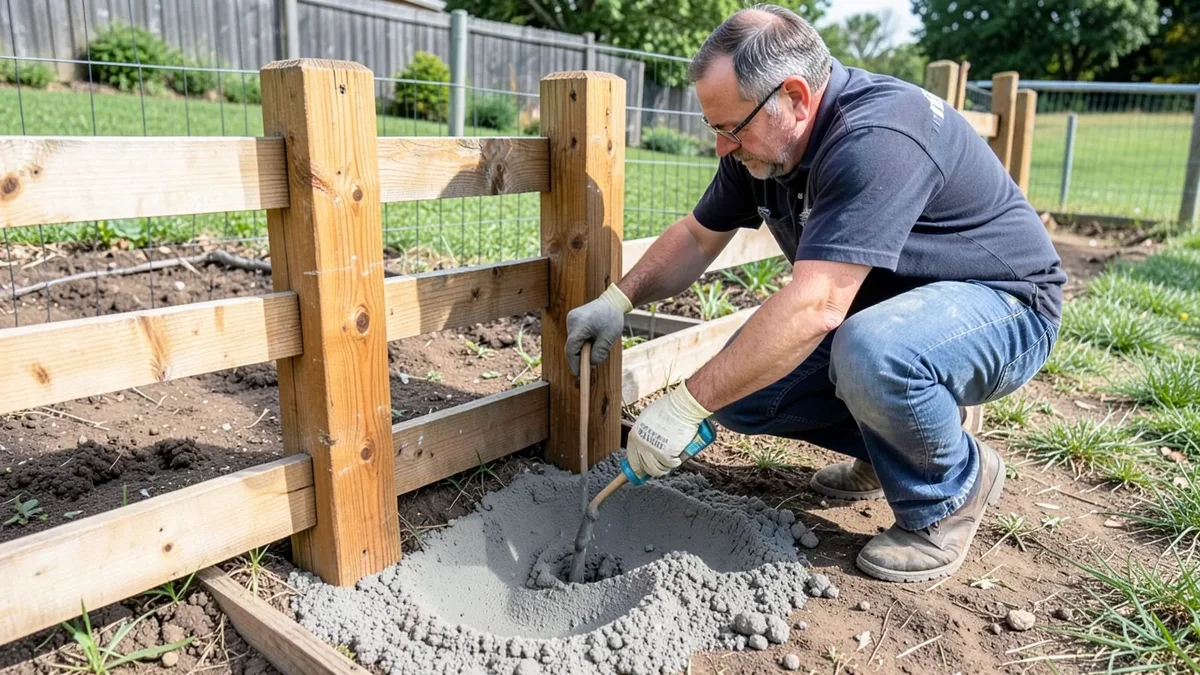
Fully encasing a post in solid concrete is the traditional method, but it has a real downside: concrete is somewhat porous, and water that gets into the gap between the post and the concrete has nowhere to go, keeping the wood damp right at the ground line — exactly where rot most often starts. Two ways to reduce that risk:
- Crown the concrete. Slope the top of the concrete collar away from the post in all directions so rainwater sheds away instead of pooling against the wood.
- Use a gravel base with a concrete collar, or gravel alone. Add 4-6″ of compacted gravel at the bottom of the hole before setting the post, so any water that reaches the post base drains down through the gravel instead of sitting against untreated end grain. Some pros skip concrete entirely for lighter fence posts and use tamped gravel and soil the full depth, trading some rigidity for better drainage.
Fast-setting bagged concrete (poured dry into the hole, then soaked with water) works fine for most post projects and skips the mixing-in-a-wheelbarrow step — just hold the post plumb while it sets, typically 20-40 minutes for initial set.
Fasteners: Don’t Use Plain Steel
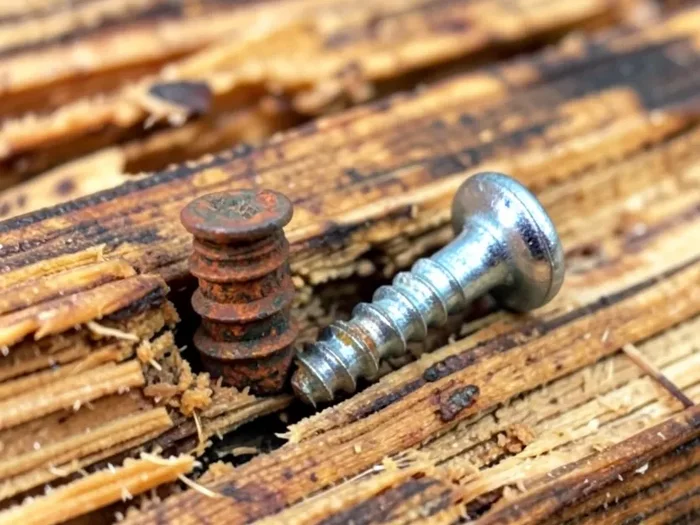
Modern pressure-treated lumber uses copper-based preservatives (ACQ or micronized copper azole, MCA), which replaced the older CCA (chromated copper arsenate) treatment for residential use in 2003. The higher copper content is mildly corrosive to plain steel and aluminum — screws, nails, and metal post bases in direct contact with treated wood will corrode noticeably faster than in untreated lumber. Always use fasteners and connectors rated for ACQ contact: hot-dip galvanized (not electro-galvanized) or stainless steel. This is easy to miss because plain deck screws will still go in and hold at first — the failure shows up years later as rust streaks and weakened joints.
Sealing Cut Ends
Pressure treatment only penetrates so far into the wood — cutting a post to length exposes untreated (or lightly treated) wood at the cut face, which is a common spot for rot to start. Coat any field cut with a copper naphthenate wood preservative (sold as products like Copper Green) before the post goes in the ground or into concrete. This step gets skipped constantly and is one of the most common reasons a treated post rots from one specific spot rather than uniformly.
Using Treated Posts for Raised Garden Beds
Modern ACQ/MCA-treated lumber doesn’t contain arsenic (unlike the older CCA treatment), and the EPA considers copper leaching from it low enough to be acceptable for general use. That said, some copper does leach into soil immediately adjacent to the wood over time. If you’re growing food and want to eliminate that variable entirely, line the interior face of treated boards with heavy plastic sheeting, or use naturally rot-resistant untreated wood like cedar or redwood instead. Either choice is reasonable — this is a risk-tolerance decision, not a safety requirement.
Painting or Staining
Freshly treated lumber is often still wet from the treatment process and won’t take stain or paint evenly until it dries out. Do the water-bead test: sprinkle water on the surface — if it beads up, the wood is still too wet to finish; once it soaks in within a minute or so, it’s ready. This can take anywhere from a few weeks to a couple of months depending on the wood and your climate.
Frequently Asked Questions
What does pressure treated mean?
The wood is infused with a preservative (modern lumber uses copper-based ACQ or MCA) under pressure so it resists rot and insect damage. Ground Contact-rated posts have a higher retention level meant for burial; Above Ground-rated lumber does not.
Can I paint or stain 4×4 posts?
Yes, once the wood has dried out from the treatment process. Sprinkle water on the surface first: if it beads up, wait longer; once it soaks in within about a minute, the post is ready to finish.
How deep should I bury a 4×4 post?
A common rule is about one-third of the post’s total length, but always meet or exceed your local frost depth requirement in cold climates, since a shallow post can heave out of the ground over repeated freeze-thaw cycles.
Are pressure treated posts safe for raised garden beds?
Modern ACQ/MCA-treated lumber contains no arsenic and the EPA considers copper leaching low-risk, but some copper does migrate into adjacent soil over time. Line the interior with plastic sheeting if you want to eliminate that entirely, or use cedar or redwood instead.
The Bottom Line
A 4×4 pressure-treated post is a reliable, inexpensive choice for fences, decks, and garden structures as long as you match the rating to the job (Ground Contact for anything buried), set it deep enough for your local frost line, let water drain away from the base instead of trapping it, and use galvanized or stainless fasteners. Skip any of those and the post will likely fail well before its rated lifespan — usually right at the ground line, exactly where it’s hardest to notice until it’s already a problem. For real-world cost ranges and general lifespan expectations before you buy, see our 4×4 pressure-treated post cost and lifespan guide.
Sponsored / affiliate links. As an Amazon Associate I earn from qualifying purchases. I may earn additional commission from eligible campaigns.