4×4 Pressure Treated Post: Cost, Lifespan and What to Know
A 4×4 pressure-treated post is dimensional lumber soaked with preservatives (typically copper azole or ACQ) under high pressure, rated for direct ground contact and resistant to rot and termites for up to 40 years — but only if it’s installed correctly. Setting a post directly in poured concrete actually traps moisture against the wood and speeds up rot at the base, the opposite of what most people assume. This guide covers real cost ranges, how long these posts actually last, and how to avoid the installation mistake that shortens their life.
Quick Answer
An 8-ft 4×4 pressure-treated post typically costs $10-$20 at major home centers, depending on treatment grade and species. It can last up to 40 years in ground contact, but setting it directly in concrete accelerates rot at the base — using gravel backfill or a post anchor instead extends its life significantly.
Introduction To 4×4 Pressure Treated Posts
Best Rot-Prevention Pick
 |
4×4 Fence Post Anchor Ground Spike (2-Pack) – $35.99 Drives into the ground and holds a 4×4 post without any concrete — directly avoids the concrete-trapped-moisture rot problem described above.
|
As an Amazon Associate we earn from qualifying purchases.
4×4 pressure-treated posts are a popular choice for outdoor construction due to their durability and resistance to rot and decay. The pressure treatment process forces preservatives deep into the wood fibers, making it suitable for ground contact and outdoor use. Using pressure-treated wood for outdoor projects reduces the risk of damage from insects and moisture compared to untreated lumber.
Common uses for 4×4 pressure-treated posts include decking, fencing, pergolas, and landscaping projects. The posts are also used for outdoor structures such as sheds and gazebos.
The Science Behind Pressure Treating Wood
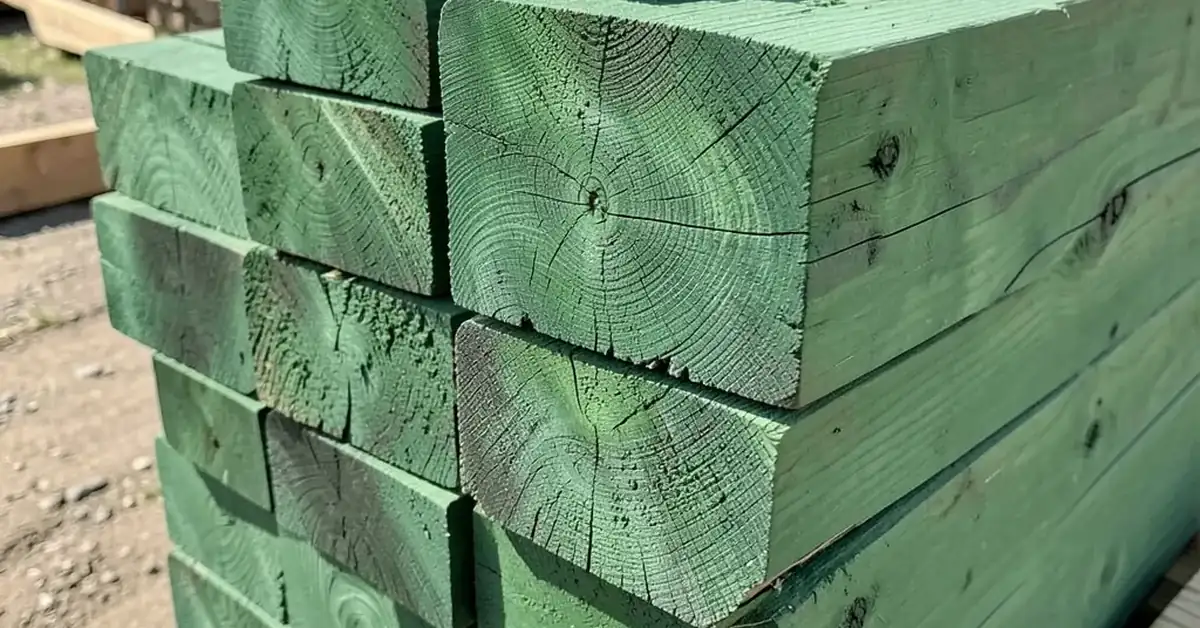
Pressure-treating wood is a controlled process: the lumber goes into a pressure chamber, and preservative chemicals are forced deep into the wood under high pressure rather than just soaked on the surface. This creates a protective barrier against rot, decay, and insect infestation that extends well below the surface.
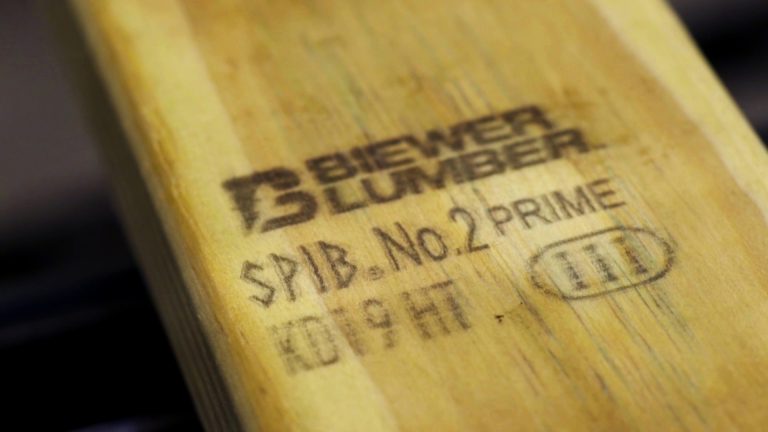
The most common preservatives are copper-based — copper azole (CA) or ACQ (Alkaline Copper Quaternary) — chosen for effectiveness against decay and termites while meeting current safety standards for residential use. The American Wood Protection Association (AWPA) rates ground-contact-rated lumber as UC4A or UC4B, which is the rating to look for on a 4×4 post going into the ground.
Pressure-treated wood is commonly used for outdoor applications like fence posts, deck boards, and landscaping structures because of this ground-contact durability.
Durability Factors
The durability of 4×4 pressure-treated posts depends on several factors. Life expectancy runs up to 40 years, but this varies with the treatment grade, wood species, and how the post is installed. Exposure to standing moisture, insects, and constant soil contact all affect how long a post actually lasts — which is why installation method matters as much as the wood itself.
📊 Ground-contact-rated lumber for in-ground posts should carry a UC4A or UC4B rating. A post rated only for above-ground use (UC3) will rot far faster when buried. — Source: American Wood Protection Association (AWPA), 2026
Installation Best Practices
Getting the installation right matters more than the wood grade for how long a post actually lasts. At a high level:
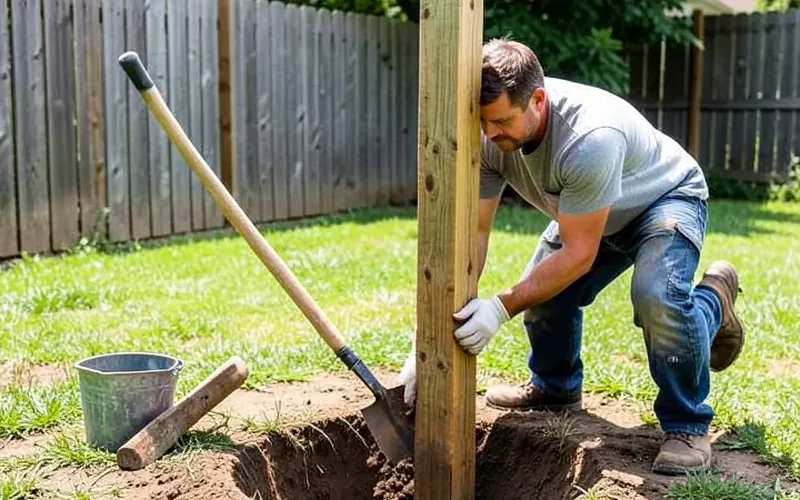
- Dig post holes to the depth and diameter required by local building codes — typically about a third of the post’s above-ground height.
- Set the post plumb and level before backfilling.
- Use gravel at the base for drainage, or a mechanical anchor, instead of burying the post directly in concrete.
- If you do use concrete, crown it above grade and sloped away from the post so water sheds off instead of pooling around the wood.
- Inspect posts periodically for softness at the base, the earliest sign of rot.
For the full depth-dive on exact hole depth, concrete-vs-gravel tradeoffs, and corrosion-resistant fasteners, see our dedicated guide on setting 4×4 pressure-treated posts the right way.
Maintenance And Care
To maintain 4×4 pressure-treated posts, inspect them annually for softness or visible decay, and apply a water-repellent sealant every 2-3 years to prolong their lifespan. Clean off dirt and mildew before resealing, and consider painting or staining for added weather protection.
Pricing for 4×4 pressure-treated posts varies by length, treatment grade, and region — expect roughly $10-$20 for a standard 8-ft post at major home centers, with premium or longer lengths running higher. Check current pricing at your local store, since lumber prices shift often.
Preventing Rot And Decay
To prevent rot and decay in 4×4 pressure-treated posts, use wood rated for ground contact (UC4A/UC4B) and avoid setting the post directly in poured concrete, which traps moisture against the base. Gravel backfill or a mechanical ground anchor lets water drain away from the wood instead.
| Causes of Wood Rot | Strategies to Prevent Decay |
| Moisture trapped against the base (often from concrete) | Use gravel backfill or a mechanical post anchor instead |
| Continuous soil contact without a ground-contact rating | Confirm UC4A/UC4B rating before burying a post |
| Standing water pooling at grade | Crown concrete or soil away from the post so water sheds |
| Fungi and insects at the wood-soil interface | Apply water-repellent preservative and inspect annually |
Painting And Staining
Painting or staining a 4×4 pressure-treated post is possible, but timing matters. Freshly treated lumber can carry excess moisture that prevents paint or stain from bonding well.
- Let it dry fully. Fresh pressure-treated lumber can take several weeks to dry, depending on climate. A quick test: if water beads on the surface, it’s not ready yet.
- Clean the surface. Wash off dirt, mildew, and any surface residue from the treatment process with mild detergent and water.
- Use the right products. Choose an exterior primer and paint, or a stain, formulated for pressure-treated wood.
- Apply thin coats. Multiple thin coats bond and cure better than one thick coat — let each one dry fully before the next.
Troubleshooting Common Issues
When you spot moisture problems on a 4×4 pressure-treated post, keep the base dry going forward and inspect for visible signs of decay. For minor surface softness, a wood hardener can strengthen weakened areas, and wood filler can patch small cracks. For a post that’s soft or crumbling below the soil line, the fix is replacement, not repair — a compromised base isn’t structurally reliable.
Environmental Considerations
Treated wood is durable, but its chemical treatment means disposal needs care. Avoid burning or landfilling pressure-treated posts: burning treated wood releases the preservative chemicals into the air, and landfilling can let them leach into soil and groundwater over time. A recycling facility that accepts treated wood, or repurposing old posts for a non-ground-contact use, are better options.
Frequently Asked Questions
How Long Will A Pressure Treated 4×4 Post Last In The Ground?
A ground-contact-rated (UC4A/UC4B) pressure-treated 4×4 post can last up to 40 years, though 15-25 years is more typical in wetter climates or when it’s set directly in concrete. Proper drainage at the base makes the biggest difference in actual lifespan.
Can You Paint Pressure Treated 4×4 Posts?
Yes, once the wood has fully dried. Wash off any surface residue, let it dry completely, then apply an exterior primer and paint (or a stain) rated for pressure-treated lumber.
Do Pressure Treated Posts Rot In Concrete?
Yes — counterintuitively, concrete can accelerate rot at the base of a post because it traps moisture against the wood instead of letting it drain. Gravel backfill or a mechanical ground anchor is often a better choice for fence posts specifically.
How Much Does A 4×4 Pressure Treated Post Cost?
An 8-ft 4×4 pressure-treated post typically runs $10-$20 at major home centers, depending on treatment grade, wood species, and your region. Longer lengths and premium ground-contact grades cost more.
Conclusion
4×4 pressure-treated posts are a reliable, affordable choice for decks, fences, and outdoor structures, with a potential lifespan of up to 40 years. The single biggest factor in actually reaching that lifespan isn’t the wood grade — it’s avoiding the moisture trap that comes from burying a post directly in concrete. Choose a ground-contact-rated post, give it proper drainage, and it will outlast most of the structure built around it.
Sponsored / affiliate links. As an Amazon Associate I earn from qualifying purchases. I may earn additional commission from eligible campaigns.