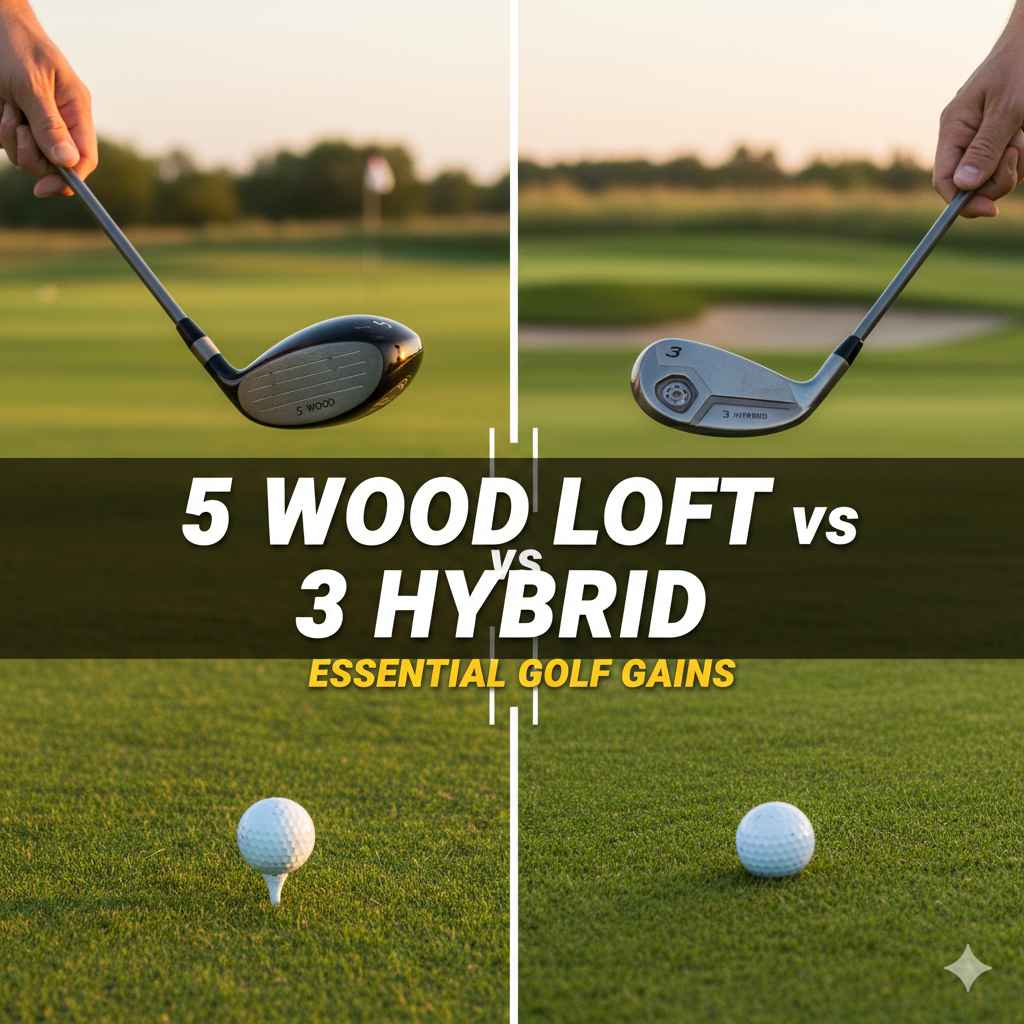
5 Wood Loft vs 3 Hybrid: Essential Golf Gains
Choosing between a 5 wood and a 3 hybrid offers distinct advantages. A 5 wood is great for distance and a higher launch, ideal for sweeping shots off the fairway. A 3 hybrid provides more versatility, ease of use from various lies, and control, often replacing longer irons for many golfers. Understand these key differences to boost your game.
Navigating the world of golf clubs can feel like a puzzle, especially when you’re deciding which club belongs in your bag for those crucial mid-to-long range shots. Two popular contenders are the 5 wood and the 3 hybrid. Many golfers wonder, “Which one is better for me?” It’s a common question because both clubs can help you gain distance and improve your score, but they do it in different ways. This guide is here to clear up the confusion, making it simple to understand the gains each club offers. We’ll break down what makes each club unique, so you can confidently make the right choice to elevate your game.
Understanding Wood Loft vs. Hybrid Design
Before we dive into the “vs.” part, let’s quickly look at what makes a 5 wood and a 3 hybrid tick. These clubs are designed with different shapes and lofts to achieve specific results on the golf course.
The 5 Wood: Your Fairway Companion
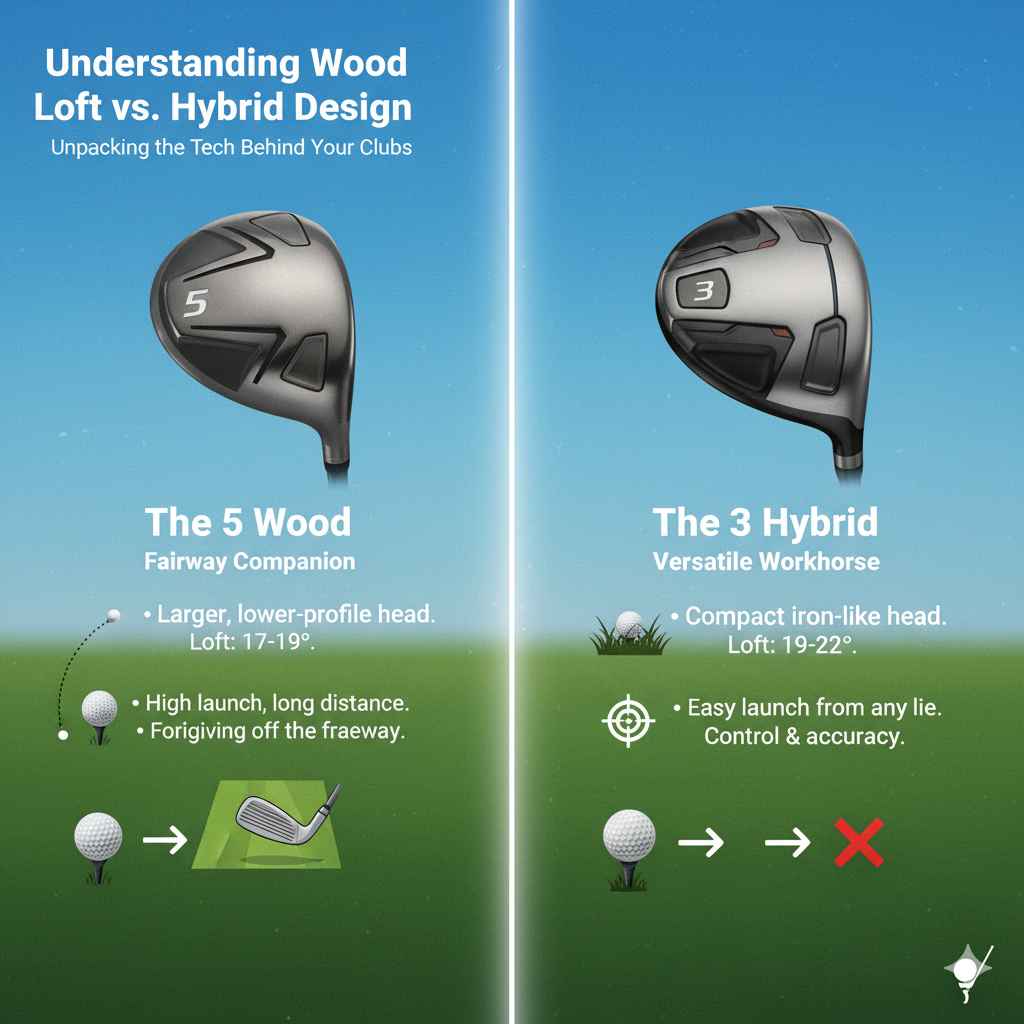
A 5 wood is a member of the wood family, though modern ones are almost always made of metal (titanium or steel). Its head is usually larger and has a lower profile, meaning it sits a bit flatter on the ground. The defining feature of a 5 wood is its loft, which typically ranges from 17 to 19 degrees. This loft angle is key to how the club performs. The loft helps to get the ball up in the air, and the larger head offers a more forgiving sweet spot.
Think of the 5 wood as a more forgiving, longer-hitting cousin to your longest iron. It’s designed for:
- Hitting the ball high and far.
- Providing confidence when hitting off the fairway.
- Replacing a long iron for many players.
The 3 Hybrid: The Versatile Workhorse
A hybrid club, sometimes called a rescue club, is a brilliant fusion of a fairway wood and an iron. It combines the larger head and lower center of gravity of a wood with the more compact shape and shorter shaft of an iron. A 3 hybrid usually has a loft between 19 and 22 degrees, often overlapping with a 5 wood but sometimes a bit higher. The unique design of a hybrid makes it easier to hit from tricky lies, like the rough, and offers a blend of distance and control.
The hybrid was invented to help golfers replace difficult-to-hit long irons (like a 3-iron or 4-iron) with something much easier to manage. It’s known for:
- Ease of hitting from various turf conditions.
- Providing a reliable ball flight.
- Offering control and accuracy.
5 Wood vs. 3 Hybrid: Key Differences and Essential Gains
Now that we know a little about each club, let’s get to the heart of the matter: how do they differ in performance, and what essential gains can you expect from choosing one over the other? The primary differences come down to loft, head design, shaft length, and how these elements affect ball flight, distance, and playability.
1. Distance: Who Reigns Supreme?
When it comes to pure distance, the 5 wood often has a slight edge, especially when hit perfectly off the tee or a clean fairway. This is usually due to its lower loft and potentially larger head size, which can generate more ball speed and a more penetrating (or lower) launch angle for maximum roll. However, this is a generalization, and individual results can vary greatly based on swing speed and technique.
A 3 hybrid, with its slightly higher loft and more iron-like characteristics, might not carry as far as a well-struck 5 wood. However, it offers more consistent distance across a wider range of shots and lie conditions. For many golfers, the shorter shaft length of a hybrid compared to a 5 wood can lead to more consistent contact, which translates to more reliable average distances, even if the absolute maximum distance is less than a perfect 5 wood shot.
Essential Gains for Distance:
- 5 Wood: Potential for longer carry and more roll, especially off the tee or a perfect fairway lie.
- 3 Hybrid: Consistent distance from various lies, often leading to a more dependable average distance due to easier control.
2. Ball Flight and Launch Angle
The loft of a club directly influences its launch angle – how high the ball ascends after impact. Generally, a 5 wood, with its lower loft (around 17-19 degrees), will launch the ball lower than a 3 hybrid (around 19-22 degrees). A lower launch angle can be advantageous for maximizing distance, especially in calm conditions, as the ball spends less time in the air battling gravity.
A 3 hybrid, with its slightly higher loft, is designed to launch the ball a little higher. This increased height is a significant advantage. A higher ball flight means the ball will land softer, making it more effective for hitting greens from longer distances. It also helps the ball carry over hazards like bunkers or water more easily. For golfers who struggle to get adequate height with their longer clubs, the hybrid’s higher launch can be a game-changer.
Essential Gains for Ball Flight:
- 5 Wood: Lower, more penetrating flight for maximum distance and roll in ideal conditions.
- 3 Hybrid: Higher, softer-landing flight for better control on approach shots and increased ability to carry hazards.
3. Playability and Versatility: Hitting from Anywhere
This is where the hybrid truly shines. Its design makes it incredibly versatile. The club’s head shape, which is less deep than a fairway wood, and its more iron-like sole (the bottom part of the club) allow it to glide through the rough more easily than a 5 wood. You can confidently swing a hybrid from a less-than-perfect lie without the club “catching” on the turf.
A 5 wood, with its larger, shallower head and lower profile, is best suited for hitting off the fairway or the tee. When the ball is sitting down in the rough, a 5 wood can be difficult to strike cleanly. The clubface might get snagged by the longer grass, leading to fat shots or significantly reduced distance. While some golfers can manage a 5 wood from light rough, it’s generally not its strong suit.
Essential Gains in Playability:
- 5 Wood: Optimal from the tee and pristine fairway lies.
- 3 Hybrid: Highly playable from the fairway, light to medium rough, and even some divots, offering confidence from diverse situations.
4. Forgiveness and Consistency
Both clubs are designed to be more forgiving than their long iron counterparts, but they offer forgiveness in different ways. The larger head of a 5 wood generally provides a bigger sweet spot, meaning off-center hits might not suffer as much in terms of distance and direction compared to a blade-style iron. This can lead to more consistent results for amateur golfers, especially on full swings.
The 3 hybrid also offers excellent forgiveness. Its weight distribution and head design help maintain clubhead speed and square the face on impact, even on slight mishits. The shorter shaft length compared to a 5 wood can also contribute to greater consistency. A shorter club is generally easier to control, leading to more solid contact and a more predictable outcome. For many golfers, this boost in control translates directly into more consistent play.
Essential Gains in Forgiveness:
- 5 Wood: Forgiveness through a larger sweet spot, particularly helpful on centered strikes.
- 3 Hybrid: Forgiveness through ease of control and consistent attack angle, leading to more stable results from a wider range of swings.
5. Control vs. Distance: The Trade-off
It’s a classic golf dilemma: do you prioritize maximum distance, or do you prioritize control and the ability to place the ball accurately? The 5 wood often leans towards maximizing distance, aiming for the longest possible carry. This can be fantastic when you have a clear path to the green and need every yard.
The 3 hybrid often offers a better balance between distance and control. While it might not reach the absolute maximum distance of a perfectly struck 5 wood, its higher loft and easier-to-control nature allow many golfers to place the ball more accurately on the green. This control is invaluable when precision is needed, especially on approach shots where getting on the green in two is the goal, or when navigating challenging course conditions.
Essential Gains in Control vs. Distance:
- 5 Wood: Prioritizes pure distance, ideal for open fairways and maximizing carry.
- 3 Hybrid: Offers a blend, providing ample distance with enhanced control for accuracy and feel.
When to Choose Which: Practical Scenarios
Deciding between a 5 wood and a 3 hybrid often comes down to your personal strengths, weaknesses, and the types of shots you face most frequently on the course. Consider these common scenarios:
Scenario 1: You’re a Powerful Swinger Needing Another Wood
If you have a fast swing speed and consistently hit your driver and 3 wood well, a 5 wood might be the natural next step. It will likely offer you significant distance, giving you a club that can reach par 5s in two shots or carry long par 4s. You’ll benefit from the lower flight and extra roll. If your swing allows you to strike the ball cleanly from the fairway consistently, the 5 wood will likely be your distance king.
Scenario 2: You Struggle with Long Irons or Fairway Woods from Tough Lies
This is the bread and butter for the 3 hybrid. If you find yourself hacking out of the rough with your 3-iron or 4-iron, or if your 5 wood feels awkward when the ball isn’t sitting perfectly, the 3 hybrid is a fantastic solution. Its design allows it to cut through thicker grass more effectively. Many players find they can swing with more aggression and confidence, knowing the hybrid is more forgiving from a variety of lies. This increased confidence often leads to better results, even if the raw distance isn’t quite as far as a perfect fairway wood strike.
Scenario 3: You Need a Reliable Club for Approaches to the Green
For approach shots where judging distance and ensuring a soft landing is critical, a 3 hybrid often provides an advantage. Its higher launch angle helps the ball stop more quickly on the green, reducing the chance of running off the back. The consistency it offers from different lies also means you’re more likely to hit a reliable shot when you need it most. While a 5 wood can certainly be used for approaches, its lower flight might require more precision to avoid a long roll-out.
Scenario 4: You’re Building a Balanced Set
Many golfers opt for a combination, carrying both a 5 wood (for maximum distance off the tee and fairway) and a 3 hybrid (for versatility and dependable shots from trouble). Alternatively, some players might carry a 3 wood and a 5 wood, and then use a 3 hybrid and a 4 hybrid to cover the gap where their long irons would traditionally be. The key is to fill the distance gaps in your bag with clubs you can hit effectively and consistently. Using tools like a USGA conforming club specifications guide can help ensure your chosen clubs meet regulations. For a deeper understanding of club mechanics, resources from PGA.com’s instruction section can offer further insights.
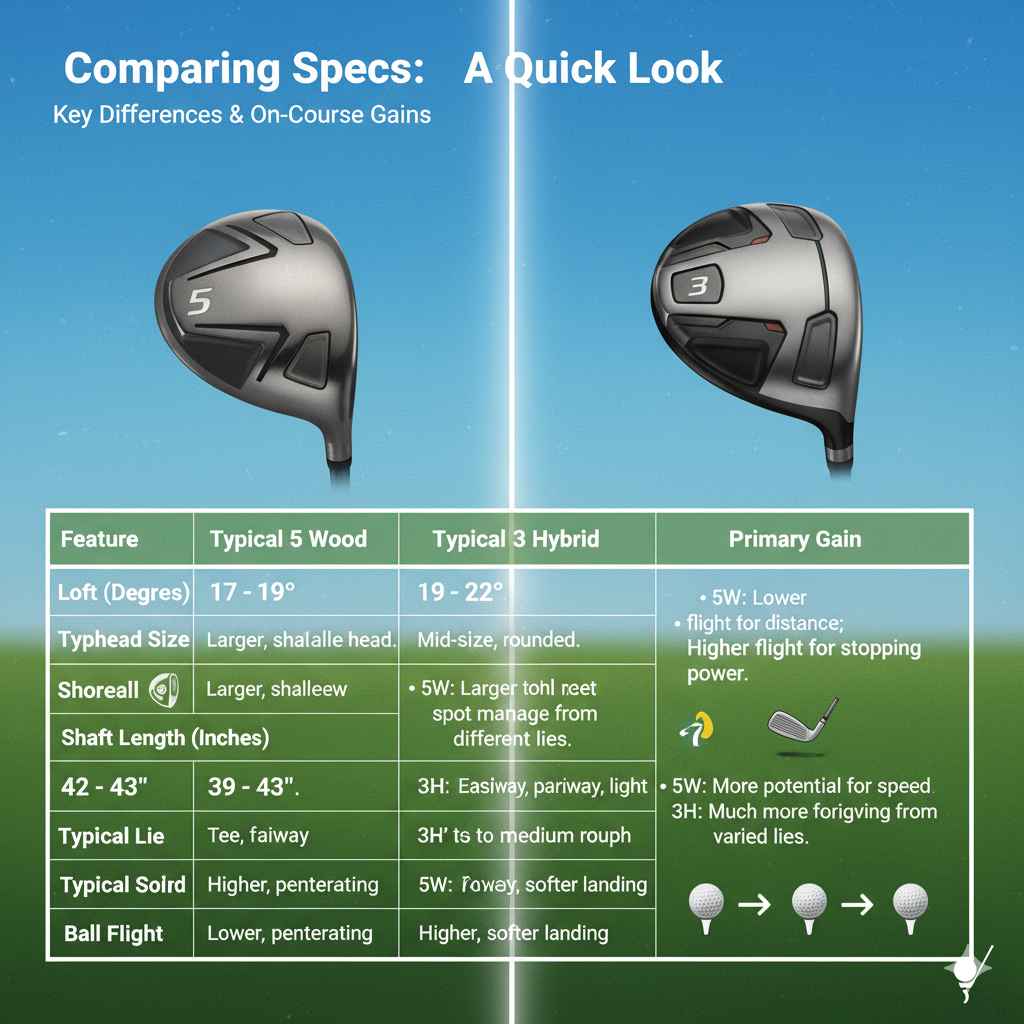
Comparing Specs: A Quick Look
Here’s a table summarizing the typical specifications and the associated gains. Remember, these are averages, and actual clubs can vary by manufacturer and model.
| Feature | Typical 5 Wood | Typical 3 Hybrid | Primary Gain |
|---|---|---|---|
| Loft (Degrees) | 17 – 19° | 19 – 22° | 5W: Lower flight for distance; 3H: Higher flight for stopping power. |
| Clubhead Size | Larger, shallower | Mid-size, rounded | 5W: Larger sweet spot; 3H: Easier to manage from different lies. |
| Shaft Length (Inches) | 42 – 43″ | 39 – 40.5″ | 5W: More potential for speed; 3H: Easier to control for consistent contact. |
| Typical Lie | Tee, fairway | Tee, fairway, light to medium rough | 5W: Optimized for clean contact; 3H: Much more forgiving from varied lies. |
| Typical Ball Flight | Lower, penetrating | Higher, softer landing | 5W: Distance emphasis; 3H: Control and green-holding ability. |
Frequently Asked Questions (FAQ)
Q1: Can a 3 hybrid hit the ball as far as a 5 wood?
Generally, a 5 wood has the potential to hit the ball further due to lower loft and a larger head, especially off a perfect strike. However, a 3 hybrid’s consistency and ease hitting from various lies can lead many golfers to achieve similar or more reliable distances with it, as they can make better contact more often.
Q2: Which club is better for beginners?
For most beginners, a 3 hybrid is often recommended over a 5 wood. Its shorter shaft makes it easier to control, and its design is more forgiving from imperfect lies, which beginners frequently encounter. The added height and softer landing also make it easier to get the ball up and stop on the green.
Q3: Should I replace my 3-iron with a 3 hybrid?
Yes, this is precisely what the 3 hybrid was designed for! Long irons like the 3-iron are notoriously difficult to hit consistently for the average golfer. A 3 hybrid offers similar yardage with significantly more ease of use, forgiveness, and playability from different turf conditions, making it a much more practical choice for most players.
Q4: Is a 5 wood useful off the tee?
Absolutely. Many golfers use their 5 wood as a “mini-driver” off the tee on tight holes where accuracy is more important than maximum distance. It offers more control than a driver and can still provide substantial distance, with a more forgiving profile than a 3 wood for some players.
Q5: How do I know if I need a 5 wood or a 3 hybrid in my bag?
Consider your typical miss-hits and the types of course conditions you play most often. If you can consistently hit your fairway woods off the deck and want maximum distance, a 5 wood might be for you. If you struggle with long irons or find yourself in the rough often, and value consistency and control, a 3 hybrid is likely the better choice. Many golfers find a place for both in their bag to cover different situations.
Q6: What is the difference in loft between a 5 wood and a 3 hybrid?
While there can be some overlap, a 5 wood typically has a loft between 17 to 19 degrees, aimed at lower flight and more distance. A 3 hybrid generally has a loft between 19 to 22 degrees, designed for a higher launch angle and better stopping power on greens.
Mastering Your Choice for Essential Golf Gains
Choosing between a 5 wood and a 3 hybrid isn’t about declaring one club definitively “better” than the other. It’s about understanding their unique strengths and how they align with your personal golfing abilities and needs. The 5 wood offers a pathway to greater potential distance and a penetrating ball flight, ideal for sweeping shots off pristine lies and maximizing carry and roll.
On the other hand, the 3 hybrid is the epitome of versatility and forgiveness. It provides a higher, softer-landing trajectory that’s easier to control, and it remains playable from a wider range of turf conditions, including those challenging lies in the rough. For many golfers, particularly amateurs and those looking to simplify their game, the 3 hybrid’s ease of use and consistency make it an indispensable tool.
The essential golf gains you’ll experience are directly tied to playing the club that best suits your swing and the demands of the course. Whether you crave that extra bit of distance from the 5 wood or the reliable playability of the 3 hybrid, making an informed choice will undoubtedly lead to more confidence, better scoring, and a more enjoyable game of golf.