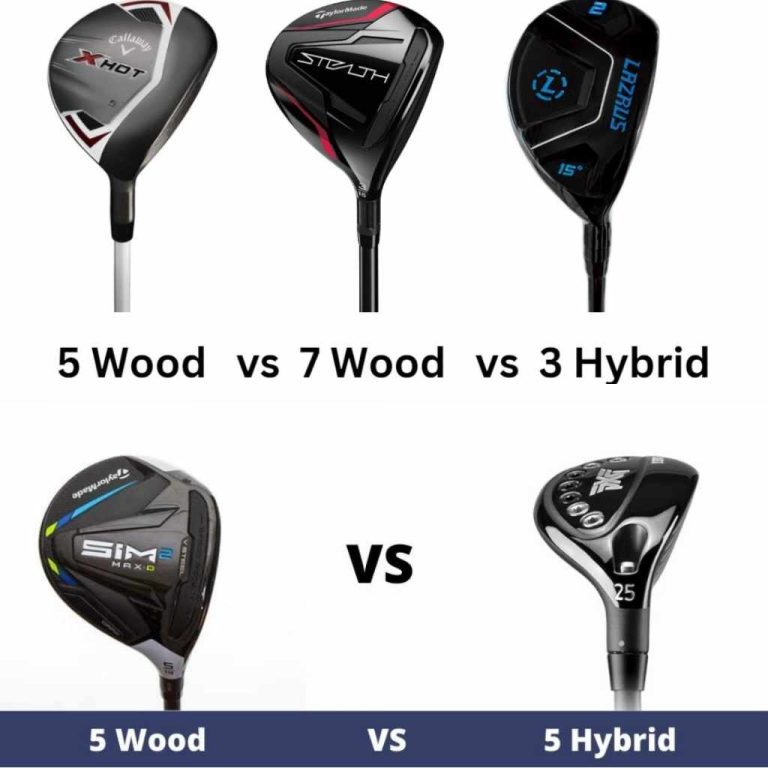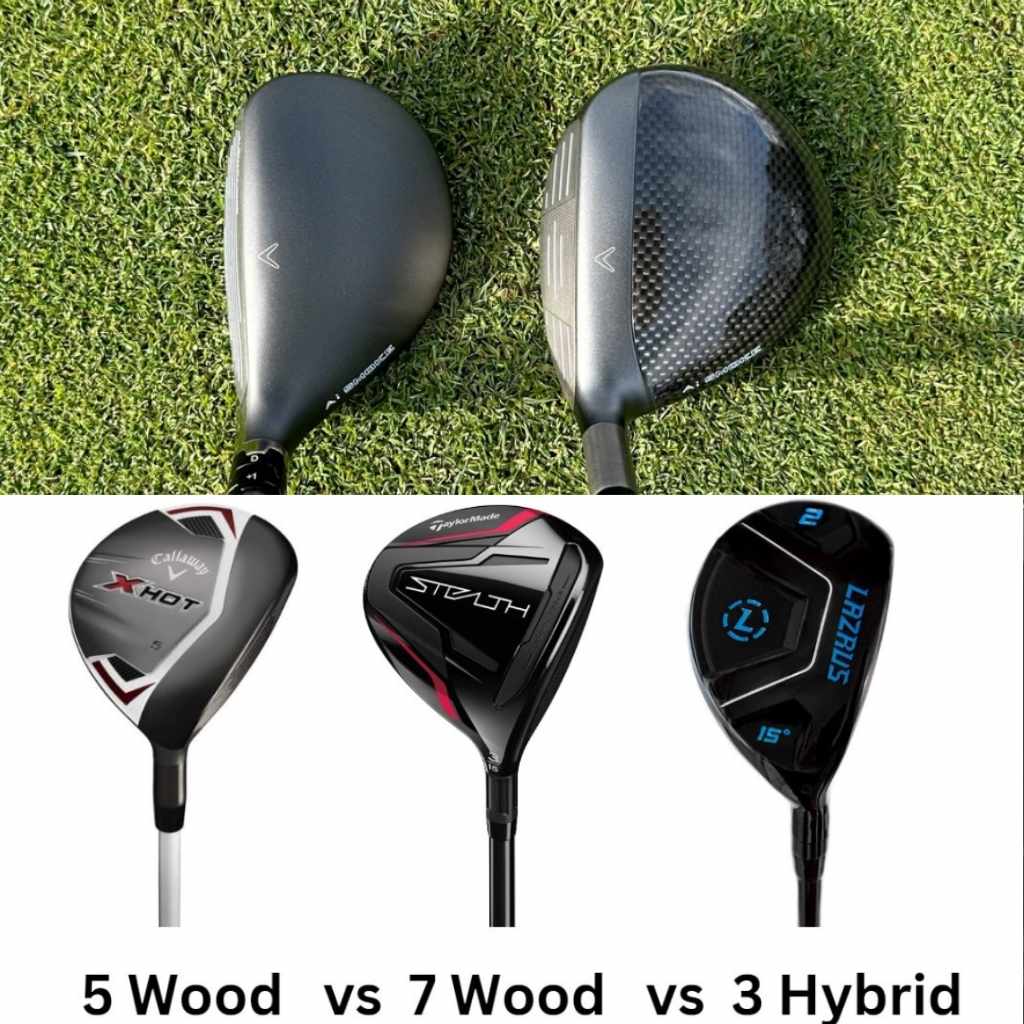
5 Wood Vs 3 Wood Distance Chart: Proven Best
The proven best distance for a 5 wood versus a 3 wood depends on your swing speed and loft, but generally, a 3 wood travels 10–20 yards farther than a 5 wood. This guide breaks down the typical distance chart for beginners, helping you choose the right club for consistent fairway shots.
Picking the right fairway wood can feel like a puzzle, especially when you look at the numbers: 3 wood or 5 wood? Many beginner golfers think bigger number equals better distance, but that is not always the case! If you struggle to hit your long shots consistently, you are not alone. The difference between these two clubs is small but important for setting up your next shot. As a fellow hobbyist who learned the hard way, I want to show you exactly how these clubs perform. We will look at how loft really matters so you can choose the perfect club and gain confidence with every swing. Let’s stop guessing and start measuring the real difference in distance!
Understanding Fairway Woods: Why Loft is Your Best Friend
When we talk about fairway woods (the ones you use off the grass, not the tee), the number on the bottom—like 3 or 5—tells you how much “loft” the clubface has. Loft is simply the angle of the clubface, measured in degrees. This angle is the single biggest factor determining how high the ball flies and how far it travels.
For beginners, it is easy to assume a lower number (like a 3 wood) means more distance because it has less loft. While that is true for powerful swings, for most of us learning the game, too little loft means a weak, low shot that barely makes it down the fairway. Higher loft (like on a 5 wood) helps get the ball up quickly and often results in a more controlled, longer shot for slower swing speeds.
What is Loft, Really?
Think of loft like the ramp on a skateboard. A very low ramp (low loft) requires a lot of speed to clear a large gap. A steeper ramp (high loft) lets you get the ball airborne easily, even with less speed.
- 3 Wood Loft: Typically ranges from 13° to 18°. This is designed for maximum distance and requires a faster swing.
- 5 Wood Loft: Typically ranges from 18° to 21°. This higher loft helps launch the ball higher and softer, which is easier for most amateurs to control.
The Essential 5 Wood Vs 3 Wood Distance Chart for Beginners
The best way to understand the difference is to look at the typical yardages based on common average swing speeds for amateur players. Remember, these are general guidelines. Your own results might vary based on your technique, ball striking, and the specific make and model of your clubs.
To give you a solid, researched baseline, these estimates are based on general golf physics principles and club fitting standards, which you can cross-reference with data from professional fitting guides, such as those often referenced by organizations focused on golf technology improvement.
Typical Distance Chart Comparison
| Club Type | Typical Loft Range (Degrees) | Average Swing Speed (MPH) | Estimated Carry Distance (Yards) | Launch Angle Goal |
|---|---|---|---|---|
| 3 Wood | 15° – 17° | 80–90 MPH | 180 – 200 Yards | Lower, piercing flight |
| 5 Wood | 18° – 20° | 75–85 MPH | 165 – 185 Yards | Higher, softer landing flight |
| 3 Wood | 15° – 17° | 90+ MPH | 200 – 220+ Yards | Optimum penetration |
| 5 Wood | 18° – 20° | 85+ MPH | 185 – 205+ Yards | Good combination of height and distance |
What this table clearly shows is that if your swing speed is below 90 MPH, using a 5 wood often gives you more predictable distance because you launch the ball better. Trying to force a 3 wood when your speed isn’t there results in a low, weak shot that loses energy fast.
Why Distance Varies: Three Key Factors
It’s crucial to understand that the chart is just a starting point. Many things influence how far your specific 5 wood or 3 wood will actually travel. Think of these factors as things you can control to maximize your woods.
1. Swing Speed (The Engine)
This is the speed at which the clubhead travels at impact. Faster swing speed generates more ball speed, leading to more distance, regardless of the club. If you swing slower, you need more help from the loft to get the ball airborne.
2. Launch Conditions (The Takeoff)
This includes the launch angle and spin rate. A 5 wood is designed to produce a higher launch angle with optimal spin, making the ball land softly on the green or travel further down the tightly mown fairway. A 3 wood, when struck correctly, has a lower launch angle and less spin, maximizing roll out.
3. Shaft Flex and Length (The Fit)
The shaft matters hugely! A shaft that is too stiff for your speed will decrease distance and control. A shaft that is too flexible might cause you to lose accuracy. When you are ready to invest in clubs, getting fitted—even at a basic level—is one of the best investments you can make for better results. Check out foundational fitting concepts discussed by organizations focused on equipment standards.
When to Choose the 3 Wood: The Distance King
The 3 wood is traditionally the course’s second-longest club (after the driver). It demands confidence and a reliable swing to use effectively off the fairway.
Best Use Cases for a 3 Wood:
- Tee Shots on Tight Holes: If a hole requires more length than your driver offers, or the fairway is tight and accuracy is vital, many golfers prefer the shorter shaft of the 3 wood over the driver for better control.
- Fast Swing Speeds: If you consistently generate ball speeds over 145 MPH and have a quick, powerful swing, the low loft of the 3 wood will maximize your absolute distance potential.
- Firm Fairways: When the course is dry and the ground is hard, the lower trajectory of the 3 wood allows the ball to roll out significantly, adding valuable extra yards.
Mentor Tip: Don’t feel obligated to hit your 3 wood every time you see an open fairway. If you are struggling to get it airborne off the deck (the grass), switch to your hybrid or 5 wood. Consistency beats maximum distance every single time when trying to shave strokes off your game.
When to Choose the 5 Wood: The Consistency Champion
For the vast majority of beginner and intermediate golfers, the 5 wood is the unsung hero of the long game. It’s easier to launch, more forgiving on slight misses, and promotes a higher, softer landing shot.
When the 5 Wood Shines:
- Approach Shots Over Water or Hazards: Because the 5 wood gets the ball up higher, faster, it is better for carrying hazards that require vertical lift rather than pure ground-rolling distance.
- Softer Fairways or Wet Conditions: When the course is soft, you need height to carry the distance, not roll. The higher loft of the 5 wood excels here.
- Confidence Building: If you feel nervous over a long second shot, picking a club you know you can launch high will instantly boost your confidence.
The difference in distance (often only 10 to 20 yards) is almost always worth the trade-off for the added height and forgiveness of the 5 wood. That saved distance often comes back to you because you hit the 5 wood consistently solid, whereas the 3 wood might come out thin or topped.
Technique Check: Hitting Fairway Woods Off the Grass
The way you approach the ball with a 3 wood versus a 5 wood changes slightly, primarily because of the ball position and attack angle. This is where many beginners get tripped up; they swing the 3 wood like a driver when standing on the fairway.
Step-by-Step Swing Setup Guide
- Ball Position Adjustment:
- 3 Wood: Place the ball just inside the front heel of your lead foot (left foot for right-handers). This encourages a slight upward strike.
- 5 Wood: Move the ball slightly back toward the center of your stance. This naturally encourages a shallower angle of attack, which works well with the higher loft.
- Shaft Angle (Lie Angle):
- With both clubs, ensure the shaft sits relatively flat at address. If the clubhead rocks back and forth too much, the shaft may be too long or the incorrect lie angle, which affects consistent contact. Always check that the club sole lies flat on the turf.
- Swing Tempo (The Feel):
- Do not try to hit the 3 wood harder. Focus on smooth acceleration. The 5 wood should feel slightly easier to swing because you are not fighting the lower loft. Keep your tempo relaxed, smooth, and consistent for both clubs.
- Strike Location:
- Aim to catch the 3 wood slightly higher on the face (closer to the center) for maximum solid contact. With the 5 wood, focus on hitting the ball cleanly before the club starts moving steeply down—you want a sweeping action, not a chopping one.
The Importance of Gapping: Creating Your Own Distance Chart
The most reliable chart is the one you create yourself. Don’t trust marketing numbers; trust your own proof on the range or course. Club gapping refers to the consistent yardage difference between each successive club in your bag.
How to Build Your Personalized Distance Chart
You will need a range finder or a GPS device to measure your actual carry distances accurately. Do this on a day when you feel comfortable and consistent.
- Warm Up Thoroughly: Always start loose!
- Hit 5 Shots with the 5 Wood: Do not try for maximum effort. Hit 5 shots with a solid, smooth tempo. Record the best three carry distances.
- Hit 5 Shots with the 3 Wood: Use the same smooth tempo. Record the best three carry distances.
- Calculate Averages: Take the average of your three best shots for each club. This average distance is your “go-to” number for that club.
- Determine Your Gap: Subtract the 5 wood average from the 3 wood average. This gap (often 10-20 yards) defines your confidence zone.
For instance, if your 5 wood averages 170 yards (carry) and your 3 wood averages 185 yards (carry), you have a reliable 15-yard gap. This knowledge allows you to select the correct club based on the yardage left to the pin.
Addressing Common Beginner Myths About Fairway Woods
Many beginners carry unnecessary baggage or follow bad advice when dealing with long clubs. Let’s clear up some common misconceptions that stop you from maximizing your distance potential.
Myth 1: A 3 Wood is Always Longer Than a 5 Wood.
Reality: Only if the golfer has enough clubhead speed to effectively launch the lower-lofted 3 wood. For most amateurs, a well-struck 5 iron will out-distance a poorly struck 3 wood every time. Focus on contact, not just the number on the club.
Myth 2: You Should Try to Hit Up on Fairway Woods Like a Driver.
Reality: This is especially harmful with the 3 wood off the grass. Because you are hitting off the ground, you should be aiming for a descending or level blow, sweeping the ball up slightly after the club contacts the ground just in front of the ball. The 5 wood’s higher loft is more forgiving if you get slightly under it.
Myth 3: Longer Shafts Always Mean More Distance.
Reality: A longer shaft can increase distance potential, but often significantly decreases accuracy and control for beginners. The 5 wood has a slightly shorter shaft than the 3 wood, which contributes to its easier handling and greater forgiveness because it reduces potential swing arc error.
Making the Final Decision: Which Club Belongs in Your Bag?
The choice between emphasizing the 3 wood or the 5 wood is personal, depending on the courses you play most often and your personal swing characteristics. Think about what you need more: raw distance potential or consistent carry.
Checklist for Choosing:
- If tee shots on tight holes are 220+ yards: You might benefit from optimizing your 3 wood.
- If your comfortable carry distance is under 190 yards: The 5 wood is likely your most reliable choice for long approach shots.
- If you struggle with the ball staying out of the air: Choose the 5 wood. Height equals distance for you right now.
- If you play on very firm, rolling courses: The 3 wood’s lower flight provides better roll potential.
Most teaching professionals recommend that any amateur golfer carrying a 3 wood should also feel completely comfortable hitting their 5 wood, as it often becomes the more frequently used and effective club off the fairway throughout a round.

Frequently Asked Questions (FAQ)
Q1: Does the 5 wood replace a long iron like a 3 iron?
A: Absolutely. For most modern golfers, a 5 wood (or a hybrid) is much easier to hit consistently than a traditional 3 iron. The 5 wood is generally used for longer shots where you need height and distance—usually 160+ yards.
Q2: How much farther should my 3 wood go than my 5 wood?
A: On average, a well-struck 3 wood should carry about 10 to 20 yards farther than a well-struck 5 wood, assuming similar swing speeds hitting the center of the face.
Q3: Can I use my 5 wood off the tee box?
A: Yes, you can! The 5 wood is an excellent choice for teeing off on short par 4s or very narrow par 3s where you need a safe shot that still covers significant distance without the wild potential of a driver.
Q4: What is the ideal height difference between my 5 wood shot and my 7 iron shot?
A: Generally, you want each successive club to travel about 10 to 15 yards shorter. Your 5 wood should fly significantly farther than your 7 iron—likely 40 to 50 yards farther, depending on your skill level.
Q5: How should I practice hitting my 3 wood off the fairway?
A: Start by placing the ball on a small tee (about half an inch high) on the fairway turf to mimic the lift you get off the driver. This helps you feel the upward strike needed. Once you are comfortable, move to hitting it off the grass directly.
Q6: Is it better to have a gap of 15 yards or 20 yards between my fairway woods?
A: A 15-yard consistent gap is better than a sporadic 20-yard gap. If you can hit your 5 wood 170 and your 3 wood 185 effectively every time, stick with that reliable 15-yard difference. Consistency is the goal.
Conclusion: Confidence Comes From Knowing Your Clubs
Stepping up to the tee or setting up for that long second shot should never inspire doubt. The battle between the 3 wood and the 5 wood isn’t about which club is “better”—it’s about which club is better for you, right now. For many hobbyists, the 5 wood offers superior launch and forgiveness, often leading to more consistent, playable distances than the lower-lofted 3 wood.
Remember the key takeaway from our distance chart: your swing speed dictates the loft you need. If you rely on maximizing height and forgiveness, embrace the 5 wood. If you have the power to launch the ball low and fast, utilize the distance advantage of the 3 wood. Take the time to measure your personal results on the range. Once you see proof in yardage, you can confidently leave the guesswork behind and start crafting beautiful shots across the fairway. Keep practicing those smooth, repeatable swings, and you’ll see great results in no time!