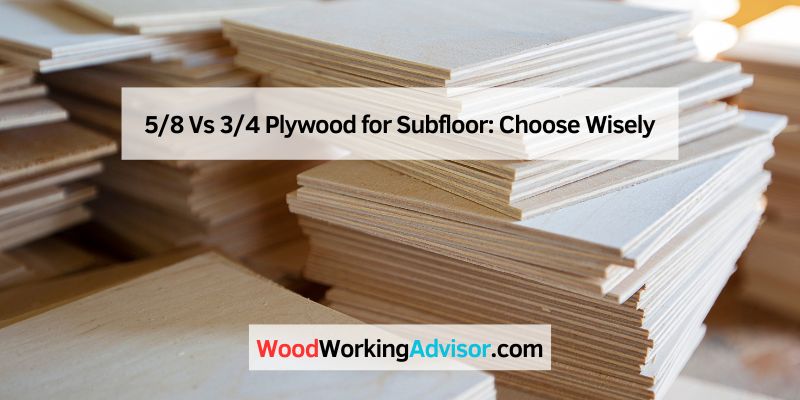
5/8 Vs 3/4 Plywood for Subfloor: Choose Wisely
When it comes to building or renovating your home, every detail matters. You might find yourself pondering over the choice between 5/8 and 3/4 plywood for your subfloor.
It’s a decision that could impact the comfort, durability, and safety of your space. Imagine walking across your home and feeling the stability beneath your feet. Choosing the right plywood thickness isn’t just about construction—it’s about the peace of mind knowing your floors are safe and sound.
You’ll discover the differences between these two options, weigh their pros and cons, and ultimately make an informed decision that aligns with your needs. Get ready to delve into the essentials that could transform your flooring experience. Your perfect subfloor awaits!
Plywood Thickness Differences
When deciding on the right plywood thickness for your subfloor, understanding the nuances between 5/8 inch and 3/4 inch plywood can make all the difference. Each thickness offers distinct advantages and might be better suited for specific scenarios. Whether you’re renovating your home or building from scratch, choosing the right plywood can affect the longevity and stability of your flooring. Let’s delve into the details.
5/8 Inch Plywood Overview
5/8 inch plywood is often chosen for its cost-effectiveness and versatility. It provides a sturdy base for many flooring types, making it a popular choice for budget-conscious homeowners. If you’re working with an existing structure, this thickness can be a great fit due to its slightly lighter weight.
This thickness is also easier to handle and install, offering a smoother DIY experience. If you’ve ever struggled with lugging heavy materials, you’ll appreciate how manageable 5/8 inch plywood can be. However, consider the type of flooring you plan to add. Some heavier options may require additional support.
3/4 Inch Plywood Overview
3/4 inch plywood is synonymous with durability. If you’re aiming for a solid, long-lasting subfloor, this thickness might be your best bet. It’s ideal for areas prone to heavy foot traffic, offering peace of mind that your flooring won’t buckle under pressure.
Have you ever walked across a floor that creaked with every step? With 3/4 inch plywood, you’re far less likely to experience that annoyance. It’s also a preferred choice for homes with larger spans between joists, providing extra strength and reducing potential sagging.
Choosing between these two thicknesses boils down to your priorities. Are you more concerned with budget and ease of installation, or is durability your main focus? Understanding your needs is key to making the right decision. What are your thoughts on plywood thickness for subfloors? Share your experiences and insights below!
Strength And Durability
Choosing between 5/8 and 3/4 plywood for subfloor impacts strength and durability. Thicker 3/4 plywood offers more stability and longevity. 5/8 plywood might suffice for lighter loads, but 3/4 plywood is preferred for heavy-duty use.
When you’re choosing plywood for your subfloor, strength and durability are key factors that can make or break your decision. You want a subfloor that can handle daily wear and tear, as well as any unexpected events like heavy furniture or appliances. But how do you decide between 5/8 and 3/4 plywood? Understanding the nuances of load-bearing capacity and impact resistance can guide your choice and ensure your floors last for years.
Load Bearing Capacity
The load-bearing capacity of plywood is crucial when it comes to supporting your home’s structure.
5/8 plywood offers a solid choice for many homes, providing sufficient strength for standard loads. It’s often used in places where weight distribution is even and consistent.
3/4 plywood, on the other hand, excels in areas with heavier loads. Think about your kitchen or laundry room where appliances add extra weight. This thickness offers more assurance against sagging or bending.
Are you planning to install heavy furniture or equipment? Then 3/4 might be your best bet. It gives you peace of mind, knowing your floor won’t buckle under pressure.
Impact Resistance
Impact resistance is another factor to consider. It determines how well the plywood can withstand shocks or impacts from objects.
5/8 plywood can handle typical household impacts fairly well. Dropping a pan or a small tool won’t cause significant damage.
However, 3/4 plywood offers superior resistance. If you’ve ever watched in horror as your child dropped a heavy toy, you’ll appreciate the extra protection. It’s not just about the immediate impact but also about long-term durability.
Imagine walking on a floor that feels rock-solid. That’s the reassurance 3/4 plywood provides.
So, what matters most to you—load-bearing strength or impact resistance? Your answer will help determine which thickness is ideal for your home.
Installation Considerations
Choosing between 5/8 and 3/4 plywood for your subfloor involves careful thought. Installation considerations play a crucial role in this decision. Factors such as ease of handling, tools, and techniques can influence the outcome. Understanding these elements ensures a smoother installation process.
Ease Of Handling
5/8 plywood is lighter than 3/4 plywood. It makes handling easier for one person. Moving and positioning sheets requires less effort. This is ideal for smaller teams or solo work. 3/4 plywood is heavier. It often requires two people to manage. The added thickness provides more durability. Larger projects may benefit from its sturdiness.
Tools And Techniques
Installing subflooring requires specific tools. For cutting, a circular saw works best. Ensure blades are sharp for clean cuts. Use a drill for securing plywood to joists. Screws are recommended over nails for better hold.
When working with 5/8 plywood, fewer screws are needed. This reduces installation time. 3/4 plywood may need additional screws. It offers greater stability with more fasteners.
Proper spacing between fasteners prevents buckling. Maintain a consistent gap. This ensures the subfloor remains even. A level subfloor is crucial for good flooring installation.

Credit: uskitchencabinet.com
Cost Analysis
Choosing the right plywood for your subfloor impacts both quality and cost. The decision between 5/8 inch and 3/4 inch plywood involves a careful cost analysis. Understanding the expenses can guide you to make an informed choice. Let’s explore the material costs and long-term investment associated with these options.
Material Costs
5/8 inch plywood generally costs less than 3/4 inch plywood. The thinner sheets require less wood, reducing the price. You might pay more for the thicker 3/4 inch plywood. This reflects its added durability and strength. Budget constraints often lead to selecting the cheaper option. Consider your budget carefully before purchasing.
Long-term Investment
3/4 inch plywood offers better durability over time. It’s a solid choice for heavy foot traffic areas. While initially more expensive, it may save money in the long run. Less frequent repairs and replacements can offset the higher upfront cost. 5/8 inch plywood might require more maintenance. Weigh the potential future costs when making a decision.
Moisture Resistance
Choosing between 5/8 and 3/4 plywood for subfloors depends on moisture resistance. Thicker plywood offers better protection against water damage, ensuring a longer-lasting floor. Consider the environment’s humidity to make the right decision.
Choosing the right plywood for your subfloor is more than just a technical decision—it’s a safeguard for your home. Moisture resistance plays a crucial role in this choice. If you’ve ever dealt with a soggy subfloor, you know how important it is to prevent water damage. The right plywood can be your ally in maintaining a dry, durable floor.
Water Damage Prevention
Water can be sneaky. It seeps into cracks and crevices, wreaking havoc on your subfloor. You might think thicker plywood automatically means better protection, but that’s not always the case.
3/4-inch plywood generally offers more strength, but 5/8-inch can be more resistant to minor water exposure. Some homeowners have found their 5/8-inch subfloors held up better after a minor leak. It often depends on the quality and treatment of the plywood.
You want to ensure your choice can withstand spills and leaks. Consider using a water-resistant sealant on your subfloor. This extra step can save you from future headaches.
Humidity Effects
Humidity can silently affect your subfloor. It causes swelling, warping, and even mold growth. The battle between 5/8-inch and 3/4-inch plywood in humid environments can be surprising.
While 3/4-inch plywood is denser, it may not always handle humidity better. A friend once shared how her 5/8-inch plywood subfloor stayed intact in her humid basement, while her thicker plywood warped. How is your home’s humidity level?
You might want to invest in a dehumidifier if your area experiences high humidity. It helps maintain the integrity of your subfloor regardless of its thickness. And remember, proper ventilation is key.
Selecting the right plywood thickness for moisture resistance means understanding your home’s environment. How often do you experience humidity or water exposure? Your decision will affect your home’s comfort and longevity.
Credit: www.inchcalculator.com
Sound Insulation
Choosing the right plywood thickness impacts sound insulation in your home. Both 5/8 and 3/4 plywood offer distinct advantages. Understanding these helps in making the right choice for your subfloor needs.
Noise Reduction Benefits
Thicker plywood often provides better noise reduction. It absorbs sound waves more effectively. 3/4 plywood is generally quieter than 5/8. This makes it a preferred choice in noise-sensitive areas.
Reducing noise enhances comfort. This is especially true in multi-level homes. Less noise means a more peaceful living environment.
Acoustic Properties
The acoustic properties of plywood differ with thickness. Thicker plywood has better sound-dampening qualities. This can help in minimizing sound transmission between floors.
3/4 plywood offers improved acoustic performance over 5/8. It provides a denser barrier against sound. This makes it suitable for spaces where sound control is crucial.
Sound insulation is essential for privacy. It also contributes to a quieter, more enjoyable home atmosphere.
Environmental Impact
Choosing between 5/8 and 3/4 plywood for subfloors affects the environment differently. Thicker plywood, like 3/4, uses more wood resources, impacting forests. Opting for 5/8 can reduce material use and support sustainable building practices.
When choosing plywood for your subfloor, the environmental impact is an essential factor to consider. Both 5/8 and 3/4 plywood options have their pros and cons. Understanding their environmental footprint can help you make a more sustainable choice.
Sustainability Factors
Sustainability often depends on the sourcing of materials. Plywood made from sustainably harvested wood is a better choice for the environment. Look for certifications like FSC (Forest Stewardship Council) to ensure responsible sourcing.
Consider the adhesive used in the plywood. Some contain formaldehyde, which can be harmful to both health and the environment. Opting for low-VOC or formaldehyde-free options can reduce indoor air pollution.
Think about the lifespan and durability. A more durable product may reduce the need for frequent replacements, minimizing long-term environmental impact. Which material do you think can withstand the test of time?
Eco-friendly Alternatives
If you’re keen on reducing your carbon footprint, explore eco-friendly alternatives to traditional plywood. Bamboo plywood is a great option. It’s rapidly renewable and can be just as strong as conventional wood.
Cork is another alternative worth considering. It’s renewable, biodegradable, and offers excellent insulation properties. Plus, it adds a unique look to your flooring.
Reclaimed wood is also an eco-friendly choice. It gives new life to materials that would otherwise go to waste. This can add character to your home and help the planet at the same time.
Choosing the right plywood for your subfloor is more than just a structural decision. It’s an opportunity to contribute positively to the environment. What steps will you take to make your home more sustainable?
Final Decision Factors
Choosing between 5/8 and 3/4 plywood for a subfloor impacts durability and cost. Thicker plywood offers more support and stability. Consider room usage and budget to decide the best fit for your project.
When deciding between 5/8 and 3/4 plywood for your subfloor, it’s crucial to consider the “Final Decision Factors” that will impact the long-term success of your project. These factors aren’t just numbers on a specification sheet; they influence the durability, comfort, and safety of your flooring. Whether you’re renovating your dream home or building a new space, understanding these factors will help you make a choice that aligns with both your needs and your lifestyle.
Project Requirements
Every project has its unique set of demands. If you’re building a structure where the subfloor will support heavy loads, like a kitchen with large appliances, 3/4 plywood may be the better choice due to its extra thickness and strength. It can handle more weight and reduce the risk of sagging.
On the other hand, if you’re working on a smaller-scale project or need to keep costs down, 5/8 plywood might fit the bill. It provides sufficient support for lighter loads and helps keep your budget in check. Consider the environment, too—will the subfloor be exposed to moisture or temperature changes? Knowing your project’s specific requirements will guide your decision.
Personal Preferences
Your personal preferences play a significant role in choosing between 5/8 and 3/4 plywood. If you prefer a quieter home, the thicker 3/4 plywood can offer better sound insulation, which is ideal for multi-level houses. You might appreciate the more solid feel underfoot that this option provides, giving a sense of stability and comfort.
Conversely, if ease of installation is a priority for you, 5/8 plywood is lighter and easier to work with. This can be particularly beneficial for DIY projects where you handle the materials yourself. Think about your comfort with installation and the finished feel you desire. Your preferences can make your home truly yours.
Have you considered how these choices might affect future renovations or the resale value of your home? Each decision factor can have lasting impacts, so take the time to weigh them carefully. After all, the best choice is one that meets your current needs while supporting your long-term vision.
Frequently Asked Questions
Is 5 8 Or 3 4 Plywood Better For Flooring?
3/4 plywood is better for flooring due to its strength and durability. It provides a solid base, reducing sagging. Opt for 5/8 plywood only for lighter loads or temporary floors. Always consider specific project needs and consult professionals for best results.
What Size Plywood Is Best For A Subfloor?
Use 3/4-inch plywood for a subfloor. It provides the necessary strength and durability. Opt for tongue-and-groove panels to ensure a snug fit and minimize movement. This thickness supports various flooring types and withstands heavy loads. Always ensure the subfloor is properly installed and leveled for optimal performance.
Can You Use 5 8 Plywood For Subfloor?
5/8 plywood can be used for subflooring, but it’s not ideal. 3/4 inch is preferred for better stability and durability. Ensure joist spacing and load requirements are met for safety and performance. Always consult building codes or a professional for specific guidelines.
Can You Use 3/8 Plywood For Subfloor?
3/8 plywood is generally too thin for subflooring. Most building codes recommend a minimum of 5/8 inch for stability. Thicker subflooring reduces flex and ensures a durable foundation for flooring. Always check local building codes and guidelines for specific requirements.
Conclusion
Choosing between 5/8 and 3/4 plywood for subfloors? It depends on your needs. 5/8 plywood works for light traffic areas. It’s budget-friendly, too. 3/4 plywood offers more strength. Ideal for heavy loads and high traffic. Consider your flooring type and room usage.
Evaluate cost versus durability. Both options have their place. Make sure to check building codes. They guide your decision. Always opt for quality materials. Your floor’s longevity depends on it. Need help? Consult a professional for advice. They ensure your choice fits your project.