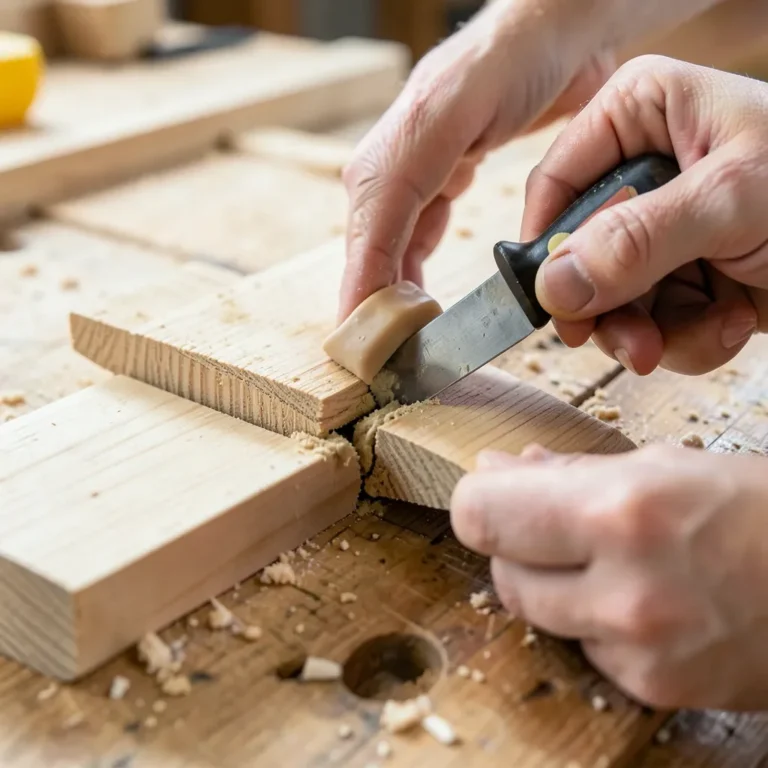
How Much Weight Can a Wooden Dowel Support? Load Limits Revealed
A wooden dowel’s real-world capacity depends far more on how it’s loaded than on a single number. As a vertical support in compression (a shelf pin, a table leg), a 3/8″-1/2″ hardwood dowel routinely holds 100+ pounds. As a horizontal, unsupported span carrying weight in the middle (a closet rod, a towel bar), that same dowel can sag or snap under 15-40 pounds, because bending a round wood section is a completely different — and much weaker — kind of stress than compressing it end-on.
Wooden dowels are versatile, but “how much weight can it hold” only has a useful answer once you know which of those two loading types applies. Wood species (oak and maple outperform pine and poplar), diameter, and unsupported length (span) are the three variables that actually move the number.
Proper installation technique matters too — a dowel glued into a snug, flat-bottomed hole shares load with the surrounding joint, while a loose or angled hole concentrates stress right where the dowel is weakest. Knowing the difference helps you avoid a failed shelf, a broken rod, or a wobbly joint down the line.
Introduction To Wooden Dowels
Best Dowel Rod Pick
Cindoco Oak Dowel Rod 3/4″ x 36″ – $6.49
A single 3/4-inch oak dowel like this is the exact size used in the compression-load examples above – plenty strong as a shelf pin or leg.
- Best for: Shelf pins, table/chair legs, and other compression-loaded uses
- Why we picked it: Solid oak matches the high-strength species this guide recommends for structural loads
- Main drawback: Sold as a single rod, so buy multiples for a full project
Compare more dowel rod options
 Option 1 Hardwood Dowel Pins 3/8″ x 1-1/2″ (100-Pack) – $7.79
|
 Option 2 ALBO Fluted Wood Dowel Pin Kit (1/4″-1/2″, 100-Pack) – $9.99
|
 Option 3 5/8″ x 36″ Oak Dowels (Set of 15) – $72.50
|
As an Amazon Associate we earn from qualifying purchases.
Wooden dowels are cylindrical wood rods used to join, support, or reinforce other pieces of wood. They’re a staple in furniture making, cabinetry, and shelving because a well-fitted dowel joint spreads load across a wide glue surface instead of relying on a single screw or nail.
Common dowel woods include oak, maple, birch, and pine. Each has a different strength-to-weight ratio. Oak and maple dowels resist bending and shearing better and are the standard choice for structural uses like shelf pins and chair stretchers. Pine and poplar dowels are lighter and easier to cut or bend, which is why they show up more in crafts and lower-load trim work.
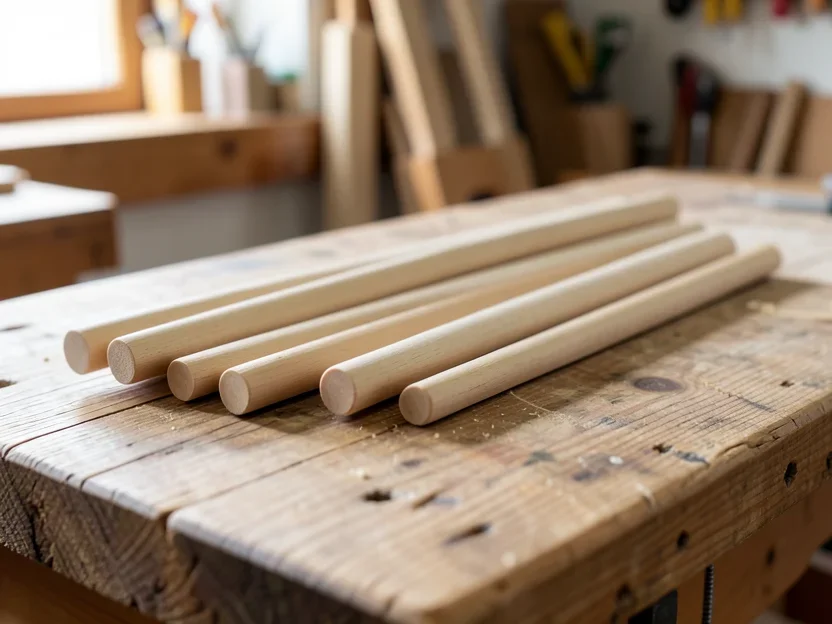
Factors Influencing Dowel Load Capacity
Wood species plays the biggest role in a dowel’s strength. Hardwoods like oak and maple have a higher modulus of rupture (the engineering measure of bending strength) than softwoods like pine, so they hold more weight at the same size.
Diameter and span (the unsupported length between supports) matter just as much as species. Bending strength increases roughly with the cube of the diameter, so going from a 3/8″ dowel to a 3/4″ dowel — double the diameter — can multiply bending capacity by roughly 6-8x, not just double it. Span works the opposite way: doubling the unsupported length cuts a dowel’s safe load to roughly a quarter of what it could carry at half that span.
| Wood Species | Relative Bending Strength | Typical Use |
|---|---|---|
| Oak | High | Shelf pins, structural joints, furniture legs |
| Maple | High | Furniture joints, tool handles |
| Birch | Moderate-High | Cabinet joinery, general dowel pins |
| Pine / Poplar | Moderate | Crafts, light shelving, decorative trim |
Compression Vs. Bending: Why The Same Dowel Rates Differently
Most published “dowel weight limit” numbers don’t say which load type they’re describing, which is where a lot of confusion comes from. There are two very different jobs a dowel can do:
- Compression (end-on load): a dowel used as a vertical shelf pin or a table/chair leg is being squeezed along its length. Wood is strong this way — a 3/8″ oak dowel pin can support well over 100 lbs per pin in this orientation, which is why 4-6 shelf pins on standard shelving can carry a genuinely heavy load.
- Bending (a load applied mid-span): a dowel used as a closet rod, a towel bar, or any horizontal piece that isn’t supported along its full length has to resist bending. This is the weak axis for round wood sections — the same 3/8″ oak dowel that easily holds 100+ lbs as a shelf pin might only handle 10-20 lbs before visibly sagging if it’s spanning 30+ unsupported inches with weight hung in the middle.
If you’re specifying a dowel for a project, the first question isn’t “what size dowel do I need” — it’s “is this dowel going to be compressed or bent.” That single distinction changes the safe number by a factor of 5-10x.
Load Limits Of Common Dowel Sizes
Small dowels (1/8″ to 1/4″ diameter) are best for light craft work and decorative joinery. Used as short shelf pins or joint reinforcement, they typically handle 10-30 lbs per pin; used as an unsupported span, their bending capacity drops well below that.
Large dowels (1/2″ to 1″ diameter) are the structural choice. As shelf pins or short structural elements, they can support 100+ lbs each; as long unsupported spans, plan for a fraction of that and add a mid-span support if the load is meaningful.
| Dowel Size | As a Shelf Pin / Compression | As an Unsupported 24″+ Span |
|---|---|---|
| Small (1/8″ – 1/4″) | 10 – 30 lbs | Under 10 lbs |
| Medium (3/8″ – 1/2″) | 40 – 100 lbs | 10 – 25 lbs |
| Large (5/8″ – 1″) | 100+ lbs | 25 – 50 lbs |
These are practical planning ranges for straight-grained hardwood dowels in good condition — not a substitute for testing your actual setup, since knots, grain runout, and moisture content all shift the real number.
Impact Of Environmental Conditions
Wooden dowels respond to moisture and temperature the same way any solid wood does. High humidity causes swelling, which can actually tighten a snug joint short-term but weakens the wood’s fiber strength over time. Low humidity causes shrinkage, which loosens joints and creates gaps that concentrate stress on a smaller contact area than the joint was designed for.
Extreme heat can dry wood out and make it brittle; sustained cold doesn’t weaken wood directly but can make it more prone to splitting under sudden load. Repeated humidity swings — wet in summer, dry in winter — are harder on a dowel joint than either extreme held steady, since the wood is constantly expanding and contracting.
A light coat of sealant or finish and storing dowels away from direct sun or damp basements/garages goes a long way toward keeping the rated capacity you’re expecting.
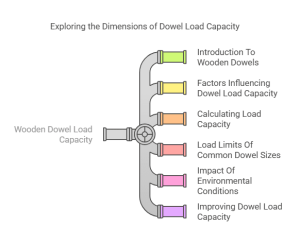
Improving Dowel Load Capacity
A few practical steps genuinely increase what a dowel can carry. Using a properly fitted, glued joint (not just a friction fit) lets the surrounding wood share load with the dowel instead of the dowel taking it alone. A quality wood glue like Titebond III in a snug, flat-bottomed hole can meaningfully outperform the dowel’s bare strength rating.
Coatings like epoxy or polyurethane protect against moisture swings, which indirectly protects strength by preventing the swell/shrink cycle described above. They don’t add bending strength on their own, but they preserve the strength the wood already has.
| Approach | Effect on Capacity |
|---|---|
| Bare, unglued dowel | Baseline — full stress on the dowel alone |
| Glued, snug-fit joint | Meaningful increase — load shared with surrounding wood |
| Added mid-span support | Largest increase for horizontal spans — can multiply safe bending load several times over |
If I were sizing a dowel for anything load-bearing, I’d size up one increment past the published minimum and add a mid-span support wherever the span exceeds about 24 inches — the cost of a slightly thicker dowel or one extra bracket is trivial next to a failed shelf.
Testing Your Own Setup
Published ranges are a planning tool, not a guarantee — the fastest way to know a specific dowel’s real capacity is to test it before it’s load-bearing in your project. Clamp or brace the dowel in the same orientation it’ll actually be used, then load it gradually (a bucket you can fill with sand or water works well) until you see any flex, creak, or give, and stop well below that point.
For anything genuinely structural — a bed slat support, a heavy shelf, a load-bearing joint — treat the numbers in this guide as a starting point for choosing size and species, then verify with your specific wood, joint, and span before trusting it with real weight.
Real-world Sizing Examples
Wooden dowels show up constantly in furniture making and shelving, and the sizing logic is consistent: match diameter and species to whether the load is compression or bending, and keep spans short.
A 1-inch oak dowel used as a pair of shelf-pin supports comfortably carries a shelf loaded with books (40-60 lbs total is routine). A 3/4-inch dowel spanning 30+ inches as a closet rod, by contrast, is being bent under the weight of hanging clothes — which is why closet rods that size are usually specified with a center support bracket rather than left to span the full width unsupported.
| Use Case | Dowel Size | Loading Type | Practical Guidance |
|---|---|---|---|
| Bookshelf pins | 3/8″ – 1/2″ oak | Compression | Fine unsupported; use 4+ pins per shelf |
| Closet rod | 3/4″ – 1″ | Bending | Add a center support past ~32″ span |
| Chair/table joinery | 3/8″ oak, glued | Mixed (shear + compression) | Glue quality matters as much as dowel size |

Frequently Asked Questions
How Much Weight Can A Wooden Dowel Hold?
It depends on how the dowel is loaded. As a vertical shelf pin (compression), a standard 3/8″-1/2″ hardwood dowel typically holds 40-100+ lbs. As an unsupported horizontal span carrying weight in the middle (bending), the same dowel might only handle 10-25 lbs. Diameter, wood species, and span length are the three factors that decide the real number.
What Factors Affect Dowel Weight Capacity?
The dowel’s diameter, wood species, and unsupported span length are the biggest factors. Diameter matters most — bending strength scales roughly with diameter cubed, so a slightly thicker dowel adds far more strength than its size increase suggests. How evenly a load is applied, and whether the dowel is glued into a snug joint versus loosely fit, also change the real-world capacity.
Can I Use Dowels For Heavy-duty Projects?
Yes, if you size and orient them correctly. Use larger-diameter hardwood dowels (oak or maple), keep any load in compression rather than an unsupported bending span where possible, and glue joints properly rather than relying on a friction fit. For long spans under real weight, add a mid-span support instead of trusting the dowel alone.
Are All Wooden Dowels The Same Strength?
No. Oak and maple dowels resist bending and shearing significantly better than pine or poplar dowels of the same size, because hardwoods have a higher modulus of rupture. Diameter and grain quality (no knots or runout) matter just as much as species — always check what wood a dowel is made from before using it somewhere load-bearing.
Conclusion
A wooden dowel’s weight capacity isn’t one number — it’s a combination of species, diameter, span, and whether the load compresses or bends the wood. Size up for hardwood over softwood, keep bending spans short, glue joints properly, and test your specific setup before trusting it with real weight. Get those right and even a modest dowel will comfortably outperform the vague “20-50 lbs” estimates you’ll find elsewhere.
Sponsored / affiliate links. As an Amazon Associate I earn from qualifying purchases. I may earn additional commission from eligible campaigns.