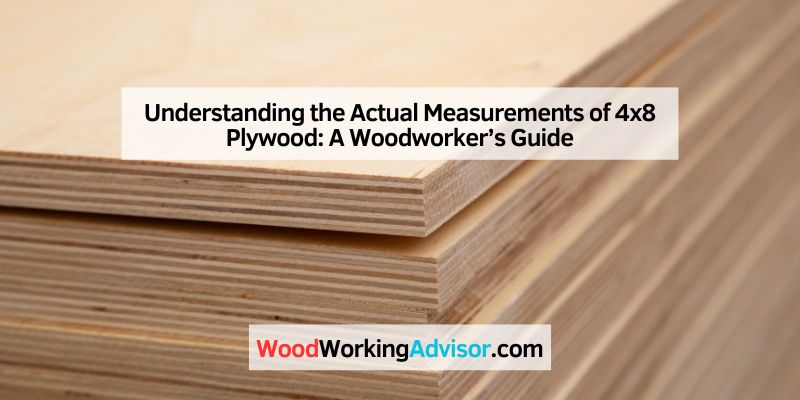
Understanding the Actual Measurements of 4×8 Plywood: A Woodworker’s Guide
Hey there, fellow woodworker! If you’ve ever walked into a lumberyard or home improvement store to pick up a 4×8 sheet of plywood, you might’ve noticed something puzzling. The label says “4×8,” but when you measure it, the dimensions don’t quite what you expected. I’ve been there, scratching my head, double-checking my tape measure, wondering if I missed something. That’s why I’m excited to dive deep into the topic of the actual measurements of 4×8 plywood with you today. Whether you’re a beginner tackling your first project or a seasoned pro, understanding plywood sizing is key to making your projects turn out just right. Let’s break it down together, step by step, so you can avoid costly mistakes and work with confidence.
In this guide, I’ll share everything I’ve learned from years of woodworking, from why plywood sizes differ from their labeled dimensions to how you can plan your projects around these quirks. By the end, you’ll know exactly what to expect when you buy a 4×8 sheet and how to make it work for your next build. So, grab a cup of coffee, and let’s get started!
What Does “4×8 Plywood” Really Mean?
When you hear “4×8 plywood,” it sounds straightforward, right? Four feet by eight feet. But here’s the thing: that’s what we call the nominal size. It’s the name we use in the store, but it’s not the actual size of the sheet. I learned this the hard way early in my woodworking journey when I cut pieces assuming a perfect 48×96 inches and ended up with gaps in my project.
The nominal size is like a nickname for plywood. It’s a standard way to describe sheets so everyone knows what you’re talking about. But the actual measurements are slightly smaller. For most 4×8 plywood sheets, the real dimensions are closer to 47-7/8 inches by 95-7/8 inches. That’s about 1/8 inch less on each side. It might not sound like much, but trust me, those fractions add up when you’re building something precise, like cabinets or furniture.
Why does this happen? It’s all about how plywood is made and sold. Manufacturers shave off a tiny bit during the cutting and sanding process to ensure the edges are smooth and the sheets are consistent. Plus, it allows for easier handling and stacking. Knowing this upfront saves you from surprises when you’re measuring and cutting.
Why Are Actual Measurements Different From Nominal Sizes?
Now, you might be wondering, “Why can’t they just make the plywood exactly 4×8?” I used to ask the same thing. The answer lies in how plywood is produced and the standards set by the industry. Let’s break it down.
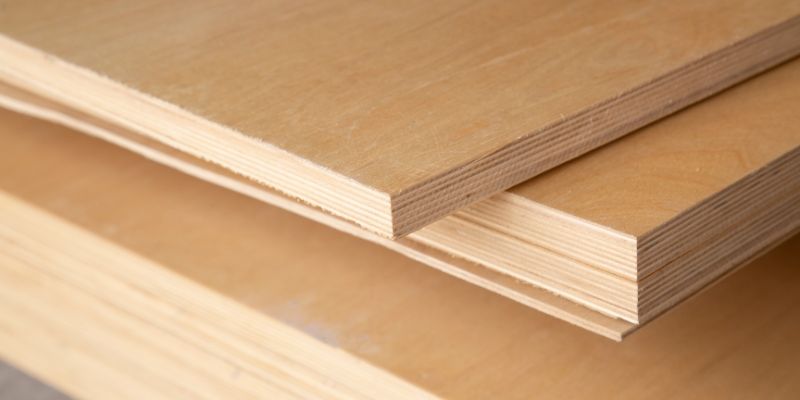
Plywood starts as thin layers of wood, called veneers, glued together. These layers are pressed and cut into large sheets. During this process, the edges get trimmed to remove imperfections and ensure the sheet is square. That trimming takes off a small amount of material—usually about 1/8 inch on each side. On top of that, plywood is often sanded to create a smooth surface, which removes a tiny bit more.
Another reason is practicality. Slightly smaller sheets are easier to transport and store. They also leave room for expansion and contraction due to humidity, which is a big deal if you’re working in a place with changing weather, like most of the USA. Industry standards, set by groups like the American Plywood Association, allow for these undersized dimensions to keep things consistent across brands.
Here’s a quick table to show you the difference:
| Nominal Size | Actual Size (Typical) | Difference |
|---|---|---|
| 4×8 feet | 47-7/8 x 95-7/8 inches | 1/8 inch per side |
This table has saved me so many headaches. Keep it in mind when planning your cuts, and you’ll avoid those “where did I go wrong?” moments.
Types of Plywood and Their Impact on Measurements
Not all plywood is created equal. I’ve worked with everything from cheap construction-grade plywood to high-end hardwood plywood, and let me tell you, the type of plywood can affect its actual measurements. Here’s what you need to know.
Construction-Grade Plywood
This is the stuff you’ll find at most big-box stores, like Home Depot or Lowe’s. It’s often made from softwoods like pine or fir and used for things like subflooring or sheathing. Construction-grade plywood, like CDX, tends to stick closely to the standard actual size of 47-7/8 x 95-7/8 inches. But here’s a tip: always measure each sheet yourself. I’ve seen some sheets vary by an extra 1/16 inch due to manufacturing differences.
Hardwood Plywood
If you’re building furniture, you might splurge on hardwood plywood, like oak or birch. These sheets are often used for cabinets or tabletops, so precision matters. Hardwood plywood is usually more consistent in size than construction-grade, but it can still be 1/8 inch undersized. Some specialty suppliers might even offer “oversized” sheets that are closer to a true 48×96 inches, but they’re rare and pricey.
Baltic Birch Plywood
Baltic birch is a favorite among woodworkers like me for its strength and clean layers. It’s often sold in metric sizes, like 5×5 feet (1524×1524 mm), but you can find 4×8 sheets too. The catch? Baltic birch is sometimes cut to metric equivalents, so a “4×8” sheet might be slightly different—closer to 1220×2440 mm (about 48×96 inches). Always check with your supplier to confirm the exact size.
No matter the type, my advice is simple: measure every sheet before you cut. It takes an extra minute but saves you from frustration later.
How to Measure Plywood Accurately
Okay, let’s talk about measuring. I can’t tell you how many times I’ve seen folks (including myself!) mess up a project because they didn’t measure properly. Here’s how I do it to make sure I’m working with the actual dimensions of my 4×8 plywood.
First, grab a reliable tape measure. I use a 25-foot Stanley tape because it’s sturdy and easy to read. Lay the plywood flat on a stable surface, like sawhorses or a workbench. Start at one corner and measure the length (the 8-foot side) and width (the 4-foot side). Write down the numbers to the nearest 1/16 inch. I like to measure both ends of each side to check if the sheet is square. If it’s off by more than 1/8 inch, you might need to trim it yourself.
Pro tip: mark the actual measurements on the sheet with a pencil. That way, you won’t forget them when you’re deep into your project. And if you’re buying multiple sheets, measure each one. I’ve had batches where one sheet was slightly different from the rest, and it threw off my cuts.
Planning Your Project Around Actual Plywood Sizes
Now that you know the actual measurements, let’s talk about how to use them in your projects. This is where the rubber meets the road, and a little planning goes a long way.
When I design a project, I always start with the actual size of the plywood—47-7/8 x 95-7/8 inches for a standard 4×8 sheet. If I’m building something like a bookshelf, I’ll account for that 1/8-inch difference in my cut list. For example, if I need a 48-inch-wide panel, I’ll know I need to use a different sheet or adjust my design slightly.
Another trick is to optimize your cuts. Plywood is expensive, so I use a cut planner (there are free ones online) to map out how I’ll break down the sheet. This helps me minimize waste and avoid running short. If you’re cutting multiple pieces, group them to account for the saw kerf—the width of the blade that eats away material. My table saw blade takes about 1/8 inch per cut, so I add that into my calculations.
Finally, think about edge banding or trim. If you’re covering the edges of your plywood with veneer or solid wood, that 1/8-inch undersize won’t matter as much. But if you’re leaving the edges exposed, you’ll need to be extra precise.
Common Mistakes to Avoid
I’ve made my fair share of mistakes with plywood, and I want to help you skip them. Here are the big ones to watch out for:
- Assuming a Perfect 4×8 Size: Always measure your sheets. Don’t trust the label.
- Not Checking for Square: Some sheets aren’t perfectly square. Use a framing square to check before cutting.
- Ignoring Saw Kerf: Your saw blade removes material with every cut. Account for it in your plans.
- Skipping a Test Cut: If you’re new to a saw or plywood type, make a practice cut to see how it behaves.
- Forgetting Humidity: Plywood can swell or shrink slightly with moisture. Store it in a dry place and let it acclimate to your workshop before cutting.
These lessons came from trial and error, but now they’re second nature. Keep them in mind, and your projects will go a lot smoother.
Where to Buy 4×8 Plywood and What to Look For
Finding good plywood is half the battle. I’ve shopped everywhere from local lumberyards to big-box stores, and here’s what I’ve learned about buying 4×8 sheets.
Big-box stores like Home Depot or Lowe’s are convenient and usually stock construction-grade and some hardwood plywood. They’re great for beginners or budget projects, but the quality can vary. Check each sheet for warping, dents, or rough surfaces before you buy. Also, ask about their cutting services—some stores will make rough cuts for free, which can save you time.
For higher-quality plywood, like Baltic birch or cabinet-grade hardwood, try a specialty lumberyard. These places often have better selection and straighter sheets, but they’re pricier. Call ahead to confirm they carry 4×8 sheets and ask about the actual dimensions. Some yards even sell “project panels” in smaller sizes if you don’t need a full sheet.
Online retailers are another option, but shipping costs can add up. If you go this route, read reviews and check the return policy in case the plywood arrives damaged.
No matter where you buy, inspect the sheets carefully. Look for flatness, smooth surfaces, and consistent thickness. And always measure the dimensions yourself before you start cutting.
Tips for Working With 4×8 Plywood
Handling a big 4×8 sheet can feel like wrestling a giant. Here are some tricks I’ve picked up to make it easier:
- Get Help or Use Supports: These sheets are heavy. Ask a friend to help you carry them, or use sawhorses to support them while cutting.
- Break It Down Early: If you don’t need the full sheet, cut it into smaller pieces right away. It’s easier to handle 2×4 sections than a whole 4×8.
- Use a Foam Board for Cutting: Lay a sheet of foam insulation on the ground and set your plywood on top. It’s a cheap way to support the sheet and prevent tear-out when cutting with a circular saw.
- Invest in a Track Saw: If you work with plywood a lot, a track saw makes straight, clean cuts a breeze. It’s a game-changer for big sheets.
- Store It Flat: Stack plywood flat in a dry place to prevent warping. I use stickers (small wood strips) between sheets to let air circulate.
These tips have saved me time, money, and a few sore muscles over the years. Try them out, and you’ll see the difference.
Conclusion
Well, we’ve covered a lot of ground, haven’t we? From the surprising truth about the actual measurements of 4×8 plywood to practical tips for measuring, cutting, and planning, I hope you feel ready to tackle your next woodworking project with confidence. Knowing that a “4×8” sheet is really 47-7/8 x 95-7/8 inches might seem like a small detail, but it’s the kind of knowledge that separates a good project from a great one.
I’ve learned these lessons through years of trial and error, and I’m thrilled to share them with you. Whether you’re building a simple shelf or a custom kitchen cabinet, taking the time to understand plywood sizes will save you headaches and make your work shine. So, next time you’re at the lumberyard, grab that tape measure, double-check those dimensions, and build something you’re proud of.
Got more questions about plywood or woodworking? Drop them in the comments or reach out—I’d love to chat more about our shared passion for creating with wood. Now, go make some sawdust!
Frequently Asked Questions About 4×8 Plywood Measurements
Why is 4×8 plywood not exactly 4×8?
The “4×8” label is the nominal size, but the actual size is smaller—usually 47-7/8 x 95-7/8 inches. This happens because manufacturers trim and sand the edges during production to ensure smooth, square sheets. It’s an industry standard, so always measure your plywood before cutting.
Does the thickness of 4×8 plywood affect its length and width?
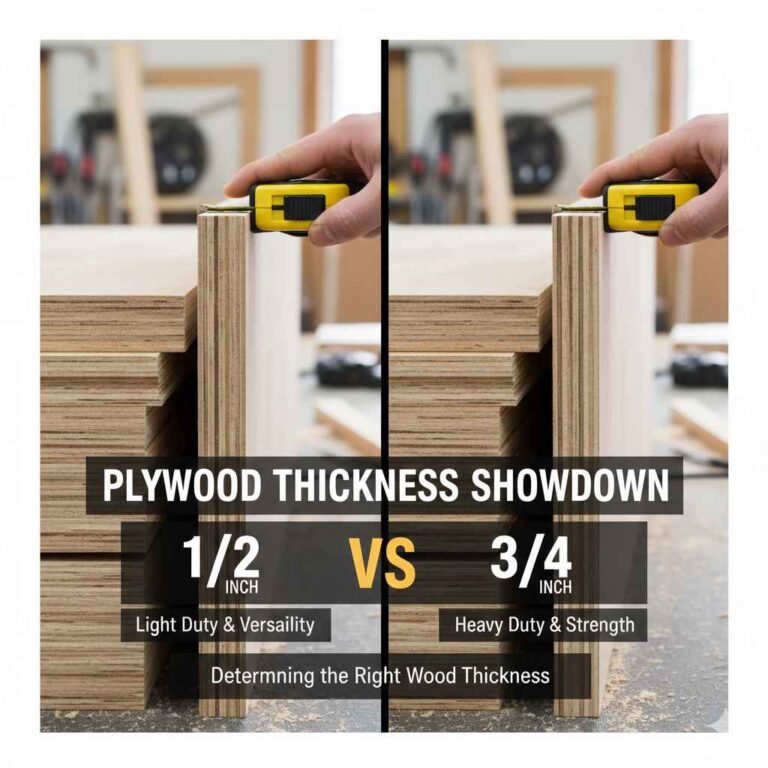
No, the thickness (like 1/2 inch or 3/4 inch) doesn’t change the length or width. A 4×8 sheet will still be about 47-7/8 x 95-7/8 inches, regardless of thickness. However, thickness can vary slightly, so check that too if your project needs precision.
Can I get plywood that’s exactly 48×96 inches?
It’s rare, but some specialty suppliers offer “oversized” plywood closer to a true 48×96 inches. These are usually more expensive and harder to find. Call your local lumberyard to ask if they carry them, or stick with standard sheets and adjust your plans.
How do I account for the smaller size in my woodworking plans?
Start with the actual size (47-7/8 x 95-7/8 inches) when designing your project. Use a cut planner to optimize your cuts and account for the saw kerf. If you need a piece exactly 48 inches, you may need to use a different sheet or add edge banding to make up the difference.
Is Baltic birch plywood the same size as regular 4×8 plywood?
Not always. Baltic birch is sometimes cut to metric sizes, so a “4×8” sheet might be closer to 1220×2440 mm (about 48×96 inches). Check with your supplier to confirm the exact dimensions, and measure the sheet yourself before cutting.