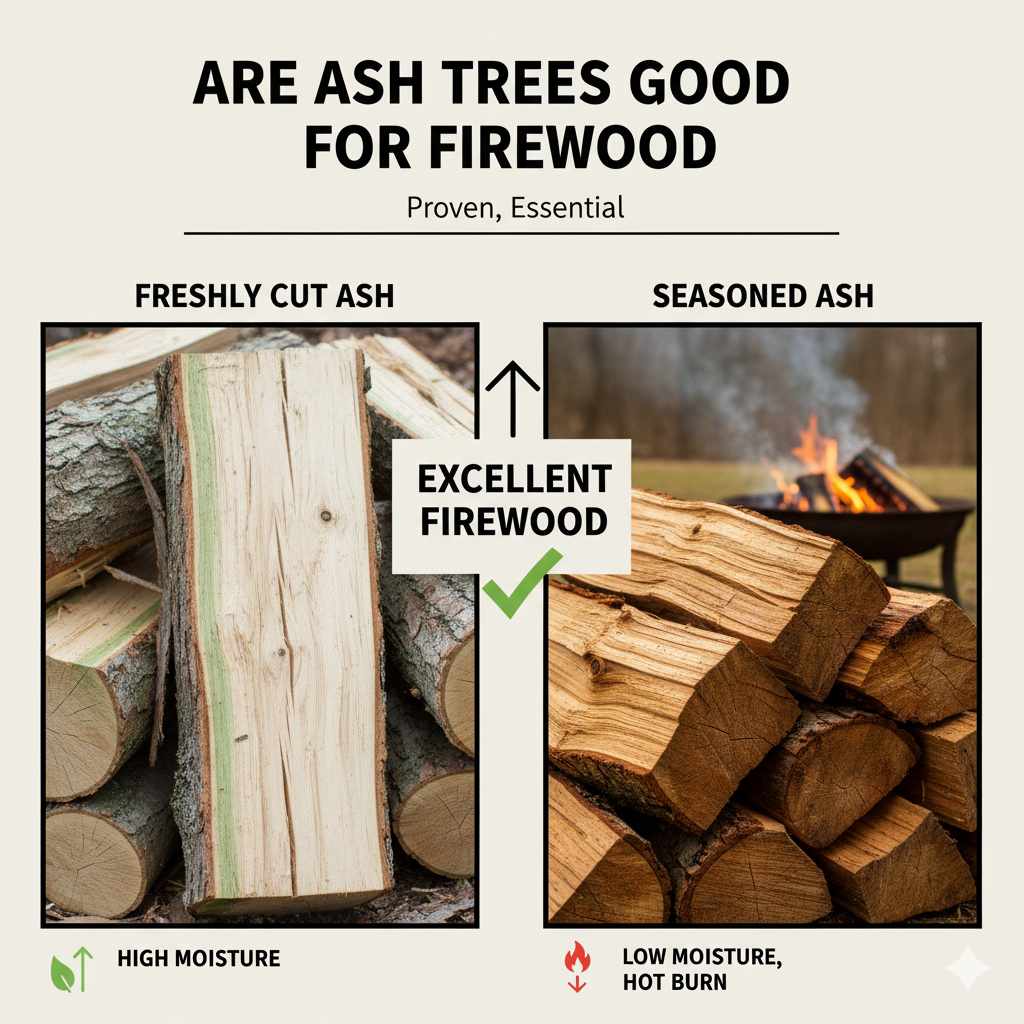
Are Ash Trees Good For Firewood: Proven, Essential
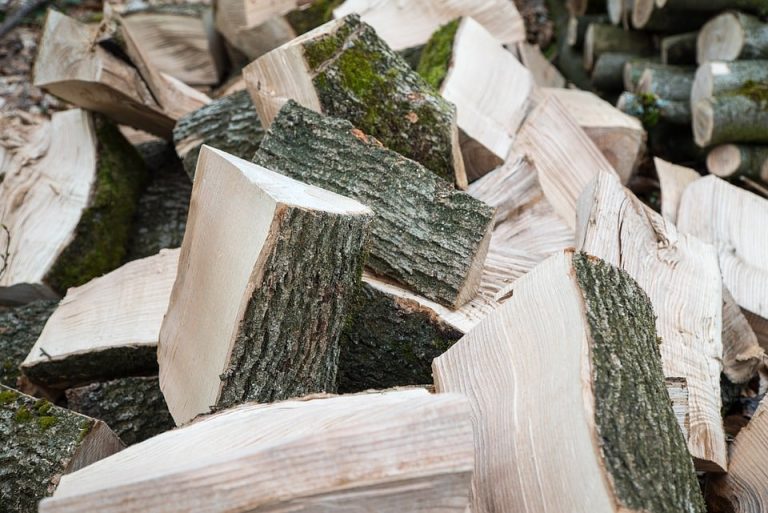
Yes, ash trees are among the best hardwoods for firewood, offering excellent burning properties like easy starting, good heat output, and predictable burning. They are a popular and reliable choice for both beginners and experienced woodworkers seeking quality firewood.
Welcome, fellow DIY enthusiasts and home comfort seekers! If you’re looking to fuel your fireplace or wood stove, you’ve likely wondered about different wood types. One name that often comes up is “ash.” But are ash trees really good for firewood? You might be frustrated by conflicting advice or unsure if you’re making the best choice for a warm, cozy home. Don’t worry, my friends! I’m here to break it down for you with tried-and-true advice. We’ll explore everything you need to know about using ash for firewood, making sure you get the most out of your fuel. Get ready to discover why ash is a fantastic option!
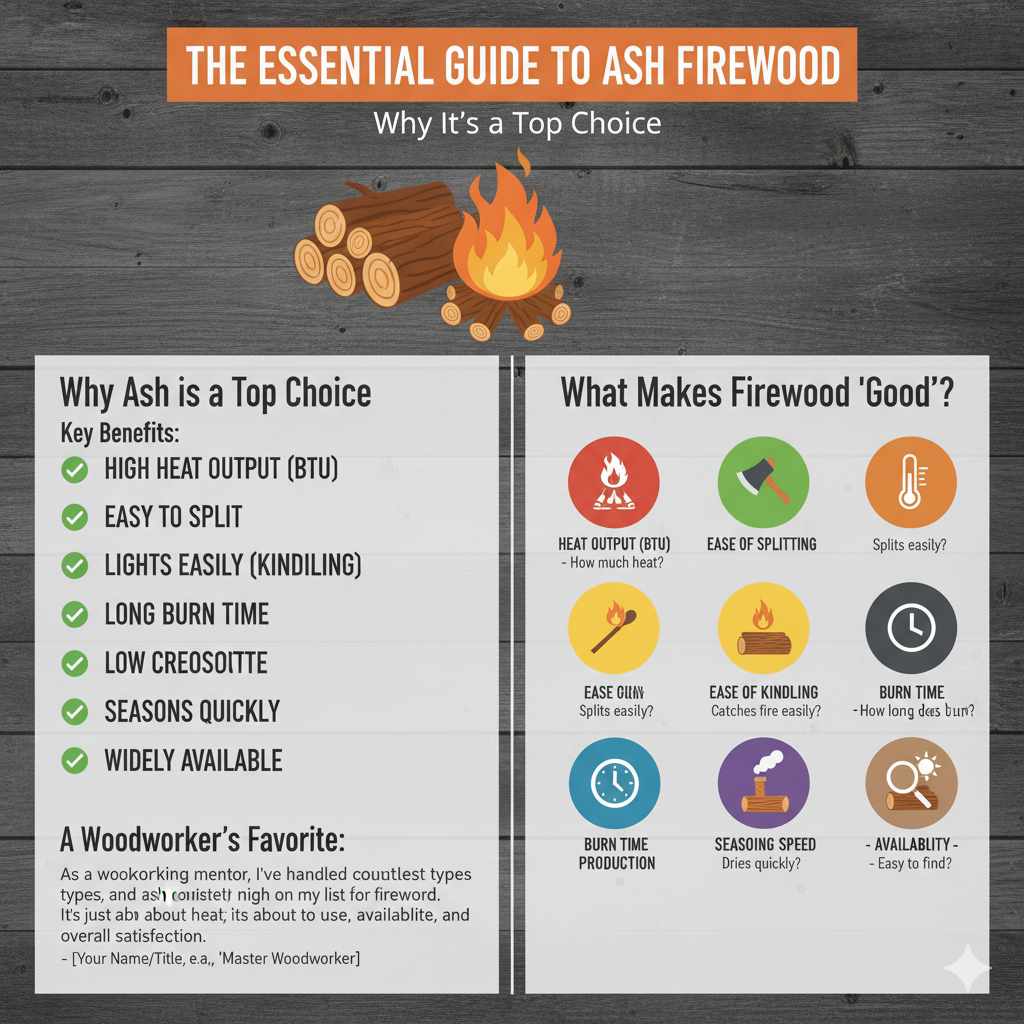
The Essential Guide to Ash Firewood: Why It’s a Top Choice
As a woodworking mentor, I’ve handled countless types of wood, and ash consistently ranks high on my list for firewood. It’s not just about heat; it’s about ease of use, availability, and overall satisfaction when you’re trying to heat your home or enjoy a roaring fire. Let’s dive into why ash wood is so highly regarded.
What Makes Firewood “Good”?
Before we get into ash specifically, let’s quickly cover what makes any firewood good. Homeowners and DIYers look for several key qualities:
Heat Output (BTU): How much heat does the wood produce? This is often measured in British Thermal Units (BTUs). Denser woods generally produce more heat.
Ease of Splitting: Can you split the logs easily with an axe or splitter? This is crucial for preparing your firewood.
Ease of Kindling: Does it catch fire easily? Good kindling makes starting your fire simple.
Burn Time: How long does a log burn? Longer burn times mean less frequent reloading.
Creosote Production: Does the wood produce a lot of creosote (a tar-like substance) that can build up in your chimney and potentially cause fires? Lower creosote is better.
Seasoning Speed: How quickly does the wood dry out (season) to be ready for burning?
Availability: Is the wood easy to find and procure in your area?
Ash wood scores well across most of these categories, making it a standout choice.
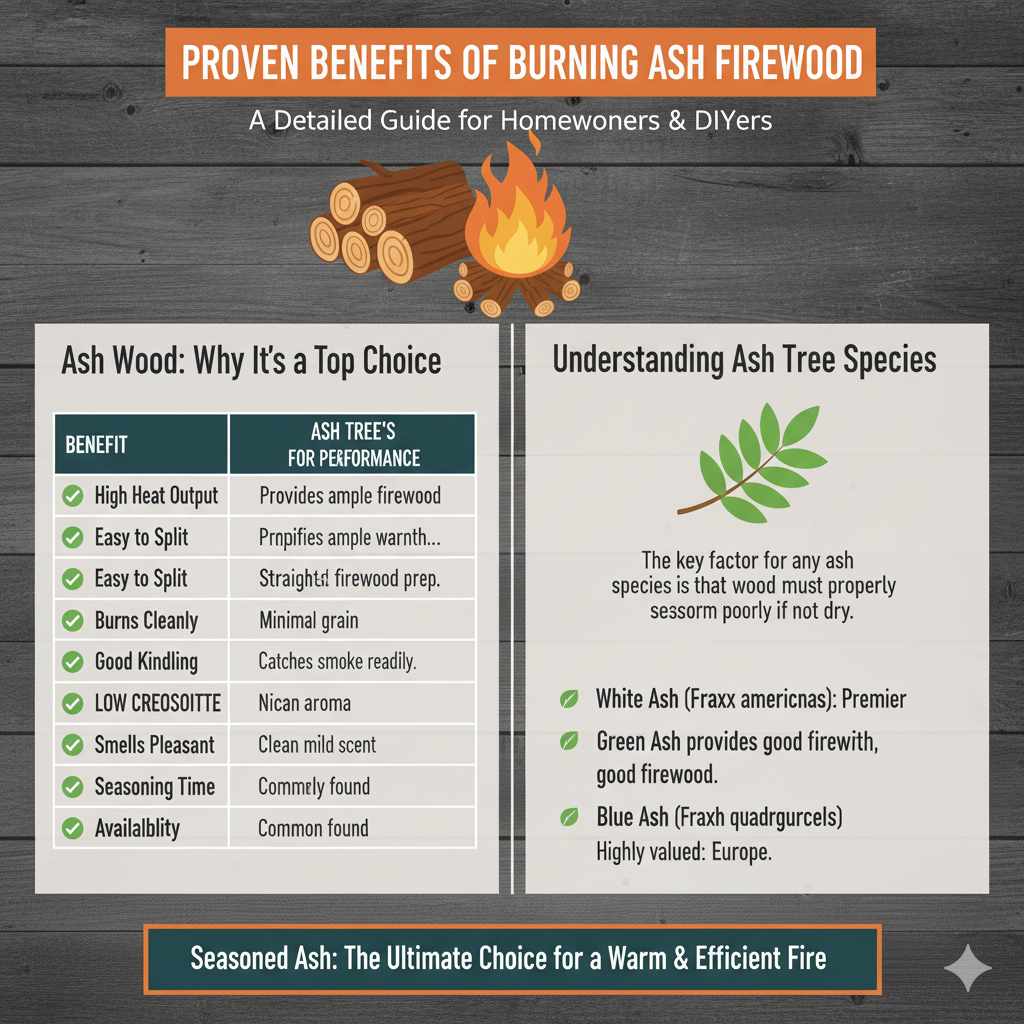
Proven Benefits of Burning Ash Firewood
Let’s explore the specific advantages that make ash trees such a beloved source of firewood in a table you can easily reference:
| Benefit | Why It Matters for Firewood | Ash Tree’s Performance |
|---|---|---|
| High Heat Output | Provides ample warmth for your home, reducing reliance on other heating sources. | Ash offers a strong BTU output, comparable to or better than many other popular hardwoods like oak. |
| Easy to Split | Simplifies the firewood preparation process, saving you time and effort. | Ash is known for its straight grain, making it relatively easy to split by hand or with a splitter. |
| Burns Cleanly | Produces less creosote buildup in chimneys, reducing fire hazards and maintenance. | Ash burns with minimal smoke and creosote when properly seasoned. |
| Good Kindling Properties | Helps fires start quickly and reliably. | Dry ash catches fire readily, making it easy to get your fire going. |
| Smells Pleasant | Adds a nice aroma to your home as it burns, unlike some woods that can have a pungent odor. | Ash provides a clean, mild scent when burning. |
| Seasoning Time | Faster seasoning means you can burn the wood sooner after cutting. | Ash seasons relatively quickly compared to some denser hardwoods. |
| Availability | Easier to source, whether you’re cutting your own or buying from a dealer. | Commonly found in many regions, which can make it more affordable. |
Understanding Ash Tree Species and Firewood Quality
There are several species of ash trees common in North America and Europe, and while most make good firewood, there can be slight variations. The most common types you’ll encounter for firewood include:
White Ash (Fraxinus americana): Often considered the premier ash for firewood due to its density and excellent burning characteristics.
Green Ash (Fraxinus pennsylvanica): Another very common and widespread species that provides good firewood.
Blue Ash (Fraxinus quadrangulata): Also burns well and is a suitable firewood source.
European Ash (Fraxinus excelsior): The primary ash species in Europe, it is highly valued for firewood.
The key factor for any ash species is that the wood must be properly seasoned. Even the best firewood can perform poorly if it’s too wet.
The Importance of Seasoning Your Ash Firewood
This is perhaps the most critical step when preparing any firewood, and ash is no exception. Seasoning is the process of drying wood so that its moisture content is reduced to around 20% or less. Burning unseasoned (green) wood is a common mistake that beginners make, leading to a host of problems.
Why Seasoning is Essential:
Heat Output: Wet wood smolders and produces very little heat. The energy the fire should use to warm your home is instead diverted to boiling off the water in the wood.
Smokiness: Green wood burns inefficiently, creating excessive smoke which is not only unpleasant but can also lead to a dirty chimney.
Creosote Buildup: The extra moisture and incomplete combustion from burning green wood are prime conditions for creosote accumulation. A chimney fire from creosote buildup is a serious danger.
Difficulty Starting Fires: Green wood is hard to ignite and keep burning.
How to Season Ash Firewood:
The process is straightforward. Once you have your ash logs split to your preferred size:
1. Stack It Properly: Stack the wood in a way that allows for good airflow. Don’t just pile it up. Use a simple wood rack, a pallet, or even old bricks to elevate the wood off the ground. This prevents ground moisture from re-entering the wood.
2. Allow Airflow: Stack the logs parallel to each other, ensuring there’s space between them for air to circulate freely. A common method is single-stacking, where logs are laid down one layer at a time.
3. Cover the Top: Protect the top of your wood stack from rain and snow. A simple tarp, piece of plywood, or dedicated wood shed roof works well. Importantly, ensure the sides are open to allow air to pass through.
4. Location Matters: Stack your wood in a sunny, breezy location if possible. This helps speed up the drying process.
5. Patience: Ash typically seasons in 6 to 12 months, depending on your climate, stacking method, and the time of year you cut it. You’ll know it’s ready when the ends of the logs look bleached and often show cracks (checking), the wood feels lighter, and it makes a clear “clack” sound when you hit two pieces together.
For more detailed guidance on wood seasoning, you can refer to resources from university extension offices, which often have excellent, science-backed information. For example, many state forestry departments offer guides on best practices for firewood.
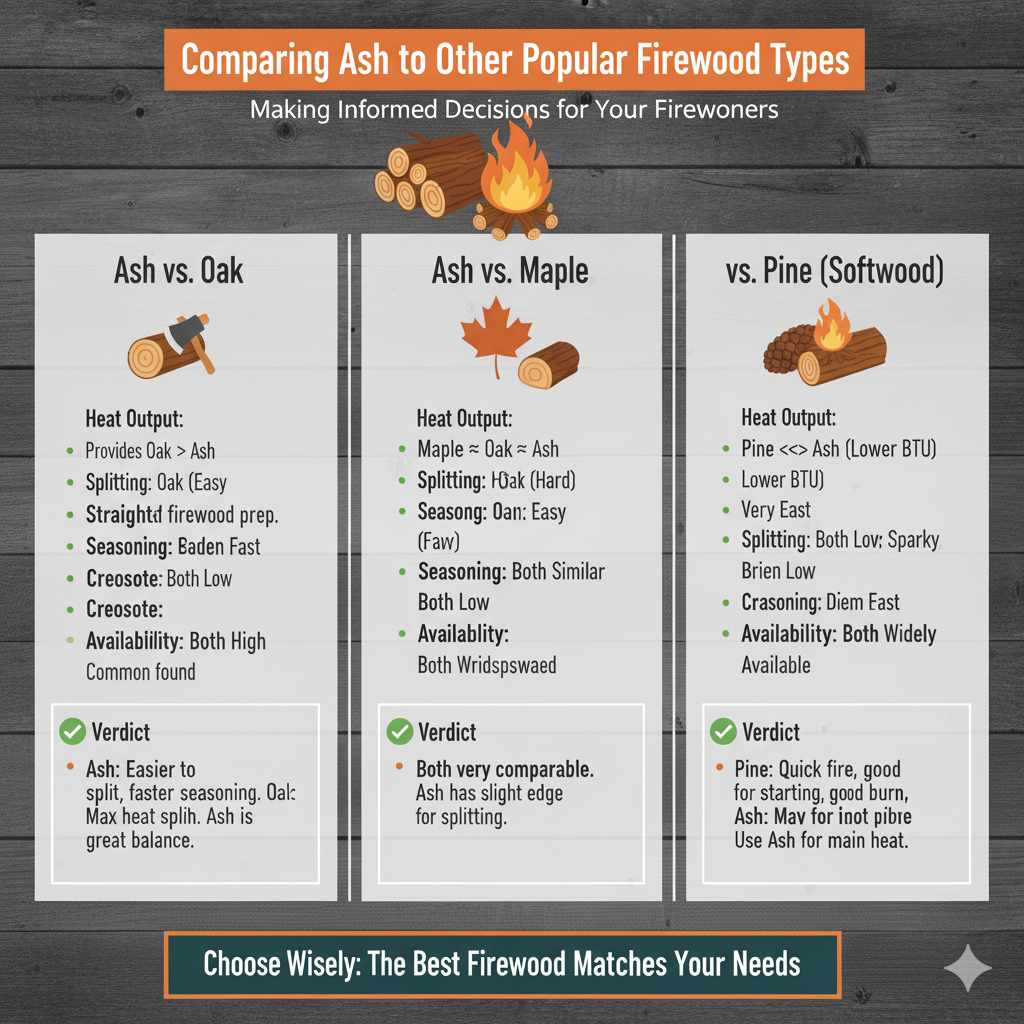
Comparing Ash to Other Popular Firewood Types
It’s always helpful to see how ash stacks up against other common firewood options. This helps you make informed decisions based on availability and your specific needs.
Ash vs. Oak:
Oak is a king of firewood for many, known for its dense wood and long, hot burn.
Heat Output: Oak generally has a slightly higher BTU output than ash due to its higher density.
Splitting: Oak can be notoriously difficult to split, especially when seasoned. Ash is significantly easier.
Seasoning: Oak can take longer to season than ash.
Creosote: Both burn relatively cleanly when seasoned.
Availability: Both are generally available, but local prevalence can vary.
The Verdict: If ease of splitting and faster seasoning are priorities, ash is often preferred. If maximum burn time and the highest possible BTU output are your absolute top goals, and you don’t mind the extra splitting effort, oak might slightly edge out ash. For many, ash offers the best balance.
Ash vs. Maple:
Maple, particularly hard maple, is another excellent firewood.
Heat Output: Hard maple rivals oak and ash in heat output. Soft maples will be slightly less.
Splitting: Hard maple can be tough to split, similar to oak. Ash is easier.
Seasoning: Maple seasons at a similar rate to ash.
Creosote: Both burn cleanly.
Availability: Both are generally widespread.
The Verdict: Very comparable to ash in many regards. Ash often has a slight edge in ease of splitting, making it more beginner-friendly.
Ash vs. Pine (Softwood):
Pine and other softwoods burn much faster and hotter, and are often called “quick fire” woods for starting fires.
Heat Output: Significantly lower BTU output than ash.
Splitting: Very easy to split.
Seasoning: Seasons very quickly.
Creosote: Can produce more creosote and spark more than hardwoods.
Availability: Widely available in many areas.
The Verdict: Softwoods like pine are excellent for starting fires but are not good for sustained, long burns compared to ash. You’ll use much more pine than ash to get the same amount of heat over time.
Preparing Ash for Your Fireplace: A Beginner’s Step-by-Step
As your woodworking mentor, my goal is to make this process as easy and safe as possible for you. Here’s a simple guide to preparing ash firewood.
Tools You’ll Need:
Safety Gear: This is non-negotiable! Always wear:
Safety glasses or goggles
Heavy-duty work gloves
Steel-toed boots
Hearing protection (if using a chainsaw or splitter)
Long pants and long-sleeved shirt
Axe or Splitting Maul: For splitting logs.
Saw: A chainsaw (for felling and bucking) or a hand saw (for smaller pieces), or a wood splitter if you have one.
Wheelbarrow or Cart: For moving logs.
Moisture Meter (Optional but Recommended): To check if your firewood is properly seasoned. You can find these online or at hardware stores.
The Process:
1. Source Your Ash: Obtain ash logs. This could be from a tree you’ve had to remove (check local regulations for cutting trees), or by purchasing logs from a reputable firewood dealer. If felling a tree yourself, ensure you know how to do so safely or hire a professional.
2. Cut to Length (Bucking): Use your saw to cut the logs into lengths suitable for your fireplace or stove. Standard lengths are usually 16 inches for stoves and 12-16 inches for fireplaces.
3. Split the Logs: This is where you turn large rounds into manageable pieces.
Safety First: Ensure you have a stable, clear area. Place the log round on a solid base, like another log or a chopping block.
Technique: For a splitting maul, aim for the middle of the log. Use your body weight and momentum. If the wood has a tight grain, try splitting from the edge towards the center, or look for knots or imperfections to aim for. Straight-grained ash should split reasonably well.
Size: Split logs into pieces that will fit easily into your fireplace or stove, typically 3-6 inches in diameter. Smaller pieces burn faster and help with starting fires, while larger pieces provide longer burns.
4. Stack for Seasoning: Follow the stacking guidelines described in the “Importance of Seasoning” section. Good airflow is key.
5. Wait and Test: Allow at least 6-12 months for seasoning. Use a moisture meter (aiming for <20%) or listen for the dry “clack” sound when you knock two pieces together.
Safety is Always First!
Wood preparation can be physically demanding and potentially dangerous. Always prioritize safety. If you’re unsure about using an axe, chainsaw, or splitter, seek guidance from experienced individuals or experienced DIYers. Resources like OSHA (Occupational Safety and Health Administration) provide excellent safety guidelines for working with tools and power equipment.
Common Challenges with Ash Firewood (And How to Overcome Them)
While ash is excellent firewood, no natural product is perfect. Understanding potential issues helps you prepare.
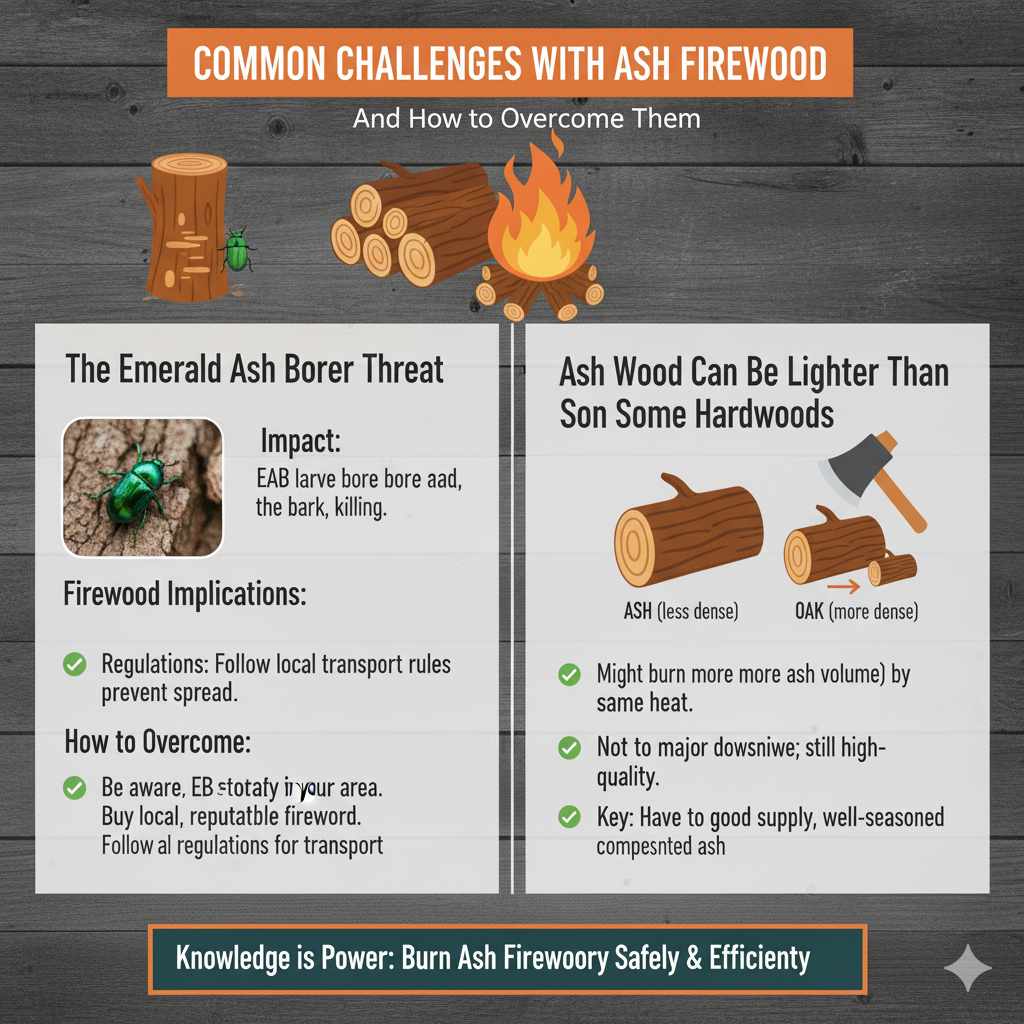
The Emerald Ash Borer Threat
A significant challenge facing ash trees is the Emerald Ash Borer (EAB). This invasive insect has devastated ash populations across North America.
Impact: EAB larvae bore into the bark, disrupting the tree’s ability to transport water and nutrients, eventually killing it.
Firewood Implications:
Availability: In infested areas, ash trees may be dying or already dead, potentially making them more available. However, responsible removal and use are crucial.
Regulations: In some regions, there are regulations about transporting firewood to prevent the spread of EAB. Always check local and state regulations before moving firewood. Generally, burning firewood locally where it was sourced is the safest practice.
Dead vs. Green Ash: While dead ash trees harvested from infested areas can still make good firewood (provided they are seasoned), living trees that appear stressed or unhealthy should be evaluated carefully.
How to Overcome: Be aware of EAB in your area. Purchase firewood from local, reputable dealers. If you’re harvesting your own, follow all local regulations regarding transport.
Ash Wood Can Be Lighter Than Some Hardwoods
While ash is a hardwood and puts out good heat, it’s generally not as dense as oak or hickory.
Impact: This means you might burn slightly more ash wood (by volume) to get the same amount of heat as you would from an equivalent volume of denser woods.
How to Overcome: This isn’t a major downside for most people, as ash is still a high-quality firewood. The ease of splitting and faster seasoning often make up for this slight difference in density. The key is to have a good supply of well-seasoned ash.
Frequently Asked Questions About Ash Firewood
Here are some common questions beginners have about using ash for firewood:Is ash firewood difficult to split?
No, ash is generally considered one of the easier hardwoods to split. Its straight grain means it usually splits cleanly and with less effort than woods like oak or hickory. This is a big advantage for those preparing their own firewood.How long does ash firewood take to season?
Properly seasoned ash typically takes about 6 to 12 months to dry. This can vary based on your climate, stacking methods, and the time of year the wood was cut. Ensuring good airflow and protection from the elements speeds up the process.What is the heat output of ash wood compared to other firewood?
Ash has a good to excellent heat output, often measured in BTUs. It’s comparable to maple and slightly less dense than oak, but still provides a very warm, satisfying burn. You can expect strong heat from well-seasoned ash.Does ash wood produce a lot of creosote?
When properly seasoned (moisture content below 20%), ash produces relatively little creosote. This is one of its major advantages, leading to safer chimney conditions and less frequent cleaning.Can I burn ash that has been affected by the Emerald Ash Borer?
Yes, provided the wood is properly seasoned and you adhere to local regulations. EAB-infested ash can still make excellent firewood. However, always check and follow any local or state quarantines regarding the movement of firewood to prevent further spread of the borer pest.What are the downsides of burning ash firewood?
The main potential downside is its susceptibility to and potential damage from the Emerald Ash Borer, which can affect availability and introduce transport regulations in some areas. While it has good heat output, it’s not as dense as some of the very hardest woods, meaning you might burn slightly more volume for the same heat.Are there any specific safety concerns when handling ash firewood?
Beyond the general safety precautions for handling any firewood (gloves, eye protection, proper lifting techniques), there are no unique safety hazards associated with ash itself. Always ensure you have the right safety gear for cutting, splitting, and stacking.
Conclusion: Make Ash Your Go-To Firewood
So, are ash trees good for firewood? Absolutely! They are a fantastic, reliable, and beginner-friendly hardwood that consistently delivers on heat, ease of use, and clean burning. From its satisfying crackle to its dependable warmth, ash wood is a cornerstone of cozy homes for good reason.