How to Cross Cut Wood With a Hand Saw (TPI Chart + Fixes)
A crosscut hand saw cuts wood perpendicular to the grain using angled, knife-like teeth (8-15 TPI) that slice fibers instead of chiseling them — unlike a rip saw’s chisel-edge teeth, which only cut efficiently with the grain. Using the wrong saw on the wrong cut is the #1 cause of splintering and wandering blades. This guide covers the correct sawing technique, how to pick the right TPI for your wood, and how to fix a saw that binds or drifts off the line.
Quick Answer
Mark your line with a square, start the kerf on the waste side with the saw at a low angle, then lengthen your strokes and let the teeth do the work — light pressure on the push, none on the pull. Most crosscut saws run 8-12 TPI; finer teeth (12-15 TPI) leave a cleaner edge in hardwood and plywood, coarser teeth (7-9 TPI) cut faster in softwood and framing lumber.
Tools and Materials You’ll Need
Best Crosscut Hand Saw Pick
HAUTMEC X-Sharp 14″ Pro Crosscut Hand Saw, 12 TPI
A dedicated 12 TPI crosscut blade with triple-ground teeth — the middle-ground tooth count that handles both trim work and general framing cuts.
- Best for: general-purpose crosscutting on boards, trim, and plywood
- Why we picked it: 12 TPI splits the difference between fine finish cuts and framing speed — a good single-saw starting point
- Main drawback: shorter 14″ blade means more strokes on wide stock than a 20-26″ saw
Compare more crosscut hand saw options
 Option 1 JORGENSEN 15″ Hand Saw, 8 TPI
|
 Option 2 IRWIN 15″ Coarse Cut, ProTouch Handle
|
 Option 3 RUITOOL Japanese Ryoba Pull Saw
|
As an Amazon Associate we earn from qualifying purchases.
- A crosscut hand saw (8-12 TPI for general work, 12-15 TPI for fine or plywood cuts)
- Combination square or try square for marking the line
- Pencil or marking knife
- Bench clamp, vise, or a second board to hold the workpiece steady
- Sawhorses or a stable workbench
- Eye protection
How to Cross Cut Wood With a Hand Saw
Crosscutting means sawing across the wood grain rather than along it — every trimmed board end, every piece cut to length, is a crosscut. Follow these steps in order for a straight, splinter-free cut.
- Mark the line: Square a pencil line across the board with a combination square, then extend it down the near face so you can sight the cut from the side.
- Secure the workpiece: Clamp the board to a bench or hold it firmly against a second board so it cannot shift — a moving workpiece is the most common cause of a wandering cut.
- Start the kerf: Rest the saw teeth on the waste side of the line, brace the blade with your thumb knuckle, and pull the saw back once or twice at a shallow 15-20° angle to establish a shallow groove without forcing it.
- Raise the angle and lengthen the stroke: Once the kerf is established, raise the saw to about 45° and use the full length of the blade on each stroke — short, choppy strokes wear one spot of the teeth and cut slower.
- Apply pressure on the push stroke only: Western saws cut on the forward push; let the saw glide back on the return with no downward pressure. Forcing the saw on both strokes is what makes teeth bind and the cut wander off the line.
- Finish the cut slowly: As you reach the last inch, shorten your strokes and support the offcut with your free hand so it doesn’t tear away and splinter the face grain.
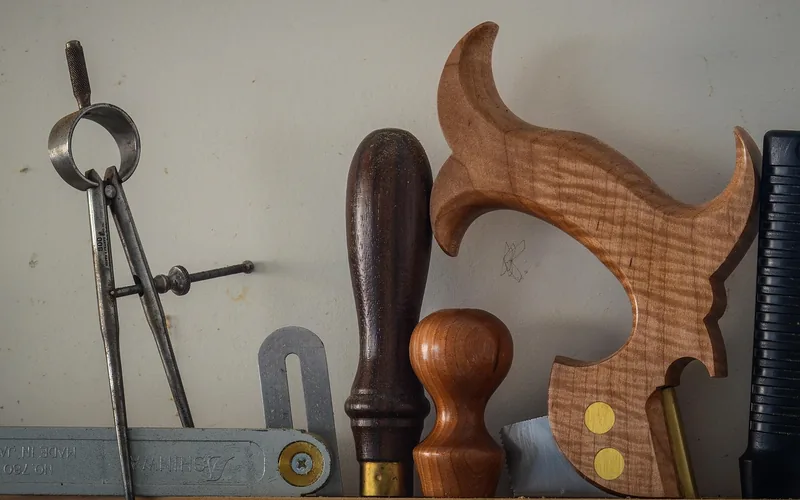
Crosscut Saw TPI Chart: Matching Tooth Count to the Cut
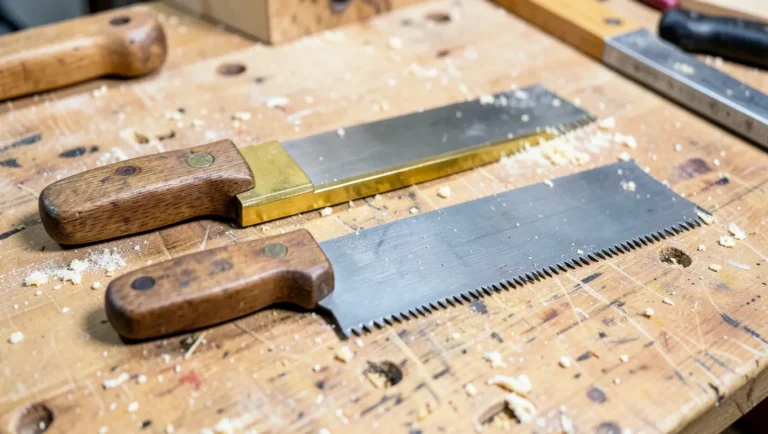
Teeth per inch (TPI) is the number of tooth points along one inch of blade, and it is the single spec that matters most when choosing a crosscut saw. Crosscut teeth are filed at an angle so each tooth acts like a small knife slicing wood fibers, while rip teeth are filed square across, cutting more like a row of tiny chisels — which is why a rip saw tears rather than slices when used across the grain.
| TPI Range | Best For | Cut Quality |
|---|---|---|
| 4-7 TPI (rip saw teeth) | Ripping with the grain | Fast, rough — not for crosscuts |
| 7-9 TPI | Framing lumber, rough crosscuts | Faster, more visible tear-out |
| 10-12 TPI | General boards, trim, most DIY crosscuts | Balanced speed and finish |
| 12-15 TPI | Plywood, hardwood, fine joinery | Slowest, cleanest edge |
Plywood needs a fine-tooth crosscut saw specifically because its thin veneer face splinters easily — a 12-15 TPI blade slices through the surface ply before it can tear, while anything under 10 TPI will chip the good face.
Common Cross Cutting Mistakes (And How to Fix Them)
The Cut Wanders Off the Line
Wandering almost always comes from starting too aggressively or letting the saw drift sideways once it’s a few strokes in. Restart the kerf at a shallow angle, keep your sawing arm and shoulder in line with the cut, and glance at the line from the side rather than from above — sighting straight down hides sideways drift until it’s too late to correct.
The Face Splinters as the Saw Exits
Splintering happens because the last unsupported wood fibers tear away instead of being sliced cleanly. Score the exit line with a marking knife before sawing, back the workpiece with scrap, or switch to a finer-tooth blade (12+ TPI) for plywood and veneered stock.
The Blade Binds or Sticks Mid-Cut
Binding usually means the kerf is closing on the blade — the workpiece is unsupported and sagging, or the saw is being twisted instead of pushed straight. Support both sides of the cut, keep the blade square to the face, and let a rubbed candle or bar of soap on the blade reduce friction in resinous or wet wood.

Crosscut Saw vs. Rip Saw vs. Hacksaw
A crosscut saw is one of several hand saws built for a specific cutting direction or material, and confusing them is the fastest way to a ruined cut.
| Saw Type | Cuts | Teeth |
|---|---|---|
| Crosscut saw | Across the wood grain | 8-15 TPI, angled/knife-edge |
| Rip saw | Along (parallel to) the wood grain | 4-7 TPI, chisel-edge |
| Hacksaw | Metal, PVC, and other hard non-wood materials | 18-32 TPI, hardened steel |
If your project involves cutting plywood by hand, stick with a fine-tooth crosscut saw rather than a rip saw — the angled teeth are what keep the thin face veneer from chipping.
Maintaining and Sharpening a Crosscut Saw
A crosscut saw stays sharp far longer with a few basic habits: wipe the blade dry after use, keep a light coat of oil on unpainted steel to stop rust, and store it hanging or in a sheath so nothing rests against the teeth. Traditional saws can be re-sharpened with a triangular saw file matched to the tooth angle; modern hardpoint saws are induction-hardened and are designed to be replaced rather than filed — check the packaging before you spend time trying to sharpen one.
If you’re stepping up from crosscuts to angled joinery work, our guide on fine-cut hand saws covers the finer TPI ranges used for dovetails and trim, and our plywood blade guide covers matching tooth geometry to sheet goods specifically.
Emergency or off-grid crosscutting — camping, storm cleanup, downed branches — calls for a different saw entirely; see our survival saw picks for compact folding options built for that use case.
Frequently Asked Questions
What is a crosscut hand saw?
A crosscut hand saw is a saw with angled, knife-shaped teeth designed to cut wood perpendicular to the grain. Tooth counts typically run 8-15 TPI, with finer teeth giving a smoother finish and coarser teeth cutting faster through thicker stock.
What’s the difference between a crosscut saw and a rip saw?
A crosscut saw has angled teeth that slice across the wood grain, while a rip saw has square-filed, chisel-shaped teeth built to cut with the grain. Using a rip saw for a crosscut leaves a torn, splintered edge because the teeth aren’t shaped to slice fibers cleanly.
How many teeth per inch (TPI) should a crosscut saw have?
Most general-purpose crosscut saws run 8-12 TPI. Use 12-15 TPI for plywood, veneer, and fine joinery where splintering is a concern, and 7-9 TPI for fast, rough cuts in framing lumber where the finish quality matters less.
Can you use a crosscut saw to cut plywood?
Yes — a fine-tooth crosscut saw (12-15 TPI) is the right tool for cutting plywood by hand. The angled teeth slice the thin face veneer instead of tearing it, which is exactly the failure mode a coarser rip-tooth saw would cause.
Why does my hand saw wander or bind when cutting?
Wandering usually comes from starting the kerf too steeply or letting the blade drift off a square starting angle; binding usually means the workpiece isn’t fully supported and the kerf is pinching the blade as it sags. Restart with a shallow starting angle, support both sides of the cut, and keep pressure on the push stroke only.
Conclusion
A crosscut hand saw is only as accurate as the technique behind it: mark the line with a square, start the kerf shallow, cut on the push stroke, and match the TPI to the material — coarser for framing lumber, finer for plywood and hardwood. Get those four things right and a $10-25 hand saw will out-cut a rushed pass with a power tool.
Sponsored / affiliate links. As an Amazon Associate I earn from qualifying purchases. I may earn additional commission from eligible campaigns.