Are Walnut Cabinets Expensive? Proven Cost
Walnut cabinets are generally considered premium and often cost more than standard oak or maple. However, the final price hinges on the grade of walnut, cabinet style, and finish. You can manage costs by choosing specific walnut cuts or focusing premium material on high-visibility areas.
Choosing cabinets for your kitchen or bath is a big decision. You want something beautiful, that lasts, and that fits your budget. Many homeowners fall in love with the rich, deep color and elegant grain of walnut wood. But right away, a big question pops up: are walnut cabinets expensive? It’s a fair worry! As your guide in the workshop, I want to take the guesswork out of pricing. Walnut sits in the higher tier of hardwoods, but “expensive” is relative. We will break down exactly what drives the cost and show you how to get that stunning look without completely blowing your budget. Let’s dive into the real numbers and proven ways to save.
Why Walnut Commands a Higher Price Tag
When we talk about the cost of any cabinet wood, we are looking at supply, demand, and the inherent qualities of the raw material. Walnut (especially Black Walnut, Juglans nigra) has a stellar reputation for good reason.
The Natural Beauty and Appeal of Black Walnut
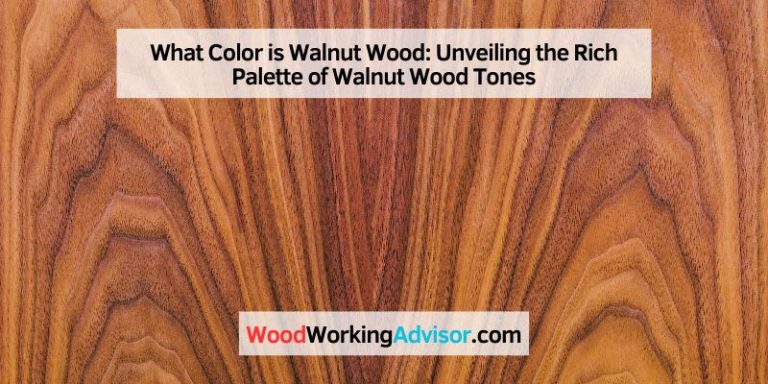
Walnut isn’t just wood; it’s a statement piece. Its natural color palette ranges from creamy white sapwood to deep, lustrous chocolate brown heartwood. This natural variation means less reliance on heavy staining.
Grain Structure: Walnut features a generally straight grain that often exhibits beautiful waves or curls, which woodworkers cherish.
Finishing Quality: It takes stains and clear topcoats exceptionally well, resulting in a smooth, premium feel.
Durability: It’s a medium-density hardwood. It’s strong enough for daily use but softer than woods like hard maple, making it easier to work with for custom shapes.
Supply and Demand Dynamics
Like any sought-after material, scarcity plays a role. While not endangered, old-growth walnut is rarer than it used to be. Most lumber comes from managed forests, which impacts the availability of large, perfect slabs needed for continuous cabinet door panels. Higher demand from furniture makers and custom cabinet shops naturally pushes the price up compared to faster-growing, more common woods like poplar or birch.
The Cost Breakdown: Factors That Determine “Expensive”
So, how do we quantify the final cost? Understanding this process helps you see where your money is going so you can make smart choices.
1. Wholesale Lumber Costs Versus Finished Cabinets
The raw material for walnut is significantly pricier. If you look at the cost per board foot (BF) compared to common choices, the difference starts early.
| Wood Species | Average Cost Range (Per Board Foot, Select Grade) | Cost Implication for Cabinets |
| :— | :— | :— |
| Birch/Poplar (Paint Grade) | $4.00 – $6.50 | Lowest entry cost. |
| Red Oak (Common Hardwood) | $6.50 – $9.00 | Mid-range standard. |
| Maple (Premium Hardwood) | $8.00 – $11.00 | Good balance of cost/durability. |
| Black Walnut | $12.00 – $20.00+ | Highest material cost. |
Note: These are estimates for rough-sawn, select-grade domestic lumber and fluctuate based on market conditions, location, and supplier.
When you purchase cabinets, you pay for the woodworking labor, finishing, hardware, and design on top of the wood cost. Since walnut requires careful selection (to match grain and color), the labor cost associated with handling this premium material also rises.
2. Cabinet Construction Style
The construction style dramatically impacts the final price, regardless of the wood species chosen.
Stock/Ready-to-Assemble (RTA): These are pre-sized boxes. If you find walnut in this category, it’s usually the most budget-friendly route, but options are limited.
Semi-Custom: These offer more size flexibility and door styles. Cost increases here due to customization time.
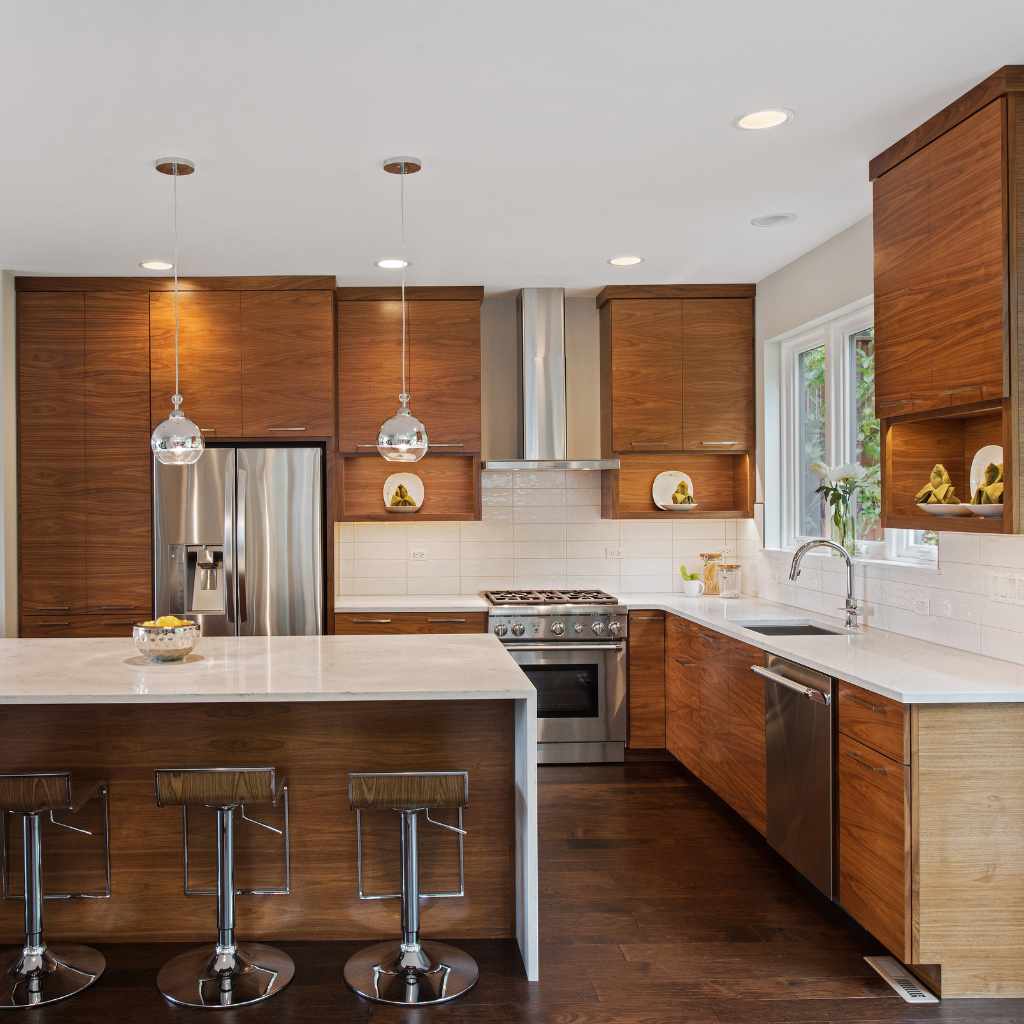
Custom Cabinetry: This is where walnut truly excels—and where the price peaks. You get perfect sizing, unique features, and your choice of grain matching.
Door Style Matters Immensely
A simple, flat-panel (slab) door uses the least amount of material and labor. A complex, highly detailed door like a raised-panel or cathedral arch requires significantly more milling time and material waste allowance.
Inexpensive Style: Slab Doors (Modern/Minimalist look)
Mid-Range Style: Shaker Doors (Classic, clean lines)
Most Expensive Style: Highly detailed raised panel or applied molding doors.
3. Grade of Walnut Used
Not all walnut is created equal. Lumber grading impacts how much of the board can be used for visible cabinet faces.
Select/Premium Grade: Minimal knots, sapwood, or blemishes. This results in a very uniform, deeply colored look. This is the most expensive choice.
Common/Character Grade: Features more knots, sapwood variation, and heavier grain patterns. This can give a rustic or modern “live edge” feel, but requires more careful gluing and patching, sometimes increasing labor costs.
Veneer Over Core: This is the single biggest cost-saver when using expensive woods. Instead of solid walnut lumber for every panel, a thin, high-quality slice of real walnut veneer is glued onto an engineered wood core (like MDF or plywood). This looks identical to solid wood but uses far less premium material.
The Reality Check: How Much More Expensive Is Walnut?
To answer the core question, “Are walnut cabinets expensive?” we must compare them to the kitchen industry standard (often painted maple or oak).
Expect solid walnut cabinets to be anywhere from 40% to 100% more expensive than standard painted maple cabinets for the same design complexity.
For example, if a mid-grade kitchen installation in painted maple costs $15,000:
1. Walnut Veneer (High-Quality): Might cost between $18,000 and $22,000.
2. Solid Walnut (Premium Grade, Custom): Could push the price past $28,000–$35,000+ depending on size and hardware.
This is why understanding veneers is crucial for budget-conscious DIYers and remodelers.
Smart Strategies to Incorporate Walnut Without Overspending
As a mentor, I always encourage smart budgeting. You don’t need solid walnut everywhere to enjoy its luxury finish. Here are proven ways to feature walnut where it matters most.
1. Embrace High-Quality Walnut Veneer
For large, flat surfaces like door and drawer fronts, veneer is your best friend. A good cabinet maker uses thick, “book-matched” or “slip-matched” walnut veneer, ensuring that the grain pattern flows beautifully across the entire run of cabinets. The key is ensuring the veneer is thick enough (usually at least 1/16 inch) to allow for sanding and refinishing down the road. For stability, veneers glued to furniture-grade plywood are often superior to solid wood panels, which can gap or crack with humidity changes.
2. Use Solid Walnut for Accents Only
Reserve your budget for the pieces you touch and see most often.
Drawer Boxes: If you are building your own cabinets or opting for high-end semi-custom lines, use solid walnut only for the exposed drawer fronts or the interior rails/stiles of face frames.
Open Shelving: A few thick, solid walnut shelves floating in the kitchen make a huge visual impact, costing significantly less than equipping the entire kitchen in solid walnut.
Kick Plates and Trim: Use smaller pieces of solid walnut for the toe-kicks or decorative molding where the material usage is low.
3. Go Slab Style (Modern Approach)
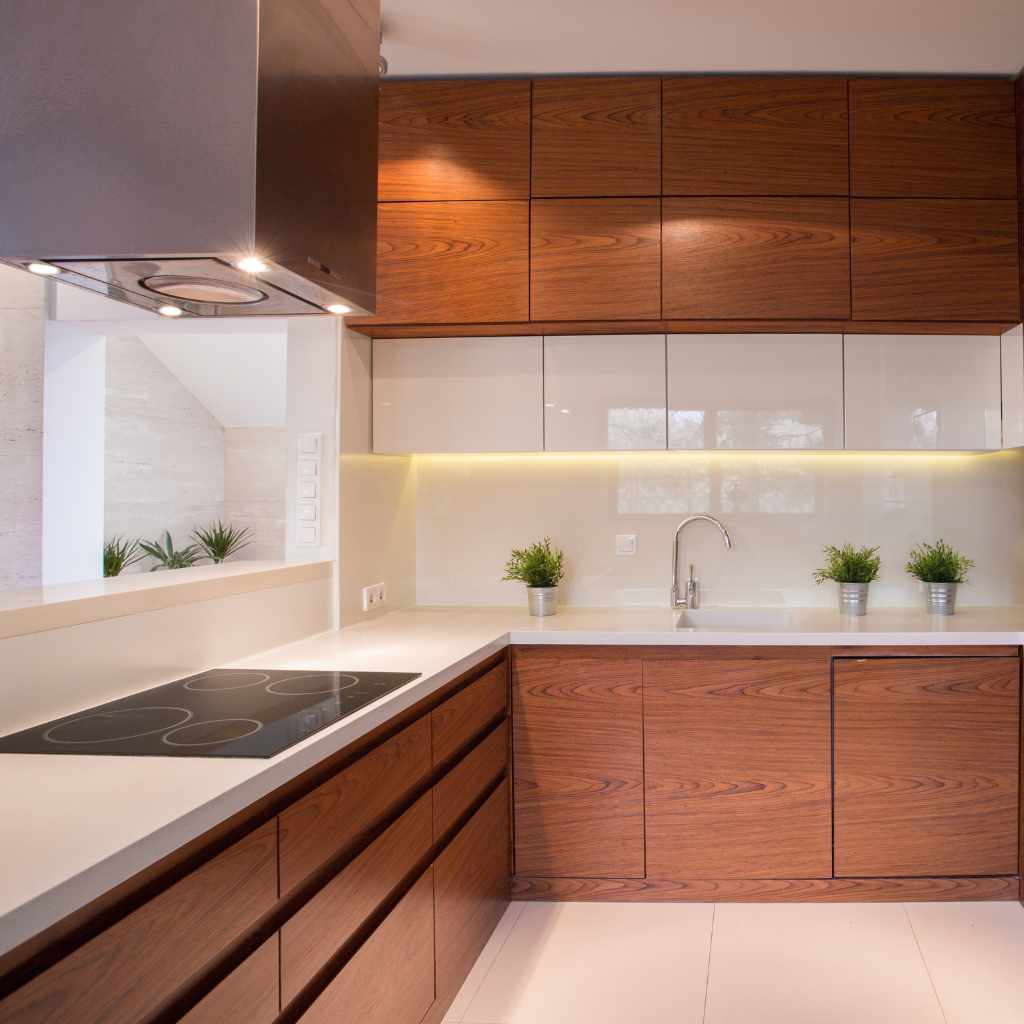
The simple slab door style requires minimal joinery and less material matching than a Shaker or raised panel. This streamlined approach showcases the natural beauty of the horizontal or vertical grain pattern unique to walnut, often keeping production time and material waste lower, which translates to savings.
4. Consider Staining Lighter Woods (The Illusion)
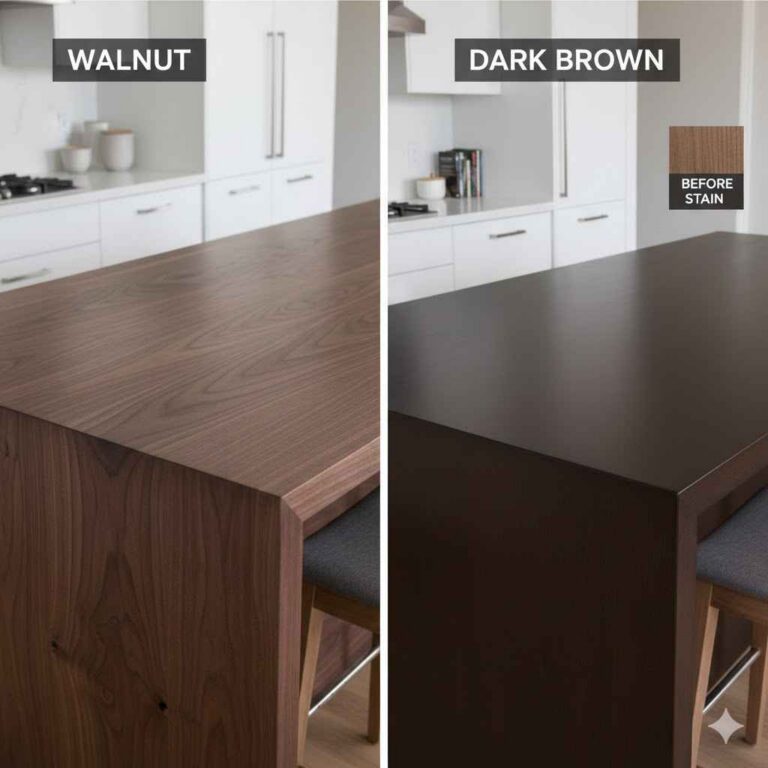
While nothing truly beats real walnut, you can achieve a similar dark, warm look using stain on other, less expensive woods like soft maple or even birch.
1. Seal the Wood: Apply a specialized stain conditioner.
2. Apply Dark Stain: Use a true dark brown/black-brown stain (like General Finishes Espresso or a dark Jacobean).
3. Seal and Protect: Finish with a clear coat.
While the grain pattern won’t be the signature walnut look, the deep coloration can be very satisfying for budget-conscious renovators. Always test this method first! For more detailed information on wood finishing, resources from the Forest Products Laboratory (FPL) can offer in-depth technical insights into finishing hardwood durability.
The Craftsmanship Factor: Labor Costs in Walnut
High-quality woodworkers charge more for walnut because good results take more time and precision.
Milling and Preparation
Walnut is often purchased rough-sawn. It must be meticulously surfaced (milled flat and square) before it can be assembled. Knots and voids must be plugged carefully or avoided entirely, especially if you want a premium look. This preparation phase is time-intensive compared to buying pre-dimensioned framing lumber.
Joinery Requirements
For cabinet doors, especially Shaker style, using solid wood requires precision joinery (mortise and tenon) to allow for seasonal movement (expansion and contraction). Gluing and clamping these joints perfectly, especially with highly figured woods where one misalignment is obvious, adds to the labor quote.
Finishing Time
Walnut naturally darkens over time, even when exposed to light. A skilled finisher must account for this reaction, often requiring careful application of clear topcoats (like conversion varnish or polyurethane) to ensure an even sheen and uniform color across all panels before installation.
A Comparison of Popular Cabinet Woods
To put the expense of walnut in perspective, let’s look at its main competitors for homeowners:
| Feature | Walnut | Maple | Cherry | Oak |
| :— | :— | :— | :— | :— |
| Cost Tier | High/Premium | Medium-High | Medium | Low-Medium |
| Color Range| Dark brown, purplish hues | Cream to pale yellow | Reddish-brown, deepens significantly with age | Light tan to reddish-brown |
| Grain | Straight, often dramatic waves | Fine and uniform | Straight, subtle figuring | Prominent, open grain (cathedral patterns) |
| Durability | Good (medium hardness) | Excellent (very hard) | Good | Excellent (very hard) |
| Best For | Modern elegance, rich contrast | Painted finishes, durability | Traditional, aged look | Rustic, high-wear areas |
As you can see, walnut sits comfortably near the top tier, justified by its unparalleled aesthetic appeal.
Tips for Sourcing More Affordable Walnut Cabinets
If your heart is set on walnut but your wallet is pulling you toward oak, don’t give up! Try these steps the next time you talk to a cabinet supplier or wood shop:
1. Use Walnut for Cabinet Boxes: If you are painting the exterior faces, ordering cabinets with walnut plywood for the interior boxes (the carcass) adds a touch of luxury that you only see when opening the doors, and it’s often cheaper than using solid walnut for the visible parts.
2. Buy Locally Sourced/Fewer Pieces: When dealing with custom shops, ask if they have any locally harvested walnut lumber that hasn’t been commercially graded yet. Sometimes, smaller local milling operations offer better prices on “character grade” wood.
3. Rethink the Layout: Do you really need cabinets on every wall? By opting for a standard, painted finish on the majority of the kitchen and reserving the walnut wood only for the island seating area or the main feature wall, you drastically reduce the square footage needing the premium material.
4. Consider Walnut as a Stain: Discuss with your contractor using a dark walnut stain on a less expensive, fine-grained wood like poplar or soft maple. While it won’t have the unique mineral streaks of true walnut, a skillfully applied dark stain can give a similar visual depth.
Understanding Wood Grading Standards for Homeowners
When you are getting quotes, make sure you understand what grade of walnut the installer is bidding on. The National Hardwood Lumber Association (NHLA) sets standards that most suppliers follow, but custom shops interpret them differently.
Here is a simple table showing what you might see on a quote:
| Grade Term Used | What It Generally Means for Cabinets | Cost Impact vs. Premium |
| :— | :— | :— |
| Clear/Select | Nearly flawless, ideal for stain/clear coats. | 100% (Base Price) |
| No. 1 Common | Some small knots, minor discoloration acceptable. Suitable for painted or heavily stained pieces. | 15% – 25% Less |
| Rustic/Character | Features knots, color variation (sapwood inclusion), voids requiring filling. | 30% – 45% Less |
To ensure you aren’t paying premium prices for character grade material, always ask to see samples of the actual* grade specified in your contract before production begins.
Safety Note from Md Meraj
If you decide to buy raw walnut lumber and build the cabinets yourself, remember that Black Walnut dust is a known irritant. Always wear a good-quality respirator (not just a dust mask) when sanding or routing this wood to protect your lungs. Safety first in the workshop! For more on wood dust safety, resources from organizations like the Occupational Safety and Health Administration (OSHA) are essential reading.
Frequently Asked Questions About Walnut Cabinets
Q1: Will my walnut cabinets look the same color in ten years?
No, and that is part of their charm! Walnut naturally darkens significantly over time when exposed to light, moving toward a deeper, more reddish-brown color. This aging process is usually desirable.
Q2: Are walnut cabinets more durable than oak or maple cabinets?
Walnut is slightly softer than oak or hard maple. While it’s durable enough for kitchen use, it can dent or scratch slightly easier than those harder woods. Proper sealing with a strong finish (like conversion varnish) mitigates this risk greatly.
Q3: Is it cheaper to buy solid walnut cabinet doors or walnut veneer doors?
Walnut veneer doors are almost always significantly cheaper than solid walnut doors because veneer uses far less of the expensive raw lumber, offering the same beautiful surface appearance.
Q4: Do walnut cabinets show dirt and fingerprints easily?
If finished with a clear satin or matte topcoat, walnut hides fingerprints and dust very well due to its naturally dark and varied grain pattern. High-gloss finishes will show smudges more readily, regardless of the wood type.
Q5: What style of kitchen hardware looks best with walnut?
Walnut pairs beautifully with metallic finishes. Brushed brass or matte black hardware offers a stunning contrast against the dark wood for a modern look. For a softer, transitional style, brushed nickel or bronze knobs work wonderfully.
Q6: If I refinish old walnut cabinets, should I strip them down to the white sapwood?
Generally, no. The beauty of walnut is the transition between the dark heartwood and the lighter sapwood. Stripping everything down might result in a very flat brown color. It’s usually best to clean them thoroughly and re-stain or just reseal them to enhance the natural variation.
Conclusion: The True Value of Walnut Cabinets
So, let’s circle back to our main question: Are walnut cabinets expensive? Yes, compared to standard utility woods, they demand a higher investment. However, that cost reflects a superior material prized globally for its color, grain, and prestige.
As your mentor, my final piece of advice is this: view the cost through the lens of value, not just price. Walnut adds significant character and resale appeal to a home that painted plywood simply cannot match. By strategically utilizing high-quality veneers for large surfaces and reserving solid lumber for smaller, high-touch elements, you gain the undeniable luxury of real walnut while keeping your project squarely within manageable financial reach. Whether you choose solid slabs or smart veneers, working with walnut is always a rewarding woodworking experience that results in truly timeless cabinetry.