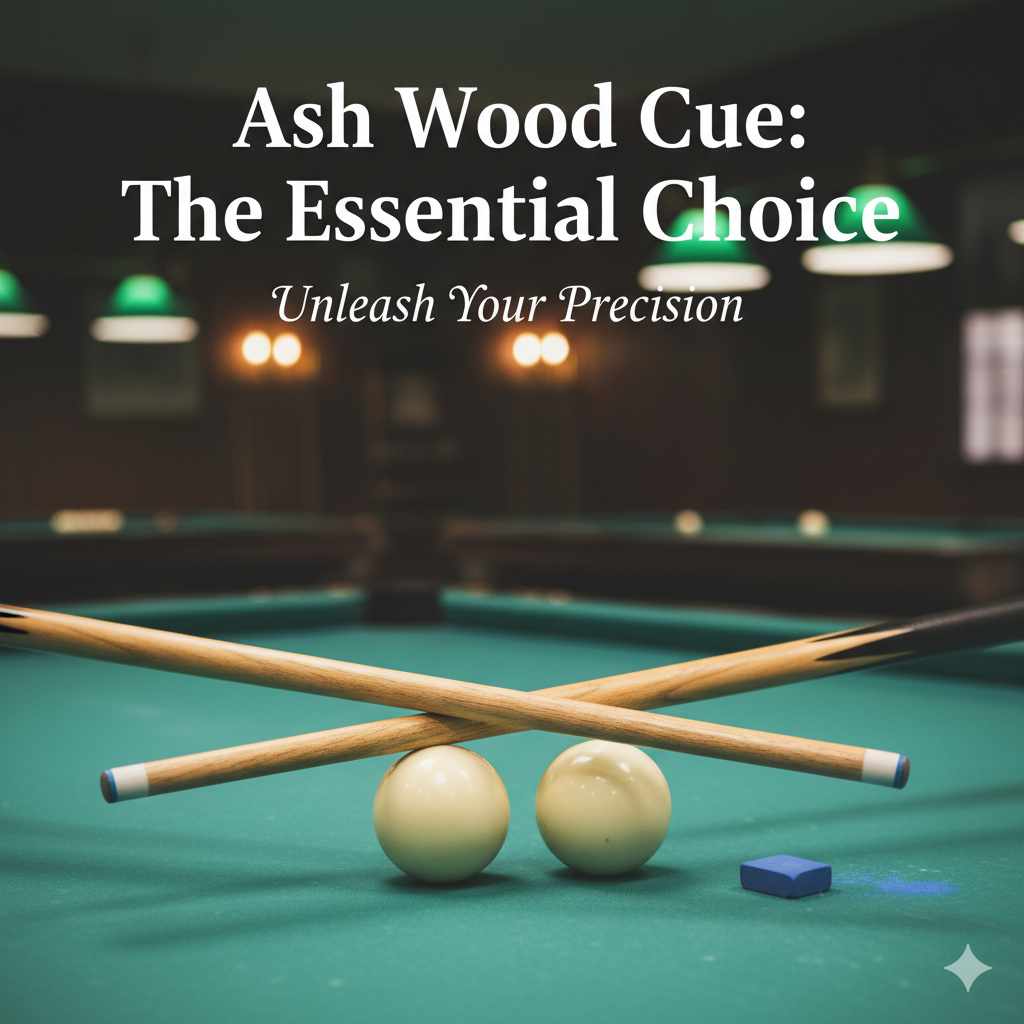
Ash Wood Cue: The Essential Choice
Ash wood cues are a fantastic choice for billiard players of all levels, offering a great balance of durability, affordability, and a satisfying feel. Their strength makes them forgiving for beginners, while their responsiveness appeals to experienced players looking for a reliable performance.
Woodworking can sometimes feel like a puzzle, especially when you’re just starting out. You want to create something beautiful and functional, but figuring out the right materials can be a challenge. If you’re looking for a woodworking project that’s both practical and rewarding, you’ve probably heard about making your own cues, or perhaps customizing an existing one. But with so many types of wood out there, which one should you choose? Don’t worry, I’m here to help simplify things. We’ll explore why ash wood is such a popular and excellent option, making your woodworking journey smoother and more enjoyable.
Why Ash Wood is Your Go-To for a Billiard Cue
When you’re diving into the world of woodworking, especially for creating or working on billiard cues, selecting the right type of wood is key. It affects the feel, the performance, and the overall longevity of your project. For many DIY enthusiasts and beginners, ash wood stands out as a truly essential choice. Why? Because it hits that sweet spot between being incredibly strong and surprisingly easy to work with. This makes it a forgiving material for those still honing their skills, while still offering the performance seasoned players appreciate.
Think of ash wood as the reliable friend in the workshop. It’s not overly finicky, it can take a bit of a knock, and it usually gives you a great result without too much fuss. This is precisely what a beginner needs when they’re tackling a new project. You want to feel confident that the wood will cooperate with your tools and techniques, and ash wood generally delivers on that promise.
Understanding the Benefits of Ash Wood for Cues
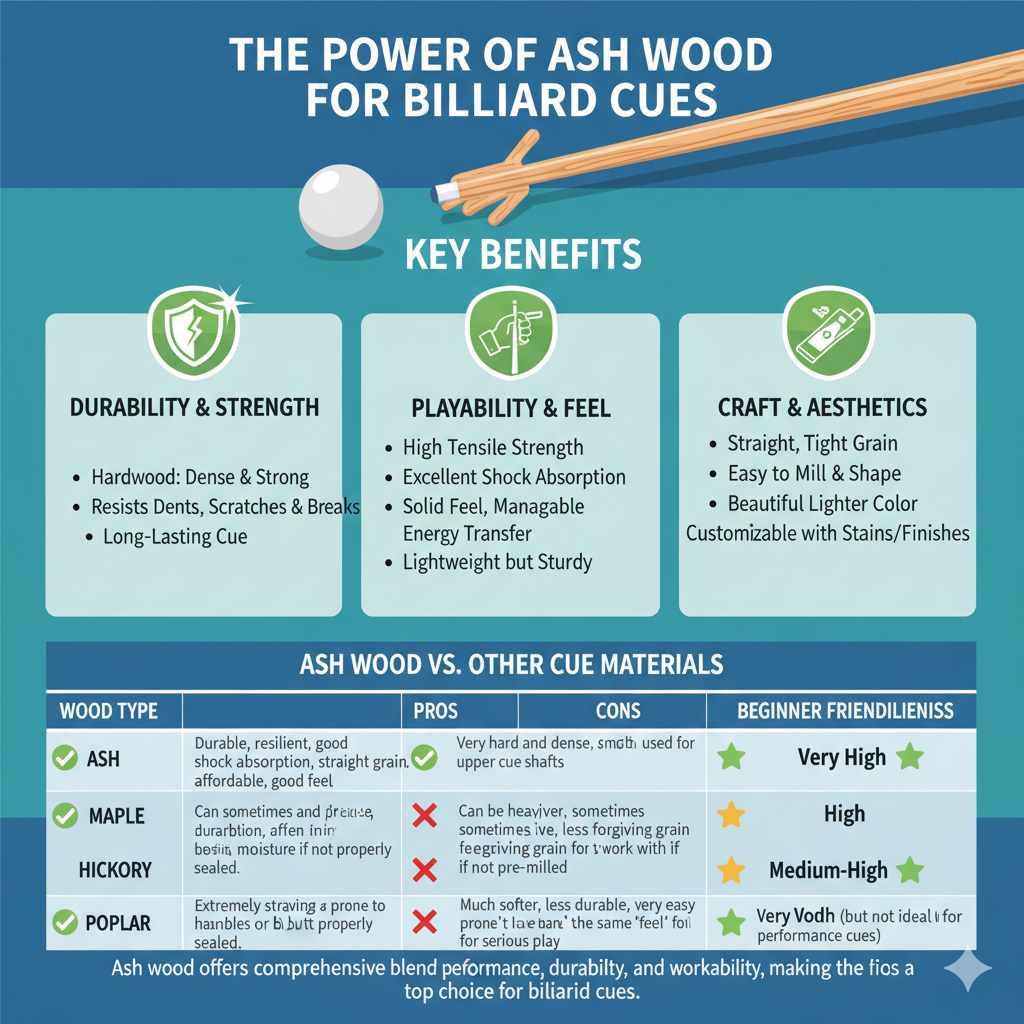
Choosing Your Ash Wood Cue: What to Look For
When you’re selecting an ash wood cue, whether you’re buying one ready-made or preparing to work with raw lumber for a custom project, there are a few things to keep in mind. This will help you ensure you’re getting a quality piece that will serve you well.
The Grain Matters
Look for ash wood with a straight, consistent grain pattern. This is often referred to as “straight-grained” ash. Why is this important?
Strength: Straight grain means the wood’s fibers are aligned uniformly. This makes it stronger and less likely to split or warp.
Consistency: A consistent grain helps with a smooth feel and predictable performance during play.
Workability: For those doing woodworking, straight grain is much easier to cut, sand, and shape without snagging or splintering.
Avoid ash that has knots, significant twists, or very wild, swirling grain patterns, especially for the main shaft of the cue. These are signs of weaker wood and can create inconsistencies in balance and playability.
Moisture Content is Crucial
Wood is a natural material and contains moisture. The amount of moisture in the wood, known as its moisture content (MC), is critical.
Too Wet: Wood that is too wet can warp, shrink, or crack as it dries. This can ruin a cue’s straightness and balance.
Too Dry: While less common in commercially available cues, extremely dry wood can be brittle.
Reputable cue manufacturers air-dry or kiln-dry their ash to achieve a stable moisture content, typically between 6% and 10% for billiard cues made in drier climates. If you are sourcing raw ash lumber for a project, ensure it has been properly seasoned or dried. You can find detailed information on wood drying standards from organizations like the Forest Products Laboratory, which provides extensive resources on wood science and drying techniques.
Consider the Cue’s Construction
Even if you’re buying a finished cue, understanding how it’s made can inform your choice.
One-Piece vs. Two-Piece: Most modern cues are two-piece, meaning they unscrew in the middle. This makes them easier to transport and store. Ash is commonly used for both the shaft and the butt of a two-piece cue.
Joint Type: The joint where the two pieces connect is important. High-quality joints are precisely machined for a tight fit, which helps maintain the cue’s straightness and feel.
Tip and Ferrule: The tip (where you chalk and hit the ball) and the ferrule (the cap at the tip) are vital for play. These are usually made from materials like phenolic resin or other durable plastics, and the quality of their installation on the ash shaft matters.
Working with Ash Wood: A Beginner’s Guide
If you’re feeling ambitious and want to try your hand at crafting a cue from scratch or modifying an existing one, ash wood is a great starting point. Here’s a simplified look at what you might encounter.
Tools You Might Need
For a basic woodworking project involving ash wood, here are some essential tools:
Measuring Tape and Pencil: For accurate measurements.
Saw: A hand saw or a power saw like a miter saw or table saw for cutting the wood to length.
Sanding Tools: Sandpaper of various grits (from coarse to fine) or a power sander (orbital or belt sander).
Wood Lathe (Optional but Recommended for Cues): If you’re making a cue shaft, a lathe is almost essential for achieving a perfectly round and tapered shape. This is where a lot of the fine tuning of a cue happens.
Files and Rasps: For shaping and refining curves.
Wood Glue: For any assembly required.
Finishing Supplies: Sanding sealer, stain, and a durable topcoat like polyurethane or lacquer.
Safety Gear: Always wear safety glasses, a dust mask, and hearing protection when operating power tools.
Basic Steps for Working with Ash Wood:
1.Measure and Cut: Carefully measure your ash wood to the desired length for your cue shaft or butt. Ensure your cuts are square and precise.
2. Shaping (If Using a Lathe): If you have access to a wood lathe, this is where you’ll turn your rough-sawn ash into a smooth, cylindrical cue shaft. You’ll gradually turn down the wood, ensuring it’s perfectly round and tapers correctly towards the tip. Precision is key here; small inconsistencies can affect play.
3. Sanding: Once the basic shape is achieved, thorough sanding is crucial. Start with a coarser grit sandpaper (e.g., 120-grit) to remove any tool marks, and gradually move to finer grits (e.g., 220, 320, 400-grit) to create a smooth surface. The smoother the surface, the better it will feel and the better it will take a finish.
4. Assembly (for Two-Piece Cues): If you’re making a two-piece cue, you’ll need to attach the joint hardware. This often involves precise drilling and fitting to ensure a snug, secure connection.
5. Applying the Finish: A good finish protects the wood and improves its appearance.
Sealer: Apply a sanding sealer to fill the wood pores and create an even surface for subsequent coats. Sand lightly after it dries.
Stain (Optional): If you want to color the wood, apply an ash wood stain.
Topcoat: Apply several thin coats of a durable finish like polyurethane or lacquer. Allow each coat to dry thoroughly and sand lightly between coats with very fine grit sandpaper (e.g., 400-600 grit) for a glass-smooth feel.
6. Adding the Tip and Ferrule: The final step for the shaft is attaching the ferrule and the cue tip. The ferrule is typically glued and then shaped to match the shaft, and the tip is then glued and shaped to the ferrule.
For a comprehensive understanding of woodworking basics and safety, resources like the Wood Magazine safety guide are invaluable. They provide essential tips for working safely and effectively with tools.
Maintaining Your Ash Wood Cue
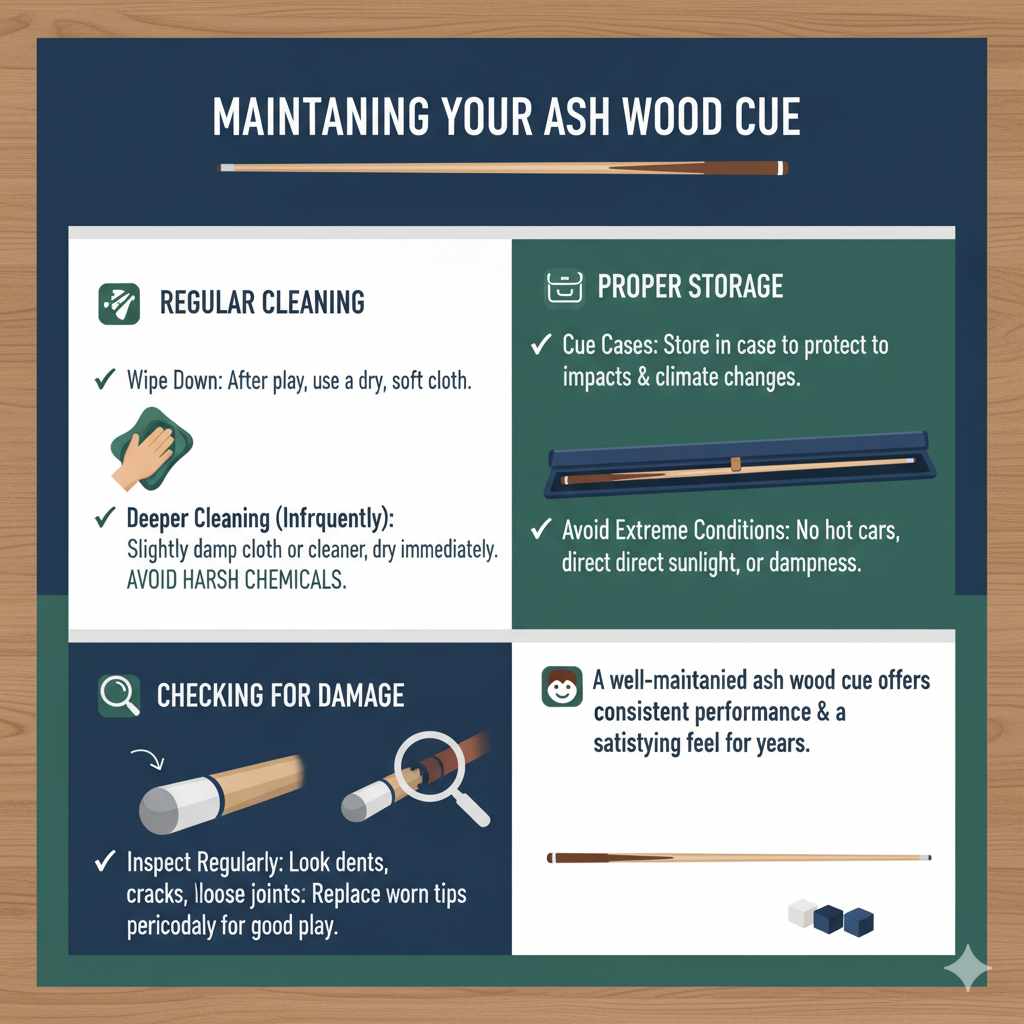
Just like any fine tool or instrument, your ash wood cue will perform best and last longest with a little care. Fortunately, maintaining an ash wood cue is straightforward.
Regular Cleaning
Wipe Down: After each playing session, wipe down your cue with a clean, dry, soft cloth. This removes chalk dust, hand oils, and any other residue that can build up on the surface.
Deeper Cleaning (Infrequently): If your cue feels a bit sticky or has accumulated more grime, you might need to clean it more thoroughly. Use a dedicated cue cleaner or a very slightly damp cloth (make sure it’s barely wet, then dry it immediately with a dry cloth). Avoid using harsh chemicals or excessive water, as this can damage the wood or finish.
Proper Storage
Cue Cases: Always store your cue in a proper cue case when you’re not using it. Cases protect the cue from impacts, dust, and drastic temperature or humidity changes.
Avoid Extreme Conditions: Don’t leave your cue in a hot car, in direct sunlight, or in a very damp environment. These conditions can cause the wood to warp, crack, or the finish to degrade.
Checking for Damage
Inspect Regularly: Take a moment now and then to inspect your cue for any signs of damage, such as dents, cracks, or loose joints. Address any minor issues promptly to prevent them from becoming bigger problems.
Tip Replacement:** The cue tip wears down with use and needs to be replaced periodically. This is a standard part of cue maintenance and is crucial for good play.
A well-maintained ash wood cue will remain a joy to play with for years to come, offering consistent performance and a satisfying feel.
Frequently Asked Questions About Ash Wood Cues
Here are some common questions beginners have about ash wood cues:
What makes ash wood a good choice for beginners?
Ash wood is strong and durable, making it forgiving of small mistakes. It’s also relatively easy to work with if you’re crafting your own cues. Its balance of weight and sturdiness provides a comfortable feel for learning the game.
Is ash wood expensive?
No, ash wood is generally considered one of the more affordable hardwood options. This makes ash wood cues a great value, offering good performance without a high price tag.
How does ash wood feel compared to maple?
Ash wood often has a slightly more flexible feel and a bit more “feedback” or vibration dampening on impact compared to maple. Maple can feel stiffer and more direct. For beginners, ash’s controlled flex can be more comfortable.
Can ash wood cues warp?
All wood can warp under the right (or wrong) conditions, but ash is quite stable when properly dried and finished. Proper storage in a cue case will significantly minimize the risk of warping.
What is the typical weight of an ash wood cue?
Ash wood cues typically range from 17 to 21 ounces, with 19 ounces being a very common and popular weight for many players. The weight is adjusted during the manufacturing process through the density of the wood and the design of the butt cap and core.
Is ash wood suitable for both the shaft and the butt of a cue?
Yes, ash wood is commonly used for both the shaft and the butt of billiard cues. Its desirable properties make it a versatile choice for the entire cue stick. For shafts, straight-grained, lighter ash is preferred, while denser ash might be used for butt sections.
How do I know if my ash wood cue is good quality?
Look for a straight grain pattern on the shaft, a smooth finish without blemishes, a perfectly fitted joint (if it’s a two-piece cue), and a well-attached cue tip. Playability is the ultimate test – it should feel balanced and solid in your hands.
Conclusion: Make Your Next Cue an Ash Wood Choice
As your woodworking mentor, I hope this dive into the world of ash wood cues has been eye-opening and inspiring. Choosing the right materials is fundamental to any successful project, and for billiard cues, ash wood truly shines as an essential option. Its robust durability means your cue will stand up to countless games, while its balanced feel and workability make it a joy to handle, whether you’re playing your first game or your thousandth.
For the beginner woodworker, ash’s forgiving nature on the tools and its inherent strength offer a confidence-boosting starting point for custom builds or modifications. For the seasoned player, ash provides a reliable, responsive, and enjoyable playing experience. It’s a wood that bridges the gap, offering performance without unnecessary complexity and quality without an exorbitant price tag.
So, whether you’re investing in your first cue, looking to upgrade your equipment, or even dreaming up your own handcrafted masterpiece, remember the fantastic qualities of ash wood. It’s a choice that promises satisfaction, longevity, and a genuine connection to the game through a material that’s both beautiful and incredibly functional. Happy woodworking and even happier cueing!