What Is the Most Durable Wood for Kitchen Cabinets?
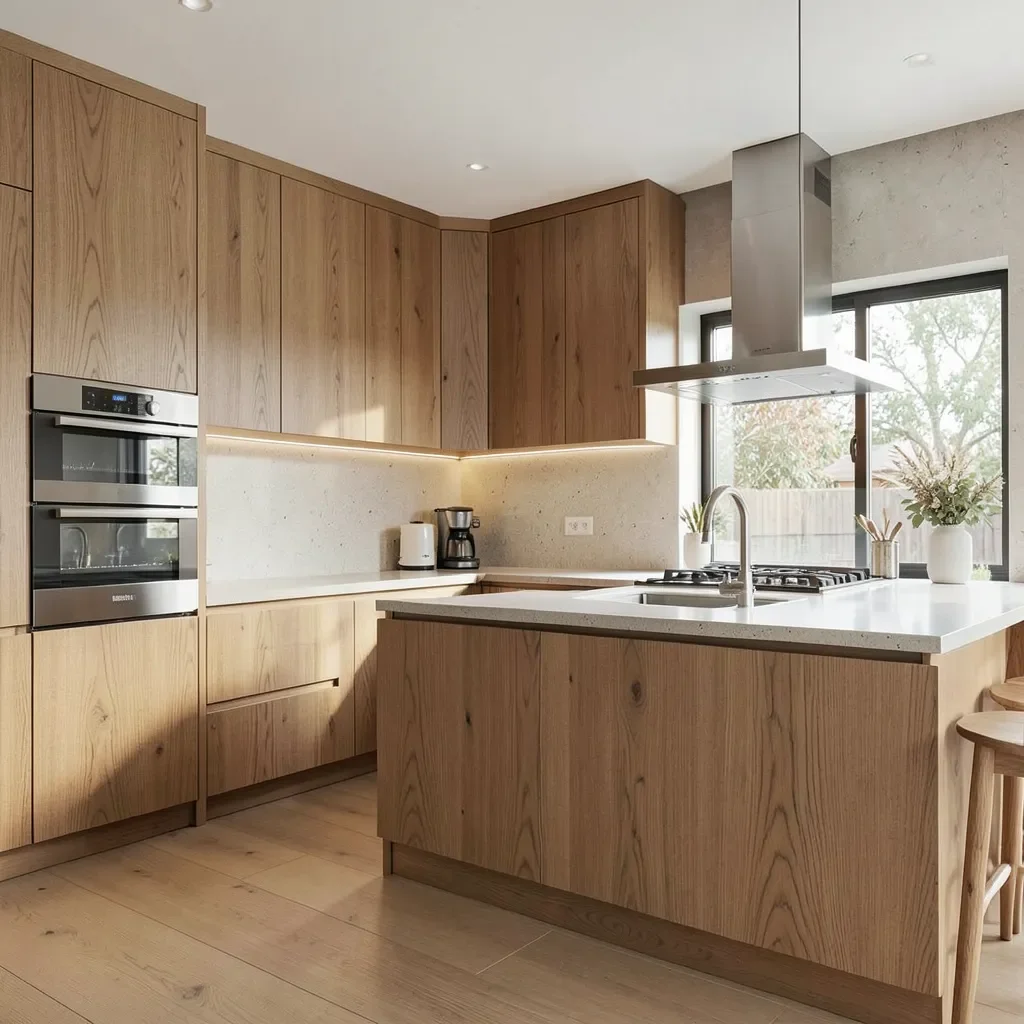
Hard maple is generally the most durable wood for kitchen cabinets, rating 1450 on the Janka hardness scale – well above oak (1290) and far above alder or pine, which are common budget cabinet woods under 700. Durability in a cabinet means resistance to dents, door-slam wear at hinges, and moisture-driven warping near the sink and dishwasher, not just hardness alone.
Janka Hardness Isn’t the Whole Story
Best for Protecting Cabinet Finish Long-Term
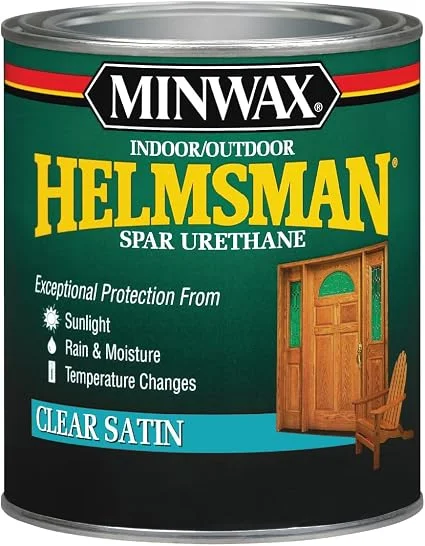 |
Minwax Helmsman Spar Urethane – $23.49 A durable topcoat protects cabinet wood from exactly the moisture cycling near sinks and dishwashers that this guide flags as a real durability risk beyond raw hardness.
|
Hickory (1820) and white oak (1360) both rate harder than maple by the Janka scale, but maple’s tight, uniform grain resists chipping at cabinet edges and corners better than oak’s more open grain structure. Hickory is genuinely the hardest common cabinet wood, but its dramatic color variation between heartwood and sapwood makes it a stronger design statement than a neutral, everyday choice – most kitchens that want hickory’s durability without the bold look land on maple instead.
Moisture Resistance Matters as Much as Hardness
Cabinets near a sink or dishwasher see far more humidity cycling than cabinets across the kitchen, and a wood’s dimensional stability under moisture swings matters more there than raw hardness. Maple and birch both hold up well; softer woods like pine or knotty alder are more prone to swelling, sticking doors, and finish failure in high-moisture zones even though they’re fine elsewhere in the kitchen.
Plywood Boxes with Solid-Wood Doors
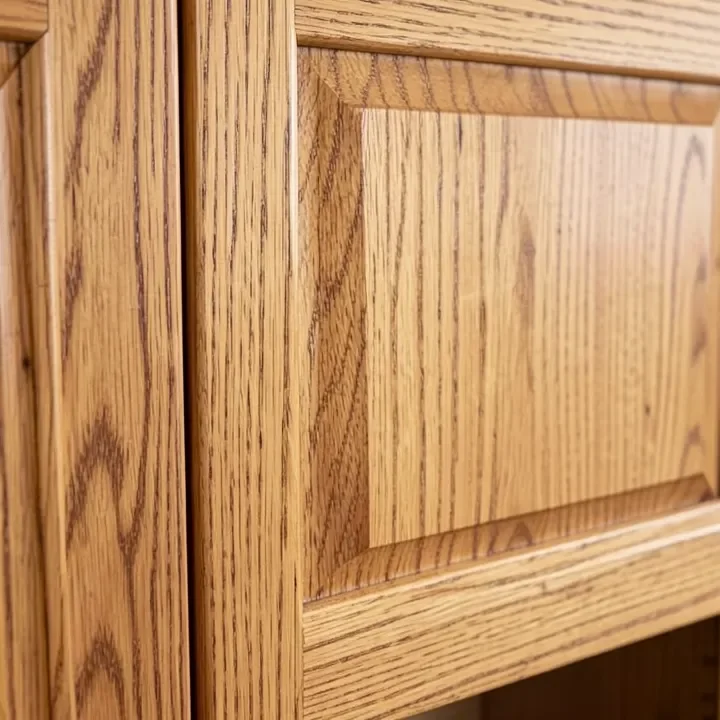
Most durable cabinets aren’t solid wood throughout – the cabinet box (sides, back, shelves) is typically hardwood plywood, which resists warping better than solid boards of that same width, while the doors and face frame use solid maple or oak for the visible durability and finish quality. This construction is standard on both budget and high-end cabinetry; it’s not a shortcut, it’s the stronger build.
Engineered Alternatives Worth Considering
Thermally fused laminate (TFL) and high-pressure laminate (HPL) cabinet doors sacrifice real wood grain for a genuinely more dent- and moisture-resistant surface at a lower price than solid maple – worth considering for a busy kitchen where practical durability outweighs the appeal of natural wood. MDF-core doors with a real wood veneer split the difference: a stable, warp-resistant core with genuine wood grain on the visible surface, though the veneer itself can still be damaged by a hard enough impact the way solid wood would dent instead.
Finish Sheen Affects Perceived Durability
A high-gloss finish shows every fingerprint, water spot, and minor scratch far more visibly than a matte or satin finish on the exact same wood species – which is why many kitchens marketed as “high durability” actually rely on a forgiving satin sheen as much as the wood species underneath it. If daily wear-and-tear visibility matters as much as actual structural durability, factor sheen into the decision alongside wood hardness.
Hinges and Hardware Wear Before the Wood Does
On a well-built cabinet, the hinges and drawer slides typically wear out or loosen before the wood itself shows real damage – soft-close European-style hinges with a real steel mounting plate hold up to repeated slamming far better than cheap stamped hinges, regardless of how hard the door’s wood species is. A durable wood choice paired with budget hardware still results in sagging, misaligned doors well before the wood itself would have failed on its own.
Regional Cost and Availability
Hard maple and oak are both widely available nationally at comparable prices in most markets, while regional species like alder (Pacific Northwest) or hickory (more common in the Southeast and Midwest) can carry a shipping premium outside their growing regions. Check local cabinet shop pricing before assuming a “better” species is worth the cost once freight is factored in – a regionally abundant, slightly softer wood can be the more practical choice than paying a premium to ship in something marginally harder.
Testing Durability Before Committing to a Full Kitchen
Ask a cabinet maker or supplier for a sample door in the exact species and finish being considered, then subject it to real conditions for a week or two – set hot pans nearby, splash water near the edges, and handle it the way a real cabinet door gets handled. A sample that shows early wear under a short deliberate stress test is a much better predictor of long-term performance than reading a wood’s Janka number alone, since real-world factors like finish quality and hardware interact with the wood species in ways a hardness chart doesn’t capture.
Repairing Dents and Dings as They Happen
Even the hardest common cabinet wood eventually picks up a dent or scratch from years of use, and catching it early makes repair easier regardless of species – a small dent in solid wood can often be raised with a damp cloth and a warm iron (the trapped moisture swells the compressed wood fibers back out) before it’s sealed under finish, while a scratch through the finish alone touches up with a matching stain pen far more easily than a scratch that’s been left to collect dirt and darken over months.
Cabinet Construction Grade Matters as Much as Species
A well-built cabinet in a moderately durable wood often outlasts a poorly constructed cabinet in a harder species, since joinery quality, panel thickness, and finish application all contribute to real-world durability alongside the wood itself – species choice is one factor among several, not the single determining variable in how long a kitchen cabinet actually lasts.
Frequently Asked Questions
Is maple or oak better for kitchen cabinets?
Maple’s tighter grain resists chipping at edges and corners better than oak, even though oak rates slightly harder on the Janka scale – both are solid, durable choices.
What is the hardest wood used for kitchen cabinets?
Hickory, at 1820 on the Janka scale, though its dramatic heartwood/sapwood color contrast makes it more of a design statement than a neutral everyday choice.
Why do cabinets use plywood boxes with solid wood doors instead of all solid wood?
Plywood resists warping better than a wide solid board of the same size, making it the stronger, more stable choice for the cabinet box, while solid wood on visible doors gives the best finish and durability where it’s seen and touched most.
Sponsored / affiliate links. As an Amazon Associate I earn from qualifying purchases. I may earn additional commission from eligible campaigns.