Ash Wood: Proven Good To Burn
Ash wood is a proven excellent choice for burning, offering a good balance of heat output, burn time, and clean burning properties. It’s readily available, easy to split, and a favorite among many wood-burning enthusiasts for both fireplaces and wood stoves.
Ever wondered if that pile of ash wood in your yard is ready for a cozy fire? Choosing the right firewood can make a big difference in how warm and enjoyable your evenings are. Some woods burn too fast, some produce too much smoke, and others just don’t give off much heat. It can be confusing for beginners, but don’t worry! We’re here to clear things up. Ash wood is a fantastic option, and by the end of this guide, you’ll know exactly why it’s earned its reputation as a top-tier burning wood and how to make the most of it.
Why Ash Wood is a Firewood Favorite
Ash wood has been a go-to fuel source for centuries, and for good reason. It offers a wonderful mix of characteristics that make it ideal for home heating. Its popularity isn’t just by chance; it’s a result of its consistent performance and ease of use, even for those new to the world of firewood.
Consistent Heat Output
One of the most sought-after qualities in firewood is its ability to produce steady, reliable heat. Ash wood excels in this area. When seasoned properly, it burns hot and consistently, providing a comfortable and sustained warmth for your home. This means fewer trips to the woodpile and a more consistent temperature in your living space. Unlike some softer woods that flare up and burn out quickly, ash provides a more long-lasting burn, making it very efficient for its volume.
Pleasant Burning Experience
Beyond just heat, the “experience” of burning wood matters. Ash wood generally burns with a bright flame and produces minimal smoke, especially when well-seasoned. This clean burn is not only more pleasant for your household but also means less creosote buildup in your chimney. Less creosote means a safer fireplace and chimney, reducing the risk of chimney fires. It’s a win-win for both comfort and safety!
Ease of Splitting
For those who process their own firewood, ease of handling is a significant factor. Ash is known for being relatively easy to split compared to some other hardwoods. Its straight grain pattern means that with a good axe or splitting maul, you can often split logs with less effort. This makes preparing your winter fuel supply a less strenuous task, which is a real advantage, especially for DIYers and homeowners who might not have heavy-duty machinery.
Understanding Ash Wood Characteristics
To truly appreciate why ash is good to burn, let’s dive a little deeper into its specific wood properties. These characteristics are what give it its excellent performance in a fire.
Density and BTU Output
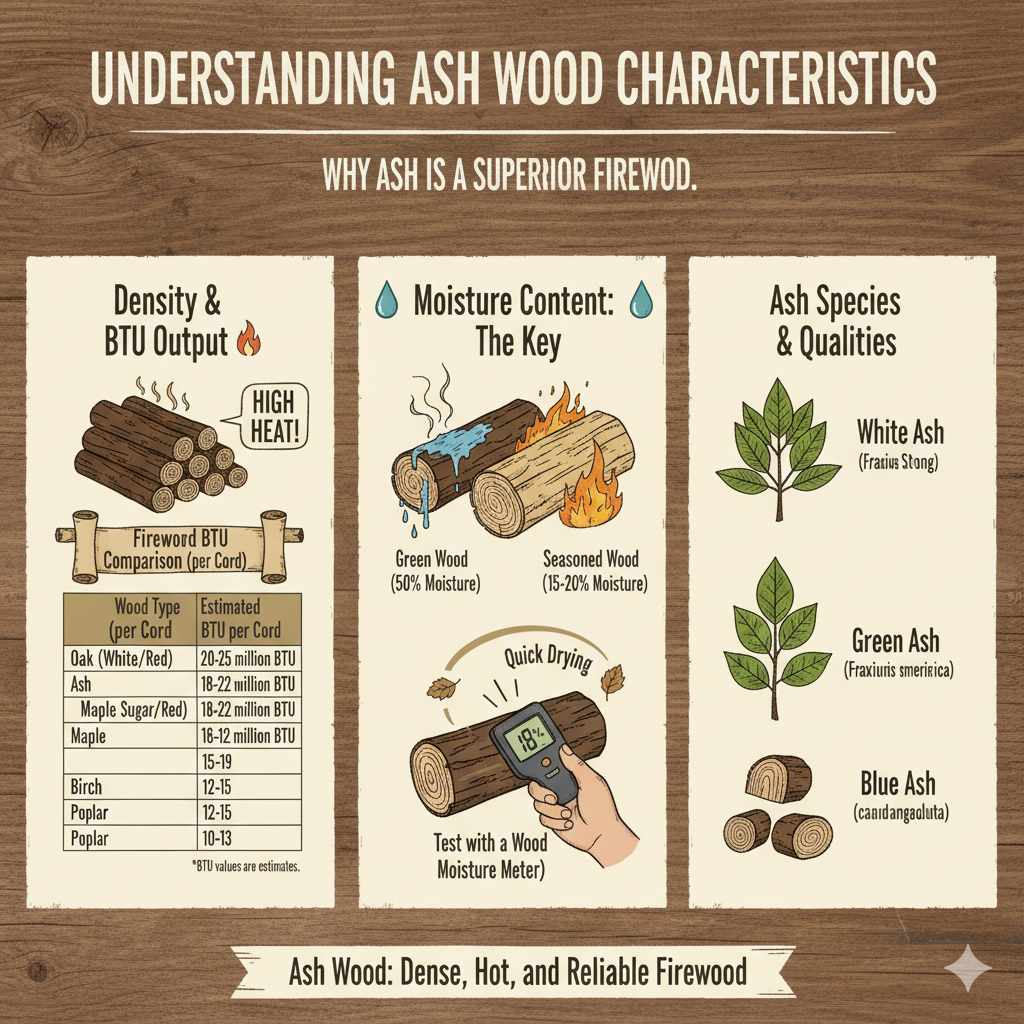
Hardwoods are generally denser than softwoods, and ash is no exception. Its density contributes directly to its heating value. Denser woods pack more energy (in the form of BTUs – British Thermal Units) per cord. Ash typically falls into the higher end of the BTU spectrum for common firewood species. A cord of seasoned ash wood can provide a substantial amount of heat, often comparable to or slightly less than oak, but usually more than popular species like pine or poplar. This means you’ll get more warmth from a smaller volume of ash wood.
Here’s a general comparison table of BTU output for common firewood types:
| Wood Type | Estimated BTU per Cord |
|---|---|
| Oak (White/Red) | 20-25 million BTU |
| Ash | 18-22 million BTU |
| Maple (Sugar/Red) | 18-22 million BTU |
| Birch | 15-19 million BTU |
| Pine | 12-15 million BTU |
| Poplar | 10-13 million BTU |
*Note: BTU values are estimates and can vary based on wood density, moisture content, and specific species within the genus.
Moisture Content: The Key to Great Burning
This is perhaps the MOST critical factor for any firewood, and ash is no different. For wood to burn well, it needs to be seasoned. Seasoning is the process of drying firewood to reduce its moisture content. Green (freshly cut) wood contains a lot of water – often 50% or more. Burning wet wood is inefficient, produces a lot of smoke and creosote, and doesn’t generate much heat because the fire’s energy is used to boil off the water. Ideally, firewood should have a moisture content of 15-20%. Ash seasons relatively well and quickly compared to some other dense hardwoods, making it a practical choice for year-round availability if managed properly.
You can test your firewood’s moisture content using a wood moisture meter. These are affordable tools that are invaluable for any serious wood burner.
Ash Species and Their Burning Qualities
There are several species of ash trees, and some are more commonly used for firewood than others. The most prevalent types include:
- White Ash (Fraxinus americana): This is a highly regarded hardwood, known for its strength and good burning properties. It’s dense and offers excellent heat output.
- Green Ash (Fraxinus pennsylvanica): Also a common species, green ash burns similarly to white ash, providing good heat and a relatively clean burn. It’s often more abundant in certain regions.
- Blue Ash (Fraxinus quadrangulata): While less common as a primary firewood source, blue ash also burns well, offering good heat.
Regardless of the specific ash species, the general characteristics described – good heat, relatively clean burn, and ease of splitting – hold true for most types when properly seasoned.
Getting the Most Out of Your Ash Wood Fire
Knowing that ash wood is good to burn is one thing; making sure you’re burning it optimally is another. Here’s how to ensure you get the best performance every time.
The Importance of Seasoning
I can’t stress this enough: seasoned firewood is crucial. For ash, this typically means letting it dry for at least six to twelve months after it’s been cut and split. Here’s how to do it:
- Cut and Split: Cut logs to the length desired for your stove or fireplace, and split them into manageable sizes.
- Stack Properly: Stack the split wood off the ground (using pallets or old pieces of lumber) in a sunny, airy location. A simple woodshed or a tarp can protect the top from rain while allowing air to circulate.
- Allow Airflow: Never stack wood directly against a wall or fence. Ensure air can move freely around all sides of the woodpile.
- Wait: Patience is key! You’ll know ash is seasoned when it’s lighter in weight, has cracks at the ends of the logs, and makes a clear, sharp “clack” sound when two pieces are hit together (rather than a dull thud).
Properly seasoned ash wood is a joy to burn. It ignites easily, burns hot, and produces far less smoke and creosote. For a more in-depth guide to firewood seasoning, you can check out resources from university extension offices, like the helpful guides from the University of New Hampshire Extension.
Burning Ash in Your Fireplace or Wood Stove
Once you have seasoned ash wood, here’s how to get a great fire going:
- Kindling and Tinder: Start with a small amount of tinder (like dry leaves, pine needles, or commercially available fire starters) and a few pieces of small, dry kindling (thin twigs or split wood).
- Build a Small Fire: Light the tinder and let the kindling catch. Gradually add slightly larger pieces of dry, seasoned ash wood as the flames grow stronger.
- Add Larger Logs: Once you have a good bed of coals and a strong flame, you can start adding larger pieces of seasoned ash. Don’t overload the firebox; allow room for air circulation.
- Control Airflow: Most modern wood stoves and fireplaces have adjustable vents. For a quick, hot burn, open the vents fully. For a longer, slower burn, especially overnight, reduce the airflow, but always ensure enough air is getting to the fire to burn efficiently and safely.
Safety First!
Burning wood is inherently an activity that requires caution. Always follow these safety tips:
- Never burn treated lumber, painted wood, or trash in your fireplace or stove.
- Ensure your chimney is cleaned and inspected annually.
- Always use a spark screen on your fireplace.
- Keep flammable materials away from the hearth.
- Install and maintain smoke and carbon monoxide detectors.
These practices are essential for any wood-burning setup, ensuring your cozy fires remain safe for your home and family. Resources like those from the National Fire Protection Association (NFPA) offer comprehensive safety guidelines.
Ash Wood vs. Other Firewood Types
How does ash stack up against other popular firewood options? Understanding these comparisons can help you make informed choices.
Ash vs. Oak
Oak is often considered the king of firewood due to its high density and excellent burn time. It burns hot and long. Ash is very similar in its burning qualities, often considered just a step below oak. Oak can be harder to split and may take longer to season than ash. Both are fantastic hardwoods. If you have access to both, you can’t go wrong with either, but ash might be slightly easier to handle.
Ash vs. Maple
Maples (like sugar maple and red maple) are also excellent firewood, offering high heat output and good burn times, very comparable to ash. Sugar maple, in particular, is dense and burns very hot. Some maples can be prone to checking (splitting) more than ash during seasoning. In terms of burning performance, ash and maple are close contenders.
Ash vs. Birch
Birch can be a good firewood, burning hot and igniting easily. However, it generally burns faster and produces less overall heat than ash due to its lower density. Birch is a favorite for starting fires because of its papery bark (which is also an excellent fire starter). If you need long-lasting, high heat, ash is superior. For quick warmth and easy ignition, birch is great.
Ash vs. Pine (and other softwoods)
Softwoods like pine, spruce, and fir ignite very easily and burn hot and fast, making them excellent for kindling and getting a fire started quickly. However, they have much lower density and BTU output than hardwoods like ash. Softwoods also tend to produce more smoke and creosote, making them a less desirable choice for primary heating fuel. Ash provides a much longer, hotter, and cleaner burn.
Common Challenges and Solutions When Burning Ash Wood
While ash is a great wood, like any firewood, you might encounter a few issues. Here are some common problems and how to solve them.
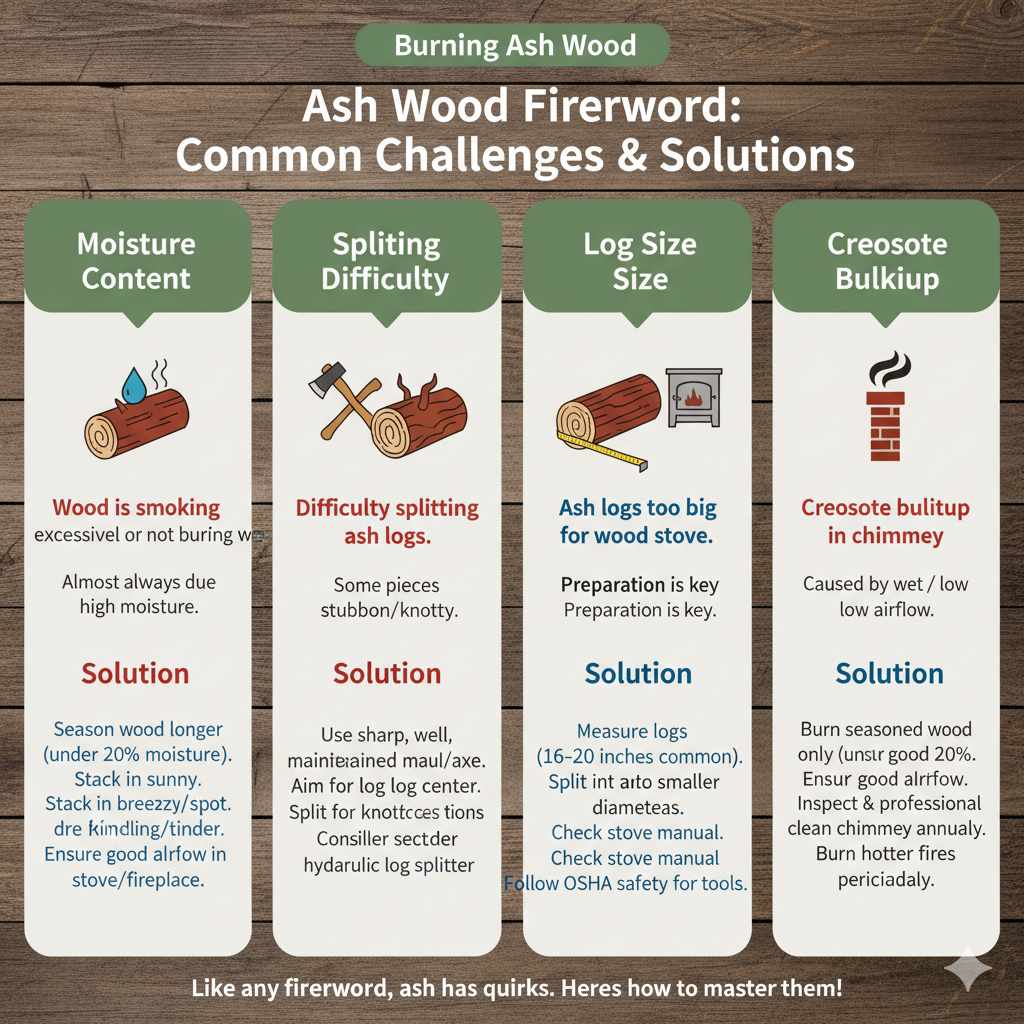
Problem: Wood is smoking excessively or not burning well.
Solution: This is almost always due to moisture content. The wood isn’t seasoned enough. If you can, let it dry for longer. If you must burn it, try to get it as dry as possible by stacking it in a very sunny, breezy spot and exposing it to heat (e.g., near a heater, though be extremely careful with this method) for a short period before burning. Always use plenty of dry kindling and tinder to get the fire very hot before adding the less-than-ideally seasoned ash. Ensure your stove or fireplace has good airflow.
Problem: Difficulty splitting ash logs.
Solution: While ash is generally easy to split, some pieces can be stubborn. Ensure you’re using a sharp, well-maintained splitting maul or axe. Aim for the center of the log. If a log is particularly knotty or has a twisted grain, try splitting it into smaller sections first, which can make the remaining pieces easier to manage. Sometimes, using a hydraulic log splitter, even a smaller manual one, can take the strain out of splitting.
Problem: Ash logs are too big for my wood stove.
Solution: This is a simple matter of preparation. When you cut your ash logs, measure them to fit your specific wood stove or fireplace. Most modern wood stoves require logs between 16 and 20 inches long. Splitting the logs into smaller diameters is also key for them to fit through the stove door and burn efficiently. Always check your appliance’s manual for recommended log size. For advice on safely handling logs, consult resources like the Occupational Safety and Health Administration (OSHA) guidelines for safe tools and practices, even for DIY.
Problem: Creosote buildup in the chimney.
Solution: This is primarily caused by burning wet wood or by smothering the fire too much (reducing airflow). Ensure you are burning only well-seasoned ash wood (under 20% moisture). Make sure your fire has enough air to burn cleanly. Regularly inspect your chimney and have it professionally cleaned at least once a year. Burning hotter fires periodically can also help reduce creosote buildup.
Frequently Asked Questions about Ash Wood for Burning
Is ash wood safe to burn?
Yes, ash wood is very safe to burn, provided it is properly seasoned (dried). Burning green or wet ash can produce excessive smoke and creosote, which are safety hazards. Always ensure your wood is dry and your chimney is maintained.
How long does ash wood last in a fireplace?
Seasoned ash wood burns for a good amount of time, typically 6-10 hours depending on the size of the logs, the density of the wood, and how you manage the airflow in your stove or fireplace. It’s a good hardwood that provides a long, consistent burn.
What is the best way to season ash wood?
The best way is to split the logs, stack them off the ground with airflow on all sides, and protect the top from rain. Allow it to dry for at least 6-12 months in a sunny, breezy location.
Does ash wood spark a lot?
Compared to some very resinous softwoods, ash wood burns relatively cleanly with less sparking. However, any wood can produce sparks, so always use a spark screen on your fireplace and maintain a safe area around your appliance.
Can I burn newly cut ash logs (green wood)?
No, burning green ash is highly inadvisable. It burns poorly, produces a lot of smoke and creosote, and will not provide much heat. Always season your firewood before burning.
What are the main advantages of burning ash wood?
The main advantages are its good heat output, long burn time, ease of splitting, relatively clean burn (less smoke and creosote when seasoned), and wide availability. It’s a well-rounded, high-performing firewood.
Are there any downsides to burning ash wood?
The primary downside, like all hardwoods, is that it requires proper seasoning (drying time). If you burn it green, you’ll have a poor experience. Some people find it slightly less dense than the densest oaks or hickories, meaning you might need a tiny bit more volume for the same amount of heat compared to those top-tier woods, but the difference is often negligible for most users.
Conclusion
So, is ash wood proven good to burn? Absolutely! It consistently ranks as one of the best all-around firewood choices for a reason. Its combination of steady, high heat output, a cleaner burn with less smoke and creosote (when seasoned), and its relative ease of splitting make it a top pick for both experienced wood burners and newcomers alike. Whether you’re heating your home primarily with a wood stove or simply enjoying a cozy fire in your fireplace, seasoned ash wood will provide a reliable, efficient, and enjoyable experience. Remember that the key to unlocking ash’s full potential lies in proper seasoning. Give it the time it needs to dry, stack it well, and you’ll be rewarded with the warm, comforting glow of a truly excellent fire all season long. Happy burning!