Is Teak Wood Good for a Sofa? Durability, Cost & Care
Teak wood is excellent for a sofa frame: it has a Janka hardness of roughly 1,070 lbf and natural oils that resist rot and insects far better than oak or pine — but solid teak costs noticeably more, and only outdoor-grade teak furniture needs to skip fabric upholstery entirely. This guide covers real durability numbers, what a teak sofa actually costs, and how to maintain one without guesswork. If you’re planning the whole room around it, see our black and wood living room ideas for how a wood sofa like this pairs with black accents.
Quick Answer
Teak is one of the best hardwoods for a sofa frame — a density of 630–720 kg/m³ and high natural oil content mean it resists moisture, warping, and pests without a topcoat. Expect to pay $800–$1,200 for teak-look engineered alternatives, roughly $1,400–$2,500 for solid teak from established makers, and $4,000+ for handcrafted, heirloom-grade pieces.

Why Teak Wood Works So Well for a Sofa Frame
Best Teak Sofa Care Kit Pick

TotalBoat 2-Part Teak Wood Cleaner and Brightening System
A two-step Part A cleaner / Part B brightener kit that removes grime and restores teak’s golden color before oiling or sealing.
- Best for: Grayed or dirty teak frames before their annual oil treatment
- Why we picked it: Two-part formula is the manufacturer-recommended prep step before oiling per the maintenance schedule above
- Main drawback: Two-part process takes longer than a single-step spray cleaner
Compare more teak care options
 Option 1 Star Brite Premium Golden Teak Oil
|
 Option 2 TotalBoat Danish Teak Sealer
|
 Option 3 SEMCO Teak Sealer, Natural
|
As an Amazon Associate we earn from qualifying purchases.
Teak is a tropical hardwood with a Janka hardness rating of about 1,070 lbf (some references list 1,080–1,155 lbf depending on the sample), which puts it above pine (~420 kg/m³ density) and in a similar range to white oak on hardness, but ahead of both on rot resistance. What actually matters for a sofa frame is teak’s natural oil content: those oils make the wood self-sealing against moisture and largely immune to termites and fungal decay, which is why teak furniture is the standard choice for boat decks and uncovered patios.
Teak is a dense, oil-rich tropical hardwood that resists rot, insects, and warping without a protective finish. That is the specific property that lets a teak-frame sofa sit outdoors, uncovered, for years — something an oak or pine frame cannot do without regular sealing.

Solid Teak vs. Teak-Look Engineered Wood vs. Oak: Real Numbers
Most comparisons online only cover teak against one alternative. Here is how solid teak stacks up against both a budget engineered-veneer alternative and the most common domestic hardwood used for sofa frames, oak — the three options a shopper is actually choosing between.
| Frame Material | Density / Hardness | Typical Lifespan | Maintenance | Typical Cost |
|---|---|---|---|---|
| Solid Teak | 630–720 kg/m³; ~1,070 lbf Janka | 30–75+ years, indoor or covered outdoor use | Occasional soap-and-water clean; oil or sealer 1–2x/year for outdoor pieces | ~$1,400–$2,500 (retail); $4,000+ handcrafted |
| Teak-Look Engineered Wood | Veneer over engineered core; core hardness varies by substrate | 15–20 years | Standard furniture care; veneer cannot be re-oiled like solid wood | ~$800–$1,200 |
| Oak | ~600–750 kg/m³; ~1,290–1,360 lbf Janka | 20–30 years with finish upkeep | Needs sealing/staining; more vulnerable to humidity swings than teak | ~$700–$1,800 |
Oak is technically harder on the Janka scale, but teak wins on real-world sofa durability because of its oil content — oak has none of teak’s natural rot resistance and needs a finish reapplied to keep moisture out. For an oak-specific breakdown, see our guide on choosing the best wood for outdoor furniture.
How Much Does a Teak Wood Sofa Actually Cost?
Solid teak sofas from established outdoor-furniture makers typically run $1,400 to $2,500, with handcrafted, mortise-and-tenon joinery pieces from specialty workshops reaching $4,000 or more. Budget-conscious shoppers often go with teak-look engineered wood ($800–$1,200), which uses a teak veneer over an engineered core — it looks similar new but has a shorter 15–20 year expected lifespan and can’t be re-oiled or refinished the way solid teak can once the veneer wears through.
Grade A vs. Grade B Teak: What the Price Difference Buys
Grade A teak is cut from the tree’s heartwood — tight grain, minimal knots, and the highest natural oil content, which is what gives teak its rot resistance in the first place. Grade B includes some sapwood and shows more grain variation. Grade A typically costs 30–50% more than Grade B, but that premium buys real longevity: a Grade B frame will need refinishing sooner and won’t weather outdoor exposure as well. For a full cost breakdown by grade and board foot, see our teak wood cost guide.
Teak Wood Sofa Maintenance: What It Actually Takes
A teak sofa frame needs less upkeep than oak or pine, but “low-maintenance” does not mean zero. For exposed frames (arms, legs, visible slats), clean with mild soap and water, avoid harsh chemical cleaners that strip the natural oils, and keep the piece out of direct heat sources like a fireplace or heating vent, which can dry and crack the wood over time.
- Dust or wipe down weekly with a soft cloth to keep grit from grinding into the grain.
- Clean with mild soap and water for general grime; avoid ammonia-based or abrasive cleaners.
- For outdoor or uncovered frames, apply a teak oil or sealer 1–2 times per year — see our step-by-step guide to applying teak oil for the full process.
- If the wood has grayed from sun exposure, clean it first with a dedicated teak cleaner before oiling — oiling over dirt just seals the grime in.
Design and Joinery: What Actually Separates a Good Teak Sofa Frame
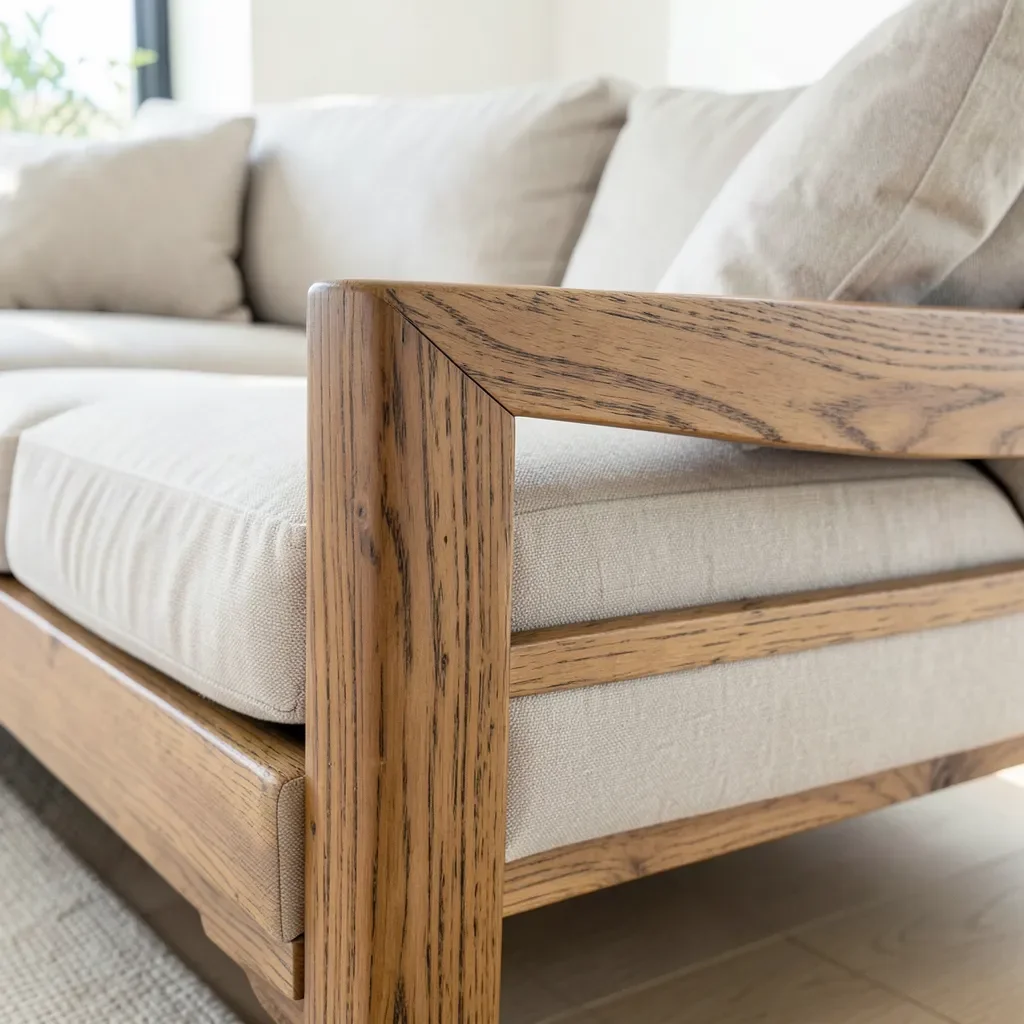
Joinery affects durability more than looks, but if you are still comparing overall styles first, see our teak wood sofa design guide for how modern, mid-century, carved, sectional, loveseat, upholstered-frame, and rattan-accent options compare by room size.
Beyond finish and grade, the joinery is what determines whether a teak sofa frame lasts decades or comes apart in a few years. Mortise-and-tenon joints — where a tongue on one piece fits into a matching slot on another — are the standard on higher-end teak frames because they hold under the repeated stress of people sitting down and getting up, without relying on glue or metal fasteners alone. Cheaper frames substitute dowels or corner brackets, which work but tend to loosen sooner under sustained use.
Stainless steel or brass hardware matters too: teak’s natural oils will corrode standard steel fasteners over time, so any teak frame meant for long-term outdoor use should use stainless or brass screws, not plain steel.

“In my own shop, teak is one of the few hardwoods where I’ll skip a topcoat entirely on outdoor pieces — the natural oil content does the sealing job. The tradeoff is upfront cost: expect to pay noticeably more per board foot than oak or ash, and factor that into the budget before you commit to a solid-teak frame.”
Frequently Asked Questions
Is teak wood good for a sofa?
Yes. Teak has a Janka hardness of roughly 1,070 lbf and natural oils that resist moisture, rot, and insect damage without a protective finish, making it one of the most durable hardwoods available for a sofa frame, indoors or outdoors.
How long does a teak wood sofa last?
A well-maintained solid teak sofa frame can last 30 to 75+ years. Lifespan depends on grade (Grade A outlasts Grade B), joinery quality, and whether outdoor pieces get an occasional oil or sealer treatment. Teak-look engineered wood alternatives typically last 15 to 20 years.
What’s the difference between Grade A and Grade B teak?
Grade A teak comes from the tree’s heartwood, with tight grain, minimal knots, and the highest natural oil content. Grade B includes some sapwood and more visible grain variation. Grade A costs 30 to 50% more but offers better long-term durability and appearance retention.
Is a teak sofa worth the extra cost?
For most buyers, yes, if the piece will see years of daily use or any outdoor exposure. Solid teak’s 30-75+ year lifespan and minimal need for refinishing usually work out cheaper per year of use than replacing a lower-grade frame every 10-15 years, though the upfront price is higher.
Can a teak sofa be used both indoors and outdoors?
Yes. Teak is one of the few furniture hardwoods rated for uncovered outdoor use thanks to its natural oils, and the same frame works indoors without any extra treatment. Indoor pieces need far less maintenance since they aren’t exposed to rain or direct sun.
Teak’s combination of natural rot resistance, real hardness, and long service life is why it remains a premium choice for sofa frames despite the higher upfront cost. Compare it against other options in our guides to acacia vs. teak outdoor furniture and ipe vs. teak pricing, or browse the full teak wood furniture hub for related guides.
Sponsored / affiliate links. As an Amazon Associate I earn from qualifying purchases. I may earn additional commission from eligible campaigns.