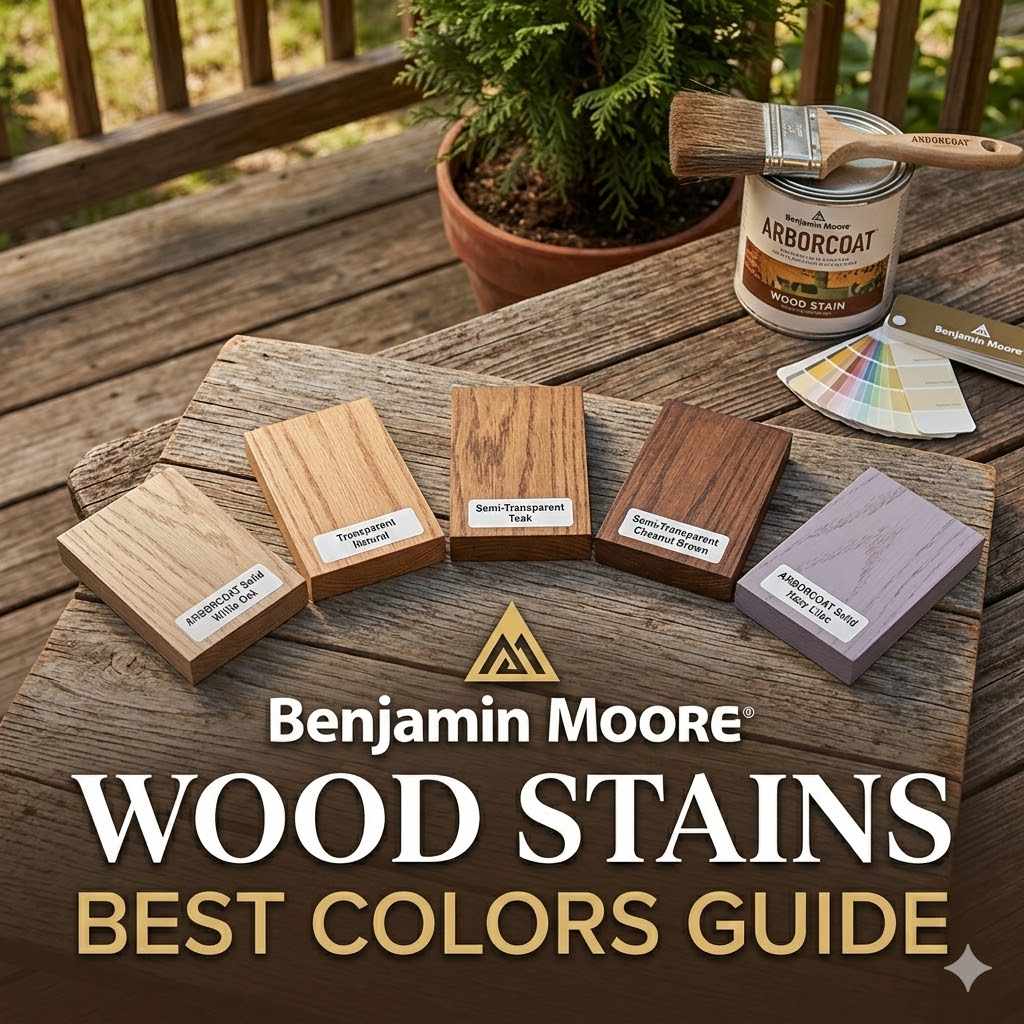
Benjamin Moore Wood Stains Best Colors Guide
Picking the right wood stain color can feel like a puzzle. You want your project to look amazing, but all the choices can be a bit overwhelming. That is where a helpful guide comes in handy.
This resource will make choosing simple. We will walk you through everything step by step, so you can find the perfect shade for your wood, no problem.
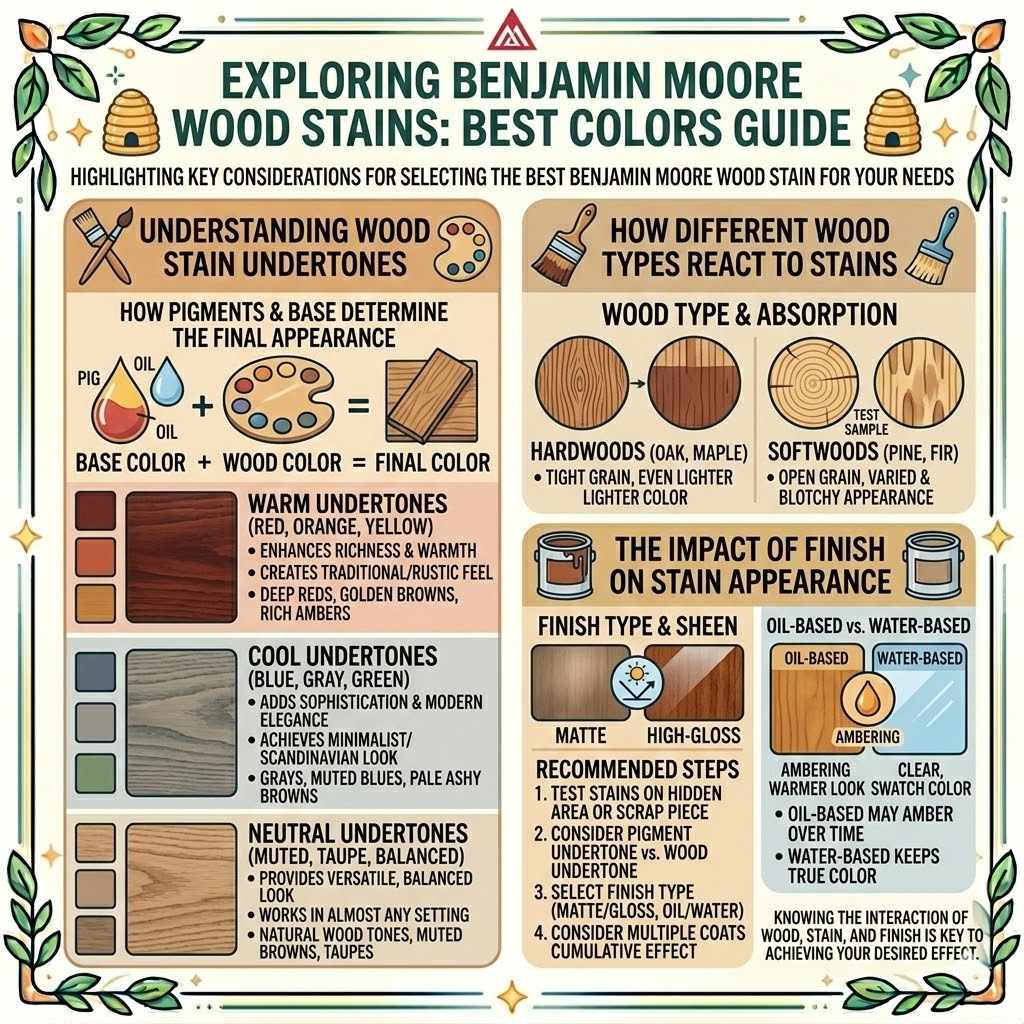
Exploring Benjamin Moore Wood Stains Best Colors Guide
This section looks at the wide variety of wood stain colors Benjamin Moore offers. We will explore popular choices and how they can transform different wood types. Understanding the range of options helps you imagine your project with a fresh look.
This guide aims to simplify your decision by highlighting key considerations for selecting the best Benjamin Moore wood stains for your needs.
Understanding Wood Stain Undertones
Wood stains get their color from pigments. These pigments mix with a base, like oil or water. The color you see is a combination of the pigment and the natural color of the wood itself.
This is why the same stain can look slightly different on pine compared to oak.
Stains often have underlying tones that influence the final appearance. These are called undertones. Common undertones include warm (red, orange, yellow), cool (blue, gray, green), and neutral.
Knowing the undertone of your wood and the undertone of the stain helps you predict the final outcome. For instance, a warm-toned stain on warm-toned wood will enhance that warmth. A cool-toned stain might balance out a very warm wood.
Benjamin Moore offers stains that lean towards these undertones. When you look at a swatch, try to see if it has a red, yellow, or gray cast. This will help you choose a color that complements your existing decor and furniture.
- Warm Undertones These stains often bring out the richness and natural warmth of wood. They can make a room feel cozier and more inviting. Think of colors like deep reds, golden browns, and rich ambers. These are great for creating a traditional or rustic feel.
- Cool Undertones Stains with cool undertones add a sense of sophistication and modern elegance. They can make wood appear more subdued or contemporary. Grays, muted blues, and pale, ashy browns fall into this category. They are excellent for achieving a minimalist or Scandinavian look.
- Neutral Undertones Neutral stains offer a balanced look. They work well in almost any setting because they don’t strongly push the wood towards warm or cool. Think of natural wood tones, muted browns, and taupes. These provide a versatile base for various design styles.
How Different Wood Types React to Stains
The type of wood you are staining plays a huge role in how the stain will look. Different woods have different grain patterns and natural colors. They also absorb stain differently.
Hardwoods like oak and maple have tight, dense grain. They tend to absorb less stain, resulting in a more even and lighter color. Softwoods like pine and fir have a more open grain.
They absorb stain more readily, especially in the softer parts of the grain. This can lead to a more varied and sometimes blotchy appearance.
When choosing a Benjamin Moore wood stain color, consider the species of your wood. A light stain might look lovely on dark walnut, while a deep stain could make pine appear richer and more substantial. It is always a good idea to test the stain on a hidden area or a scrap piece of the same wood type before applying it to your main project.
For example, a popular choice like a warm honey tone might look golden on maple but could appear more orange on pine due to pine’s natural yellow undertones. Understanding this interaction helps prevent surprises and ensures you achieve the desired effect with your Benjamin Moore wood stains: Best Colors Guide.
The Impact of Finish on Stain Appearance
The finish you apply over your wood stain can significantly alter its final look. The finish adds a protective layer, but it also affects the color’s depth, sheen, and overall visual appeal.
Common finishes include polyurethane, varnish, lacquer, and oil. Each has a different sheen level, from matte to high gloss. A matte finish will absorb light and make the color appear more subdued.
A high-gloss finish will reflect light, making the color look richer and deeper, and can sometimes create a slight darkening effect.
Some finishes also have a yellowish or amber cast, especially oil-based ones. This ambering effect can warm up any stain color. For example, a cool gray stain might appear slightly warmer after an oil-based polyurethane is applied.
Water-based finishes are typically clearer and will not add much color of their own.
When selecting your Benjamin Moore wood stain, consider what type of finish you plan to use. If you want a very true-to-swatch color, a water-based clear finish is best. If you prefer a richer, warmer look, an oil-based finish might be the way to go.
It is also important to remember that applying multiple coats of finish can build up a cumulative effect. This can subtly deepen the stain’s color over time, especially with finishes that tend to yellow.
Popular Benjamin Moore Wood Stain Colors and Their Uses
Benjamin Moore provides a stunning palette for wood finishing. This section highlights some of their most popular stain colors and offers practical advice on where and how to use them. We aim to help you visualize these shades in your own projects, making the selection process easier and more enjoyable.
Warm and Inviting Stains
These colors create a cozy and traditional atmosphere. They are perfect for furniture, trim, and flooring where warmth is desired. Benjamin Moore’s range includes classic browns, reds, and golds that evoke a sense of comfort and heritage.
Consider a color like “Tuscan Sofa” for a rich, medium-brown tone. It works beautifully on dining tables, cabinets, and wooden accent walls. This shade brings out the natural beauty of woods like oak and cherry.
It complements a variety of decor styles, from farmhouse to more formal settings.
Another popular choice is a deep reddish-brown, like “Mahogany.” This color adds a touch of elegance and can make any wood piece feel more luxurious. It is excellent for statement furniture items or for creating a distinguished look in a study or library.
- Golden Oak This is a timeless choice that imparts a warm, inviting glow. It brings out the natural grain of woods like oak and maple. It is fantastic for flooring, interior doors, and furniture. Its versatility makes it suitable for both traditional and modern homes.
- Walnut Stain Offers a deep, sophisticated brown that adds richness and depth. It’s a great option for kitchen cabinets, bookshelves, and custom furniture pieces. Walnut stain can make simpler wood types look more expensive.
- Cherry Stain Mimics the beautiful, warm red tones of cherry wood. It brings a classic, elegant feel to any project. This color is ideal for dining room sets, mantels, and architectural trim.
These warm stains often pair well with neutral or earth-toned decor. They create a harmonious and welcoming environment. Remember to test these on your specific wood to see how their undertones interact.
Cool and Contemporary Stains
For a modern or minimalist aesthetic, cool-toned stains are an excellent choice. Benjamin Moore offers shades that evoke a sense of calm and sophistication. These are ideal for furniture, accent pieces, and contemporary interior design elements.
A popular cool option is a light gray stain, such as “Driftwood.” This color provides a subtle, weathered look that complements modern and coastal decor. It is perfect for furniture, barn doors, or even wooden accent walls.
Darker, almost black stains with cool undertones also provide a dramatic, contemporary feel. These can transform a simple piece of furniture into a striking focal point. They work well in minimalist spaces or as a bold contrast against lighter decor.
- Gray Wash This light, airy stain gives wood a soft, muted appearance. It is ideal for creating a distressed or coastal look. It works well on pine, poplar, or any wood where you want a subtle color effect without obscuring the grain too much.
- Espresso Stain While it sounds dark and rich, some espresso stains have cool, almost blue-black undertones. This creates a sleek, modern look. It is a fantastic choice for kitchen cabinets or minimalist furniture.
- Ash Gray This shade offers a sophisticated, slightly desaturated gray. It brings a contemporary feel without being too stark. It pairs well with modern decor and can be used on tables, chairs, or built-in shelving.
Cool stains are great for making a space feel larger and more open. They also pair well with other cool colors like blues, greens, and grays in your interior design. When using these on lighter woods, be aware that they might require more coats to achieve full coverage.
Natural and Neutral Stains
Neutral stains offer a versatile and timeless appeal. They enhance the wood’s natural beauty without significantly altering its color. Benjamin Moore’s neutral options provide subtle variations that work with almost any design scheme.
A clear or natural stain will simply seal and protect the wood, letting its original color shine through. These are great when you love the wood you are working with and just want to enhance its grain and protect it.
Slightly tinted neutral stains can offer a bit more character. For example, a light tan or beige stain can add a touch of warmth and depth while still looking very natural. These are ideal for furniture, trim, or flooring.
- Natural Finish This is the most transparent option. It lets the wood’s original color and grain show through completely. It offers protection without adding significant color. Perfect for maintaining the authentic look of fine woods.
- Light Honey A light, warm neutral that adds a touch of golden warmth. It is subtle and inviting, making it suitable for a wide range of applications from furniture to cabinetry.
- Taupe Stain This earthy, neutral shade bridges the gap between brown and gray. It offers a sophisticated and versatile look that complements many color palettes. It can be used to create a cohesive feel throughout a room.
Neutral stains are excellent for projects where you want the wood itself to be the star. They are also a safe bet if you are unsure about committing to a bolder color. Their understated elegance makes them a popular choice for designers and DIYers alike.
Applying Benjamin Moore Wood Stains for Best Results
Achieving a beautiful finish with Benjamin Moore wood stains involves more than just picking the right color. The application process is key to a professional and long-lasting result. This section will guide you through the essential steps to ensure your staining project is a success.
Surface Preparation is Crucial
Before you even open the can of stain, preparing your wood surface is the most important step. A smooth, clean surface ensures even stain absorption and a flawless finish. Rushing this stage can lead to blotches, uneven color, and a less-than-ideal final appearance.
Start by cleaning the wood thoroughly. Remove any dust, dirt, grease, or old finishes. Sanding is essential.
Use sandpaper of progressively finer grits. Begin with a coarser grit, like 100 or 120, to remove imperfections and smooth out rough areas. Then, move to a medium grit, like 150, and finish with a fine grit, like 220.
This creates a smooth canvas for the stain.
After sanding, wipe the wood down with a tack cloth or a slightly damp rag to remove all sanding dust. Any remaining dust will show up under the stain. For porous woods like pine, you might consider using a pre-stain wood conditioner.
This product helps to even out the stain absorption, preventing blotchiness, especially in areas with contrasting grain patterns.
A well-prepared surface is the foundation for any successful staining project, ensuring your chosen Benjamin Moore wood stains: Best Colors Guide truly shine. Skipping this step is the most common mistake beginners make.
Sanding Techniques for a Smooth Finish
- Start with Coarse Grit Use 80-100 grit sandpaper to remove any rough spots, old finishes, or imperfections. Always sand in the direction of the wood grain.
- Progress to Medium Grit Move to 150 grit sandpaper. This refines the surface and removes the deeper scratches left by the coarser grit. Maintain consistent pressure and direction.
- Finish with Fine Grit Use 180-220 grit sandpaper for the final sanding. This creates a silky-smooth surface that will accept stain evenly. A smoother surface means a more uniform stain color.
- Dust Removal After sanding, meticulously remove all dust. Use a vacuum cleaner with a brush attachment, followed by a tack cloth. Any remaining dust will embed in the stain and be visible.
Proper Application Techniques
Applying Benjamin Moore wood stains correctly ensures an even and beautiful color. There are a few methods you can use, depending on the type of stain and the effect you want to achieve.
For oil-based stains, you can apply them with a brush, rag, or foam applicator. Start by applying the stain liberally to a small section of the wood. Let it sit for a few minutes to allow the wood to absorb the color.
The amount of time you leave it on will affect the depth of the color.
Then, using a clean, lint-free rag, wipe off the excess stain. Always wipe in the direction of the wood grain. The goal is to remove all the surface stain, leaving the color evenly distributed within the wood pores.
For water-based stains, they often dry faster. You might need to work in smaller sections and wipe off the excess more quickly. Follow the specific instructions on the Benjamin Moore product label for best results.
Practice on a scrap piece first to get a feel for the drying time and wipe-off consistency.
Applying in thin, even coats is generally better than applying one thick coat. This gives you more control over the color saturation and reduces the risk of drips and unevenness. Always allow adequate drying time between coats if you plan to apply more than one.
Stain Application Methods
- Brush Application Use a high-quality natural bristle brush for oil-based stains or a synthetic brush for water-based stains. Apply in the direction of the grain.
- Rag Application For a more rustic or antiqued look, you can apply stain with a clean, lint-free rag. Rub it into the wood, then wipe off the excess.
- Foam Applicator Foam applicators can provide a smooth, even coat, especially on larger, flat surfaces.
- Wipe and Remove Excess After allowing the stain to penetrate for a few minutes (check product instructions), use a clean rag to wipe away any excess stain. Work with the grain to ensure an even color.
Topcoats and Protection
Once your stain is dry, applying a topcoat is crucial. The topcoat protects the stained wood from wear, moisture, and damage. It also enhances the appearance of the stain and can add a desired sheen.
Benjamin Moore offers a range of protective finishes. These can be water-based or oil-based, and come in different sheens like matte, satin, semi-gloss, and high-gloss. The sheen you choose will affect the final look of your project.
A matte finish provides a subtle, natural look, while a high-gloss finish offers a dramatic, reflective surface.
Apply the topcoat in thin, even layers. Avoid applying it too thickly, as this can lead to bubbling or an uneven finish. Lightly sand between coats with very fine-grit sandpaper (320 or higher) and wipe away dust.
This helps create a smooth, durable surface. Allow each coat to dry completely according to the manufacturer’s instructions before applying the next.
For high-traffic areas like tabletops or flooring, multiple topcoats are recommended for maximum durability. Choosing the right topcoat will ensure your beautifully stained project remains looking its best for years to come.
- Durability and Protection Topcoats shield the stained wood from everyday wear and tear. This includes scratches, scuffs, and moisture damage. They are essential for any piece that will be used frequently.
- Sheen Selection The sheen of your topcoat impacts the final look. Matte finishes offer a natural, subdued appearance. Satin and semi-gloss add a subtle shine. High-gloss creates a dramatic, reflective surface.
- Application Tips Apply topcoats in thin, even layers. Avoid over-application. Lightly sanding between coats with fine-grit sandpaper and removing dust improves adhesion and smoothness.
- Drying and Curing Always allow adequate drying time between coats. Full curing can take several days or even weeks, during which the finish reaches its maximum hardness.
Choosing the Right Benjamin Moore Wood Stain for Your Project Type
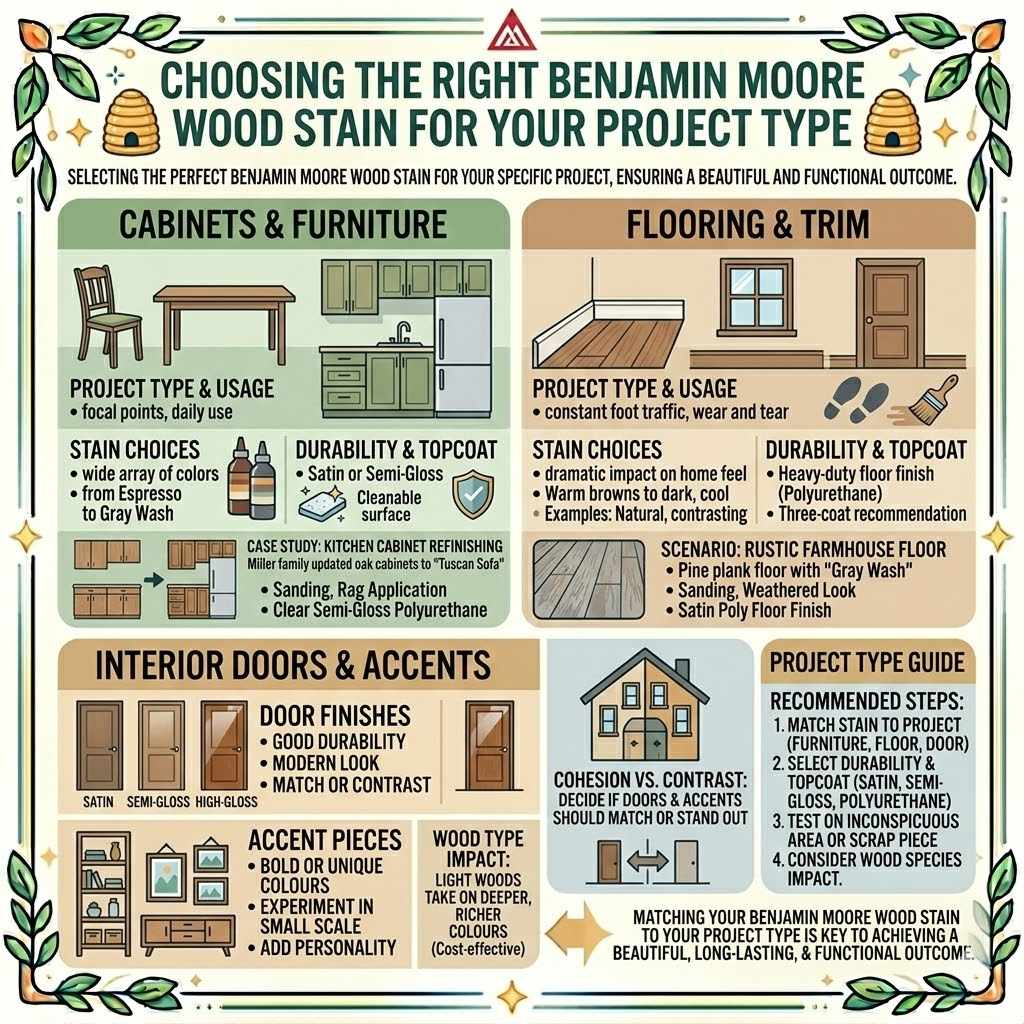
Selecting the perfect Benjamin Moore wood stain depends heavily on what you are staining. Different projects have different requirements for durability, appearance, and the type of wood used. This section will help you match the right stain to your specific project, ensuring a beautiful and functional outcome.
Cabinets and Furniture
Cabinets and furniture are often the focal points of a room, so their finish needs to be both beautiful and durable. Benjamin Moore wood stains offer a wide array of colors that can revitalize these pieces. For kitchen cabinets, consider stains that are easy to clean and resist staining themselves.
A satin or semi-gloss topcoat is often recommended for cabinets and furniture to provide good protection and a subtle sheen. For a more dramatic transformation, consider darker stains like Espresso or a rich Walnut. If you prefer a lighter, more airy feel, a Gray Wash or Light Honey could be ideal.
When staining furniture, think about the existing decor. A classic Mahogany can add a touch of elegance to a traditional dining set, while a cool Ash Gray might suit a modern coffee table. Always test your chosen stain on an inconspicuous area first to ensure it complements the furniture’s style and your room’s aesthetic.
The type of wood the cabinet or furniture is made from also matters. Oak and maple can take stain beautifully. If you are working with a less desirable wood, a more opaque stain might be a good option to achieve a specific color and hide the underlying grain.
Case Study Kitchen Cabinet Refinishing
The Miller family wanted to update their dated kitchen without a full renovation. They chose Benjamin Moore’s “Tuscan Sofa” stain for their oak cabinets. After thorough preparation, they applied the stain using a rag for an even, slightly variegated look, followed by three coats of a water-based semi-gloss polyurethane.
- Preparation involved sanding the cabinets down to bare wood and wiping them clean.
- The “Tuscan Sofa” stain was applied with a rag, working in small sections.
- Excess stain was wiped off immediately with a clean rag, following the grain.
- Three coats of clear semi-gloss polyurethane were applied, with light sanding between coats.
The result was a warm, inviting kitchen that felt significantly more modern and cohesive. The stain brought out the oak’s natural grain while giving it a rich, updated hue.
Flooring and Trim
Wood flooring and trim are subjected to constant foot traffic and wear. Therefore, durability is paramount. Benjamin Moore wood stains, when paired with a heavy-duty topcoat, can create stunning and long-lasting finishes for these areas.
For flooring, a durable polyurethane or a specialized floor finish is essential. The color choice can dramatically impact the feel of your home. A warm, medium brown can make a space feel cozy, while a darker, cooler stain can provide a sophisticated, modern backdrop.
Trim, such as baseboards, window frames, and door casings, benefits from stains that complement the overall color scheme of the room. A Natural Finish can highlight the wood’s beauty and let it blend seamlessly. Alternatively, a contrasting stain can make the trim stand out as an architectural feature.
When staining floors, consider the species of wood. Hardwood floors with dense grain, like maple, will take stain differently than softer woods. It is crucial to test the stain and topcoat combination on a scrap piece of your flooring material to ensure you achieve the desired look and durability.
For high-traffic areas, it is recommended to use at least three coats of a durable floor finish. Ensure adequate drying and curing time to achieve maximum hardness. The effort in preparing and staining properly will pay off with beautiful, resilient wood surfaces for years to come.
Scenario: Choosing Stain for a Rustic Farmhouse Floor
- The homeowner wants a rustic farmhouse look for their pine plank flooring.
- They select Benjamin Moore’s “Gray Wash” stain for its slightly weathered, muted appearance.
- After sanding the pine planks, they apply the “Gray Wash” stain.
- To enhance durability and add a subtle sheen, they apply three coats of a water-based satin polyurethane floor finish.
The final result is a floor that looks like it has aged naturally, adding character and charm to the rustic farmhouse aesthetic. The lighter color helps to keep the space feeling open and bright.
Interior Doors and Accents
Interior doors and decorative accents like shelving or molding offer opportunities for creative expression. Benjamin Moore wood stains allow you to make these elements either blend in or stand out.
For interior doors, you can choose a stain that matches your trim or flooring for a cohesive look. Or, you can opt for a contrasting stain to make the doors a feature. A deep Espresso stain on a door can create a dramatic entrance to a room.
Decorative accents like picture frames, shelving units, or custom-built furniture pieces can be great places to experiment with different stain colors. A unique or bolder stain choice might be perfect for a smaller accent piece where a full room of that color might be too much.
When staining smaller items, proper preparation and application are still key. Ensure all surfaces are clean and smooth. Use a good quality brush for precise application, especially around intricate details.
The type of wood will again influence the outcome. A light, inexpensive wood can be transformed with a rich, dark stain. Conversely, a beautiful natural wood like cherry or walnut can be enhanced with a clear or light stain to showcase its natural beauty.
- Door Finishes For interior doors, a satin or semi-gloss finish offers good durability. A high-gloss finish can make doors look very modern and sleek.
- Accent Pieces Use bold or unique stains on smaller items like shelves, picture frames, or decorative boxes. This is a great way to add personality to your decor.
- Wood Type Impact Lighter woods can take on deeper, richer colors with staining, offering a cost-effective way to achieve a high-end look.
- Cohesion vs. Contrast Decide if you want your doors and accents to match the rest of your woodwork or stand out as a deliberate design choice.
Frequently Asked Questions
Question: What is the most popular Benjamin Moore wood stain color?
Answer: While popularity can shift, warm browns like “Tuscan Sofa” and rich reds like “Mahogany” are consistently popular for their classic appeal. Cool grays like “Driftwood” are also trending for modern looks.
Question: Can I use Benjamin Moore wood stain on painted wood?
Answer: No, you cannot directly stain over paint. You must remove all the paint down to the bare wood before you can apply wood stain. Benjamin Moore stains are designed for unfinished wood.
Question: How many coats of Benjamin Moore wood stain should I apply?
Answer: Typically, one coat is sufficient for a rich color, but you can apply a second coat if you desire a deeper hue. Always allow adequate drying time between coats and for the final coat before applying a topcoat.
Question: How long does Benjamin Moore wood stain take to dry?
Answer: Drying times vary based on the stain type (oil-based or water-based), temperature, and humidity. Oil-based stains generally take longer to dry than water-based ones, often 24-48 hours before applying a topcoat.
Question: What is the difference between a stain and a wood conditioner?
Answer: Stain adds color to wood. Wood conditioner is applied before staining, especially on porous woods like pine, to help the wood absorb the stain more evenly and prevent blotchiness.
Conclusion
Choosing the right Benjamin Moore wood stain color is simpler with this guide. You now know about undertones, wood types, and application methods. We have covered popular choices and project-specific advice.
You can confidently select a shade that perfectly fits your vision. Enjoy creating beautiful, stained wood pieces with Benjamin Moore’s quality products.