How to Apply Stain on a Deck: Best Method by Stain Type
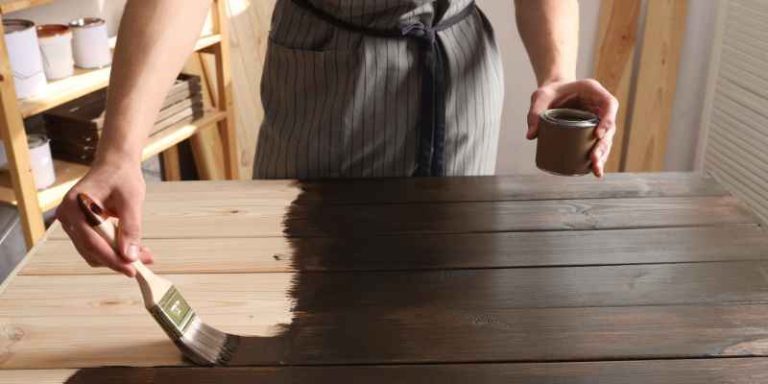
The best way to apply stain on a deck is to work a few boards at a time along their full length, keep a wet edge, and brush the stain into the grain before it sets, whether you put it down with a brush, pad, roller or sprayer. Which applicator you pick matters less than doing that last step. This guide covers the application itself: which tool fits which stain, what order to do the boards in, and when a second coat helps or hurts. For deck cleaning, repairs and cure timing, see our full walkthrough on applying deck stain and sealer.
Quick Answer
Railings first, then the deck floor, then stairs. Stain 2-3 boards at a time, full length, and back-brush every pass. Skip the automatic second coat: on penetrating stains it only works wet-on-wet.
Pick the Applicator to Match the Stain
Best Stain Brush for Back-Brushing
 |
Wooster Bravo Stainer Bristle/Polyester Stain Brush, 4 Inch – $14.29 A wide, firm brush made for stain, and the tool this guide leans on for working wet stain into the grain after any roller or sprayer pass.
|
Transparent and semi-transparent stains are meant to soak in, so they punish any method that leaves a film. Solid stains are the opposite: they form a coating, so thick buildup is the enemy. That one difference decides most of the choice below.
| Applicator | Best on | Speed | Back-brush needed? | Watch out for |
|---|---|---|---|---|
| Brush (4-6 in.) | All stain types, rough or weathered wood, railings | Slowest | No, it is the back-brush | Fatigue on large decks; use an extension pole |
| Stain pad | Smooth boards, semi-transparent and solid | Medium | Rarely | Skips deep grain and the gaps between boards |
| Roller (3/8 in. nap for smooth, 1/2 in. or more for rough) | Solid and semi-solid stains on big flat areas | Fast | Yes | Pooling in board gaps; unsuitable for thin transparent stains |
| Pump or garden sprayer | Large decks, lattice, balusters | Fastest | Always | Overspray and wind drift; stain sitting on top of the wood |
If you are working with a specific brand, its label may override these defaults. For example, our Ready Seal review covers a stain that is sold with its own application directions, and the Sherwin-Williams SuperDeck breakdown does the same for that line.
Order of Work: Railings, Floor, Stairs
Most guides say “work in sections” and stop there. The order actually matters because stain drips, and because you can walk yourself into a corner. A sequence that works on almost any deck:
- Railings, posts and balusters first, top to bottom. Anything that drips lands on bare boards you have not stained yet.
- Deck floor second, starting at the corner farthest from the stairs or door so you finish at the exit.
- Stairs last. Do every other tread, or half the width, so you still have a dry path, then come back for the rest once it is safe to step.
- Edges before faces: brush the board sides and the gaps first, then the top face, so stain does not pool between boards.
On the floor, treat each group of 2 or 3 boards as one unit and stain it from one end to the other without stopping. Most lap marks come from pausing mid-board, letting the edge begin to set, and then overlapping fresh stain onto it. Stop only at a joint or a board end.
How to Back-Brush Properly
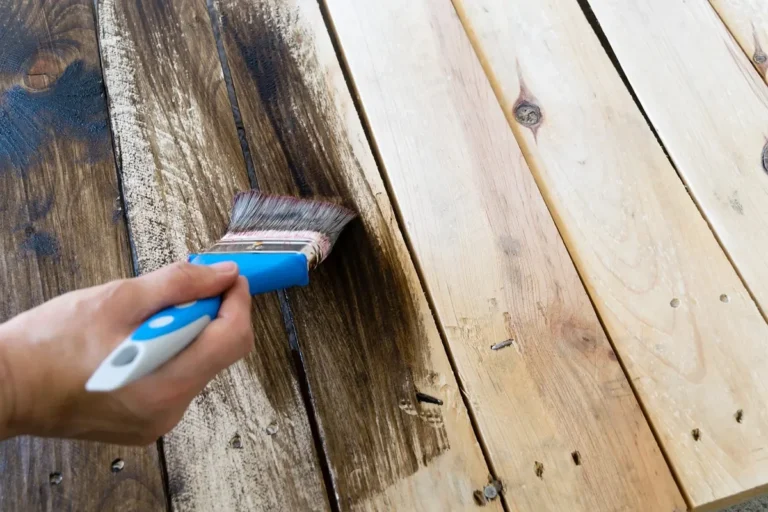
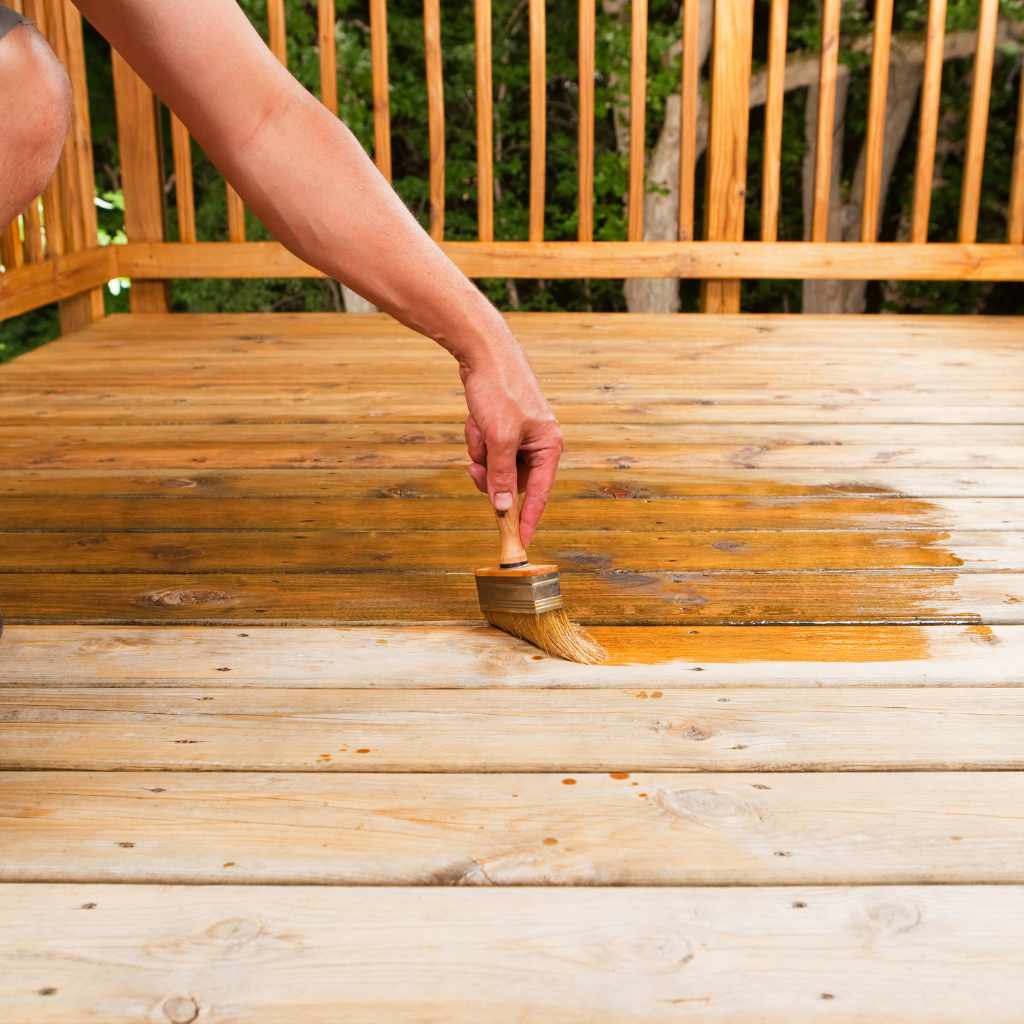
Back-brushing means going over wet stain with a dry brush, along the grain, to push it into the wood and level out any puddles. Do it immediately behind the roller or sprayer, while the stain is still glossy and wet. If you wait until it dulls, you are only dragging a skin around.
- Use long strokes with the grain, lifting the brush at the board end rather than at the middle.
- Spread out puddles that collect in knots, cracks and board gaps. Puddles dry as dark, tacky patches that peel first.
- Wipe back any excess on the surface. If stain is still sitting on top after 15 minutes or so, the wood cannot absorb more, and extra product will not add protection.
The Two-Coat Myth
The common advice to always put on two coats and wait a few hours between them is right for solid stains and often wrong for penetrating ones. Transparent and semi-transparent oil-based stains soak in during the first coat. If the first coat has fully dried, a second one has no open pores to enter, so it can sit on the surface, stay tacky and peel. Many labels for these products call for one coat, or a second coat applied wet-on-wet within a short window while the first is still absorbing. Solid, film-forming stains usually do want two thin coats with the label drying time between them.
So read the can for your exact product before you commit. If it says “apply a second coat while the first is still wet,” that is a wet-on-wet instruction, not a reason to wait a day.
How Much Stain You Need
Coverage is where most people run short mid-job, which forces a stop at the worst possible moment. This table does the arithmetic for decking boards only, using two rates: 200 square feet per gallon as a mid-range figure for smooth, newer wood, and 125 square feet per gallon for rough or weathered boards that drink more. Check your own can, since real coverage varies a lot by product and wood.
| Deck size | Decking area | Smooth wood (200 sq ft/gal) | Rough or weathered (125 sq ft/gal) |
|---|---|---|---|
| 10 x 10 ft | 100 sq ft | 0.5 gal | 0.8 gal |
| 12 x 12 ft | 144 sq ft | 0.7 gal | 1.2 gal |
| 12 x 16 ft | 192 sq ft | 1.0 gal | 1.5 gal |
| 16 x 20 ft | 320 sq ft | 1.6 gal | 2.6 gal |
| 20 x 24 ft | 480 sq ft | 2.4 gal | 3.8 gal |
Railings, balusters and stairs are extra, and balusters in particular eat more stain than their size suggests. Buy a bit over, because color can vary slightly between batches, and a mid-deck switch to a new can can show as a visible change. Pour all your cans into one bucket and mix them together (boxing) for a consistent color across the deck.
Weather Window and Surface Temperature
Most deck stain labels give a temperature range, often somewhere between 50 and 90 degrees F, and a dry spell of roughly 24 to 48 hours afterward. Two things catch people out. First, the label means surface temperature, and boards in direct sun can be much hotter than the air, so stain dries before it can soak in. Second, evening dew can wet fresh stain overnight, so finish early enough in the day for the surface to set before dusk.
Our guides on drying wood stain faster and how long to wait before walking on stained decks cover the cure side in depth. Starting with new lumber? See when to seal pressure-treated wood first, since fresh pressure-treated boards may be too wet to take stain.
Prep That Affects How the Stain Goes On
Application problems are often prep problems. A mildewed or dirty surface blocks absorption, so use a proper cleaner, such as one of our DIY deck cleaner recipes, and let the boards dry fully. Sand only raised grain and old stain flakes, and stop at 60 to 80 grit, as covered in our guide on deck sanding grits, since finer sanding closes the pores. Fill deep cracks with exterior filler (see how to use wood filler) and let it cure before staining.
Reapplying Solid Color Stain
If solid stain is faded but still firmly adhered, you can clean it, let it dry and recoat. If it is peeling, bubbling or flaking, strip it first, because a new coat over a failing film fails with it, often within a season.
- Faded only: clean, dry 48 hours, scuff glossy areas lightly and apply one or two thin coats of the same product line.
- Peeling or flaking: strip with a deck stain stripper, sand, and prime bare weathered wood if the stain maker calls for it.
- Switching oil to water-based or the reverse: test adhesion in a small area first, and strip if in doubt.
Safety: Oily Rags Can Ignite
Rags, pads and brushes soaked in oil-based stain can heat up as the oil cures and, in a pile, can catch fire on their own. Lay them flat outdoors, away from buildings, until fully dry, or put them in a sealed metal container filled with water. Never bundle them into a trash can. If you spray, wear a respirator rated for organic vapors and work in open air with the wind at your back.
Frequently Asked Questions
What is the best way to apply stain to a deck?
Brush it on, or roll or spray it on and then back-brush right away. Work 2 to 3 boards at a time along their full length so you always have a wet edge, and never stop in the middle of a board. Back-brushing is what pushes the stain into the grain instead of leaving a film on top.
Should I stain the railings or the deck floor first?
Railings and posts first, working top to bottom, then the deck floor, then the stairs last. Drips and spatter from the railings land on boards you have not stained yet, and you finish at the exit instead of trapping yourself in a corner.
Do I always need two coats of deck stain?
No. Many penetrating transparent and semi-transparent stains call for one coat, or a second coat applied wet-on-wet while the first is still absorbing. A second coat over a fully dried penetrating stain has nowhere to soak in and can sit on the surface and peel. Film-forming solid stains usually do want two coats with drying time between. Follow the can for your product.
Can I use a roller or sprayer without back-brushing?
You can, but the result is usually a surface film with uneven penetration, which shows up as lap marks and early peeling. A roller or sprayer is just a faster way to get stain onto the boards. The brush pass is what works it into the wood.
How much stain do I need for a 12 x 16 foot deck?
The decking surface is 192 square feet. At 200 square feet per gallon that is about one gallon for a single coat, and at 125 square feet per gallon on rough or weathered boards it is closer to 1.5 gallons. Railings, stairs and balusters add to that, so buy extra rather than running short mid-board.
Bottom Line
Pick the applicator that fits your stain, work from railings to floor to stairs, keep a wet edge by staining whole boards at a time, and back-brush every pass. Treat the second coat as a decision you make from the can, not a default. Get those three things right and the applicator brand barely matters.
Sponsored / affiliate links. As an Amazon Associate I earn from qualifying purchases. I may earn additional commission from eligible campaigns.