
How to Dispose of Wood Stain and Paint: Latex vs. Oil-Based
Latex wood stain and paint can go in the regular trash once fully dried — but the EPA classifies oil-based stains, paints, and varnishes as hazardous waste under RCRA Subtitle C, so they can never go in a curbside bin. Pouring either type down a drain violates the Clean Water Act and can contaminate groundwater. This guide covers how to dry out latex products for trash disposal, where oil-based waste has to go (PaintCare accepts drop-offs at over 2,300 U.S. locations), and how to handle stain-soaked rags without starting a fire.
Latex vs. Oil-Based: Why the Disposal Rules Are Different
Wood stain and paint fall into two regulatory categories, and the container label tells you which one you have. Latex (water-based) products are not classified as hazardous once the liquid has evaporated, so a fully dried can or a solidified blob of paint is legal to throw away with normal household trash in most municipalities. Oil-based products — including oil-based wood stain, varnish, shellac, and traditional oil paint — contain solvents that the EPA regulates as hazardous waste under RCRA Subtitle C, whether the can is full, empty, or hardened solid. That distinction is the entire reason generic “just throw it away” advice gets people fined or, worse, gets solvent into a local water supply.
| Factor | Latex / Water-Based | Oil-Based |
|---|---|---|
| Regulatory status | Non-hazardous once fully dried | Hazardous waste (RCRA Subtitle C) |
| Trash disposal | Allowed after drying solid | Never allowed, dried or not |
| Where it goes | Curbside trash (dried) or PaintCare drop-off (liquid) | Household Hazardous Waste (HHW) facility or PaintCare |
| Clean-up solvent | Water and soap | Mineral spirits or paint thinner (also hazardous waste) |
If the can has no label left, do a quick check before you decide how to dispose of it: latex paint and stain clean up with soap and water, while oil-based paint and stain need mineral spirits or paint thinner to clean brushes. That single test tells you which column above applies.
Best Paint Hardener Pick
 |
Homax 3535 Waste Away Paint Hardener – $3.99 A powder that turns leftover latex or acrylic paint solid in 15–20 minutes so it is legal to put in the regular trash, no digging through the garage for cat litter or sawdust.
|
As an Amazon Associate we earn from qualifying purchases.

How to Dispose of Latex Paint and Water-Based Stain
Latex paint and water-based wood stain are safe for curbside trash once the liquid has fully solidified — a wet or even half-liquid can still counts as loose liquid waste that most haulers will reject.
- Check the amount left: less than an inch of paint in the bottom of a can will air-dry in a few days with the lid off in a ventilated space. Larger amounts need a drying agent.
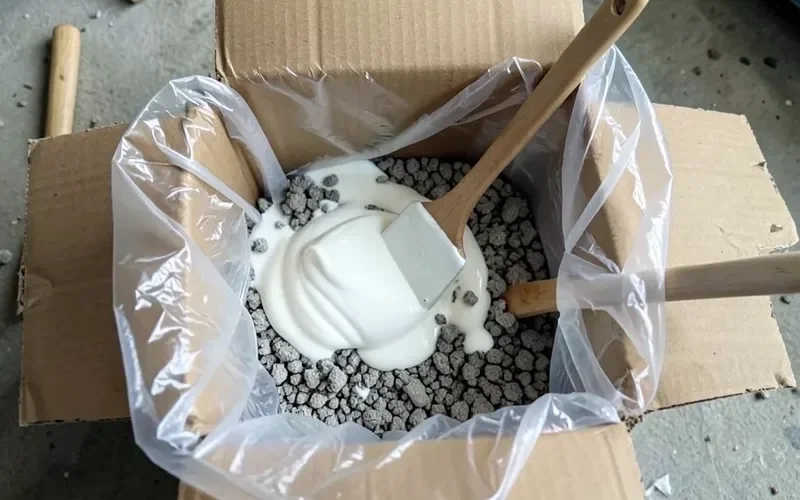
- Add a drying agent for anything more than an inch: stir in cat litter, sawdust, or a commercial paint hardener (see the pick above) until the paint reaches an oatmeal-thick, non-pourable consistency.
- Let it fully solidify: a paint hardener typically sets in 15–20 minutes per 2/3 gallon; cat litter or sawdust can take 24–48 hours depending on the amount and ventilation.
- Remove the lid and trash it: most municipalities want the lid off so collectors can see the paint is solid, not liquid. Leave the can open in the trash bin, or dump the solidified block into the bag and recycle the empty metal or plastic can separately if your city’s recycling program accepts it.
How to Dispose of Oil-Based Paint and Stain (Hazardous Waste Rules)
Oil-based wood stain, varnish, shellac, and oil paint are regulated as hazardous waste under RCRA Subtitle C regardless of whether the can is liquid, dried, or empty with residue inside. Drying an oil-based product does not change its legal classification the way it does for latex — it still has to go to a licensed disposal point, not the trash.
Two disposal paths cover almost every situation:
- Household Hazardous Waste (HHW) facility: most counties run a permanent HHW drop-off site or periodic collection events specifically for solvent-based paint, stain, and varnish. A search for “[your city] household hazardous waste” will surface the nearest one.
- PaintCare drop-off site: PaintCare is the paint industry’s stewardship program and runs more than 2,300 year-round drop-off locations — mostly at paint and hardware stores — in the 11 states and Washington D.C. that have paint stewardship laws. Check PaintCare.org for the nearest location; it accepts both latex and oil-based products, so you can bring liquid latex here too instead of drying it out yourself.
📊 PaintCare operates over 2,300 drop-off sites across the 11 states with paint stewardship laws plus Washington D.C. — Source: PaintCare, 2026.
If neither option is nearby, call the retailer where you bought the product — many paint and stain retailers accept leftover product for recycling even outside the official PaintCare network, particularly in states without stewardship laws.
How to Dispose of Paint- and Stain-Soaked Rags Safely
Rags soaked in oil-based stain, linseed oil finish, or oil paint are a genuine fire hazard, not just a disposal inconvenience. As the oil cures, the oxidation reaction generates heat, and a rag balled up in a trash can or laundry hamper can reach ignition temperature with no open flame involved — this is a real, well-documented cause of shop and garage fires, not a scare tactic.
- Lay rags flat outdoors to dry: spread them individually on a non-flammable surface such as concrete or a metal bucket lid, away from the house, siding, or anything combustible, until they are stiff and fully dry.
- Or submerge them in water: if you cannot dry them outdoors immediately, keep the rags submerged in a sealed metal container filled with water until you can dry or dispose of them — a dry, balled-up rag is the dangerous state, not a wet one.
- Bag once fully dry: a completely dry, oil-cured rag can go in regular trash. A rag with any oil-based product still wet on it should go to the same HHW facility as the paint or stain itself.
Rags used only with latex paint or water-based stain do not carry this fire risk — let them air-dry and dispose of them with regular trash.
What About Spray Paint Cans and Empty Containers?
Aerosol spray paint and stain follow a different test than liquid cans because the container stays pressurized until the propellant is gone, not just the paint. A can that still rattles or sprays anything — paint or just propellant — is not empty and cannot go in curbside recycling or trash in most areas; it needs to go to the same HHW facility or PaintCare site as liquid paint, since a punctured pressurized can is a real hazard in a garbage truck.
- Fully empty aerosol can (no rattle, no spray, no smell): most curbside metal recycling programs accept it; check your municipality’s specific rule since some still classify all aerosols as hazardous regardless of emptiness.
- Aerosol can with any paint or propellant left: HHW facility or PaintCare, never the trash or curbside recycling.
- Empty, dry metal paint or stain cans (liquid, not aerosol): once the can is scraped clean and any residue has dried, the empty metal container itself can usually go in curbside metal recycling separately from the disposal method used for the paint or stain that was inside it.
Common Disposal Mistakes to Avoid
- Pouring paint or stain down a drain or storm sewer: this violates the Clean Water Act and can contaminate groundwater; see our answer on whether paint can go down the drain for what actually happens if it does.
- Pouring out solvent or paint thinner the same way: mineral spirits and paint thinner poured down a drain carries the same violation and additional fire risk in sewer lines.
- Assuming dried paint is automatically trash-legal: that is only true for latex and acrylic. Dried oil-based paint and stain are still hazardous waste.
- Balling up oil-soaked rags in the trash: as covered above, this is a genuine fire risk, not just a disposal technicality.
- Leaving liquid paint in a can in the trash: haulers can refuse the entire bin, and a punctured can leaks into the truck and eventually a landfill’s leachate system.
Frequently Asked Questions
Can you throw dried latex paint in the trash?
Yes. Once latex or acrylic paint has fully solidified — either by air-drying or with a hardener like cat litter or a commercial paint solidifier — it is no longer classified as hazardous and most municipalities accept it in regular household trash with the lid off.
Is oil-based wood stain hazardous waste?
Yes. The EPA classifies oil-based stain, varnish, shellac, and paint as hazardous waste under RCRA Subtitle C whether the container is liquid, dried, or empty with residue. It has to go to a Household Hazardous Waste facility or a PaintCare drop-off site, never the trash.
Can you wash wood stain or paint down the drain?
No. Pouring paint or stain, latex or oil-based, down a sink or storm drain violates the Clean Water Act and can contaminate groundwater and municipal water treatment systems. Dry out latex for the trash or take either type to a PaintCare location.
How do you dispose of paint- or stain-soaked rags?
Lay rags used with oil-based products flat outdoors on a non-flammable surface until fully dry, or keep them submerged in water in a sealed metal container until you can dry them — balled-up, oil-soaked rags can self-ignite from the curing reaction’s heat. Once fully dry, bag them with regular trash.
What is PaintCare and how do I find a drop-off location?
PaintCare is the paint industry’s stewardship program that runs more than 2,300 year-round drop-off sites, mostly at paint and hardware stores, in the 11 states and Washington D.C. with paint stewardship laws. Check PaintCare.org and enter your zip code to find the nearest site; it accepts both latex and oil-based paint and stain.
Conclusion
The disposal method comes down to one question: latex or oil-based? Dry out latex paint and stain with cat litter or a hardener and it is legal for regular trash. Oil-based paint, stain, and varnish stay classified as hazardous waste no matter how dry they get, so they need a Household Hazardous Waste facility or a PaintCare drop-off — and either type should never go down a drain.
Sponsored / affiliate links. As an Amazon Associate I earn from qualifying purchases. I may earn additional commission from eligible campaigns.