Cabot Semi-Solid vs Solid Stain: Skip Solid on Deck Floors
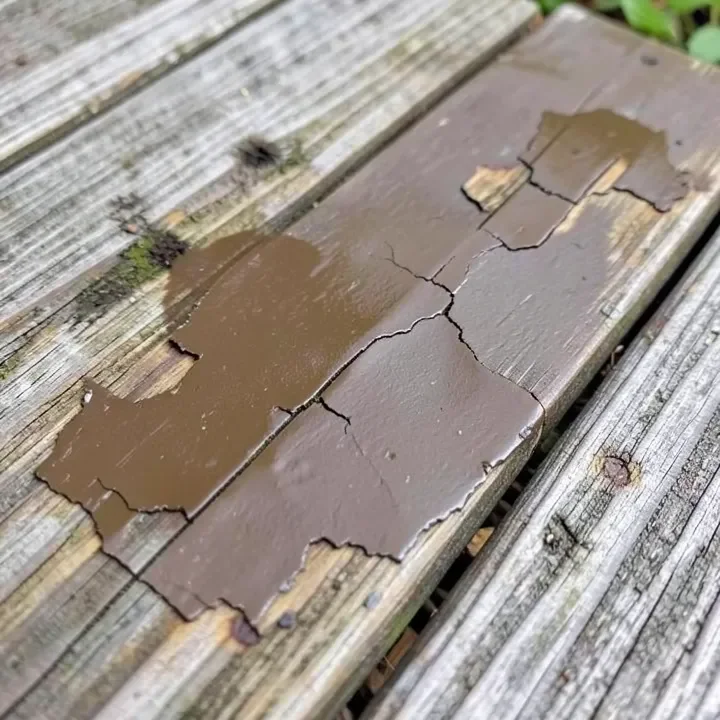
Cabot’s semi-solid and solid stains differ in more than opacity. Solid stain forms a full film that can crack and peel on horizontal deck boards within a few years, while semi-solid weathers by fading instead of peeling and holds up better underfoot. Independent field tests have flagged this exact failure mode on deck floors, even though solid stain still performs well on vertical fences and siding. This guide covers which Cabot line fits which surface, plus real opacity and coverage numbers.
Cabot’s Two Stain Lines, By the Numbers
Best Cabot Pick for Deck Floors
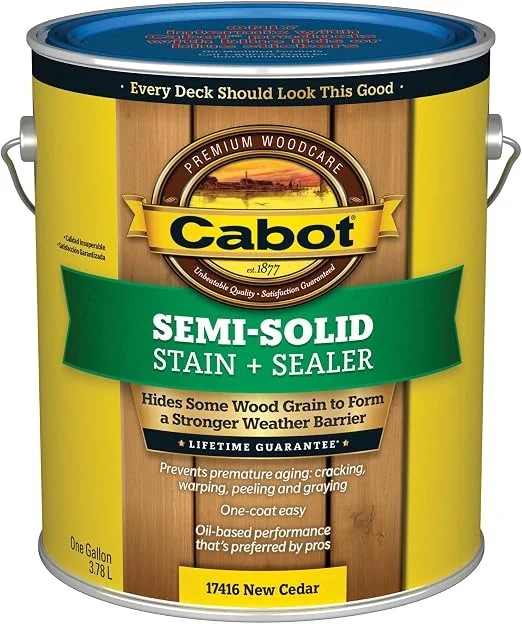 |
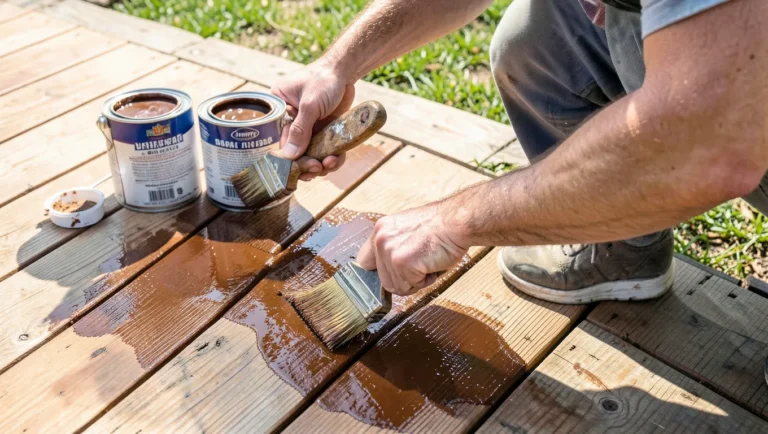
Cabot Semi-Solid Wood Stain + Sealer, Low VOC (New Cedar) – $75.51 This is the line this guide recommends for deck floors specifically — it hides about 70% of the wood grain and weathers by fading instead of the cracking and peeling that solid stain is documented to develop on horizontal boards.
|
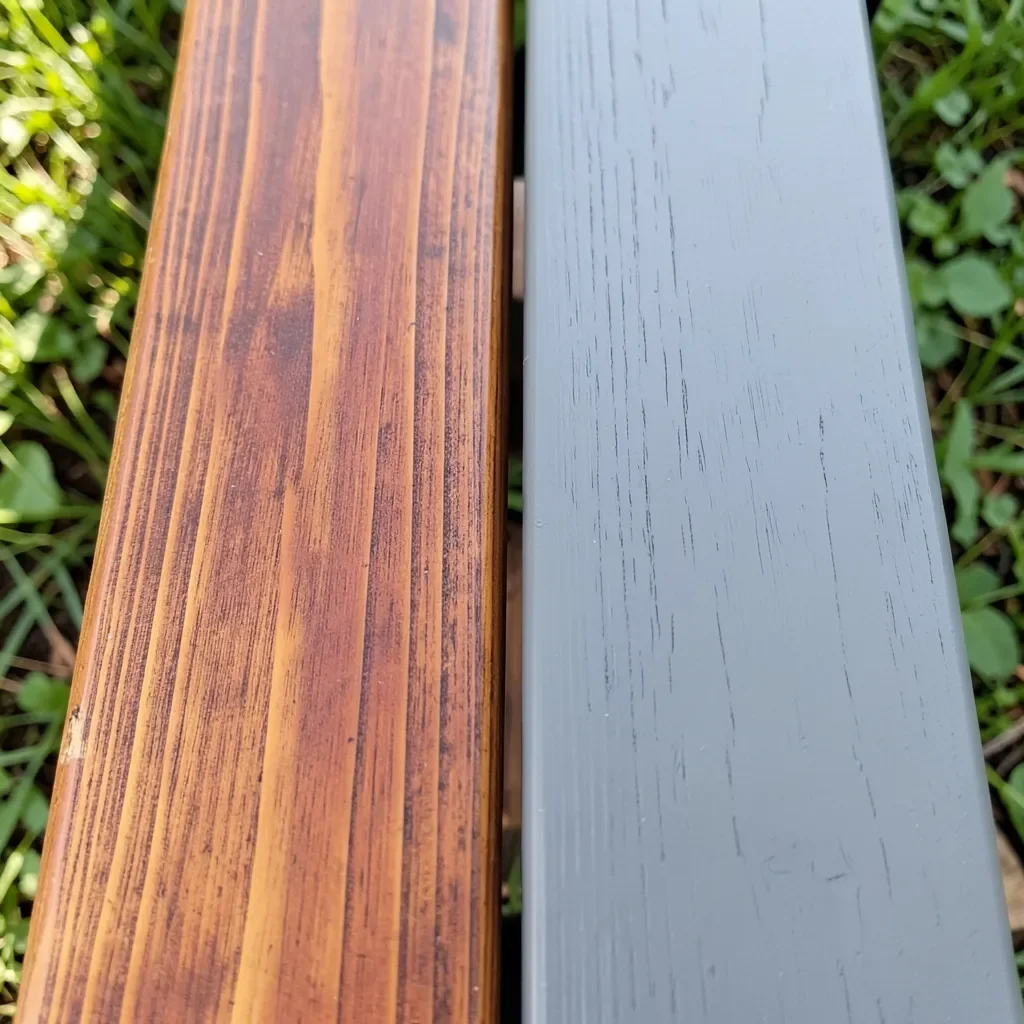
Cabot Semi-Solid Stain + Sealer carries roughly twice the pigment of a semi-transparent stain, hides about 70% of the wood grain, and is sold in around 100 colors. Cabot Solid Color Oil Deck Stain uses a tough alkyd resin for a fully opaque finish designed for maximum color and UV protection. Cabot also sells a Low VOC waterborne alkyd version (#17400) where oil-based solvent stains are restricted, and a separate 100% acrylic Semi-Solid Siding Stain formulated specifically for siding, shingles, and log homes rather than decking.
The Real Difference: How Each One Actually Fails
Manufacturer marketing tends to frame solid stain as simply “more protective,” but that’s only half the story. Solid color stain weathers by cracking and peeling once its film becomes brittle with age — a 2-year independent field test scored Cabot’s oil-based solid stain just 4 out of 10 for wear and peeling, with visible deterioration by year two and cracking commonly reported by year four on deck floors specifically. The same product scored a strong 10 out of 10 for mold and mildew resistance, so the issue isn’t the formula’s protection chemistry, it’s how a brittle film handles being walked on and rained on repeatedly.
📊 A 2-year field test scored Cabot’s oil-based solid color stain 4/10 for wear and peeling, but 10/10 for mold and mildew resistance — Source: DeckStainHelp, Cabot Solid Color Stain Review
Semi-solid stain avoids this failure mode because it weathers more like a stain and less like paint — it fades and erodes gradually at the surface rather than building up a thick film that eventually has nowhere to go but crack. That’s why semi-solid is the safer default for deck floors and other horizontal surfaces, while solid stain’s peeling problem mostly shows up where the coating takes direct foot traffic and pooling water.
Cabot Semi-Solid vs Solid Stain Comparison
| Feature | Semi-Solid | Solid Color |
|---|---|---|
| Grain visibility | ~30% grain still shows | Fully opaque, no grain |
| Weathers by | Fading and erosion | Can crack/peel once brittle |
| Best surface | Deck floors, horizontal wood | Fences, siding, vertical wood |
| Coats needed | Usually 2 | Usually 1–2 |
| Best for aged wood | 5–10 year old decks, grayed but sound | Wood needing full imperfection coverage |
| Mold/mildew resistance | Good | Excellent (10/10 in field testing) |
Which One Fits Your Project
- Deck floors and horizontal surfaces: choose semi-solid. It handles foot traffic and weather cycling without the brittle-film cracking solid stain shows in field tests.
- Fences and siding (vertical surfaces): solid stain works well here since it isn’t walked on, and its full opacity is genuinely useful for hiding old, weathered, or mismatched boards.
- A 5–10 year old deck that’s grayed and splotchy but structurally sound: semi-solid evens out the color while keeping some of the wood grain visible.
- Siding with significant surface imperfections: solid color stain’s full opacity covers what semi-solid can’t.
Application and Surface Prep
Both lines need a clean, dry surface, but solid stain generally requires more thorough prep since any texture unevenness will show through a fully opaque finish differently than it would through semi-solid. Sand or strip old peeling coatings before applying either product — recoating over failing stain just traps the problem underneath a new layer that will fail again sooner. If you’re deciding between Cabot and another exterior stain brand for a specific project, see how it stacks up on choosing the best deck stain overall.
Frequently Asked Questions
What is the real difference between Cabot semi-solid and solid stain?
Semi-solid carries roughly twice the pigment of a semi-transparent stain and hides about 70% of the wood grain, while solid color stain is fully opaque and hides all of it. The bigger practical difference is how each one fails over time: solid stain forms a complete film that can crack and peel, while semi-solid weathers by gradually fading instead.
Can I use Cabot solid stain on a deck floor?
You can, but independent field testing has found Cabot’s oil-based solid color stain prone to cracking and peeling on horizontal deck boards within a few years, since foot traffic and standing water stress the film differently than on a vertical surface. It performs noticeably better on fences and siding, where the surface isn’t walked on.
Why does solid stain peel but semi-solid doesn’t?
Solid stain is a film-forming product, meaning it sits on top of the wood as a continuous layer that can crack once it becomes brittle with age or gets stressed by foot traffic and moisture cycling. Semi-solid still forms a thinner film but carries less pigment and weathers more by erosion and fading, so it doesn’t build up the same brittle layer that eventually cracks.
How many coats of Cabot stain do I need?
Semi-solid typically needs two coats to reach full color depth, while solid color stain usually covers in one to two coats since it’s fully opaque from the start. Both benefit from a clean, dry, lightly sanded surface before application.
Is Cabot semi-solid or solid stain better for old, weathered wood?
Semi-solid works well on decks that have grayed and gone slightly splotchy over 5-10 years but still have sound boards, since it evens out color while keeping some natural texture. Solid stain is the better choice when the wood has more significant imperfections you want fully hidden, as long as it’s on a vertical surface rather than a deck floor.
The opacity difference between Cabot’s semi-solid and solid stains is real, but it’s not the number that should drive your decision — where the wood sits and how much foot traffic and weather cycling it takes matters more. Semi-solid for deck floors, solid for fences and siding, is the split independent testing actually supports.
Weighing two specific Cabot oils instead? See our comparison of Cabot Gold vs Australian Timber Oil.
Sponsored / affiliate links. As an Amazon Associate I earn from qualifying purchases. I may earn additional commission from eligible campaigns.