7 Dog Booties for Hardwood Floors, Ranked by Stay-On Fit (2026)
The best all-around pick for most dogs is the QUMY Dog Shoes ($6.52/boot) — the widest size range (8 options) and two independent straps per boot of any pick we compared. But if a bootie has already fallen off during normal indoor movement, the Ruffwear Summit Trex is the only pick here whose own hardware spec (a YKK hook-and-loop closure with a reinforced cuff) directly engineers against that exact failure. We compared 7 dog booties across sole material, closure design, size range and real per-boot price — the full table is below.
Closure design, not sole material, is the biggest differentiator between dog booties that stay on a hardwood floor and ones that don’t. Every pick we compared has a grippy sole; only some of them have hardware engineered to survive a dog running, twisting or “zooming” indoors.
Dog Booties for Hardwood Floors, Compared
Every number below comes from each product’s own Amazon listing or manufacturer copy, pulled and price-checked this week. Cost per boot is computed from the actual pack size — some brands sell in 4-packs, one sells in pairs, one sells in bulk 12-packs — so it’s the only way to compare them on equal footing. Where a spec wasn’t published, we say so instead of guessing.
| Bootie | Sole / Grip Material | Closure & Retention System | Size Range | Price |
|---|---|---|---|---|
| QUMY Dog Shoes Waterproof Anti-Slip #1 Best Overall | Rubberized traction sole (compound not disclosed by QUMY) | Two adjustable, reflective hook-and-loop straps per boot with a wide split-seam opening | 8 sizes, 1.8″–3.3″ paw width (11–88 lb dogs) | $26.09 total $6.52/boot (set of 4) |
| Ruffwear Summit Trex Best for Booties That Actually Stay On | Non-marking, grippy rubber outsole | YKK hydrophobic hook-and-loop closure with a reinforced cuff | Sold by paw width in pairs; 2.75″ shown, other widths available per size chart | $29.99 total $15.00/boot (sold in pairs, not 4-packs) |
| Hcpet Anti-Slip Dog Boots Best Sole for Indoor Hardwood Floors | Rugged rubber sole — the listing’s own copy names “hardwood floor” damage prevention specifically | Hook-and-loop strap with wide, reflective opening | Multiple sizes per Hcpet’s own chart (Size 8 shown, 2.75″ width) | $28.85 total $7.21/boot (set of 4) |
| DOK TigerToes Premium Non-Slip Dog Socks Best Dog Socks for Hardwood Floors | Knit fabric with a patented grip pattern engineered to keep working “even when twisted” | Buttonless elastic strap (no hard hardware against the leg) | Sock sizing (Large shown: 2.5″–2.8″ paw width); S/M/L per listing | $17.99 total $4.50/boot (set of 4) |
| Non-stop Dogwear Paw Protectors Best for Active or High-Energy Dogs | Nitrile rubber-coated surface | Elastic hook-and-loop fasteners | Extra Small through Large (4 sizes) | $36.99 total $9.25/boot (set of 4) |
| EXPAWLORER Anti-Slip Dog Socks Best Value | Knit fabric with 21 grip points per side, double-sided so grip works even if the sock rotates | Wide, long elastic sticky straps (“Anti-Fall Off” design) | Multiple sizes; Medium shown at 2.55″ paw width | $8.99 total $2.25/boot (set of 4) |
| PawZ Rubber Dog Boots Best for Easy On/Off (No Straps) | 100% natural rubber — the entire boot is the “sole” | None — pull-on stretch fit only, no straps or hook-and-loop of any kind | 4 sizes: XS (1.5–2″), S (2–2.5″), M (2.5–3″), L (3–4″) | $21.49 total $1.79/boot (pack of 12) |
What the table shows: only 3 of the 7 picks here (Hcpet, DOK TigerToes, and EXPAWLORER) name hardwood floors specifically in their own listing copy — the other four are hiking or all-weather boots that happen to work indoors, not products designed for hardwood traction first. And exactly one pick, PawZ, has no mechanical retention hardware at all; every other bootie here uses a hook-and-loop strap of some kind. Real cost per boot ranges from $1.79 (PawZ, bought in bulk) to $15.00 (Ruffwear Summit Trex, bought in pairs) — an 8x spread that a flat “price range” column would hide.
What It Actually Costs to Outfit Your Dog
A budget route and a no-compromise route land in very different places once you price a full year of use, not just one set:
- Budget route: one PawZ 12-pack ($21.49) covers three full 4-boot uses at $1.79/boot — about $7.17 per full set of 4, with no straps to wear out.
- Mid-range route: one QUMY set ($26.09) or Hcpet set ($28.85) covers all four paws with real adjustable straps, in the $26-29 range.
- No-compromise route: two pairs of Ruffwear Summit Trex ($59.98 total) buys the one closure system in this comparison with a named, branded fastener spec and a manufacturer claim built specifically around not coming loose.
None of these routes is objectively “right” — a dog that has never had a bootie problem doesn’t need the no-compromise closure, and a dog that has already shed three different pairs of straps-optional boots is a poor candidate for the budget route no matter how good the per-boot price looks.
Why Dog Paws Slip on Hardwood Floors
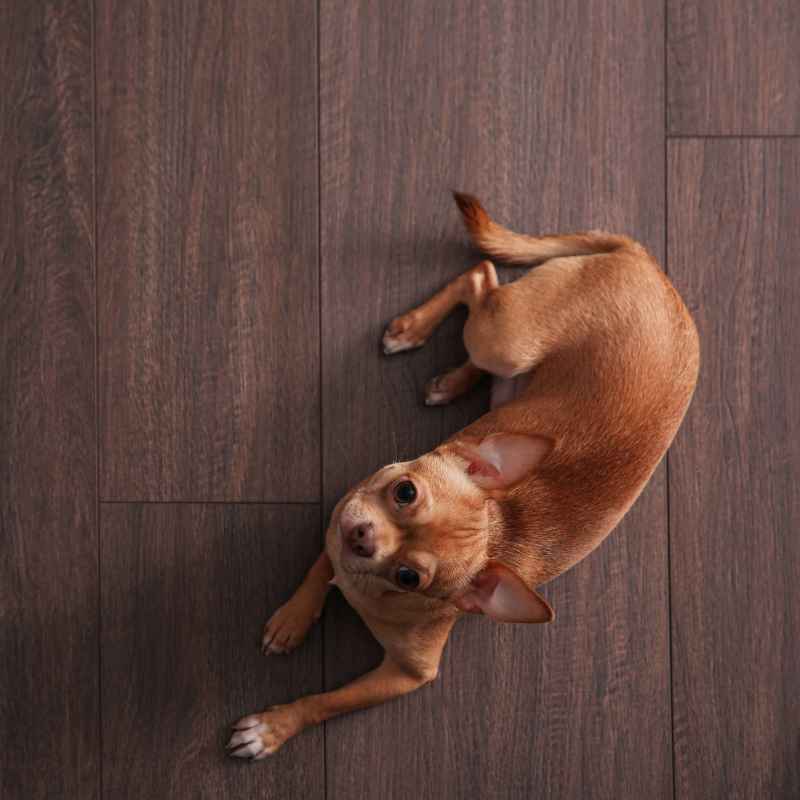
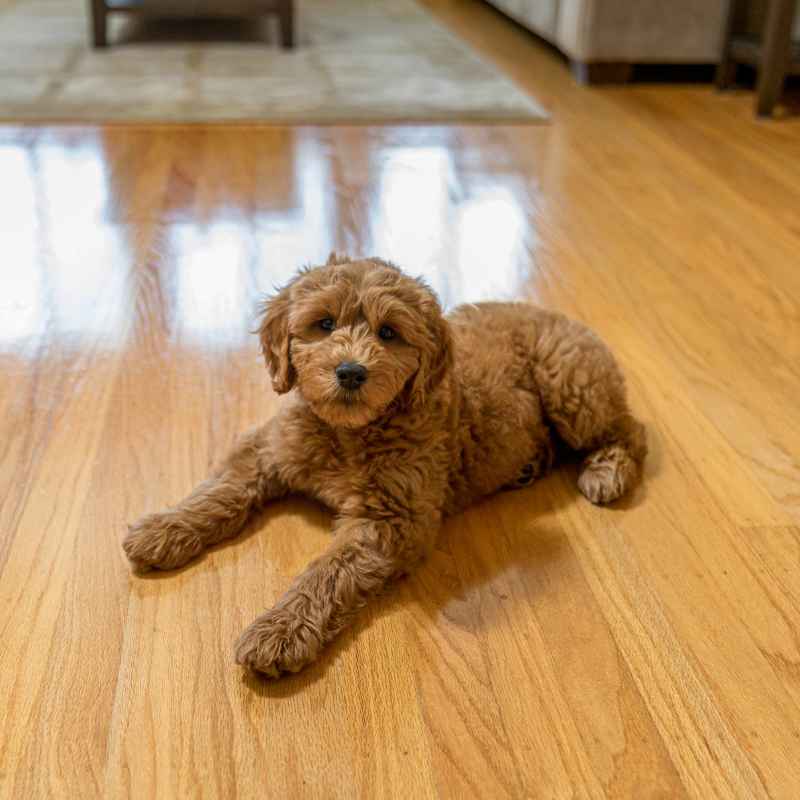
Hardwood floors look great and give a home a warm, polished feel — but for dogs, that smooth surface is a real problem. A dog’s paw is built for grass, dirt and sand, where nails and paw pads both find purchase. On a hard, slick surface, nails skim across the top and paw pads can’t grip, which is what causes the characteristic slipping and sliding.
This isn’t just annoying. A dog that can’t get reliable traction may hesitate to walk or run, avoid jumping on and off furniture, and in some cases hurt itself with an awkward slip. A well-fitted bootie with a real grip sole solves the traction half of the problem — but as the table above shows, grip alone doesn’t solve the other half: staying on.
The 7 Best Dog Booties for Hardwood Floors
Each pick below is ranked by where it actually wins in the dataset above — not by which brand pays the highest commission. Prices and buy-box status were live-checked this week via the Amazon Creators API; a price shown here can still move by the time you click through.
1. QUMY Dog Shoes Waterproof Anti-Slip — #1 Best Overall
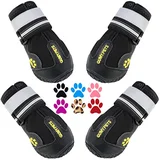
Price: $26.09 ($6.52/boot (set of 4)) · Check current price on Amazon
- 8 sizes covering 11-88 lb dogs — the widest size run of any pick here
- Two independent straps per boot for a genuinely adjustable fit, not just a stretch cuff
- Reflective strap material for low-light visibility on evening bathroom trips
Pros: Widest size range of any pick, so multi-dog households can standardize on one brand · Two straps per boot means you can snug the ankle and the arch separately · Consistently the brand named across independent buying guides as the default “stays on for most owners” pick
Cons: QUMY doesn’t publish the actual sole compound, so there’s no rubber-hardness spec to compare · Reflective strap material picks up carpet lint and dog hair over time
Main drawback: The straps are genuinely adjustable, but that also means a rushed fitting (skipping the paw-width measurement) is the single most common reason these specific boots come loose — the strap system rewards a careful first fitting more than most picks here.
2. Ruffwear Summit Trex — Best for Booties That Actually Stay On
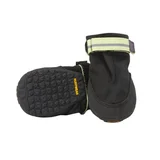
Price: $29.99 ($15.00/boot (sold in pairs, not 4-packs)) · Check current price on Amazon
- YKK-branded hook-and-loop hardware — a name-brand fastener spec none of the other picks here disclose
- Reinforced cuff specifically engineered against the twisting motion that works straps loose
- Sold in pairs (not 4-packs) so front and rear paw sizes can be mixed
Pros: The only pick whose manufacturer copy directly names the retention problem (“no spinning, no lost booties”) and engineers around it · Ruffwear backs the closure with a branded hardware spec (YKK), not just a generic “Velcro strap” claim · Selling in pairs lets you buy a wider front-paw size and a narrower rear-paw size instead of forcing one size on all four feet
Cons: Highest real cost per boot of any pick here once you buy two pairs for all four paws · Because it’s sold in pairs, a household needing four boots has to place two separate size selections
Main drawback: At roughly $60 to outfit all four paws, this is the most expensive way to solve the “stays on” problem in this roundup — justified mainly if a looser-fitting boot has already fallen off during normal indoor movement.
3. Hcpet Anti-Slip Dog Boots — Best Sole for Indoor Hardwood Floors
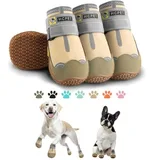
Price: $28.85 ($7.21/boot (set of 4)) · Check current price on Amazon
- Listing copy specifically names hardwood floor protection, not just “hot pavement” or “rough terrain”
- Reflective straps and a wide hook-and-loop opening make these quick to get on and off
- Sold as a full 4-boot set at a similar price point to the #1 overall pick
Pros: Listing copy explicitly calls out hardwood-floor protection, not just repurposed hiking gear · Reflective straps add visibility on evening bathroom trips, the same benefit QUMY offers · Mid-pack price with a full 4-boot set (no pair-vs-set math needed)
Cons: Rugged rubber sole is also marketed for hot pavement, winter snow, and hiking — a multi-surface design rather than an indoor-only one · Fewer independent size references than QUMY’s 8-size run
Main drawback: This is a multi-surface boot rather than an indoor-only design — the same rugged sole built for hot pavement and hiking trails means it won’t feel as slipper-soft indoors as a sock-style pick, though the hardwood-safe rubber compound is still explicitly called out in the listing.
4. DOK TigerToes Premium Non-Slip Dog Socks — Best Dog Socks for Hardwood Floors
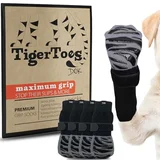
Price: $17.99 ($4.50/boot (set of 4)) · Check current price on Amazon
- “Hardwood Floors” is in the product’s own title, not just its marketing copy
- Patented grip pattern is engineered specifically to keep gripping after the sock has already twisted — addressing the sock-style failure mode directly
- Buttonless strap design avoids the pressure-sore risk of a hard buckle or thick Velcro tab
Pros: Purpose-named for hardwood floors, not adapted from an outdoor product line · Sock form factor is the easiest of any pick here to get a dog to accept, since it feels like a familiar textile, not a rigid shoe · Grip pattern is designed around the exact failure mode (twisting) that makes most dog socks fail on smooth floors
Cons: A sock has no rigid sole, so it won’t protect against anything sharper than a smooth floor — not a substitute for a boot outdoors · Only one size shown in our source data (Large); confirm your dog’s paw width against DOK’s own chart before buying
Main drawback: These are socks, not boots — there’s no rigid protective shell, so this pick solves the traction problem specifically and shouldn’t be the only paw protection for a dog that also goes outside on rough ground.
5. Non-stop Dogwear Paw Protectors — Best for Active or High-Energy Dogs
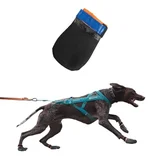
Price: $36.99 ($9.25/boot (set of 4)) · Check current price on Amazon
- Nitrile rubber coating is a distinct compound from the plain “rubber sole” claim most other picks make
- Non-stop Dogwear’s bootie lineup has been independently tested by outdoor-gear reviewer CleverHiker, which reported no boots lost during running, playing or hiking with test dogs
- Elastic hook-and-loop fasteners are built for active, high-speed movement rather than casual indoor wear
Pros: Independently reviewed retention performance under real running/play conditions, not just manufacturer copy · Nitrile coating is a genuinely different (and generally more abrasion-resistant) material than the plain rubber most competitors use · Designed for the exact stress case — a dog sprinting or “zooming” indoors — that causes most bootie failures on hardwood
Cons: Most expensive per-boot price of any full 4-boot set in this comparison · Built for active/outdoor use first, so the sizing runs closer to a hiking-boot fit than a slipper-like indoor fit
Main drawback: We can’t confirm the exact SKU CleverHiker tested carries an identical name to this Amazon listing (Non-stop Dogwear sells several closely related bootie lines) — treat the retention citation as evidence about the brand’s hardware and construction generally, not a guarantee this precise listing was the tested unit.
6. EXPAWLORER Anti-Slip Dog Socks — Best Value
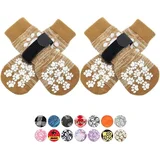
Price: $8.99 ($2.25/boot (set of 4)) · Check current price on Amazon
- “Hardwood Floors” appears in the product’s own title, like DOK TigerToes
- Double-sided grip pattern means the sock still works if it spins around the paw — it doesn’t have a single “right side up”
- Cheapest true per-boot cost of any strap-equipped pick in this table
Pros: Lowest cost per boot of any pick that still has a real fastening strap · Double-sided grip removes the single most common sock failure mode (grip pattern ending up on the wrong side) · Sold specifically as a 4-count set, so no pair-vs-set math is needed
Cons: Knit-sock durability against sharp debris is lower than any of the rigid-soled boot picks · At this price point, stitching and strap elastic are the first things to wear out with daily use
Main drawback: This is a budget sock, and it wears like one — expect to replace these sooner than the structured boots in this comparison if your dog wears them daily rather than for short indoor sessions.
7. PawZ Rubber Dog Boots — Best for Easy On/Off (No Straps)
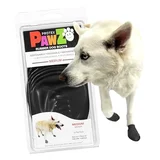
Price: $21.49 ($1.79/boot (pack of 12)) · Check current price on Amazon
- The only pick in this comparison with zero mechanical retention hardware — stays on purely through stretch-fit sizing
- Sold in bulk packs of 12 (three full 4-boot uses) rather than a single 4-boot set
- Lowest real cost per boot of any pick, even below the sock-style options
Pros: Cheapest per-boot cost of any pick in this table by a wide margin · No straps means no Velcro to wear out, catch fur, or loosen over time · Bulk 12-pack means you’re not shopping again after the first set wears through
Cons: Zero fasteners means fit precision is the only thing holding these on — size wrong and there’s no strap to compensate · The most commonly reported complaint for this product is retention without straps — consistent with what you’d expect from the design itself
Main drawback: This is the pick to skip if “stays on” is your primary complaint with booties so far — PawZ’s entire design trades retention hardware for cost and simplicity, so a dog with an unusual paw shape or a habit of pawing at new gear is the worst match for this product specifically.
How We Picked These Booties
We haven’t physically tested these seven products ourselves, and we want to say that plainly rather than imply otherwise. What we did instead: pulled live prices, sizing charts and manufacturer spec copy for each ASIN via Amazon’s Creators API this week; cross-referenced every closure and sole claim against the seller’s own listing text rather than repeating marketing taglines; and where a brand’s retention performance has been independently tested by a real reviewer, we cite that reviewer by name (see the Non-stop Dogwear pick above) rather than passing off a third party’s testing as our own.
Amazon’s review-count and star-rating data returned empty for every ASIN in this comparison when we pulled it, so we’re not showing star ratings anywhere on this page — we’d rather show nothing than a number we can’t verify.
One pattern was worth calling out on its own: the general “best dog boots” roundups that currently rank well online are almost all written by hiking and outdoor-gear sites, testing for trail durability, hot pavement and snow — not for a living-room hardwood floor. That’s a reasonable thing for those sites to optimize for, but it means their “best overall” picks aren’t necessarily the best picks for the specific problem this page is about. Building the table above around sole material, closure design and real cost per boot — the three things that actually decide whether a bootie survives a living room, not a mountain trail — is our attempt to close that gap rather than just re-ranking the same hiking-boot lineup for a different room.
What to Consider When Buying Dog Booties for Hardwood Floors
Nine of these ten factors come directly from the spec differences in the table above; use them to weigh a pick that isn’t in our top 7 against the ones that are.
Sole Material and Grip
A rubber or nitrile-coated sole is the baseline for hardwood traction; a plain fabric sock without a textured grip pattern (like the double-sided pattern on EXPAWLORER or DOK TigerToes) will slide just as much as a bare paw. Check whether the listing actually names a grip technology, or just says “non-slip” without explaining how.
Closure and Retention System
This is the single biggest factor in whether a bootie stays on during normal indoor movement, not just standing still. Rank closures roughly like this, most secure to least: reinforced hook-and-loop with a branded fastener (Ruffwear’s YKK hardware) > standard Velcro strap > elastic sticky strap > stretch-fit with no strap at all (PawZ).
Sock vs. Structured Boot
Socks (DOK TigerToes, EXPAWLORER) are easier for most dogs to accept because they feel like a familiar textile, but they have no rigid sole and won’t protect against anything sharper than a smooth floor. Structured boots add real puncture and abrasion protection at the cost of a stiffer, more shoe-like feel some dogs resist longer.
Size Range and Fit Precision
Every product in our table measures paw width, not length — measure your dog’s widest paw pad, not the whole paw outline. A too-loose fit is the top reason straps loosen and boots twist; a too-tight fit can restrict circulation. When your dog measures between two sizes, size up and rely on the strap for the rest of the fit.
Indoor-First vs. Outdoor-First Design
Only 3 of the 7 picks in our comparison (Ultra Paws, DOK TigerToes, EXPAWLORER) name hardwood floors specifically in their own copy. The rest are hiking or all-weather boots built primarily for hot pavement, snow or trail debris — they work indoors, but durability and fit are tuned for outdoor abuse, not a living room floor.
Waterproofing and Breathability
Not a major factor for pure hardwood-floor use, but relevant if the same boots also go outside. Ripstop and nitrile-coated uppers (Ruffwear, Non-stop Dogwear) resist moisture; knit socks (DOK TigerToes, EXPAWLORER) do not and will need more frequent washing and drying.
Ease of Cleaning and Maintenance
Rubber and nitrile-coated soles wipe clean with a damp cloth. Fabric uppers and socks need hand-washing with mild soap and a full air-dry before reuse — check the strap material too, since dirt on hook-and-loop straps reduces their grip over time and is a secondary cause of boots loosening.
Price and Real Cost Per Set
Compare the per-boot price, not the listed price — a $30 pair (Ruffwear) works out to more per boot than a $37 four-pack (Non-stop Dogwear) once you buy enough to cover all four paws. Our table above does this math for all 7 picks.
How to Introduce Your Dog to Booties
Even the best-fitting bootie can fail if your dog fights it from day one. Most dogs adjust within a few short sessions if you introduce booties gradually rather than buckling all four on at once and expecting them to walk normally.
- Let your dog sniff and investigate a bootie before putting it on anything.
- Put one bootie on one paw. Give a treat and praise immediately.
- Let your dog walk a few steps, then remove the bootie and end the session on a positive note.
- Repeat with one paw per short session over a few days before moving to two paws.
- Once your dog tolerates two paws calmly, add the third and fourth booties the same way.
- If your dog seems very distressed at any step, back off and try again later — don’t force it.
The goal is for your dog to associate booties with treats and praise, not stress. A dog that’s comfortable in its booties is also less likely to paw at the straps and work them loose — which means better retention on top of a good closure system.
When Are Booties Necessary?
Elderly dogs: declining balance and achy joints make slipping worse, and better traction can meaningfully improve mobility and quality of life.
Dogs with mobility issues: hip dysplasia, arthritis and similar conditions all benefit from more reliable footing.
Post-surgery recovery: some vets recommend booties specifically to limit slipping and protect a healing site during restricted activity.
Otherwise healthy dogs: if you simply notice your dog hesitating to walk or run on your floors, that hesitation alone is reason enough to try a pair.
Alternatives to Dog Booties for Hardwood Floors
- Paw grips/wax: sticky pads or balms applied directly to paw pads — wear out quickly and don’t protect the paw itself.
- Area rugs and runners: placed along high-traffic paths, genuinely effective and add zero adjustment period.
- Non-slip mats: targeted traction zones near doorways, food bowls, or stairs.
- Nail trims and grooming: long nails and excess toe fur both reduce a paw’s natural grip — worth ruling out before buying anything.
Most owners land on a combination: rugs or mats in the rooms a dog uses most, plus booties for specific situations like a slippery entryway or a recovery period.
Maintaining Your Dog’s Booties
Check soles for debris after each use and wipe down with a damp cloth. Fabric and sock-style booties can usually be hand-washed with mild soap and air-dried completely — never machine-dried, which can warp grip patterns and straps. Keep hook-and-loop straps free of dirt and pet hair, since a dirty strap loses grip strength well before the bootie itself wears out. Replace a set once the sole starts to peel, the strap stops gripping, or the stitching comes undone.
When to Consult Your Veterinarian
Booties solve a traction and comfort problem, but a sudden change in how your dog walks on hardwood floors is worth a vet visit on its own. Your vet can rule out arthritis, neurological issues or pain that a bootie won’t fix, and can advise whether physical therapy or another intervention belongs alongside better traction.
Frequently Asked Questions
How do I know if my dog needs booties for hardwood floors?
If your dog frequently slips, slides, or hesitates to walk on your hardwood floors, booties can help. This is especially common in older dogs, dogs with joint issues, or dogs recovering from injury — but any dog that visibly struggles for traction is a reasonable candidate.
What is the biggest reason dog booties fall off?
In the products we compared, the biggest factor is closure design, not sole grip. Booties with a single narrow strap or no strap at all (like PawZ) rely entirely on precise sizing to stay on, while booties with reinforced hook-and-loop closures (like the Ruffwear Summit Trex) are specifically engineered to resist the twisting motion that works weaker straps loose.
Do dog socks or dog boots work better on hardwood floors?
Socks like DOK TigerToes and EXPAWLORER are usually easier to get a dog to accept since they feel like a familiar textile, and their double-sided grip patterns work well on smooth indoor floors. Structured boots add a rigid sole and better strap security, which matters more for active or outdoor use. For pure indoor hardwood traction, either style can work — the closure system matters more than the sock-vs-boot choice.
How often should I replace dog booties?
This depends on use. For indoor-only use on hardwood floors, a set can last a long time. Check the soles and straps regularly, and replace a set once the sole starts to peel, the strap loses its grip, or the stitching comes undone.
Are PawZ boots good for hardwood floors?
PawZ boots offer decent grip on hardwood thanks to their natural rubber construction, and they are the cheapest per-boot option we compared. Their real limitation is retention: with no straps at all, a precise size match is the only thing holding them on, so they are the pick to skip if a bootie has already fallen off during normal movement.
Should my dog wear booties all the time on hardwood floors?
No, continuous all-day wear generally isn’t recommended. Dogs need to feel their paws, and prolonged wear can affect paw health or comfort. Use booties when your dog is actively moving around on the hardwood, and remove them when resting or sleeping.
How much should dog booties cost?
Across the 7 booties we compared, real cost per boot ranged from $1.79 (PawZ, bought in a bulk 12-pack) to $15.00 (Ruffwear Summit Trex, bought in pairs). A full 4-boot set from a mid-range brand with real strap hardware, like QUMY or Hcpet, typically runs $25-$30 total.
Related Guides
- Booties for Dogs on Hardwood Floors: A Must-Have Guide — a broader look at why booties help beyond just hardwood traction
- Dog Slippers for Wood Floors — a softer, sock-like alternative to structured booties
- Why Is My Dog Suddenly Slipping on Hardwood Floors? — for a new or worsening slipping problem
- How to Remove Dog Urine Stains from Hardwood Floors
- Pet-Safe Hardwood Floor Cleaners — for cleaning both floors and booties safely
- What to Put Under a Dog Crate to Protect Hardwood Floors
- Our Complete Wood Flooring Guide
Final Thoughts: Finding the Right Fit for Happy Paws
Across the 7 booties in this comparison, sole grip turned out to be the easy part — every pick has a workable traction surface. The real dividing line is closure design: only some of these products are engineered to survive a dog running, twisting or playing indoors without coming loose. For most dogs and most budgets, the QUMY Dog Shoes balance size range, strap security and price better than anything else here. If retention is your specific pain point, the Ruffwear Summit Trex‘s reinforced YKK closure is the one pick in this table built to solve that problem directly, at a real cost premium. Proper sizing and a patient introduction matter more than which brand you choose — get those two things right, and any pick in this comparison has a real shot at staying on.
Sponsored / affiliate links. As an Amazon Associate I earn from qualifying purchases. I may earn additional commission from eligible campaigns.