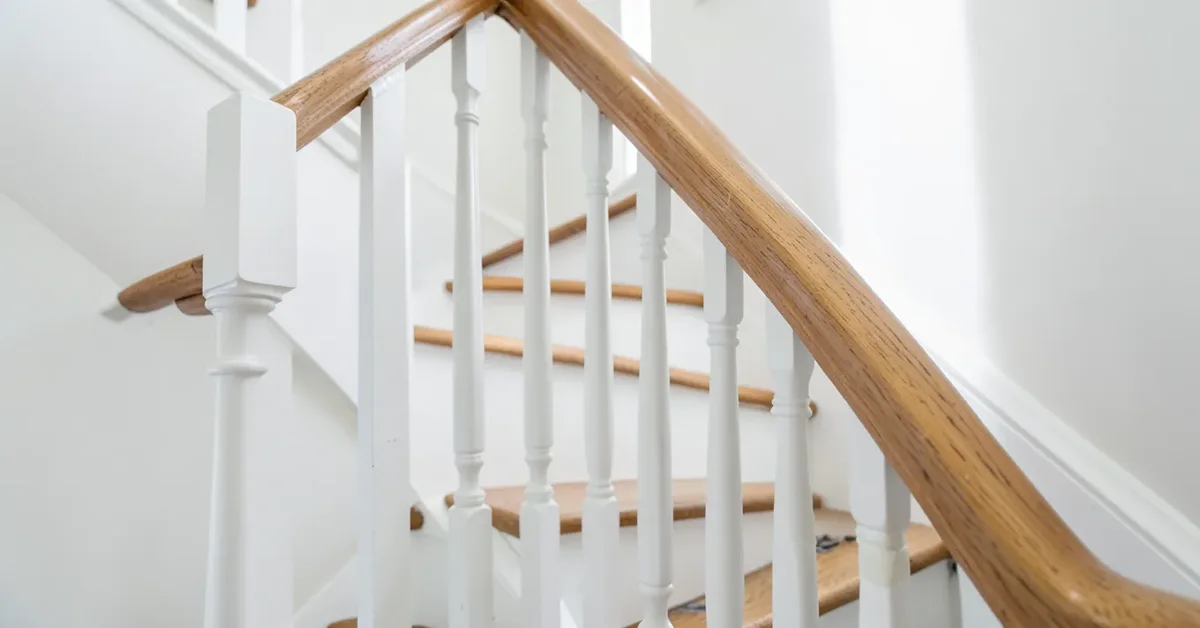
Best Way to Paint Spindles on Stairs (Brush or Sprayer)
The best way to paint stair spindles is to clean and lightly sand them, mask off the treads and handrail, prime, then apply two thin coats of a semi-gloss or satin trim enamel with a small angled brush – or a fine-finish sprayer if you’re painting more than a handful. The real challenge with spindles isn’t the paint, it’s the shape: every spindle is a round, often turned surface with no flat face for a brush to ride on.
Why Spindles Are Harder Than Other Trim
Best For A Full Staircase Of Spindles
 |
HomeRight Super Finish Max HVLP Paint Sprayer – $57.00 A round spindle has no flat face for a brush to glide on – every stroke fights the curve. If you’re painting more than a handful, a fine-finish sprayer coats the whole round surface in one pass and gets into turned details a brush can’t reach evenly.
|
A flat baluster or a door only needs a brush to glide in one direction. A turned spindle curves away from the brush on every stroke, which is exactly why drips, missed spots on the underside of curves, and uneven coverage show up more on spindles than on any other trim in the house. That’s also why professional painters lean on sprayers for a full staircase – not because brushing is wrong, but because a sprayer coats the entire round profile in one pass instead of fighting the curve stroke by stroke.
Choosing Paint And Finish
A water-based acrylic-alkyd trim enamel is the standard modern choice – it has much of oil paint’s hardness and smooth leveling with soap-and-water cleanup and lower odor. Semi-gloss is the most common finish for spindles because it wipes clean easily and holds up to the hand contact a staircase gets daily; satin is a reasonable step down in shine that hides minor prep imperfections slightly better. Skip flat/matte paint here – it’s the least durable option and shows scuffs fastest on a high-touch surface.
Tools You’ll Actually Need
- A 1-2 inch angled sash brush for detail work around each spindle’s base and turned details
- Painter’s tape and plastic sheeting or drop cloths for the treads, handrail, and walls
- Fine-grit (220) sandpaper and a tack cloth
- A quality bonding primer, especially if painting over a glossy existing finish or bare wood with knots
- An HVLP sprayer (see above) if you’re doing a full staircase run rather than a few spindles
Step-By-Step Process
- Clean: Wipe every spindle with a damp cloth and mild soap, removing dust, grease, and handprints. Let dry completely.
- Sand: Lightly sand with 220-grit sandpaper to dull any existing gloss and give primer something to grip. Wipe away dust with a tack cloth.
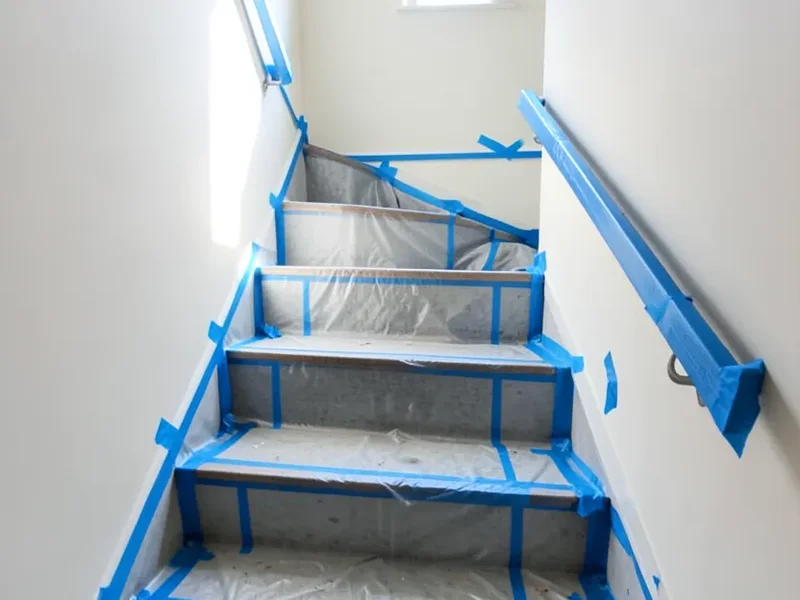
- Mask: Cover the treads, handrail, and nearby walls with painter’s tape and plastic sheeting or drop cloths.
- Prime: Apply a thin, even coat of bonding primer, working into the turned details. Let it dry fully before painting.
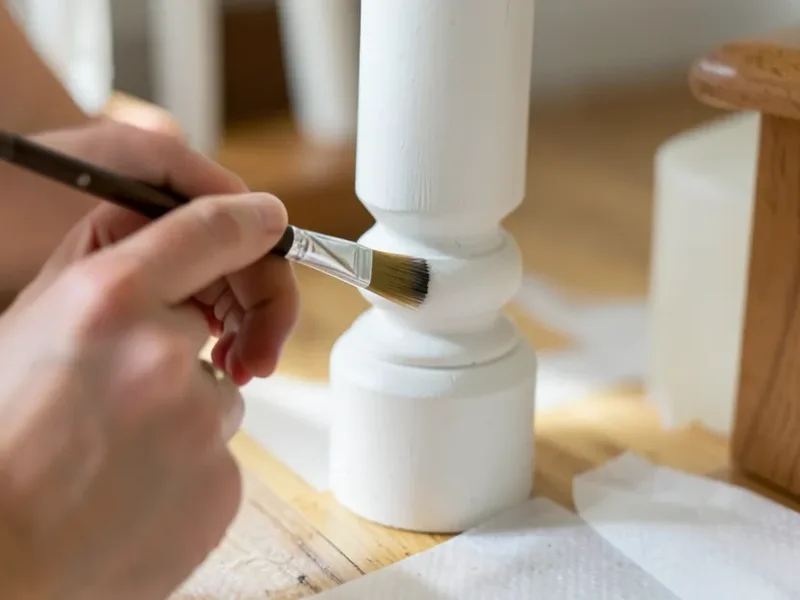
- Paint (first coat): Using a small angled brush or the sprayer, apply thin, even coverage from top to bottom on each spindle. Avoid overloading the brush – thin coats prevent drips far better than trying to cover in one heavy pass.
- Dry and recoat: Let the first coat dry per the can’s instructions (typically 2-4 hours for latex/acrylic enamel), then apply a second coat.
- Cure: Avoid heavy contact with painted spindles for about a week while the finish fully cures, even though it will feel dry to the touch much sooner.
Avoiding Drips And Uneven Coverage
Dip the brush lightly and wipe excess on the can’s rim before touching the spindle – an overloaded brush is the single biggest cause of drips on a round surface, since paint has nowhere flat to sit. Work in one consistent direction, and check the underside of each curve before moving on; that’s where a drip forms invisibly and only shows up once it’s dry.
Maintaining Painted Spindles
Clean with a soft cloth and mild soap and water – avoid abrasive scrubbers, which will dull or scratch the finish over time. Keep a small amount of the leftover paint on hand for touch-ups; lightly sand any chip before dabbing on a thin matching layer so the repair blends rather than sitting as a visible bump.
If a spindle is damaged beyond a simple touch-up – or you are already looking at a full repaint cycle every few years – it is worth comparing that ongoing cost against replacing the wood spindles with metal, which trades a higher upfront material cost for a powder-coated finish that does not need repainting at all.
Frequently Asked Questions
How do I prepare spindles before painting?
Clean them with a damp cloth and mild soap to remove dust, grease, and grime, let them dry fully, then lightly sand with fine-grit sandpaper (220 grit is enough for a coat over existing paint or bare wood) to give the primer something to grip. Wipe away sanding dust with a tack cloth before priming.
What type of paint is best for stair spindles?
A semi-gloss or satin trim enamel (water-based acrylic-alkyd hybrids are the modern standard) balances durability and cleanability with easier cleanup than old-school oil-based paint. High-gloss shows every brush mark and imperfection more than semi-gloss does, which matters more on a heavily turned spindle than on a flat door.
How many coats of paint do spindles need?
Two coats over a properly primed surface is standard – one coat alone usually shows the primer or old color through in spots, especially on the curves and corners of a turned spindle. Let each coat dry fully (check the can’s recoat time, typically 2-4 hours for latex) before adding the next.
Should I paint spindles with a brush or a sprayer?
For a handful of spindles, a small angled brush (1-2 inch) gives you full control with minimal setup. For a full staircase run, a fine-finish HVLP sprayer is significantly faster and coats the round profile more evenly than repeated brush strokes can – the trade-off is more time spent masking the surrounding area first.
Can I paint spindles without removing them from the staircase?
Yes, and most people do – removing and reinstalling turned spindles is more work than it saves. Mask the treads, handrail, and walls carefully with painter’s tape and plastic sheeting, and work slowly around each spindle’s base where it meets the tread.
Conclusion
Painting stair spindles comes down to respecting the shape: thin coats, a brush suited to the curve (or a sprayer for a full run), and thorough masking of everything around them. Clean, sand, prime, and apply two thin coats, and a staircase that looked dated can look brand new in a weekend.
Sponsored / affiliate links. As an Amazon Associate I earn from qualifying purchases. I may earn additional commission from eligible campaigns.