Birch vs Pine Plywood: Why the Edge Grain Actually Matters
Birch and pine plywood look similar in a listing photo, but the real difference shows up on the cut edge: Baltic birch’s edge is made of dozens of thin, void-free plies that can be sanded and left bare as a finished detail, while pine plywood’s edge usually has small core voids and knots that need filler or edge banding before it looks presentable. That single fact drives most of the cost, strength, and appearance differences below, so it’s the first thing to understand before you buy either one.
Both are genuinely useful sheet goods, just for different jobs. This guide compares their grain and appearance, why the edge quality diverges so much between the two, real strength and cost differences, and which one actually makes sense for your next project.
Quick Answer: Which Plywood Should You Buy?
If you’re building something where the plywood edge shows — drawer boxes, shelving, shop jigs, small furniture — Baltic birch is worth the extra cost because you can skip edge banding entirely. If the plywood will be hidden behind paint, inside a wall, or under a countertop, standard pine or fir plywood is the cheaper, perfectly adequate choice. Here’s the exact Baltic birch stock referenced throughout this guide:
Best Void-Free Baltic Birch Pick
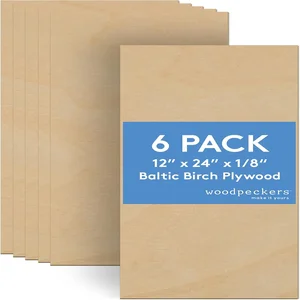 |
Woodpeckers 3mm Baltic Birch Plywood, Box of 6 (12″ x 24″) – $33.99 This is the exact void-free, multi-ply Baltic birch stock this guide references for drawer boxes, jigs, and shelving where the edge itself is the finished look.
|
Grain, Color, and Face Appearance
Birch Plywood’s Grain and Color
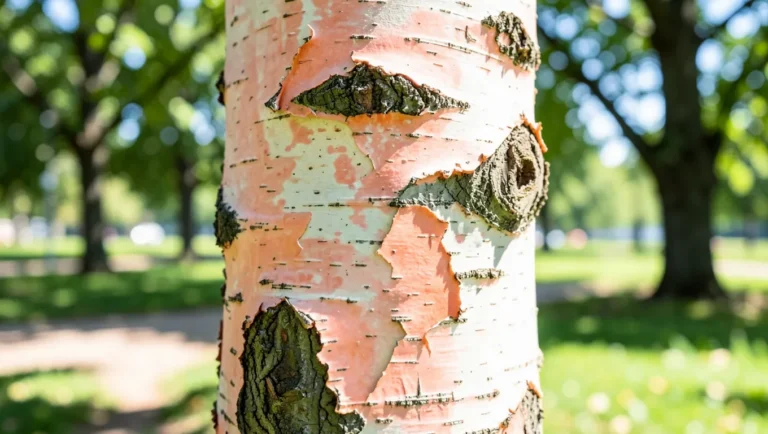
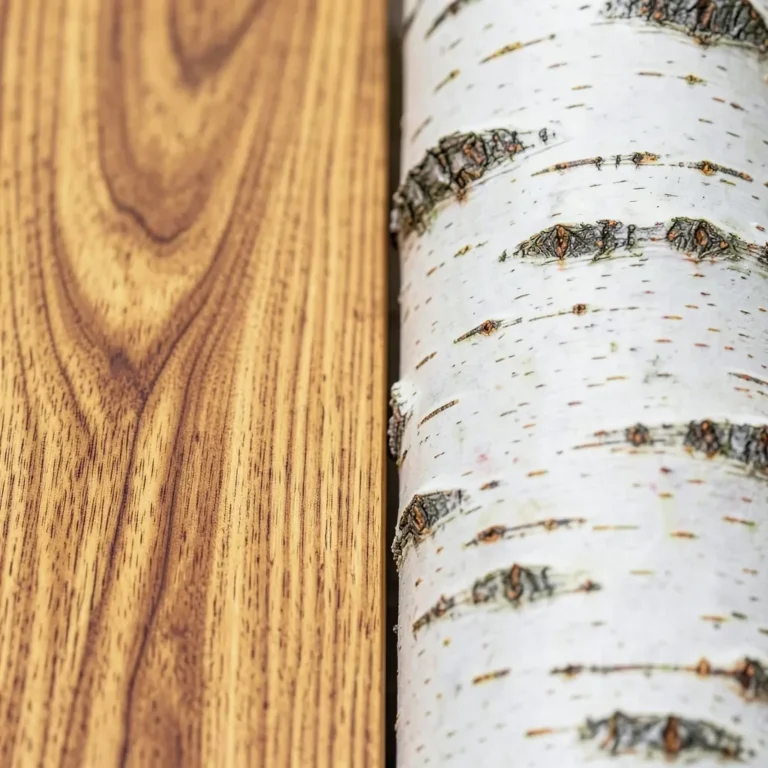
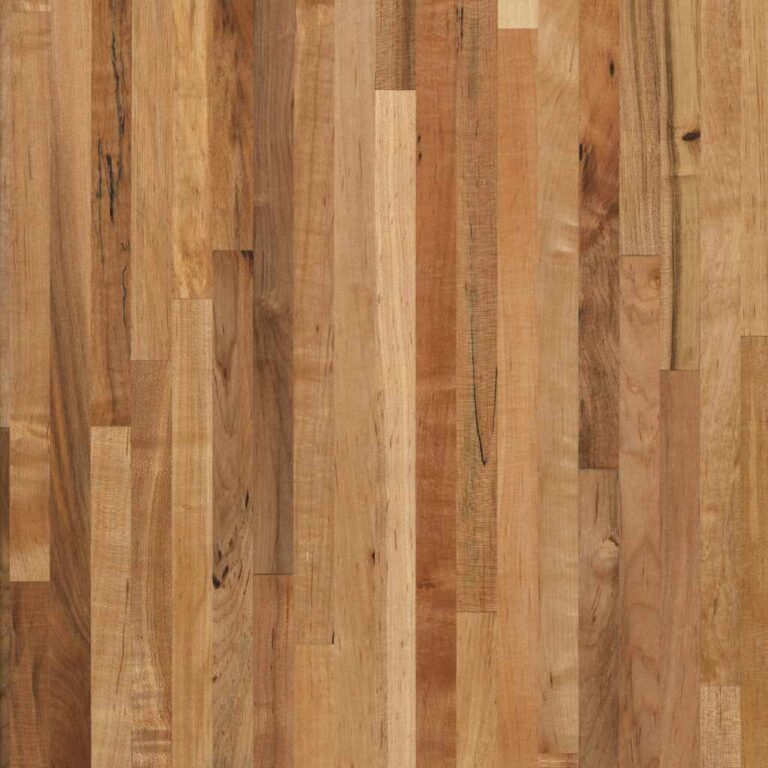
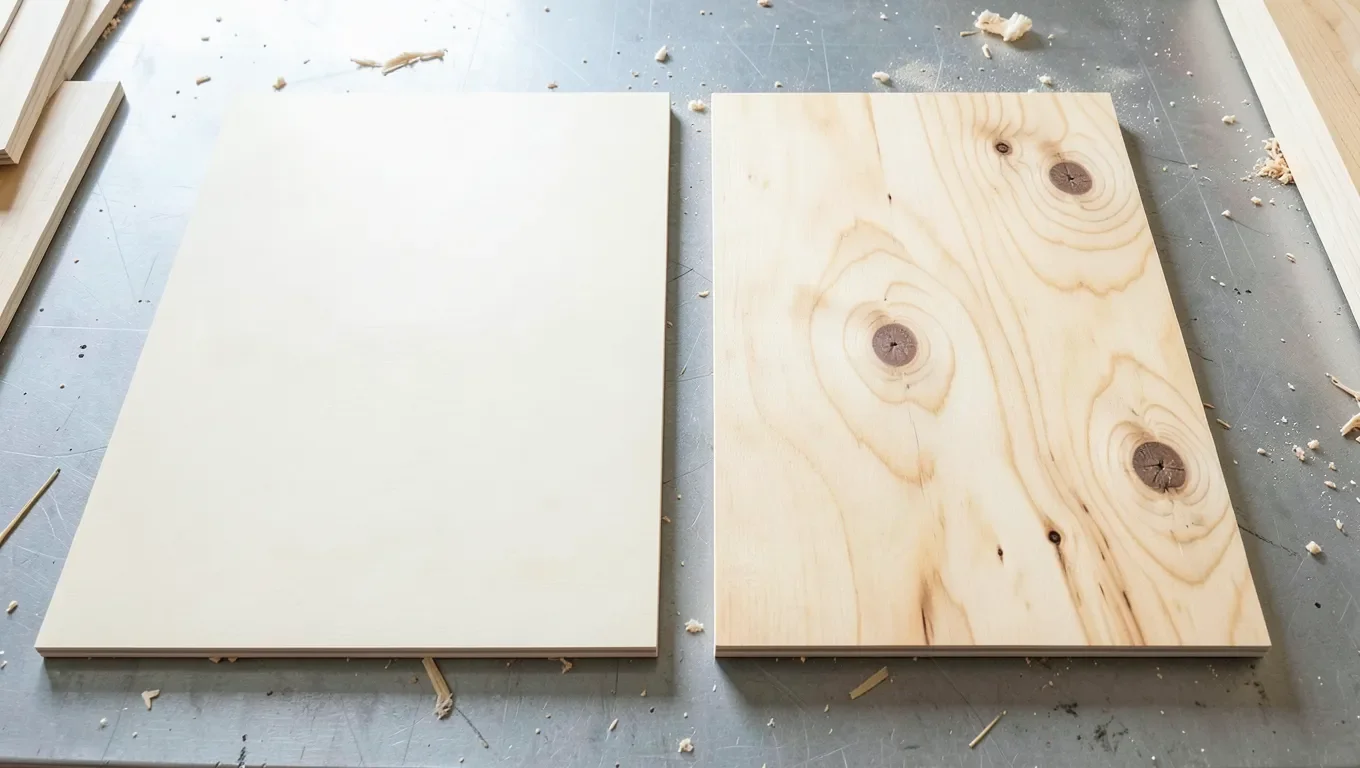
Birch plywood, and Baltic birch in particular, has a fine, tight, and remarkably uniform grain in a pale cream to light-honey color. Because birch is a hardwood, the face veneer takes paint and clear finish evenly, without the blotching that softer, more porous woods can show. Painted birch plywood keeps a smooth, factory-like surface because there are no knots interrupting the finish.
Pine Plywood’s Grain and Color
Pine plywood shows a more open, resinous grain pattern with visible knots scattered across the face, ranging from pale yellow to light brown. Those knots aren’t a defect — they’re simply where pine is a softwood species with a naturally looser growth pattern than birch. Many woodworkers actually prefer that rustic look for casual furniture, and pine takes stain well as long as you seal the knots first so they don’t bleed resin through the finish.
The Exposed-Edge Difference Most Comparisons Skip
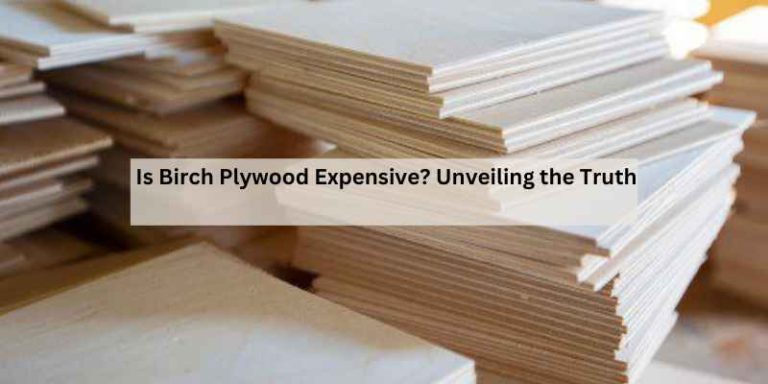
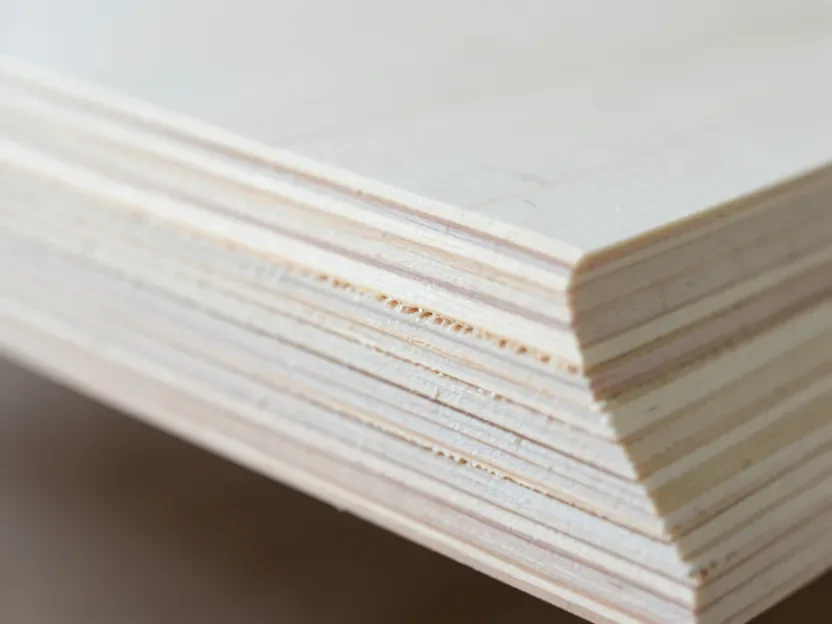
Most plywood comparisons stop at hardness numbers and never mention the one distinction that actually changes how you build with these materials: what the cut edge looks like. A 3/4 inch sheet of true Baltic birch plywood is typically built from around 13 thin birch veneers, cross-laminated with almost no gaps between plies. Sand that edge lightly and you get a clean, striped, void-free edge that looks intentional — which is exactly why cabinetmakers use it raw on drawer boxes, jig fences, and shelving where the edge is visible.
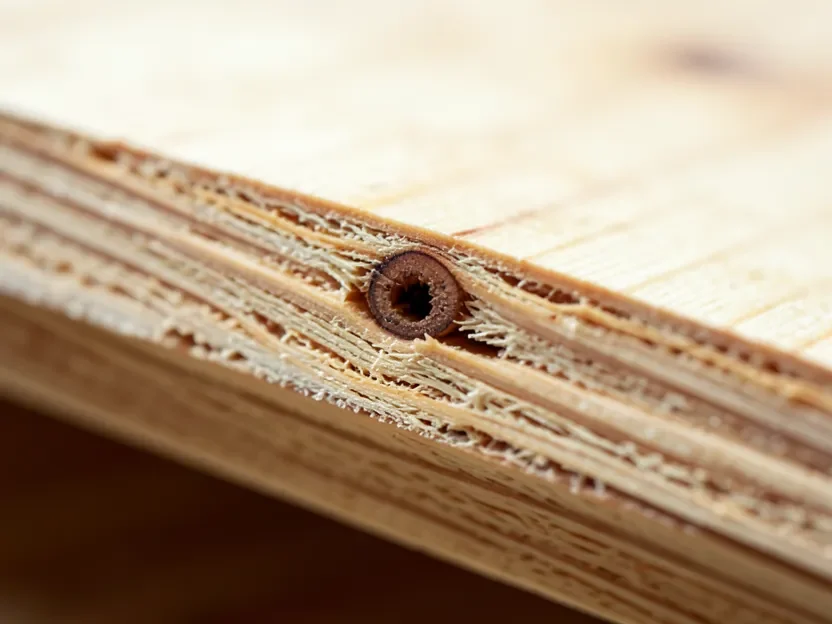
Standard pine (softwood) plywood is built from fewer, thicker plies, and voluntary softwood plywood standards allow a certain amount of internal core gaps and knot-outs in the inner veneers, since the product is graded for structural use, not edge appearance. Cut into a sheet of pine plywood and you’ll often hit a small void or a knot pocket right at the edge. That’s not a defect either — it’s just not designed to be seen. It’s why pine plywood edges almost always get edge banding, iron-on veneer tape, or a bead of wood filler before they’re painted, while a Baltic birch edge frequently gets nothing more than 220-grit sandpaper.
Strength, Durability, and Structural Use
Birch is the harder wood by a wide margin. Birch lands around 1,260 on the Janka hardness scale, while pine ranges roughly from 380 to 870 depending on the species used. That extra density means birch plywood resists dents, holds screws more tightly without stripping, and stands up better to repeated racking (like a drawer that gets slammed shut daily). Pine plywood is softer and lighter, which actually helps in its own applications: it’s easier to cut, easier to nail without pre-drilling, and lighter to carry up a ladder for wall or ceiling sheathing.
Neither one is naturally weatherproof. Both need a real exterior-rated finish or waterproof glue line construction before outdoor use; birch’s density just means it swells and warps somewhat more slowly than pine when both are left unprotected.
Cost, Availability, and Sustainability
Baltic birch plywood costs noticeably more per sheet, and the price gap comes from more than just “it’s a hardwood.” Milling dozens of thin, consistent veneers and holding a tighter void-free grading standard is simply more labor-intensive than producing a 5 to 7-ply pine sheet, and imported Baltic birch has to travel farther to reach most U.S. retailers, so it’s also less consistently stocked at big box stores. Pine plywood is a fast-growing domestic softwood milled in far higher volume, which keeps it cheap and easy to find at any lumberyard.
On sustainability, pine’s fast growth cycle makes it a highly renewable choice, and most commodity pine plywood carries chain-of-custody certification from major suppliers. Birch grows more slowly, so look for FSC or PEFC-certified Baltic birch specifically if sourcing responsibly matters for your project — not every supplier carries it, but many do.
Which One Should You Buy?
- Choose Baltic birch plywood for drawer boxes, jig fences, shelving with a visible edge, small furniture, and anywhere you want a clean edge without banding.
- Choose pine plywood for wall and ceiling sheathing, subfloor underlayment, painted cabinet carcasses hidden behind face frames, and any budget-driven structural project.
- Reach for a hybrid approach when it fits: pine plywood for the hidden bulk of a build, with a birch or hardwood edge band only where it actually shows.
If you’re also weighing structural sheet-good options for a similar decision, our comparison of BC-grade plywood vs. Sande plywood covers a related but different plywood-buying question: face/back grading versus species selection. And if you want to see how standard birch plywood stacks up against true Baltic birch specifically, see our Baltic birch vs. birch plywood guide.
Frequently Asked Questions
What’s the real difference between birch and pine plywood?
Birch plywood is a hardwood-faced sheet good with a dense, pale, uniform grain and, in Baltic birch specifically, a void-free multi-ply core that looks clean on a cut edge. Pine plywood is a softwood product with visible knots, a more open grain, and an inner core that’s allowed to have small voids since it’s graded for structural strength rather than edge appearance.
Why does Baltic birch plywood cost more than pine plywood?
Baltic birch uses more, thinner veneers per sheet, a hardwood species that’s slower to grow and mill, and a tighter void-free grading standard, all of which add labor and material cost. Pine plywood is a high-volume, fast-growing domestic softwood, which keeps its price and availability much friendlier for budget or structural projects.
Can you leave a pine plywood edge unfinished?
You can, but it usually looks rough: pine plywood edges commonly show a knot pocket or a small core void that most builders fill with wood filler or cover with iron-on edge banding before painting. Baltic birch’s tightly layered, void-free edge is the one that’s routinely sanded and left bare as the finished look.
Which plywood is stronger, birch or pine?
Birch is the stronger, harder material, sitting around 1,260 on the Janka hardness scale versus roughly 380 to 870 for pine depending on species. Birch plywood resists dents and holds screws more tightly, while pine plywood is lighter and easier to cut and nail for less demanding builds.
Which plywood should I use for cabinets versus framing?
Use birch or Baltic birch plywood for cabinet interiors, drawer boxes, and shelving where the edge is visible and durability matters. Use pine or standard softwood plywood for wall sheathing, subfloor, and any structural framing that will be hidden, where cost and availability matter more than face appearance.
Conclusion
Birch plywood, especially true Baltic birch, earns its higher price with a harder face, a void-free layered edge you can leave exposed, and a cleaner overall finish. Pine plywood is the practical, budget-friendly choice for structural and hidden work where nobody will ever see the edge. Match the plywood to whether the edge shows, not just to the price tag, and both materials will do their job well.
Sponsored / affiliate links. As an Amazon Associate I earn from qualifying purchases. I may earn additional commission from eligible campaigns.
 Baltic Birch Plywood Sheets Box of 45 - Laser Engraving Cutting, Scroll Saw Nature Veneer Color, Stronger Than Basswood, A/A Grade,12 x 12 x 1/8”, 3mm Thickness Perfect for Wood Burning
 Baltic Birch Plywood 1/8'' x 12'' x 18'', 6 Pack, B/BB Grade, Void-Free Core, Laser Cutting Ready, Flat Sheets for CNC, Engraving, DIY Crafts, Art Painting, Wood Burning, Staining