Brown vs Green Pressure Treated Wood: Key Differences
Choosing between brown and green pressure treated wood can feel a bit tricky when you’re starting out. You see them in stores, and they look different, but what does that really mean for your projects? People often wonder about their strength, how long they last, and if one is better for certain jobs.
Don’t worry, figuring out the Brown vs Green Pressure Treated Wood: Key Differences is simpler than it sounds. We’ll walk through it step by step so you can pick the right wood for your needs.
Understanding Pressure Treated Wood Colors
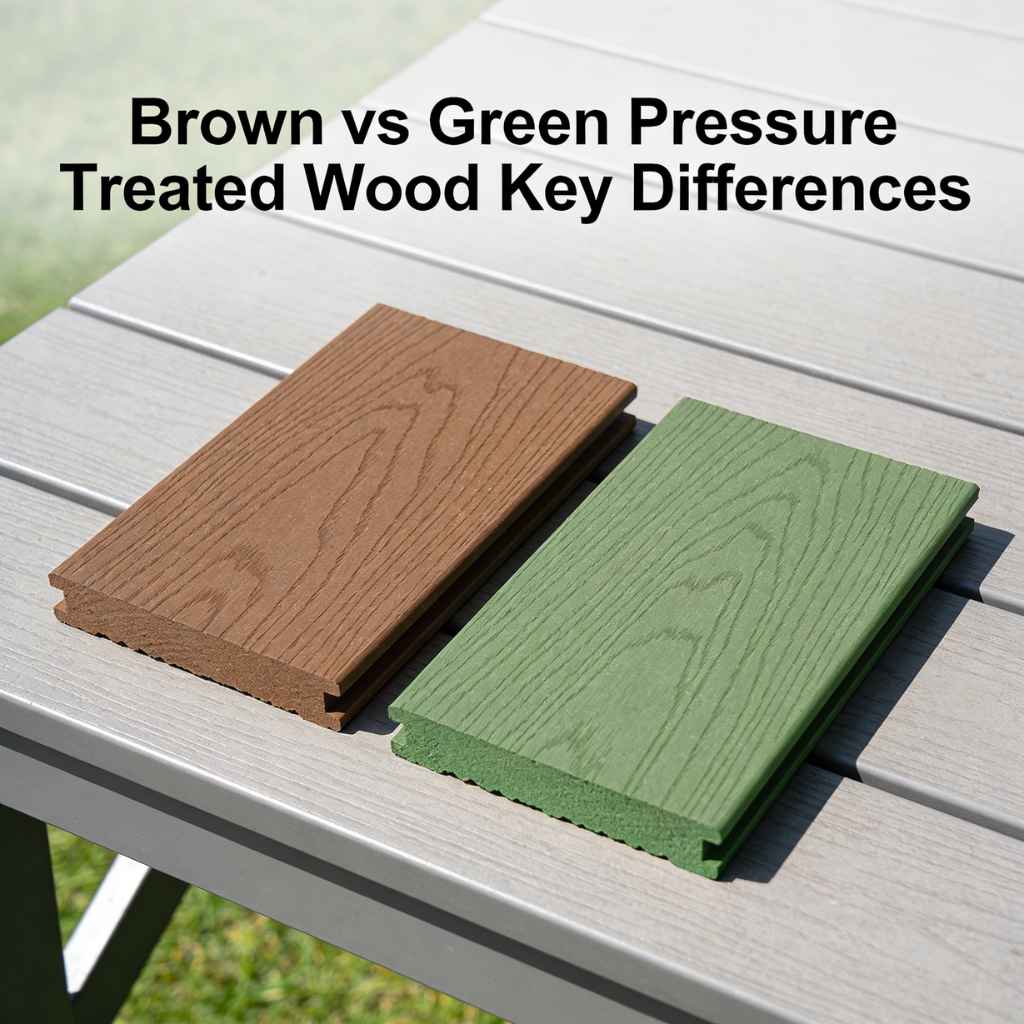
Pressure treated wood is a popular choice for outdoor projects because it’s built to last. The treatment process uses chemicals to protect the wood from rot, insects, and decay, making it much more durable than untreated lumber. When you’re looking at wood at the lumber yard, you’ll likely notice two main color variations: the bright green hue and the more natural brown tone.
These color differences aren’t just for looks; they are clues to the type of treatment the wood has received and, in some cases, the chemicals used. This distinction is important because it can affect how the wood performs in different environments and how it should be cared for over time. Understanding why wood gets these colors helps you make a smarter choice for your deck, fence, or garden bed.
The Role of Preservatives
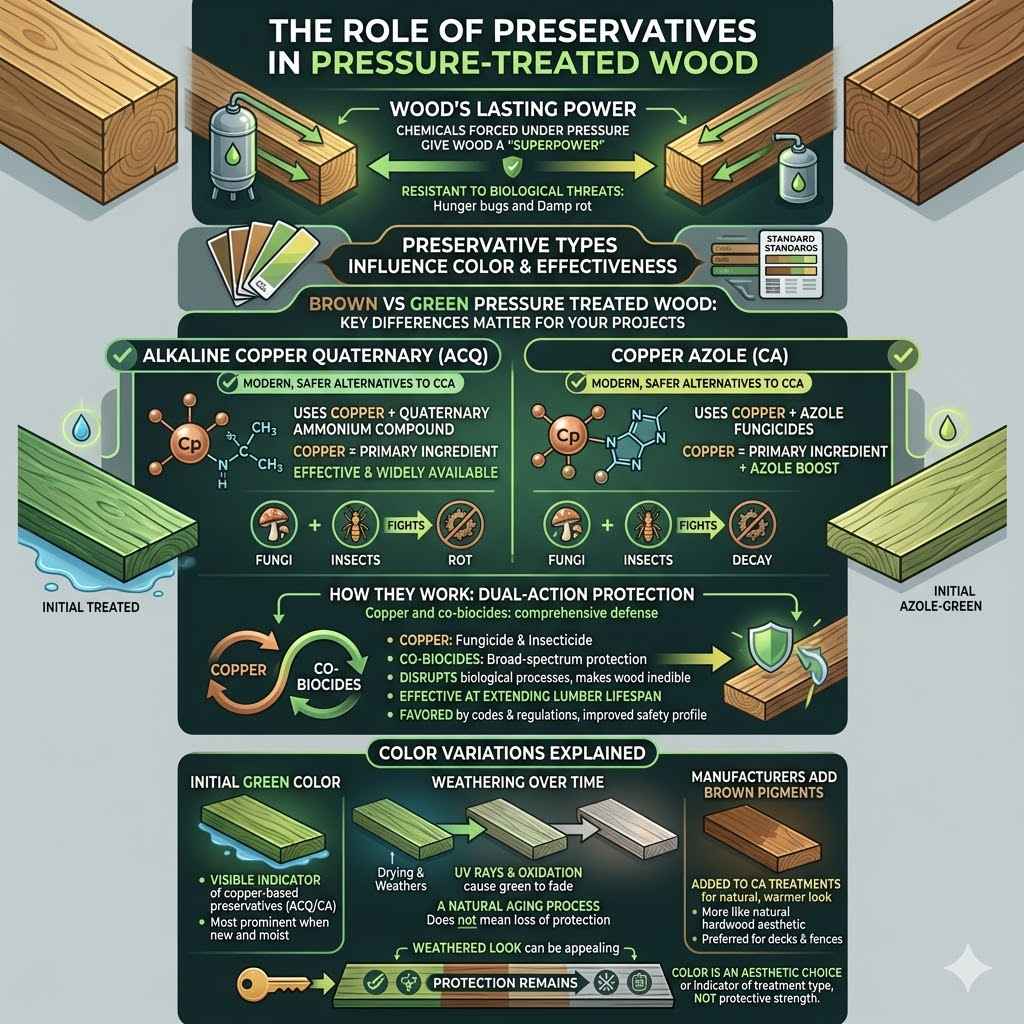
The chemicals forced into the wood under pressure are what give it its lasting power. These preservatives work by making the wood resistant to biological threats. Think of it as giving the wood a superpower against hungry bugs and damp rot.
The type and amount of preservative used can influence the wood’s color, as well as its effectiveness in various outdoor conditions. Different industries and regions might even have specific standards for the types of preservatives allowed, which can also tie into the final color of the treated wood. This is a key part of why the Brown vs Green Pressure Treated Wood: Key Differences matter for your projects.
Alkaline Copper Quaternary (ACQ) and Copper Azole (CA)
Two of the most common preservative systems you’ll find are Alkaline Copper Quaternary (ACQ) and Copper Azole (CA). These are modern, safer alternatives to older treatments like Chromated Copper Arsenate (CCA). ACQ typically gives wood a greenish tint when it’s first treated, especially when wet.
This is due to the copper content, which is the primary ingredient fighting off fungi and insects. Copper Azole (CA) also uses copper but often includes organic azoles to boost protection. CA-treated wood may start with a lighter green or even a yellowish-green color.
Over time, as the wood is exposed to sunlight and the elements, this green color will naturally fade and turn into a silvery gray or a light brown. This color change is a natural aging process and doesn’t mean the wood is losing its protection.
The copper in these treatments acts as a fungicide and insecticide. It disrupts the biological processes of decay organisms and insects, effectively killing them or making the wood inedible. The quaternary compounds in ACQ and the azoles in CA act as co-biocides, working with the copper to provide a broad spectrum of protection.
This dual-action approach makes ACQ and CA very effective at extending the lifespan of lumber used outdoors. Many building codes and environmental regulations now favor these types of treatments for residential and commercial use due to their improved safety profile compared to older arsenic-based preservatives.
Color Variations Explained
The initial green color in pressure treated wood is a visible indicator that the wood has been treated with copper-based preservatives like ACQ or CA. This greenish hue is most prominent when the wood is newly treated and still moist. As the wood dries and weathers, the green color typically fades.
Exposure to ultraviolet (UV) rays from the sun and the natural oxidation of the copper can cause the wood to turn a light brown or a silvery gray over time. This color change is a normal part of the weathering process and does not signify a loss of protective qualities. In fact, many people find the weathered look of pressure treated wood to be quite appealing for outdoor structures.
Some manufacturers also add brown pigments to their treated wood to give it a more finished, natural look from the start. This is often done with CA treatments. This brown coloring can make the wood look more like natural hardwood and can be a preferred aesthetic for homeowners who want their decks or fences to have a warmer appearance immediately after installation.
Regardless of whether the wood is green, brown, or a faded gray, the underlying protection against rot and insects is provided by the preservative chemicals infused into the wood. The color is more of an aesthetic choice or an indicator of the treatment type rather than a measure of its protective strength.
Applications and Performance
Both brown and green pressure treated wood are designed for outdoor use and offer excellent protection against decay, fungi, and insect infestation. The primary difference in performance often comes down to the specific application and the level of exposure the wood will face. For general landscaping, decks, fences, and playground equipment, both types perform admirably.
However, there can be subtle differences in how they handle moisture and how they look as they age.
Ground Contact vs. Above Ground Use
One of the most critical distinctions when selecting pressure treated wood is its intended use: ground contact or above ground. This designation is dictated by the retention level of the preservative chemicals within the wood. Wood rated for ground contact has a higher concentration of preservatives to withstand constant moisture and potential contact with soil-borne fungi and insects.
This makes it ideal for posts set directly into the ground, retaining walls that are partially buried, or any structure that will be in prolonged contact with the earth.
Wood rated for above ground use is suitable for applications where the lumber will not be in direct contact with soil and will have better airflow. This includes deck joists, deck boards, railings, and fence pickets that are attached to posts set in concrete or gravel. While above ground treated wood is still protected from decay and insects, it may not hold up as well to the intense moisture and microbial activity found in soil over the long term.
Using the correct rating for your application ensures the longevity and safety of your project. Both brown and green treated woods come in both ground contact and above ground ratings, so the color is not the sole indicator of its suitability.
The higher preservative retention in ground contact lumber means it can better resist the constant dampness and the array of microorganisms present in soil that can accelerate wood degradation. This is why fence posts, deck pilings, and other structural elements that go into the ground must be treated to ground contact standards. Failing to do so can lead to premature rot and structural failure, requiring costly repairs or replacement.
It’s a small but crucial detail that significantly impacts the durability of outdoor construction.
For above ground applications, the wood still needs protection, but the chemical concentration can be lower. This is because the wood is less likely to be saturated with moisture and is less exposed to certain decay agents found directly in the soil. However, even above ground, exposure to rain, humidity, and pests is a concern, which is why all pressure treated lumber intended for outdoor use receives a preservative treatment.
Always check the end tag or ask a lumber yard professional to confirm the intended use rating for the wood you are purchasing.
Appearance and Finishing
When it comes to appearance, the initial color of pressure treated wood can influence your design choices. Green treated wood, with its distinctive hue, can sometimes be perceived as less aesthetically pleasing for certain projects, especially if a natural wood look is desired. However, this green color fades over time, often developing into a more neutral gray or brown, which many find acceptable or even desirable for a weathered look.
For those who prefer a richer, more uniform color from the outset, brown treated wood offers a warmer, more natural appearance that blends well with landscaping and existing structures.
Both green and brown treated woods can be stained or painted. However, it’s crucial to allow the wood to dry out sufficiently after treatment before applying any finish. Freshly treated lumber contains a high level of moisture, and attempting to stain or paint it too soon can result in poor adhesion, peeling, and cracking of the finish.
Most manufacturers recommend waiting anywhere from a few weeks to several months, depending on the weather conditions, before applying a finish. A simple test is to sprinkle water on the wood; if the water beads up, it’s too wet. If it soaks in, it’s likely ready.
The choice between painting or staining often comes down to the desired final look and the level of maintenance you’re willing to commit to. Stains can penetrate the wood, offering protection while allowing the wood grain to show through, giving a more natural look. Paints, on the other hand, provide a solid color and can offer a thicker protective layer.
Both can help protect the wood further from UV damage and moisture, extending its life and maintaining its appearance. However, both will require periodic reapplication as they wear down over time.
For those building projects where a very specific color is desired, such as a brightly colored deck or a uniquely painted fence, the initial color of the treated wood might be a consideration. While both green and brown treated woods can be painted over, starting with a brown treated wood might require fewer coats of paint to achieve an opaque finish compared to starting with a vibrant green. However, with proper priming and the right paint, achieving your desired color is possible with either type.
Maintenance and Longevity
The longevity of pressure treated wood is one of its main selling points. When properly installed and maintained, it can last for decades, significantly outperforming untreated lumber in outdoor environments. However, the type of treatment and the wood’s color can sometimes hint at its expected lifespan and the kind of care it might need.
Understanding these aspects ensures your project remains beautiful and functional for years to come.
Lifespan Expectations
When discussing Brown vs Green Pressure Treated Wood: Key Differences, longevity is a key factor. Both types of pressure treated wood are engineered for durability. When used according to their rating (ground contact vs.
above ground) and properly maintained, they can last for 15 to 25 years, and sometimes even longer. The preservatives are designed to prevent rot and insect damage, which are the primary causes of premature wood failure outdoors. The exact lifespan can depend on the specific climate, the quality of installation, and the level of exposure to the elements.
For example, a deck built with ground-contact rated posts and joists that is regularly cleaned and re-sealed (if stained) might easily exceed 20 years. Conversely, a fence made with above-ground rated posts that are constantly exposed to damp soil might start to show signs of decay much sooner, even within 10-15 years. The chemical retention level is the most significant factor in lifespan.
Higher retention means more preservative is infused into the wood, offering greater resistance to decay organisms and insects, especially in challenging conditions.
It’s also important to remember that while the preservatives protect against biological threats, wood is still a natural material. It can still be affected by warping, splitting, and checking (small cracks) due to changes in moisture content and temperature. These are physical changes rather than decay and don’t necessarily mean the wood is failing structurally, but they can affect its appearance and require maintenance like filling cracks or tightening fasteners.
Some studies suggest that newer preservative formulations, like CA, might offer slightly longer service lives in certain aggressive environments due to their broader spectrum of effectiveness. However, for most standard residential applications, the difference in lifespan between well-treated brown and green wood is often negligible, assuming both are of good quality and used appropriately. The quality of the treatment process and the species of wood used also play a significant role.
Care and Protection
Regular maintenance is key to maximizing the lifespan of any pressure treated wood project, regardless of its color. This typically involves periodic cleaning to remove dirt, mildew, and algae, which can trap moisture and promote decay. A gentle cleaning solution, often a mixture of water and mild detergent or a specialized wood cleaner, is usually sufficient.
Power washing can be used, but at a low setting and from a distance, as high pressure can damage the wood surface.
If the wood is stained, reapplication of the stain every 1-3 years, depending on the product and the climate, is recommended. This not only refreshes the color but also adds a protective barrier against UV rays and moisture. Even if you prefer the weathered gray look, applying a clear water repellent or a sealant can help prevent excessive drying, cracking, and warping.
These sealants help keep the moisture content more stable within the wood.
Checking fasteners is also part of good maintenance. Over time, screws and nails can loosen due to the expansion and contraction of the wood. Tightening them or replacing any corroded fasteners (especially important with older types of treated wood that could corrode fasteners) will ensure the structural integrity of your project.
Inspecting for any signs of rot, particularly at joints and connection points, is also wise. Early detection of any issues can prevent them from becoming major problems.
Consider using lumber specifically rated for ground contact for any part of the project that will be in direct contact with the soil. This extra level of protection is a simple step that significantly extends the life of posts, pilings, and other buried elements. It’s a preventative measure that pays off in the long run by reducing the need for repairs and replacements.
Environmental Considerations
Modern pressure treated wood, whether brown or green, uses preservatives that are considered safer for the environment and human health than older formulations. Chemicals like CCA (Chromated Copper Arsenate), which contained arsenic, have been largely phased out for residential use due to health concerns. The current treatments, such as ACQ and CA, primarily use copper, which is less toxic and breaks down more slowly in the environment.
When it comes to disposal, treated wood should not be burned in open fires or stoves because the burning process can release toxic chemicals into the air. Instead, it should be disposed of through approved waste management facilities, often taken to a landfill that accepts construction debris. Some municipalities may have specific guidelines for the disposal of treated wood, so it’s always a good idea to check local regulations.
The longevity of pressure treated wood also contributes to environmental sustainability. By lasting much longer than untreated wood, it reduces the need for frequent replacement, thus conserving forest resources. This extended lifespan means fewer trees need to be harvested over time for similar outdoor structures, making it a more eco-friendly choice in the long run.
The production of pressure treated wood also involves specialized industrial processes to ensure the chemicals are infused deep into the lumber, minimizing leaching into the surrounding soil or water.
When selecting treated wood, looking for products certified by organizations like the Forest Stewardship Council (FSC) can provide assurance of responsible sourcing and production practices. While the color itself doesn’t directly indicate environmental impact, the choice of preservative system does. The widespread adoption of copper-based treatments reflects a shift towards more environmentally conscious wood preservation methods.
This ensures that the benefits of durability and longevity come with fewer ecological risks.
Choosing the Right Wood for Your Project
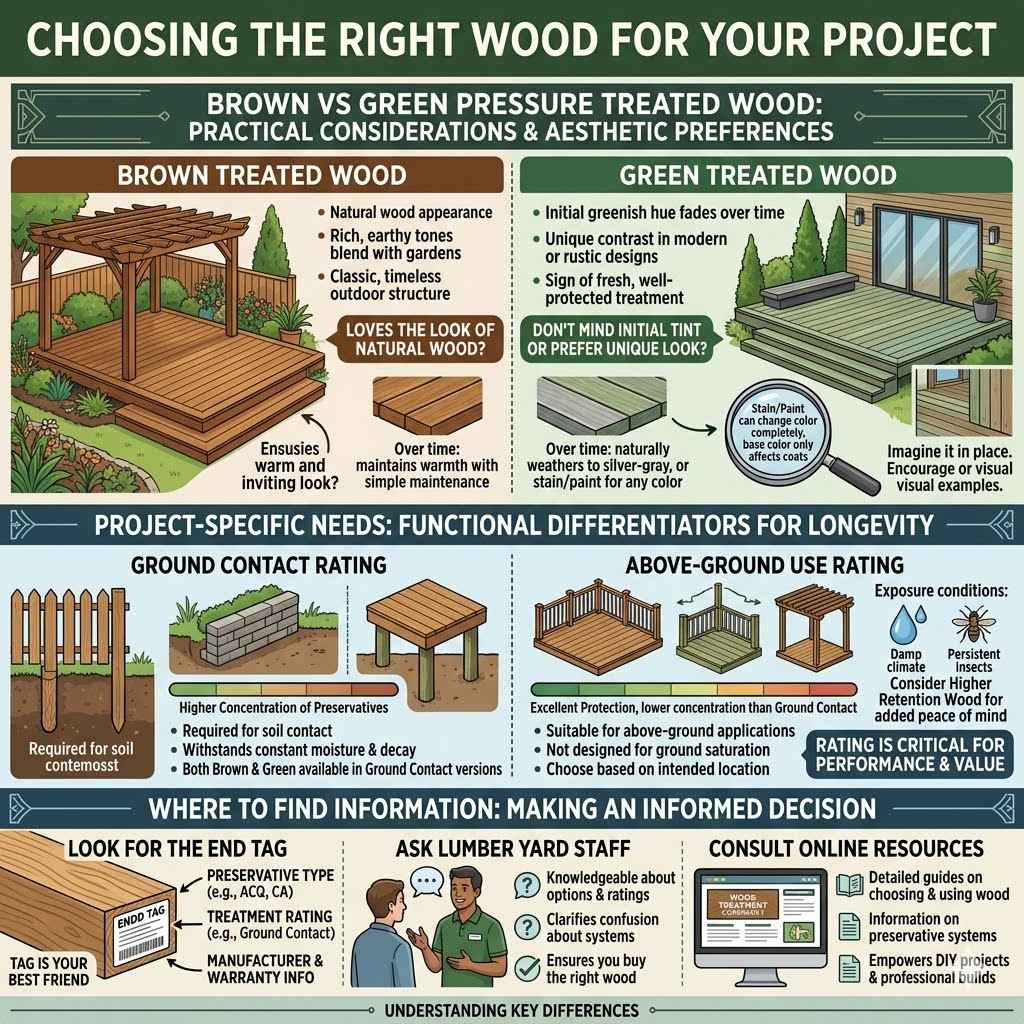
Deciding between brown and green pressure treated wood often comes down to a blend of practical considerations and personal aesthetic preferences. Both offer excellent protection against the elements, but understanding their nuances can help you make the best choice for your specific needs. Think about how you want your project to look, where it will be placed, and what kind of maintenance you’re comfortable with.
Aesthetic Preferences
Your personal style plays a big role when deciding between brown and green treated wood. If you love the look of natural wood and want your project to have a warm, inviting appearance right from the start, brown treated wood is often the preferred choice. Its richer, earthier tones blend seamlessly with most garden settings and architectural styles, giving a finished look with minimal immediate effort.
It’s the go-to for many homeowners looking for that classic, timeless outdoor structure.
On the other hand, some people don’t mind the initial greenish hue, or they actually prefer it. This green tint can be a characteristic that stands out, especially in modern or more rustic designs. It can also be a sign that the wood is freshly treated and well-protected.
Over time, as mentioned, this green will fade, and you can embrace the natural silver-gray weathering, or you can choose to stain or paint it to achieve any color you desire. The key is knowing that the color is just the surface layer and the underlying protection is what truly matters for durability.
Consider the surrounding environment. If your project is near a lot of natural greenery, a brown wood might blend in more subtly. If you’re aiming for a more distinct look, the green might offer a unique contrast.
Ultimately, the best way to decide is to look at examples of projects built with both types of wood, or even better, look at samples of the wood itself and imagine it in place. If you plan to stain or paint, remember that the base color might affect the number of coats needed but won’t prevent you from achieving your desired finish.
Project-Specific Needs
When selecting pressure treated wood, always consider the specific demands of your project. For projects that will be in direct contact with the soil, such as fence posts, retaining wall bases, or deck pilings, you absolutely must choose wood rated for ground contact. This rating indicates a higher concentration of preservatives to withstand constant moisture and potential decay from the earth.
Both brown and green treated wood come in ground contact versions, so the color isn’t the deciding factor here, but the rating is critical.
For above-ground applications like deck boards, railings, or pergolas, wood rated for above-ground use is sufficient. While it still offers excellent protection, it’s not designed for the intense saturation that ground contact lumber endures. Using the correct rating ensures you get the best performance and value for your money.
It’s like using the right tool for the job; using the wrong one can lead to premature failure and extra costs down the line.
Think about the exposure to weather. If your project will be in a very damp or humid climate, opting for higher retention wood, even for above-ground use, might be a wise investment for added peace of mind. Similarly, if insects are a persistent problem in your area, ensuring you have a robust treatment level is important.
The color is a visual cue, but the treatment level and rating are the functional differentiators that will impact your project’s longevity.
Where to Find Information
When you’re at the lumber yard, look for the end tag on the wood. This tag is your best friend when it comes to understanding the specifics of the pressure treated lumber. It will clearly state the type of preservative used (e.g., ACQ, CA), the treatment level or rating (e.g., “Above Ground Use,” “Ground Contact”), and often the manufacturer’s name and any warranty information.
This tag is crucial for making an informed decision and ensuring you’re buying the right wood for your project’s requirements.
Don’t hesitate to ask lumber yard staff for assistance. They are usually knowledgeable about the different types of pressure treated wood they carry and can help you find what you need based on your project plans. They can explain the differences between the wood you see and help clarify any confusion about ratings or preservative systems.
It’s better to ask a few questions upfront than to discover later that you’ve chosen the wrong material.
Online resources from wood treatment companies and lumber associations can also be very helpful. These sites often provide detailed guides on how to choose and use pressure treated wood, along with information on the different preservative systems and their applications. Reading up on these resources can empower you with knowledge to make confident choices for your DIY projects or professional builds.
Understanding these details is part of mastering the Brown vs Green Pressure Treated Wood: Key Differences.
Frequently Asked Questions
Question: Does the color of pressure treated wood affect its strength
Answer: No, the color of pressure treated wood (brown or green) does not directly affect its structural strength. Strength comes from the type and quality of the wood itself. The color is an indicator of the type of preservative treatment used, which affects its resistance to rot and insects.
Question: Can I use green treated wood for a garden bed
Answer: Yes, you can use green treated wood for a garden bed, but it’s recommended to use a food-safe barrier between the soil and the wood if you are growing edible plants. Modern treatments are safer, but a barrier provides extra peace of mind.
Question: How long does pressure treated wood last
Answer: Properly installed and maintained pressure treated wood can last 15 to 25 years or even longer. Lifespan depends on the treatment level, whether it’s rated for ground contact, climate, and maintenance.
Question: Should I seal brown or green pressure treated wood
Answer: It is a good idea to seal or stain pressure treated wood after it has dried sufficiently, regardless of its color. Sealing protects it from UV rays and moisture, helping to prevent cracking and warping, and can also enhance its appearance.
Question: What is the difference between ACQ and CA treatment
Answer: ACQ (Alkaline Copper Quaternary) and CA (Copper Azole) are both common copper-based preservative systems. CA treatments often include organic azoles alongside copper for enhanced protection and may result in a more natural brown color from the start, while ACQ often gives a greener hue.
Summary
Understanding Brown vs Green Pressure Treated Wood: Key Differences boils down to color indicating treatment type, not strength. Both offer durability against rot and insects when rated correctly for ground contact or above ground use. Choose based on your aesthetic preference and project needs, and always check the lumber tag for vital information.